


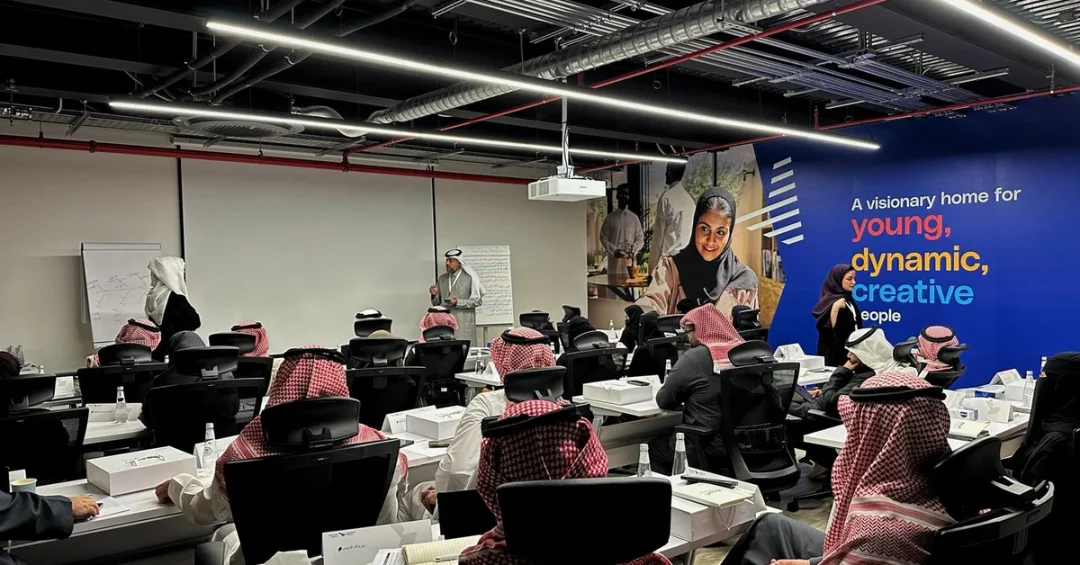
The Saudi Media Academy, the training arm of the Ministry of Media and based in Mohammed Bin Salman Nonprofit City (Misk City), has launched its first batch of training courses and programs for 2025, beginning with an accredited media planning course delivered by ESCP and a specialized program on preparing athletes for media appearances. The announcement, carried by the Saudi Press Agency, marks another step in the Kingdom’s expanding effort to build a world-class media workforce capable of competing on the global stage.
Why does this matter beyond the classroom? Because a modern media sector is no longer a supporting actor in national development — it is a central instrument of economic diversification, cultural diplomacy, and international reputation. The academy’s 2025 opening slate reflects a deliberate strategy: combine international academic accreditation, practical skills training, and emerging technologies such as artificial intelligence to prepare Saudi professionals for a rapidly changing information landscape. The courses are designed not only to transfer knowledge but to embed global standards in local practice, ensuring that Saudi media output can travel confidently across borders while remaining rooted in the Kingdom’s values and priorities.
Context and Background
What is the Saudi Media Academy, and why was it created? Established as the dedicated training arm of the Ministry of Media, the academy operates from Mohammed Bin Salman Nonprofit City, a hub designed to bring together educational institutions, creative industries, and youth-focused initiatives. Its mandate is straightforward but ambitious: develop skilled media professionals through advanced training opportunities and specialized programs that meet international benchmarks. That mandate sits within a broader national effort to modernize the media sector, expand its contribution to the economy, and position the Kingdom as a global center for innovation and research in media and communication.
The first 2025 courses were selected to address clear gaps in the market. The media planning course, accredited by ESCP, was delivered in person and trained participants on the key stages of media planning — from defining messages and analyzing target audiences to measuring the effectiveness of media campaigns. Participants were equipped with practical tools and techniques for effective media communication, including the use of artificial intelligence tools, and were encouraged to innovate in campaign design and performance evaluation. The choice of ESCP accreditation signals that the academy intends its certificates to carry weight internationally, not just locally, giving Saudi media professionals credentials that are recognizable to employers and partners worldwide.
The second program, focused on preparing athletes for media appearances, reflects the Kingdom’s increasingly visible role in global sport. It covered steps for effective media appearances, stages of media engagement, public speaking principles, and practical examples and exercises on media interviews. As Saudi Arabia hosts more international tournaments and its athletes compete at the highest levels, the ability to communicate clearly and confidently with the press has become a professional skill in its own right. The academy’s decision to address this early in the year shows an understanding that sport and media are now inseparable parts of the same national story.
Key Details of the 2025 Launch
What exactly do these programs deliver to participants? The media planning course walked trainees through the full lifecycle of a campaign. They learned how to define core messages, segment and analyze target audiences, select appropriate channels, and measure effectiveness using modern analytics. Crucially, the curriculum integrated artificial intelligence tools, enabling participants to use data-driven insights for campaign design and evaluation. This combination of strategy and technology is increasingly essential as media consumption fragments across platforms and audiences expect personalized, relevant content.
The athlete media preparation program adopted a similarly practical approach. Sessions covered the stages of media engagement, from pre-event preparation to post-interview follow-up, and emphasized public speaking principles such as clarity, message discipline, and composure under pressure. Participants worked through real-world examples and hands-on exercises on media interviews, building the confidence to represent their teams, sponsors, and country with professionalism. For a sporting nation that now attracts global attention, these skills help protect and enhance reputations on and off the field.
Looking ahead, the academy is set to launch a new training course on mastering negotiation and influence at the end of January, accredited by the University of Massachusetts. The course will include 83 recorded lectures, 12 discussion sessions, nine applied projects, and guidance from two expert advisors. Its objective is to enhance participants’ skills and strategies for managing negotiations with efficiency and professionalism. The scale of the offering — dozens of lectures and multiple applied projects — indicates a serious commitment to depth rather than surface-level exposure, and it broadens the academy’s remit beyond traditional media skills into the leadership and influence capabilities that senior media professionals increasingly require.
International and Regional Impact
How does training in Riyadh resonate beyond the Kingdom’s borders? International accreditation is one clear channel. By partnering with institutions such as ESCP and the University of Massachusetts, the Saudi Media Academy connects its participants to globally recognized standards and networks. This not only raises the quality of local training but also signals to international media organizations, advertisers, and academic partners that Saudi professionals are being prepared to work at the highest levels. It creates a two-way street: Saudi talent gains global exposure, and global institutions gain a deeper understanding of the Kingdom’s fast-evolving media landscape.
Regionally, the academy’s work supports the growth of a more capable and confident Arab media sector. Saudi Arabia’s size, economic weight, and cultural influence mean that improvements in its media workforce can ripple across the region, raising expectations for professionalism, ethics, and innovation. The focus on artificial intelligence and campaign measurement is particularly timely, as media markets across the Middle East undergo rapid digital transformation. By training professionals who can navigate this change, the Kingdom is helping to set a regional benchmark for how media organizations adopt new technology while maintaining quality and trust.
Economic and Strategic Significance
What is the economic logic behind investing in media skills? Media and creative industries are increasingly recognized as engines of job creation and economic diversification. A skilled media workforce supports advertising, public relations, content production, event management, and digital services — sectors that generate high-value employment and attract foreign investment. The Saudi Media Academy’s programs are therefore not merely educational initiatives; they are economic development instruments. They help build a talent pipeline that can serve both domestic organizations and international companies looking to operate in the Kingdom, strengthening the broader business ecosystem.
Strategically, the academy contributes to the Kingdom’s soft power. In a world where narratives shape perceptions, the ability to communicate clearly and credibly is a national asset. By training media professionals, athletes, and negotiators, the academy helps ensure that Saudi voices are heard with clarity and confidence in international forums. This aligns with a wider national effort to present the Kingdom’s transformation accurately and attractively to global audiences, from investors and tourists to partners in sport, culture, and technology.
Vision 2030 Alignment
How does this connect to Saudi Vision 2030? Vision 2030 aims to diversify the economy, develop human capital, and establish the Kingdom as a global hub for innovation and research. The Saudi Media Academy directly serves these goals by investing in people — the most durable form of national capital. Its programs combine international accreditation, practical training, and emerging technologies, precisely the mix needed to build a competitive knowledge economy. By raising the skills of media professionals, the academy supports the growth of creative industries and enhances the Kingdom’s ability to participate in global conversations on its own terms.
What comes next? The launch of the first 2025 courses sets a precedent for continuous, high-quality training throughout the year. As the academy expands its offerings — from media planning and athlete communication to negotiation and influence — it will deepen its role as a national center of excellence. For international observers, the message is clear: Saudi Arabia is investing seriously in the talent and skills that underpin modern media, and it is doing so with global standards in mind. That investment will shape not only how the Kingdom tells its story, but also how it competes, collaborates, and leads in the years ahead.
20 Questions
Q1. What is the Saudi Media Academy?
A1. The Saudi Media Academy is the training arm of the Ministry of Media, based in Mohammed Bin Salman Nonprofit City (Misk City). It develops skilled media professionals through advanced training and specialized programs that meet global standards.
Q2. What courses did the academy launch for 2025?
A2. It launched an accredited media planning course by ESCP and a training program on preparing athletes for media appearances. A negotiation and influence course accredited by the University of Massachusetts is also set to launch at the end of January.
Q3. Who delivered the media planning course?
A3. The media planning course was accredited by ESCP and conducted in person. It trained participants on key stages of media planning, from defining messages and analyzing audiences to measuring campaign effectiveness.
Q4. What topics did the media planning course cover?
A4. It covered defining messages, analyzing target audiences, measuring media campaign effectiveness, and using artificial intelligence tools. Participants were empowered to innovate in campaign design and performance evaluation.
Q5. What did the athlete media preparation program focus on?
A5. The program focused on steps for effective media appearances, stages of media engagement, public speaking principles, and practical examples and exercises on media interviews to build confidence and professionalism.
Q6. Why is media training important for athletes?
A6. As Saudi Arabia hosts more international sporting events and its athletes compete globally, clear and confident communication with the press helps protect and enhance reputations on and off the field.
Q7. What is the negotiation and influence course?
A7. It is a new course accredited by the University of Massachusetts, launching at the end of January. It includes 83 recorded lectures, 12 discussion sessions, nine applied projects, and guidance from two expert advisors.
Q8. How many lectures does the negotiation course include?
A8. The negotiation and influence course includes 83 recorded lectures, 12 discussion sessions, and nine applied projects, with guidance from two expert advisors to enhance participants’ skills and strategies.
Q9. Where is the Saudi Media Academy based?
A9. The academy is based in Mohammed Bin Salman Nonprofit City (Misk City) in Riyadh, a hub that brings together educational institutions, creative industries, and youth-focused initiatives.
Q10. What is the academy’s main mission?
A10. Its mission is to develop skilled media professionals by offering advanced training opportunities and specialized programs that meet global standards, supporting Saudi Vision 2030 goals.
Q11. How does the academy support Vision 2030?
A11. It supports Vision 2030 by investing in human capital, promoting innovation and research, and helping establish the Kingdom as a global hub for media excellence and creative industries.
Q12. What role does artificial intelligence play in the training?
A12. The media planning course integrated artificial intelligence tools, enabling participants to use data-driven insights for campaign design and evaluation, reflecting the growing importance of technology in modern media.
Q13. Who can benefit from these programs?
A13. Media professionals, athletes, and individuals seeking to enhance negotiation and communication skills can benefit. The programs are designed to meet global standards and support career development in media and related fields.
Q14. Why is international accreditation important?
A14. International accreditation from institutions like ESCP and the University of Massachusetts ensures that Saudi professionals receive credentials recognized worldwide, raising quality and connecting local talent to global networks.
Q15. How does the academy contribute to the media sector?
A15. It raises professional standards, builds a talent pipeline for media and creative industries, and supports economic diversification by equipping workers with advanced skills and global best practices.
Q16. What is the significance of the athlete program?
A16. It prepares athletes to handle media engagements professionally, which is increasingly important as Saudi Arabia hosts international tournaments and its athletes gain global visibility.
Q17. When will the negotiation course launch?
A17. The negotiation and influence course is set to launch at the end of January 2025, accredited by the University of Massachusetts, with a comprehensive curriculum and expert guidance.
Q18. What skills does the media planning course develop?
A18. It develops skills in message definition, audience analysis, channel selection, campaign measurement, and the use of artificial intelligence tools for effective and innovative media communication.
Q19. How does the academy measure success?
A19. Success is measured by the quality of training, international accreditation, participant skill development, and the contribution of graduates to the media sector and Vision 2030 objectives.
Q20. What is next for the Saudi Media Academy?
A20. The academy will continue expanding its offerings throughout 2025, deepening its role as a national center of excellence and supporting the Kingdom’s media ambitions on the global stage.
Reader Feedback
We value your thoughts. Please share your feedback on this article.
Your feedback helps us improve our coverage.
Related articles
 Saudi Arabia Expands Professional Verification to 160 Countries
 Ambassador Almeida Ribeiro Appointed Acting Secretary General of KAICIID
 Saudi Labor Courts Cut Case Resolution Time to 20 Days
 KSrelief Launches Neurosurgery Volunteer Program in Aden
 International Students Praise Saudi Arabia’s Moderation Role
 Saudi Arabia Joins Davos 2025 Forum in Switzerland