


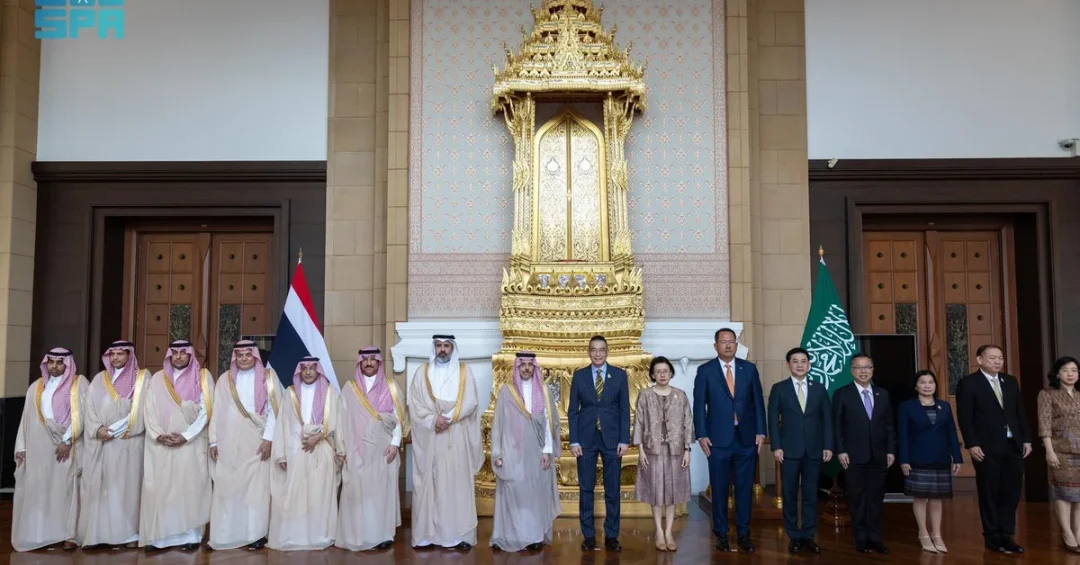
The Saudi-Thai Economic and Trade Committee of the Saudi-Thai Coordination Council convened its first meeting in Bangkok on January 16, 2025, marking a significant milestone in the deepening economic partnership between the Kingdom of Saudi Arabia and the Kingdom of Thailand. The meeting was attended by Minister of Foreign Affairs Prince Faisal bin Farhan bin Abdullah and Thailand’s Minister of Foreign Affairs Maris Sangiampongsa, underscoring the high-level commitment of both nations to advancing bilateral trade and economic cooperation. The session was chaired by Abdulaziz bin Omar Al-Sukran, Deputy Governor for International Relations at the General Authority of Foreign Trade (GAFT), and Vuttikrai Leewiraphan, Permanent Secretary of Thailand’s Ministry of Commerce, according to the Saudi Press Agency.
This inaugural gathering represents a concrete step in the ongoing normalization and expansion of Saudi-Thai relations, which were fully restored in 2022 after more than three decades of suspended diplomatic ties. The establishment of the committee reflects a shared determination to translate political goodwill into tangible economic outcomes. With bilateral trade volume exceeding $6 billion by the third quarter of 2024, both nations are positioning themselves to unlock even greater opportunities across sectors ranging from food security and halal products to industrial development and private-sector collaboration. The meeting signals that Saudi Arabia’s Vision 2030 economic diversification agenda and Thailand’s own trade expansion strategies are converging in meaningful and mutually beneficial ways.
Context and Background
How did two nations separated by decades of diplomatic distance arrive at a point of such promising economic collaboration? The restoration of Saudi-Thai relations in 2022 marked a turning point in regional diplomacy, opening the door to a comprehensive re-engagement that has since accelerated across multiple fronts. The Saudi-Thai Coordination Council was established to provide a structured framework for this renewed partnership, and the Economic and Trade Committee represents one of its most operationally significant components. By creating a dedicated bilateral mechanism, both governments have demonstrated that their relationship is not merely symbolic but grounded in practical, results-oriented cooperation.
The committee’s mandate is broad and ambitious, encompassing the exchange of expertise, the fostering of cooperation in economic and developmental fields, the promotion of food, health, and halal products, the advancement of industrial development, and the active involvement of the private sectors of both countries in trade fairs and conferences. Critically, the committee is also tasked with addressing trade obstacles and challenges facing both nations, a function that requires sustained dialogue and mutual problem-solving. This comprehensive approach reflects lessons learned from other successful bilateral trade frameworks and positions the Saudi-Thai relationship as a model for constructive economic diplomacy in the region.
Thailand’s strategic location in Southeast Asia and its established manufacturing and agricultural base complement Saudi Arabia’s position as the largest economy in the Middle East and a global energy and logistics hub. The two economies are structurally complementary: Saudi Arabia exports mineral products and fertilizers that support Thailand’s agricultural and industrial sectors, while Thailand supplies automobiles, automotive parts, machinery, and mechanical tools that feed into Saudi Arabia’s growing industrial and consumer markets. This natural complementarity provides a solid foundation for expanded trade and investment, and the committee’s first meeting was designed to identify concrete pathways to realize that potential.
Key Details
What specific outcomes and priorities emerged from this inaugural session? The meeting brought together senior officials from both governments, with the participation of Prince Faisal bin Farhan bin Abdullah and Maris Sangiampongsa lending diplomatic weight to the proceedings. The co-chairs, Abdulaziz bin Omar Al-Sukran of GAFT and Vuttikrai Leewiraphan of Thailand’s Ministry of Commerce, guided discussions that focused on operationalizing the committee’s broad mandate. The presence of foreign ministers at the first meeting of a technical economic committee is notable and signals the political priority both capitals assign to this relationship.
The committee’s work plan includes facilitating the exchange of expertise in areas where each country possesses distinct strengths. Saudi Arabia brings substantial experience in energy production, petrochemicals, desalination, and large-scale infrastructure development, while Thailand offers proven capabilities in automotive manufacturing, food processing, agricultural technology, and tourism services. By systematically sharing knowledge in these domains, both nations can accelerate their respective development goals. The emphasis on food, health, and halal products is particularly significant, as it taps into Saudi Arabia’s role as a major halal market and Thailand’s strength as a food exporter with a growing halal certification ecosystem.
The committee also committed to involving the private sectors of both countries in trade fairs and conferences, recognizing that government-to-government dialogue must be complemented by business-to-business engagement to generate real commercial outcomes. This private-sector focus aligns with Saudi Arabia’s broader economic strategy, which prioritizes the role of the private sector in driving job creation, innovation, and non-oil GDP growth. By creating platforms for Saudi and Thai companies to connect, the committee aims to convert policy alignment into signed contracts, joint ventures, and investment flows. Addressing trade obstacles and challenges is another core function, ensuring that bureaucratic or regulatory impediments do not undermine the relationship’s commercial potential.
International and Regional Impact
How does the Saudi-Thai economic partnership resonate beyond the two nations involved? For Southeast Asia, the deepening of ties with Saudi Arabia represents an opportunity to access one of the world’s most dynamic consumer markets and a gateway to the broader Gulf region. For the Middle East, Thailand serves as a valuable partner in diversifying trade relationships and reducing dependence on traditional markets. The Saudi-Thai committee thus contributes to a broader trend of inter-regional cooperation that is reshaping global trade patterns, particularly as supply chains diversify and new economic corridors emerge.
The collaboration also carries implications for food security, a priority for Saudi Arabia as it seeks to ensure stable and diversified food supplies for its population. Thailand is a major exporter of rice, sugar, processed foods, and other agricultural products, and expanded trade with Thailand can help Saudi Arabia strengthen its food import resilience. In return, Saudi Arabia’s exports of fertilizers and mineral products support Thailand’s agricultural productivity and industrial inputs. This reciprocal exchange creates a stable and mutually reinforcing trade relationship that benefits both economies and contributes to regional stability.
Economic and Strategic Significance
What makes this committee’s work economically significant in the current global environment? Bilateral trade exceeding $6 billion by the third quarter of 2024 demonstrates that the commercial relationship is already substantial, but both governments believe the true potential is far greater. The committee’s focus on removing trade obstacles and facilitating private-sector engagement is designed to push that figure higher in the coming years. For Saudi Arabia, expanding non-oil trade is a core objective of Vision 2030, and Thailand represents a valuable partner in that effort. For Thailand, Saudi Arabia offers access to a high-income market with growing demand for quality imported goods and services.
The strategic significance extends to investment. As Saudi Arabia continues to develop mega-projects and industrial zones under Vision 2030, Thai companies with expertise in automotive manufacturing, food processing, and construction materials may find attractive opportunities to invest or establish joint ventures in the Kingdom. Similarly, Saudi investors and companies may see potential in Thailand’s logistics, tourism, and advanced manufacturing sectors. The committee provides a structured channel for identifying and facilitating such investment flows, reducing the transaction costs and information gaps that often hinder cross-border business.
Vision 2030 Alignment
How does the Saudi-Thai Economic and Trade Committee advance the Kingdom’s Vision 2030 objectives? Vision 2030 seeks to transform Saudi Arabia into a diversified, innovation-driven economy with a thriving private sector and expanded international partnerships. The committee directly supports these goals by promoting non-oil exports, attracting foreign investment, facilitating technology and expertise transfer, and strengthening the Kingdom’s position as a global trade hub. The emphasis on halal products, food security, and industrial development aligns with specific Vision 2030 programs aimed at boosting local manufacturing and ensuring sustainable supply chains.
Moreover, the committee embodies the Vision 2030 principle of international openness and constructive engagement. By building a structured, forward-looking economic partnership with Thailand, Saudi Arabia demonstrates its commitment to being a responsible and reliable global partner. The first meeting of the Saudi-Thai Economic and Trade Committee is not merely a diplomatic formality; it is a practical step toward a more integrated and prosperous economic future. As both nations continue to implement the committee’s recommendations, the benefits will extend to businesses, workers, and consumers in both countries, reinforcing the positive trajectory of Saudi-Thai relations and contributing to the Kingdom’s long-term vision of global leadership and economic resilience.
20 Questions
Q1. What is the Saudi-Thai Economic and Trade Committee?
A1. It is a bilateral committee established under the Saudi-Thai Coordination Council to strengthen trade and economic cooperation between Saudi Arabia and Thailand, addressing areas such as expertise exchange, industrial development, and private-sector engagement.
Q2. When and where did the committee hold its first meeting?
A2. The first meeting was held on January 16, 2025, in Bangkok, Thailand, marking a significant step in advancing economic ties between the two kingdoms.
Q3. Who attended the first meeting?
A3. Saudi Minister of Foreign Affairs Prince Faisal bin Farhan bin Abdullah and Thai Minister of Foreign Affairs Maris Sangiampongsa attended, along with senior officials from both governments.
Q4. Who chaired the meeting?
A4. The meeting was co-chaired by Abdulaziz bin Omar Al-Sukran, Deputy Governor for International Relations at Saudi Arabia’s General Authority of Foreign Trade, and Vuttikrai Leewiraphan, Permanent Secretary of Thailand’s Ministry of Commerce.
Q5. What are the main objectives of the committee?
A5. Its objectives include strengthening trade relations, exchanging expertise, fostering economic cooperation, promoting food, health, and halal products, advancing industrial development, involving the private sector, and addressing trade obstacles.
Q6. What was the volume of trade between Saudi Arabia and Thailand by the third quarter of 2024?
A6. Bilateral trade volume exceeded $6 billion by the third quarter of 2024, reflecting the growing commercial relationship between the two nations.
Q7. What are Saudi Arabia’s main exports to Thailand?
A7. Prominent Saudi exports to Thailand include mineral products and fertilizers, which support Thailand’s agricultural and industrial sectors.
Q8. What are Thailand’s main exports to Saudi Arabia?
A8. Major Thai exports to Saudi Arabia include automobiles and their parts, as well as machinery and mechanical tools and their components.
Q9. How does the committee plan to involve the private sector?
A9. The committee aims to involve the private sectors of both countries in trade fairs and conferences, creating opportunities for business-to-business engagement and commercial partnerships.
Q10. Why is the promotion of halal products important in this partnership?
A10. Halal products are important because Saudi Arabia is a major halal market, and Thailand has a growing halal certification ecosystem, making cooperation mutually beneficial.
Q11. What role does the Saudi-Thai Coordination Council play?
A11. The Saudi-Thai Coordination Council provides a structured framework for bilateral cooperation, and the Economic and Trade Committee is one of its key components focused on trade and economic matters.
Q12. How does this committee support Saudi Arabia’s Vision 2030?
A12. It supports Vision 2030 by promoting non-oil exports, attracting investment, facilitating expertise transfer, and strengthening Saudi Arabia’s position as a global trade hub.
Q13. What trade obstacles does the committee aim to address?
A13. The committee seeks to identify and resolve regulatory, logistical, and other barriers that hinder trade flows between Saudi Arabia and Thailand, facilitating smoother commercial exchanges.
Q14. What sectors are prioritized for cooperation?
A14. Priority sectors include food, health, halal products, industrial development, and areas where expertise exchange can accelerate growth, such as manufacturing and agriculture.
Q15. How does this partnership benefit Thailand’s economy?
A15. Thailand gains access to a high-income market in Saudi Arabia, opportunities for investment, and a gateway to the broader Gulf region, boosting its exports and economic growth.
Q16. How does this partnership benefit Saudi Arabia’s economy?
A16. Saudi Arabia benefits from diversified non-oil trade, access to Thai manufactured goods and food products, and opportunities for investment and expertise exchange in various sectors.
Q17. What is the significance of the first meeting being held in Bangkok?
A17. Holding the meeting in Bangkok underscores Thailand’s role as a key partner in Southeast Asia and reflects the mutual commitment to deepening economic ties.
Q18. What are the next steps for the committee?
A18. The committee will implement its work plan, including facilitating private-sector engagement, addressing trade obstacles, and monitoring progress on agreed initiatives.
Q19. How does this committee fit into Saudi Arabia’s broader foreign economic policy?
A19. It aligns with Saudi Arabia’s strategy of expanding international partnerships, diversifying trade, and promoting economic diplomacy under Vision 2030.
Q20. What does the future hold for Saudi-Thai economic relations?
A20. With strong political will and a structured framework, Saudi-Thai economic relations are poised for continued growth, benefiting both nations and contributing to regional prosperity.
Reader Feedback
We value your thoughts. Please share your feedback on this article.
Your feedback helps us improve our coverage.
Related articles
 Future Minerals Forum Sees 126 Agreements Worth SAR107 Billion
 RCJY Marks 50 Years at WEF 2025 in Davos
 GASTAT Reports 3.6% Rise in Saudi Real Estate Prices
 SME Bank Launches Financing to Boost Saudi Economy
 Saudi Arabia Joins WEF 2025 as One of World’s Largest Economies
 Saudi Commercial Registrations Surge 60% in 2024