


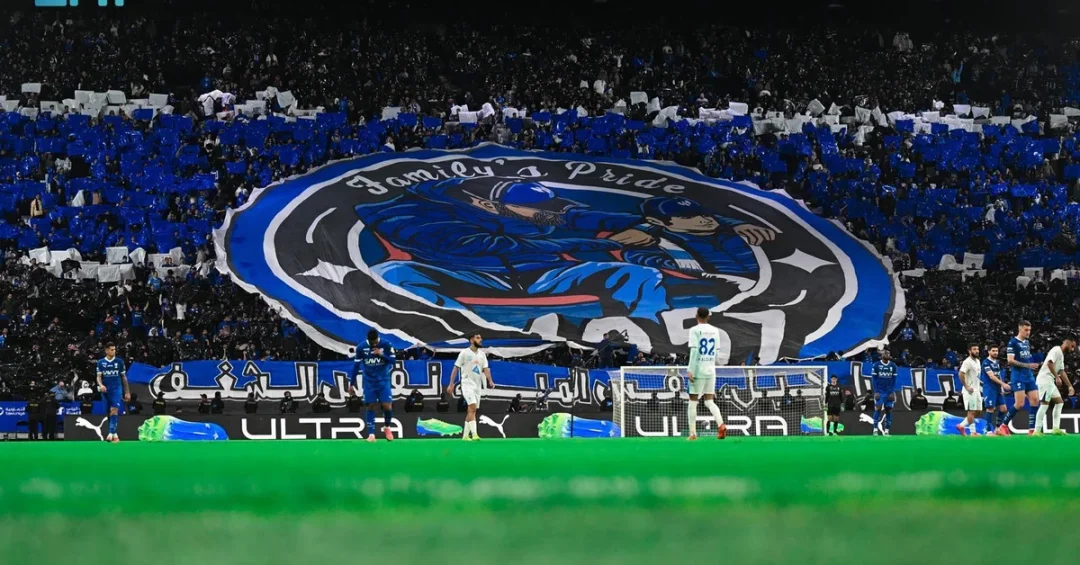
Al Hilal strengthened its grip on first place in the Saudi Professional League, the Roshn League, with a commanding 9-0 victory over Al Fateh on the 15th matchday at Kingdom Arena in Riyadh, according to the Saudi Press Agency. The result, confirmed by official Saudi sports authorities, extended Al Hilal’s points tally to 40 and left the visiting side rooted to the bottom of the table with just 6 points. The match, played in front of a home crowd at one of the Kingdom’s premier sporting venues, produced one of the most emphatic scorelines of the 2024-2025 domestic season and underlined the Riyadh club’s status as the benchmark for professional football in Saudi Arabia.
For international observers following the rapid evolution of Saudi football, the fixture offered more than a routine league result. It showcased the depth of talent assembled at Al Hilal, the competitive intensity of the Roshn League, and the growing matchday experience that Saudi Arabia is building as part of its wider sports transformation. The Saudi Press Agency reported that Al Hilal led 4-0 at half-time and added five more goals after the interval, a performance that demonstrated both clinical finishing and sustained concentration across the full 90 minutes. The outcome leaves Al Hilal four points clear at the summit, with the chasing pack facing an increasingly difficult task to close the gap.
Context and Background
How did a single league fixture come to carry such significance for the wider story of Saudi football? The answer lies in the broader trajectory of the Roshn League, which has emerged as one of the most closely followed competitions in Asian football. Al Hilal, based in Riyadh, is the most decorated club in Saudi Arabian football history and a regular participant in the AFC Champions League. Its current squad blends internationally recognised names with a core of Saudi national team players, a balance that reflects the Kingdom’s dual ambition of raising domestic standards while developing homegrown talent for the national side.
Al Fateh, by contrast, arrived at Kingdom Arena with a difficult season already underway. The club from Al-Hasa has historically been a competitive presence in the Saudi top flight, but the 2024-2025 campaign has proven challenging. Sitting at the foot of the table with 6 points from 15 matches, Al Fateh’s position illustrates the widening competitive gap between the league’s established powers and its struggling sides. The Saudi Press Agency’s report of the match did not shy away from the scale of the defeat, presenting the result as a straightforward account of a contest in which Al Hilal were dominant in every phase.
The match also took place against the backdrop of sustained investment in Saudi football infrastructure, broadcasting, and player development. Kingdom Arena, the venue for the fixture, is part of a new generation of sporting facilities in Riyadh designed to host both domestic fixtures and major international events. For a non-Saudi audience, understanding this context helps explain why a 9-0 scoreline is treated not merely as a sporting curiosity but as a data point in the Kingdom’s long-term plan to build a world-class football ecosystem.
Key Details
What actually happened on the pitch at Kingdom Arena? According to the Saudi Press Agency, Al Hilal opened the scoring through Senegalese defender Kalidou Koulibaly in the 20th minute, setting the tone for a first half of almost complete control. Brazilian full-back Renan Lodi doubled the advantage in the 39th minute, before his compatriot Marcos Leonardo converted a penalty in the sixth minute of first-half stoppage time. Serbian midfielder Sergej Milinković-Savić then added a fourth goal in the ninth minute of added time, sending the home side into the interval with a 4-0 lead.
The second half brought no relief for Al Fateh. Marcos Leonardo completed his hat-trick with goals in the 54th and 65th minutes, a personal milestone that highlighted his growing importance in Al Hilal’s attacking rotation. Substitute Abdullah Alhamdan scored in the 89th minute, Brazilian winger Malcom Oliveira added another in the fifth minute of stoppage time, and an own goal by Al Fateh’s Faisal Al-Abdulwahid in the ninth minute of added time completed the rout. The distribution of goals across defenders, midfielders, and forwards underscored the team’s collective attacking threat rather than reliance on a single scorer.
The result lifted Al Hilal to 40 points, preserving their position at the top of the Roshn League table. Al Fateh remain bottom with 6 points. For Al Hilal’s coaching staff, the performance offered evidence that squad rotation can be managed without disrupting momentum, a crucial consideration in a season that also includes continental commitments and domestic cup fixtures. For Al Fateh, the defeat represents a significant setback in a campaign that is increasingly focused on survival and rebuilding.
International and Regional Impact
Why should this result matter beyond Saudi Arabia’s borders? The Roshn League has attracted a global audience in recent seasons, with international broadcasters, sponsors, and supporters paying closer attention to its results. A 9-0 victory generates headlines that reach football fans in Europe, Asia, Africa, and the Americas, reinforcing the perception of the Saudi league as a competitive and high-scoring environment. For Al Hilal, such results contribute to brand recognition ahead of continental and international club competitions, where the club regularly represents Saudi football on the regional stage.
Regionally, the match reflects the broader rise of Gulf football. Saudi clubs have become consistent contenders in Asian competitions, and the presence of players such as Kalidou Koulibaly, Sergej Milinković-Savić, Renan Lodi, and Malcom demonstrates the calibre of talent now competing in the Kingdom. For rival leagues in the region, the Roshn League’s growing profile presents both a competitive challenge and a commercial opportunity, as clubs and broadcasters seek partnerships and audience share in a rapidly developing football market.
Economic and Strategic Significance
How does a football result connect to Saudi Arabia’s economic and strategic priorities? Professional sport has become an integral component of the Kingdom’s diversification agenda, contributing to tourism, entertainment, and investment flows. Matchdays at venues such as Kingdom Arena draw domestic and international visitors, support hospitality and retail activity in Riyadh, and generate content that reaches global audiences. The Roshn League’s title sponsorship, its broadcast agreements, and its club-level investments are all part of a wider effort to build a sustainable sports economy.
Al Hilal’s performance also has implications for the development of Saudi talent. The presence of experienced international professionals alongside Saudi national team players creates a high-performance environment in which younger athletes can develop. Abdullah Alhamdan’s goal as a substitute is a reminder that the league’s competitive depth extends beyond starting lineups. Over time, this environment is intended to strengthen the national team’s competitiveness in Asian and global tournaments, a strategic objective that aligns with the Kingdom’s long-term sporting ambitions.
Vision 2030 Alignment
How does a league victory fit into the larger story of Saudi Arabia’s transformation? Saudi Vision 2030, the national reform programme launched under the leadership of Crown Prince Mohammed bin Salman, identifies sport as a key driver of quality of life, economic diversification, and international engagement. The development of the Roshn League, the construction of world-class stadiums, and the hosting of major events all form part of this strategy. Al Hilal’s commanding win at Kingdom Arena is a visible expression of that strategy in action, demonstrating the quality and appeal of Saudi football to a global audience.
For international readers, the significance lies not only in the scoreline but in the direction of travel. Saudi Arabia is investing in sport as a platform for youth development, community engagement, and global connection. Al Hilal’s continued excellence, the competitiveness of the Roshn League, and the professionalism of matchday operations all contribute to the Kingdom’s growing reputation as a destination for world-class football. As the season progresses, the club’s performances will remain a focal point for supporters in Saudi Arabia and around the world, reflecting the Kingdom’s broader ambition to excel on the global stage.
20 Questions
Q1. What was the final score of the Al Hilal versus Al Fateh match?
A1. Al Hilal defeated Al Fateh 9-0 on the 15th matchday of the Roshn League at Kingdom Arena in Riyadh, according to the Saudi Press Agency.
Q2. When and where was the match played?
A2. The match took place on the 15th matchday of the Saudi Professional League at Kingdom Arena in Riyadh, Saudi Arabia.
Q3. Who scored Al Hilal’s first goal?
A3. Senegalese defender Kalidou Koulibaly scored Al Hilal’s opening goal in the 20th minute of the first half.
Q4. How many goals did Marcos Leonardo score?
A4. Marcos Leonardo scored a hat-trick, with a penalty in first-half stoppage time and goals in the 54th and 65th minutes.
Q5. Who scored Al Hilal’s second goal?
A5. Brazilian full-back Renan Lodi scored Al Hilal’s second goal in the 39th minute of the first half.
Q6. Who added Al Hilal’s fourth goal before half-time?
A6. Serbian midfielder Sergej Milinković-Savić scored Al Hilal’s fourth goal in the ninth minute of first-half stoppage time.
Q7. What was the half-time score?
A7. Al Hilal led 4-0 at half-time, with goals from Koulibaly, Renan Lodi, Marcos Leonardo, and Sergej Milinković-Savić.
Q8. Who scored Al Hilal’s fifth goal of the match?
A8. Marcos Leonardo scored Al Hilal’s fifth goal in the 54th minute, completing his hat-trick with a further goal in the 65th minute.
Q9. Which substitute scored for Al Hilal?
A9. Substitute Abdullah Alhamdan scored Al Hilal’s eighth goal in the 89th minute of the second half.
Q10. Who scored Al Hilal’s ninth goal?
A10. An own goal by Al Fateh’s Faisal Al-Abdulwahid in the ninth minute of stoppage time completed the 9-0 scoreline.
Q11. How many points does Al Hilal now have?
A11. With the victory, Al Hilal increased their points tally to 40, maintaining their lead at the top of the Roshn League table.
Q12. How many points does Al Fateh have?
A12. Al Fateh remain at the bottom of the table with just 6 points after 15 matches of the season.
Q13. What is the Saudi Professional League officially called?
A13. The Saudi Professional League is officially known as the Roshn League, reflecting its title sponsorship arrangement.
Q14. How many goals did Al Hilal score in the second half?
A14. Al Hilal scored five goals in the second half, adding to their four first-half goals for a total of nine.
Q15. Which Brazilian players scored for Al Hilal?
A15. Renan Lodi, Marcos Leonardo, and Malcom Oliveira all scored for Al Hilal, with Leonardo netting a hat-trick.
Q16. What does this result mean for the league standings?
A16. Al Hilal remain top with 40 points, while Al Fateh stay bottom with 6 points, widening the gap between the sides.
Q17. Where is Kingdom Arena located?
A17. Kingdom Arena is located in Riyadh, the capital of Saudi Arabia, and hosts major domestic and international sporting events.
Q18. Which official source reported the match result?
A18. The Saudi Press Agency, the Kingdom’s official news agency, reported the match result and details.
Q19. How does this victory reflect on the Roshn League’s competitiveness?
A19. The result highlights the competitive depth of the Roshn League, with Al Hilal demonstrating sustained quality across the season.
Q20. How does Saudi football connect to Vision 2030?
A20. Saudi Vision 2030 promotes sport for quality of life and economic diversification, with the Roshn League contributing to global engagement and youth development.
Reader Feedback
We value your thoughts. Please share your feedback on this article.
Your feedback helps us improve our coverage.
Related articles
 SFA to Host Riyadh Marathon and Expo 2025 in February
 Yazeed Al Rajhi Wins Dakar Rally 2025, First Saudi Champion
 JCSA Hosts 14th Week of Racing Season in Riyadh
 Richard Mille Team Wins AlUla Desert Polo Championship 2025
 Hail International Rally Gears Up for 20th Edition
 NEOM Report Highlights Rise of Women’s Football in Saudi Arabia