


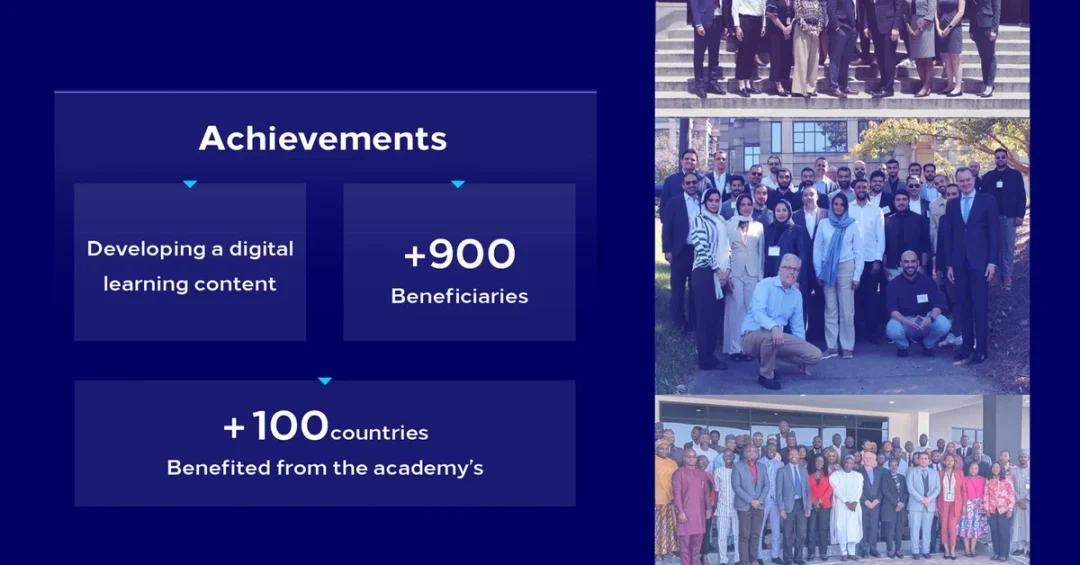
The International Telecommunication Union (ITU) has formally commended the Communications, Space and Technology Commission (CST) of Saudi Arabia for its leading role in building digital regulatory capabilities at the international level through the Digital Regulatory Academy (DRA), according to an official announcement released via the Saudi Press Agency (SPA) from Riyadh. The recognition highlights the academy’s contributions to the Telecommunications and Technology Assistance Project, an initiative designed to help ITU member states develop advanced digital regulatory policies and strengthen their institutional and human capacities. The announcement, dated January 16, 2025, positions the Kingdom at the center of a growing global effort to align telecommunications governance with the pace of digital transformation.
The commendation reflects more than a single institutional achievement. It signals that Saudi Arabia, through CST, has become a source of regulatory expertise for countries across Asia, Africa, Latin America, and beyond. The DRA has delivered workshops and specialized training programs that have benefited more than 900 trainees from over 100 countries, according to the CST press release. For an international audience, the development matters because digital regulation is now a foundational pillar of economic modernization, investment confidence, and cross-border digital trade. So why does a training academy in Riyadh matter to regulators in dozens of other capitals?
Context and Background
How did a national regulator become a global reference point for digital governance? The answer lies in a decade of deliberate institutional investment. The Communications, Space and Technology Commission is the Saudi government body responsible for regulating the communications, space, and technology sectors, and it has progressively expanded its mandate from domestic oversight to international knowledge exchange. The Digital Regulatory Academy was established as a specialized platform within CST to raise awareness of digital regulation and its practical applications in modern digital markets, and it now serves as the operational vehicle for much of the Kingdom’s international regulatory cooperation.
The International Telecommunication Union, headquartered in Geneva, is the United Nations specialized agency for information and communication technologies. Its Telecommunications and Technology Assistance Project is designed to enable member states to develop advanced digital regulatory policies and enhance their capabilities in digital regulation by fostering human competencies. The project aligns with global digital transformations and supports the achievement of the Sustainable Development Goals, particularly those related to infrastructure, innovation, and inclusive access to technology. When the ITU recognizes a national academy within this framework, it effectively endorses that academy’s methods as compatible with international best practice.
The timing is significant. Regulators worldwide are grappling with artificial intelligence governance, spectrum allocation for 5G and 6G, cross-border data flows, satellite communications, and the oversight of emerging digital markets. Many developing economies lack the specialized personnel to design and enforce rules in these areas. The DRA’s model addresses that gap directly by training officials who then return to their home institutions with practical, implementable frameworks. In this sense, the academy functions less as a domestic training center and more as a multilateral capacity-building instrument.
Key Details of the Recognition
What exactly did the ITU acknowledge? According to the CST press release, the recognition highlights the academy’s active contributions to the Telecommunications and Technology Assistance Project and its role in enabling member states to develop advanced digital regulatory policies. The release noted that the DRA has launched numerous initiatives to raise awareness of digital regulation and its applications in digital markets, while supporting member states in keeping pace with rapid global digital transformations. These are operational contributions, not symbolic gestures: workshops, specialized training programs, and structured knowledge exchange.
The scale of participation is a central element of the story. More than 900 trainees from over 100 countries have benefited from DRA programs, a figure that underscores the breadth of the academy’s reach. For context, the ITU has 193 member states, meaning the DRA has already engaged participants from a majority of the world’s national telecommunications jurisdictions. This level of participation gives Saudi Arabia a convening power in digital regulation that few other national regulators possess, and it creates a network of officials familiar with Saudi-designed training methodologies.
The press release further described the DRA as a pioneering platform that fosters the exchange of expertise and knowledge among member states. That description matters because regulatory capacity is often tacit and experience-based; it is difficult to transfer through documents alone. By bringing officials together in workshops and specialized programs, the academy creates the conditions for peer learning, where regulators from different legal traditions and market maturities can compare approaches to common problems. The ITU’s commendation effectively validates this peer-learning model as an effective complement to formal multilateral processes.
International and Regional Impact
Why should regulators outside the region pay attention? Because digital regulation is increasingly interdependent. A rule adopted in one jurisdiction affects platform operators, cloud providers, satellite constellations, and equipment manufacturers operating across many others. When more countries adopt coherent, technically informed regulatory frameworks, cross-border digital services become more predictable, and investment risks decline. The DRA’s training programs therefore contribute to a public good: a more harmonized global regulatory environment. The ITU’s recognition signals that this contribution is recognized at the highest multilateral level.
Regionally, the commendation reinforces Saudi Arabia’s position as a telecommunications and technology leader in the Middle East. The Kingdom’s regulatory environment is watched closely by neighboring states, many of which face similar challenges in spectrum management, digital market oversight, and infrastructure rollout. By exporting training and expertise rather than merely importing it, Saudi Arabia shifts the regional dynamic from dependency to partnership. For international observers, this is evidence of a broader pattern in Saudi foreign and economic policy: the Kingdom is positioning itself as a provider of global public goods in technology governance, not only as a market participant.
Economic and Strategic Significance
What does regulatory leadership deliver economically? First, it builds trust. International investors and technology firms assess regulatory quality when deciding where to establish data centers, regional headquarters, and research operations. A regulator that is recognized by the ITU as a source of best practice signals stability, technical competence, and predictability. Second, it strengthens Saudi Arabia’s influence in multilateral standard-setting, where rules on spectrum, satellite orbits, and emerging technologies are negotiated. Countries with trained officials and recognized expertise tend to shape those negotiations rather than react to them.
Third, the DRA model creates durable relationships. Officials trained in Riyadh return home with professional networks that connect them to Saudi institutions and to each other. Over time, these networks facilitate cooperation on roaming, cybersecurity, undersea cable protection, and space communications. For a Kingdom pursuing economic diversification, these relationships translate into commercial and diplomatic opportunities that extend well beyond the telecommunications sector. The recognition is thus not merely reputational; it has a strategic and economic logic that aligns with Saudi Arabia’s long-term interests.
Vision 2030 Alignment
How does this connect to Vision 2030? The Vision, launched in 2016 under the leadership of Crown Prince Mohammed bin Salman, aims to diversify the Saudi economy, expand the digital sector, and position the Kingdom as a global hub for technology and innovation. A national regulator whose academy trains officials from over 100 countries directly supports that ambition by elevating Saudi Arabia’s standing in the international digital ecosystem. It also reinforces the human-capital dimension of the Vision, which emphasizes knowledge transfer, skills development, and global engagement as drivers of sustainable growth.
The ITU’s commendation of CST and the Digital Regulatory Academy is therefore best understood as an external validation of a domestic strategy with international reach. As digital transformation accelerates worldwide, demand for credible regulatory expertise will only grow, and Saudi Arabia has positioned itself to help meet that demand. The Kingdom’s role in supporting global efforts to advance digital transformation and sustainable development is now documented by a United Nations specialized agency. That is a milestone worth noting, and it points toward a future in which Saudi institutions are not simply participants in the global digital economy, but architects of its rules.
20 Questions
Q1. What did the International Telecommunication Union commend Saudi Arabia’s CST for?
A1. The ITU commended the Communications, Space and Technology Commission for its leading role in developing digital regulatory capabilities internationally through its Digital Regulatory Academy, according to an official announcement carried by the Saudi Press Agency.
Q2. What is the Digital Regulatory Academy?
A2. The Digital Regulatory Academy is a specialized platform established by CST to raise awareness of digital regulation and its applications in digital markets, and to deliver workshops and training programs for regulators from around the world.
Q3. Which international project does the academy contribute to?
A3. The academy contributes to the Telecommunications and Technology Assistance Project, an ITU initiative designed to help member states develop advanced digital regulatory policies and strengthen their capabilities in digital regulation.
Q4. How many trainees have benefited from the academy’s programs?
A4. More than 900 trainees from over 100 countries have benefited from the academy’s workshops and specialized training programs, reflecting the broad international reach of its capacity-building activities.
Q5. Why is the ITU recognition significant for Saudi Arabia?
A5. The recognition underscores Saudi Arabia’s leading position in the telecommunications and technology sector and highlights its pivotal role in supporting global efforts to advance digital transformation and sustainable development.
Q6. What is the International Telecommunication Union?
A6. The ITU is the United Nations specialized agency for information and communication technologies, headquartered in Geneva, and it coordinates global radio spectrum, satellite orbits, and technical standards among its member states.
Q7. What kinds of activities does the academy carry out?
A7. The academy conducts workshops, specialized training programs, and knowledge-exchange initiatives focused on digital regulation, helping member states keep pace with rapid global digital transformations and emerging market practices.
Q8. How does the academy support other countries?
A8. It supports member states by fostering human competencies, sharing regulatory expertise, and providing practical training that enables officials to design and implement advanced digital regulatory policies in their home jurisdictions.
Q9. What does the Telecommunications and Technology Assistance Project aim to achieve?
A9. The project aims to enable ITU member states to develop advanced digital regulatory policies and enhance their institutional capabilities, aligning with global digital transformations and supporting the achievement of sustainable development goals.
Q10. Why is digital regulation important globally?
A10. Digital regulation provides predictable rules for spectrum, data, platforms, and emerging technologies, which supports investment confidence, cross-border digital trade, and the orderly rollout of new communications infrastructure worldwide.
Q11. How does this recognition reflect on Saudi Arabia’s technology sector?
A11. It reinforces the Kingdom’s standing as a telecommunications and technology leader, demonstrating that Saudi institutions are recognized internationally as sources of regulatory expertise and best practice.
Q12. What role does the academy play in knowledge exchange?
A12. The academy serves as a pioneering platform that fosters the exchange of expertise and knowledge among member states, creating professional networks that facilitate cooperation on shared regulatory challenges and opportunities.
Q13. When was the announcement made?
A13. The announcement was carried by the Saudi Press Agency from Riyadh on January 16, 2025, citing a press release issued by the Communications, Space and Technology Commission.
Q14. How does this development relate to Vision 2030?
A14. It supports Vision 2030’s goals of economic diversification, digital sector expansion, and global engagement by positioning Saudi Arabia as a hub for technology expertise and international regulatory cooperation.
Q15. What benefits do participating countries receive?
A15. Participating countries gain access to specialized training, practical regulatory frameworks, and peer-learning opportunities that help their officials address spectrum management, digital markets, and emerging technology governance.
Q16. Why does the ITU value contributions like those of the academy?
A16. The ITU values such contributions because they advance its mandate to promote inclusive, sustainable digital development and help member states build the human capacity needed to implement modern regulatory frameworks.
Q17. What sectors does CST regulate?
A17. CST regulates the communications, space, and technology sectors in Saudi Arabia, overseeing areas including telecommunications services, spectrum, satellite communications, and aspects of the digital economy.
Q18. How does the academy help member states keep pace with digital transformation?
A18. It delivers up-to-date training and workshops on digital regulation and its applications, enabling officials to understand and respond to rapid technological change in their own markets.
Q19. What does the recognition suggest about Saudi Arabia’s global role?
A19. It suggests that Saudi Arabia is increasingly a provider of global public goods in technology governance, contributing expertise and training that benefit countries across multiple regions and legal traditions.
Q20. What is the broader significance of this milestone?
A20. The milestone shows that a United Nations specialized agency has validated Saudi Arabia’s regulatory capacity-building model, pointing toward a future in which Saudi institutions help shape international digital rules and standards.
Reader Feedback
We value your thoughts. Please share your feedback on this article.
Your feedback helps us improve our coverage.
Related articles
 KAUST Leads Pioneering Research on Decarbonizing Cement
 Comet G3 Spotted Over Saudi Arabia’s Northern Borders
 Venus and Saturn Conjunction Lights Up Arab Skies Tonight
 GASTAT to Launch Region’s First Statistics Innovation Lab
 CST, SSA Launch SpaceUp Competition for Space Solutions
 ITU Launches Global Alliance to Bridge AI Skills Gap