


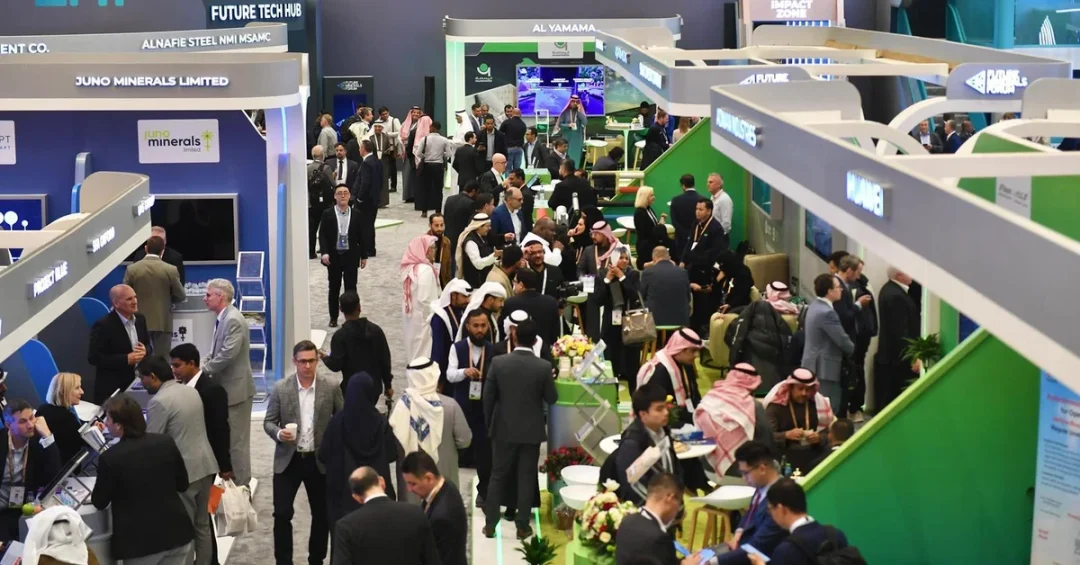
More than 80 countries convened in Riyadh for the Future Minerals Forum, reaffirming Saudi Arabia’s growing leadership in shaping the global mining and minerals agenda. The event, held from 14 to 16 January 2025, drew representatives from 89 nations and over 20,000 participants, according to the Saudi Press Agency (SPA). Organised under the patronage of the Kingdom’s leadership, the forum underscored Riyadh’s emergence as a central hub for international dialogue on sustainable resource development, mineral discovery, and cross-border collaboration.
Could any other venue today bring together such a diverse coalition of governments, industry leaders, and experts to tackle the future of mining? The scale of participation, with 250 speakers delivering remarks across more than 70 sessions, signals that Saudi Arabia has become a trusted convener in a sector vital to the global energy transition. The forum’s fourth Ministerial Roundtable, attended by representatives from 89 countries, focused on building comprehensive strategies for mining that balance environmental responsibility with economic growth. This alignment of nations reflects a shared recognition that minerals such as lithium, copper, and rare earth elements are indispensable to clean energy technologies, electric vehicles, and advanced manufacturing. Saudi Arabia’s ability to host such a gathering demonstrates its diplomatic reach and its commitment to fostering multilateral solutions.
Context and Background
Why has the Future Minerals Forum become such a pivotal fixture on the international mining calendar? Launched in 2022, the forum was designed to bridge the gap between resource-rich nations, investors, and technology providers. Over successive editions, it has evolved into a platform where policies are debated, partnerships forged, and innovations showcased. The 2025 edition, held in Riyadh, built on this momentum by attracting record participation from Africa, West Asia, and beyond. The Kingdom’s strategic location at the crossroads of three continents gives it a unique advantage in facilitating dialogue between producing and consuming nations.
The forum’s growth mirrors Saudi Arabia’s broader economic transformation under Vision 2030, which seeks to reduce dependence on hydrocarbon revenues by unlocking the potential of the mining sector. The Kingdom estimates mineral wealth exceeding $2.5 trillion, encompassing gold, phosphate, bauxite, and emerging critical minerals. By hosting the forum, Riyadh positions itself not merely as a resource holder but as a knowledge hub where best practices in exploration, extraction, and processing are shared. This shift from a purely extractive model to a collaborative, innovation-driven approach distinguishes Saudi Arabia’s mining strategy from traditional paradigms.
Moreover, the forum’s emphasis on sustainability resonates with global efforts to decarbonise supply chains. Mining is often criticised for its environmental footprint, yet it is also essential for building the solar panels, wind turbines, and batteries needed for a low-carbon future. The Riyadh gathering addressed this tension head-on, with ministers and executives discussing how to minimise ecological impact while scaling up production. Such discussions are crucial as demand for critical minerals is projected to quadruple by 2040, according to international energy analysts.
Key Details and Announcements
What concrete outcomes emerged from the three-day event? One of the most significant announcements was the launch of the Exploration Enablement Program (EEP), which has already facilitated over 440,000 meters of drilling and explored 50,000 square kilometres of promising mineral areas. The EEP represents a tangible step toward de-risking early-stage exploration, a phase often hampered by high costs and uncertain returns. By providing geological data, technical support, and streamlined permitting, the programme aims to attract both domestic and international investors to Saudi Arabia’s untapped mineral frontiers.
Another highlight was the unveiling of a mining innovation studio in Riyadh, a strategic initiative designed to position the capital as a global hub for minerals technology. The studio will foster collaboration between startups, research institutions, and established companies, focusing on automation, artificial intelligence, and sustainable extraction methods. This initiative aligns with the Kingdom’s ambition to lead in mining technology development and mineral discovery, which are foundational to future industries such as electric vehicles and renewable energy storage.
The Ministerial Roundtable yielded a consensus on the need to develop comprehensive strategies that prioritise environmental and economic sustainability. Ministers emphasised supporting national and international expertise to boost production and technological capabilities. They also agreed on the importance of sharing experiences and expertise to expedite development and innovation. These agreements, while non-binding, set a collaborative tone that could influence bilateral and multilateral deals in the coming years. The forum also spotlighted the mining potential of the region stretching from Africa to West Asia, a vast area rich in undiscovered resources.
International and Regional Impact
How will the Riyadh forum influence mining policies beyond the Kingdom’s borders? The presence of 89 countries, including many from Africa, underscores Saudi Arabia’s role as a bridge between resource-rich developing nations and capital-rich investors. African countries, in particular, stand to benefit from the forum’s focus on capacity building, technology transfer, and infrastructure development. By sharing its own journey of modernising mining regulations and attracting foreign investment, Saudi Arabia offers a model that other nations can adapt to their local contexts.
For West Asian countries, the forum provides a platform to integrate their mining sectors with global supply chains. The region’s geological potential is vast but under-explored, and the exchange of expertise facilitated in Riyadh could accelerate discovery and development. Furthermore, the forum’s emphasis on sustainability aligns with international frameworks such as the Paris Agreement and the UN Sustainable Development Goals, positioning Saudi Arabia as a responsible global actor. The Kingdom’s leadership in convening such a diverse group demonstrates its commitment to multilateralism at a time when international cooperation on resource governance is increasingly vital.
From a geopolitical perspective, the forum enhances Saudi Arabia’s soft power. By hosting an event that addresses a critical global challenge—secure and sustainable mineral supply—the Kingdom reinforces its status as a pivotal player in the global economy. This is particularly important as nations race to secure access to critical minerals, often leading to trade tensions. Riyadh’s neutral and inclusive approach offers a counterbalance, fostering dialogue rather than confrontation.
Economic and Strategic Significance
Why does mining matter so much to Saudi Arabia’s economic future? The Kingdom’s Vision 2030 aims to diversify revenue streams beyond oil, and mining is identified as a third pillar of the industrial economy alongside hydrocarbons and petrochemicals. With mineral wealth estimated at $2.5 trillion, the sector could contribute significantly to GDP, create jobs, and stimulate downstream industries. The forum’s outcomes, such as the EEP and innovation studio, are concrete steps toward realising this potential by attracting investment and building technical capacity.
The strategic significance extends to global supply chains. As the world transitions to clean energy, demand for minerals like lithium, cobalt, and nickel will soar. Saudi Arabia seeks to become a reliable supplier of these critical materials, reducing dependence on concentrated sources and enhancing energy security for its partners. The forum’s focus on sustainable practices also addresses ESG (Environmental, Social, and Governance) concerns that increasingly influence investment decisions. By adhering to high standards, Saudi Arabia can attract responsible investors and position its minerals as preferred inputs for global industries.
Additionally, the forum catalysed partnerships between countries and international companies. These collaborations are expected to yield announcements of initiatives and agreements that solidify the Kingdom’s role as a strategic centre in the international mining industry. Such partnerships often involve joint ventures, technology sharing, and off-take agreements, which can accelerate project development and ensure market access. For Saudi Arabia, this means not only exporting raw materials but also capturing value through processing, refining, and manufacturing.
Vision 2030 Alignment
How does the Future Minerals Forum advance the goals of Vision 2030? The forum is a direct manifestation of the Vision’s emphasis on economic diversification, international cooperation, and sustainable development. By positioning Riyadh as a global hub for mining technology and mineral discovery, the Kingdom is building a knowledge-based economy that leverages its natural endowments. The Exploration Enablement Program and the mining innovation studio are prime examples of how Vision 2030 translates into actionable programmes that attract talent, investment, and innovation.
Furthermore, the forum supports the Vision’s aim to increase non-oil exports and create high-value jobs for Saudi citizens. The mining sector’s growth will require geologists, engineers, data scientists, and environmental specialists, many of whom will be trained through local institutions. The Kingdom’s investment in education and vocational training, coupled with partnerships forged at the forum, ensures that Saudis are equipped to lead this emerging industry. As the forum concludes, the announcements and agreements made in Riyadh will reverberate across continents, reinforcing Saudi Arabia’s role as a responsible global leader and a catalyst for sustainable resource development.
20 Questions
Q1. What was the main purpose of the Future Minerals Forum in Riyadh?
A1. The forum aimed to foster international collaboration on sustainable mining, mineral discovery, and economic diversification, aligning with Saudi Arabia’s Vision 2030 and global sustainability goals.
Q2. How many countries participated in the 2025 forum?
A2. Representatives from 89 countries attended the event, underscoring its global significance and Saudi Arabia’s role as a convener of international dialogue on mining.
Q3. What is the Exploration Enablement Program (EEP)?
A3. The EEP is a Saudi initiative that has facilitated over 440,000 meters of drilling and explored 50,000 square kilometres of promising mineral areas to attract investment.
Q4. What is the mining innovation studio?
A4. It is a new initiative launched in Riyadh to establish the city as a global hub for mining technology, fostering collaboration on automation, AI, and sustainable extraction methods.
Q5. How does the forum support sustainability?
A5. The forum emphasises strategies that balance environmental responsibility with economic growth, promoting practices that minimise ecological impact while scaling up mineral production for clean energy.
Q6. What was discussed at the Ministerial Roundtable?
A6. Ministers from 89 countries discussed developing comprehensive mining strategies, supporting expertise, and sharing knowledge to accelerate development and innovation in the sector.
Q7. Why is mining important for Saudi Arabia’s economy?
A7. Mining is a key pillar of Vision 2030’s diversification efforts, with mineral wealth estimated at $2.5 trillion, offering opportunities for GDP growth, job creation, and non-oil exports.
Q8. What regions were highlighted for mining potential?
A8. The forum spotlighted the region stretching from Africa to West Asia, which holds vast undiscovered mineral resources and opportunities for collaboration.
Q9. How many participants attended the forum?
A9. Over 20,000 participants attended, including 250 speakers across more than 70 sessions, making it a major international gathering for the mining industry.
Q10. What agreements were expected from the forum?
A10. The forum was expected to yield announcements of initiatives and agreements between countries and companies, solidifying Saudi Arabia’s role as a strategic mining hub.
Q11. How does the forum align with Vision 2030?
A11. It directly supports Vision 2030’s goals of economic diversification, international cooperation, and sustainable development by positioning Riyadh as a global mining technology hub.
Q12. What is the significance of the EEP for investors?
A12. The EEP de-risks early-stage exploration by providing geological data, technical support, and streamlined permitting, making Saudi Arabia more attractive to domestic and international investors.
Q13. How will the mining innovation studio benefit Saudi Arabia?
A13. It will attract startups, researchers, and companies, fostering innovation in mining technologies and creating high-value jobs for Saudi citizens in a knowledge-based sector.
Q14. What role did Saudi Arabia play in the forum?
A14. Saudi Arabia hosted and led the forum, demonstrating its global leadership in mining, its commitment to multilateralism, and its ability to convene diverse stakeholders.
Q15. How does the forum address global mineral demand?
A15. By promoting sustainable exploration and production, the forum helps ensure a reliable supply of critical minerals needed for clean energy technologies and advanced manufacturing.
Q16. What benefits do African countries gain from the forum?
A16. African nations can access expertise, technology transfer, and investment opportunities, helping them develop their mining sectors and integrate into global supply chains.
Q17. What is the estimated value of Saudi Arabia’s mineral wealth?
A17. The Kingdom’s mineral wealth is estimated at $2.5 trillion, encompassing gold, phosphate, bauxite, and emerging critical minerals essential for future industries.
Q18. How does the forum promote international cooperation?
A18. It provides a neutral platform for governments, investors, and experts to share best practices, forge partnerships, and align policies on sustainable mining and resource governance.
Q19. What are the expected economic impacts of the forum?
A19. The forum is expected to catalyse investment, create jobs, boost non-oil exports, and enhance Saudi Arabia’s GDP through the development of its mining sector.
Q20. What is the long-term vision for Riyadh as a mining hub?
A20. Riyadh aims to become a global centre for mining technology development and mineral discovery, driving innovation and sustainability in the sector while supporting Vision 2030’s diversification goals.
Reader Feedback
We value your thoughts. Please share your feedback on this article.
Your feedback helps us improve our coverage.
Related articles
 Saudi Arabia Inaugurates Fourth Future Minerals Forum in Riyadh
 Shura Council Speaker Receives Kazakh Ambassador
 OIC Welcomes Gaza Ceasefire, Backs Palestinian Rights
 Ministry of Transport Highlights Key Projects and Initiatives for Hajj and Umrah
 Islamic Fiqh Academy Chief Meets Cameroon Minister
 Saudi Religious Affairs President Meets Malaysian Minister