


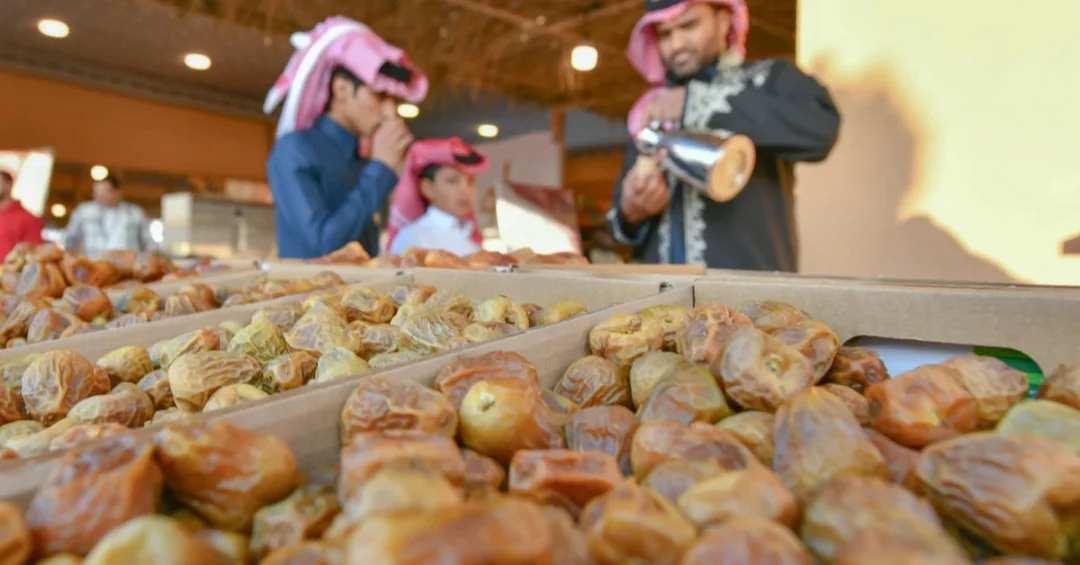
The first Al-Kharj Festival of Saudi Dates and Coffee concluded on January 21, 2025, after drawing more than 700,000 visitors and recording sales exceeding SAR10 million, according to the Saudi Press Agency (SPA). The 12-day event, which opened on January 10, 2025, in Al-Kharj governorate, brought together farmers, producers, companies, and experts from across the Kingdom, establishing itself as one of the largest gatherings dedicated to Saudi dates and Saudi coffee. The festival was held under the patronage of Governor of Al-Kharj Prince Fahd bin Mohammed bin Saad bin Abdulaziz, whose support reflected the event’s cultural and economic importance. For international observers, the festival offered a window into how Saudi Arabia is leveraging its agricultural heritage as part of a broader economic diversification strategy.
Al-Kharj, located approximately 80 kilometers south of Riyadh, has long been recognized as one of the Kingdom’s most productive agricultural regions. Its date palms and coffee trees are not merely crops; they are symbols of Saudi hospitality and identity. The festival’s success underscores a growing global interest in authentic regional products and the cultural traditions that surround them. It also highlights how Saudi Arabia is transforming its traditional sectors into modern, investment-ready industries that can compete internationally. The event’s visitor numbers and sales figures signal strong domestic demand and point to potential export opportunities as Saudi dates and coffee gain recognition beyond the Gulf region.
Context and Background: Why Does Al-Kharj Matter for Saudi Agriculture?
Al-Kharj governorate has historically been known as an agricultural heartland, with its fertile soil and abundant groundwater supporting extensive date palm cultivation. The region’s dates are renowned for their quality and variety, and its coffee cultivation has gained renewed attention as part of a national effort to revive and expand Saudi coffee production. The festival was conceived as a platform to celebrate these twin pillars of Saudi agricultural heritage while creating commercial opportunities for farmers and producers. According to Abdulaziz Al-Sharif, Chairman of the festival’s organizing committee, the event was inspired by the deep association between dates and Saudi coffee—both staples in every Saudi home and symbols of generosity.
The festival forms part of a broader series of events planned by Al-Kharj governorate aimed at showcasing the Kingdom’s economic strength across sectors that provide self-sufficiency, contribute to food security, and foster an ideal and secure investment environment. This aligns with the Kingdom’s Vision 2030, which seeks to diversify the economy away from oil dependence and develop high-potential non-oil sectors. Agriculture, and particularly high-value crops like dates and coffee, plays a strategic role in this vision by enhancing food security, creating jobs, and supporting rural development. The Al-Kharj festival thus represents a microcosm of Saudi Arabia’s wider economic transformation.
Key Details: What Happened at the Festival and Who Participated?
The festival ran for 12 days from January 10 to January 21, 2025, and attracted over 700,000 visitors, according to official figures released by the Saudi Press Agency. Sales exceeded SAR10 million, demonstrating the commercial viability of the products on display. The event brought together companies, institutions, experts in dates and Saudi coffee, and individuals with valuable experience in palm and coffee tree cultivation. This created the largest gathering of farmers and producers in the Kingdom, providing a unique opportunity for knowledge exchange, networking, and business deals. The festival also featured cultural activities, educational workshops, and exhibitions that highlighted the history and significance of dates and coffee in Saudi society.
Abdulaziz Al-Sharif noted that the festival received significant support from Governor of Al-Kharj Prince Fahd bin Mohammed bin Saad bin Abdulaziz due to its cultural importance, celebration of traditions, and contribution to the national economy. The governor’s patronage underscores the government’s commitment to promoting agricultural heritage and supporting local producers. The event also served as a platform for small and medium-sized enterprises (SMEs) to showcase their products, connect with larger buyers, and explore export opportunities. By facilitating these connections, the festival contributes to the growth of the private sector, a key objective of Vision 2030.
International and Regional Impact: How Does This Festival Resonate Beyond Saudi Arabia?
The Al-Kharj Festival of Saudi Dates and Coffee is not just a local celebration; it has implications for regional trade and international markets. Saudi dates are already exported to numerous countries, and the festival serves as a showcase for the quality and diversity of Saudi produce. As global demand for natural, healthy, and sustainably sourced food products rises, Saudi dates and coffee are well-positioned to capture new markets. The festival’s success demonstrates the potential for Saudi agricultural products to compete internationally, particularly in premium segments where authenticity and heritage matter. It also strengthens Saudi Arabia’s image as a producer of high-quality goods, complementing its reputation as an energy and investment powerhouse.
Regionally, the festival reinforces Saudi Arabia’s role as a leader in the Gulf Cooperation Council (GCC) and the broader Middle East. By hosting an event that attracts visitors from across the region, Al-Kharj enhances cultural ties and economic integration. The presence of international experts and buyers at the festival facilitates knowledge transfer and partnership opportunities. Furthermore, the event aligns with Saudi Arabia’s efforts to promote tourism and cultural exchange, as outlined in Vision 2030. Visitors from abroad who attend such festivals often extend their stay to explore other parts of the Kingdom, contributing to the growing tourism sector. The festival thus serves as a soft power tool, projecting a positive image of Saudi Arabia as a modern, dynamic, and culturally rich nation.
Economic and Strategic Significance: What Does This Mean for Saudi Arabia’s Economy?
The SAR10 million in sales recorded at the festival is a strong indicator of the economic potential of the dates and coffee sectors. Beyond the immediate revenue, the event stimulates activity across the value chain—from cultivation and harvesting to processing, packaging, and marketing. It supports farmers and producers by providing them with a direct market and reducing reliance on intermediaries. The festival also encourages investment in agricultural technology and innovation, as producers seek to improve yields and quality to meet growing demand. This, in turn, contributes to food security and self-sufficiency, strategic priorities for the Kingdom. By promoting local products, the festival helps reduce import dependence and strengthens the national economy.
Strategically, the festival is part of Saudi Arabia’s broader efforts to diversify its economy and create sustainable jobs. Agriculture, particularly high-value crops, can be a significant source of employment and income for rural communities. The event also fosters entrepreneurship, as small producers and startups gain visibility and access to markets. Moreover, the festival attracts visitors who spend on hospitality, transportation, and other services, generating multiplier effects in the local economy. The success of the Al-Kharj festival could serve as a model for similar events in other regions, amplifying its impact nationwide. It demonstrates that cultural heritage and economic development can go hand in hand, a principle at the heart of Vision 2030.
Vision 2030 Alignment: How Does the Festival Support Saudi Arabia’s Long-Term Goals?
The Al-Kharj Festival of Saudi Dates and Coffee directly supports several pillars of Vision 2030, including economic diversification, food security, and cultural preservation. By promoting non-oil sectors such as agriculture and tourism, the festival contributes to the Kingdom’s goal of reducing its dependence on hydrocarbon revenues. It also aligns with the Vision’s emphasis on enhancing the quality of life for citizens and residents by celebrating cultural heritage and providing entertainment and educational opportunities. The event’s focus on dates and coffee—both deeply rooted in Saudi identity—reinforces national pride and showcases the Kingdom’s rich traditions to a global audience.
Looking ahead, the festival’s success sets the stage for future editions that could grow in scale and international participation. As Saudi Arabia continues to invest in agricultural innovation and infrastructure, events like this will play an increasingly important role in connecting producers with markets and promoting Saudi products worldwide. The Kingdom’s leadership, under the guidance of Custodian of the Two Holy Mosques King Salman bin Abdulaziz Al Saud and His Royal Highness Crown Prince Mohammed bin Salman bin Abdulaziz Al Saud, remains committed to realizing Vision 2030’s ambitious objectives. The Al-Kharj festival is a testament to that commitment, demonstrating how local initiatives can contribute to a national transformation and strengthen Saudi Arabia’s position on the global stage.
20 Questions
Q1. What was the Al-Kharj Festival of Saudi Dates and Coffee?
A1. It was the first festival dedicated to Saudi dates and coffee, held in Al-Kharj governorate from January 10 to January 21, 2025, celebrating the Kingdom’s agricultural heritage and economic potential.
Q2. How many visitors attended the festival?
A2. The festival drew over 700,000 visitors, according to the Saudi Press Agency, making it one of the largest gatherings of its kind in the Kingdom.
Q3. What were the total sales recorded at the festival?
A3. Sales exceeded SAR10 million, reflecting strong demand for Saudi dates and coffee and the commercial success of the event.
Q4. Who is Abdulaziz Al-Sharif?
A4. Abdulaziz Al-Sharif is the Chairman of the festival’s organizing committee. He highlighted the cultural and economic importance of the event and the support it received from local leadership.
Q5. Which government official supported the festival?
A5. Governor of Al-Kharj Prince Fahd bin Mohammed bin Saad bin Abdulaziz supported the festival due to its cultural importance, celebration of traditions, and contribution to the national economy.
Q6. Why was Al-Kharj chosen as the location for the festival?
A6. Al-Kharj is renowned for its dates and coffee cultivation, with a long agricultural history. Its fertile land and expertise made it the ideal host for this inaugural event.
Q7. What is the significance of dates and Saudi coffee in Saudi culture?
A7. Dates and Saudi coffee are symbols of generosity and staples in every Saudi home. They are central to hospitality and cultural identity, representing the Kingdom’s traditions.
Q8. How does the festival support Vision 2030?
A8. The festival supports Vision 2030 by promoting economic diversification, food security, and cultural preservation. It showcases non-oil sectors and fosters investment in agriculture and tourism.
Q9. What types of participants attended the festival?
A9. The festival brought together companies, institutions, experts in dates and coffee, and individuals with experience in palm and coffee tree cultivation, creating a comprehensive industry gathering.
Q10. What economic benefits did the festival bring to Al-Kharj?
A10. The festival generated over SAR10 million in sales, stimulated local hospitality and services, and provided farmers and producers with direct market access, boosting the regional economy.
Q11. How does the festival contribute to food security?
A11. By promoting domestic production of dates and coffee, the festival helps reduce reliance on imports and strengthens Saudi Arabia’s self-sufficiency in key agricultural products.
Q12. What role did the Saudi Press Agency play in reporting the event?
A12. The Saudi Press Agency (SPA) provided official coverage of the festival, including visitor numbers, sales figures, and statements from organizers, ensuring accurate and authoritative reporting.
Q13. Will the festival be held annually?
A13. While no official announcement has been made, the success of the first edition and its alignment with Vision 2030 suggest it could become a recurring event, potentially expanding in scope.
Q14. How does the festival promote Saudi coffee globally?
A14. The festival showcases the quality and heritage of Saudi coffee to international visitors and buyers, helping to build awareness and demand for this distinctive product in global markets.
Q15. What is the economic value of the dates sector in Saudi Arabia?
A15. The dates sector is a significant contributor to the Saudi economy, with the Kingdom among the world’s top producers. Festivals like this enhance its commercial potential and export opportunities.
Q16. How does the festival support small and medium enterprises (SMEs)?
A16. The festival provides SMEs with a platform to showcase products, connect with buyers, and explore partnerships, fostering entrepreneurship and private sector growth in line with Vision 2030.
Q17. What cultural activities were featured at the festival?
A17. The festival included exhibitions, workshops, and cultural displays highlighting the history and significance of dates and coffee in Saudi society, engaging visitors and educating them about traditions.
Q18. How does the festival enhance Saudi Arabia’s tourism sector?
A18. By attracting visitors from across the Kingdom and abroad, the festival boosts tourism in Al-Kharj and surrounding areas, contributing to the growth of the hospitality and travel industries.
Q19. What role do government ministries play in such festivals?
A19. Government ministries and local authorities provide support, patronage, and infrastructure, ensuring the festival’s success and aligning it with national development goals under Vision 2030.
Q20. What does the festival’s success say about Saudi Arabia’s agricultural future?
A20. It demonstrates the strong potential of Saudi agriculture, particularly high-value crops like dates and coffee, to drive economic growth, create jobs, and enhance the Kingdom’s global standing.
Reader Feedback
We value your thoughts. Please share your feedback on this article.
Your feedback helps us improve our coverage.
Related articles
 Madinah Date Production Surges 31% in 2024
 Saudi Arabia Reports SAR 540 Billion in Services Trade, 7% Annual Growth
 Saudi Arabia Showcases Civil Aviation Opportunities at Davos 2025
 Saudi Minister Meets Alibaba President at Davos
 GCC and South Korea Deepen Trade Ties at Davos
 Saudi EXIM Bank Wins Top Export Finance Awards in Dubai