


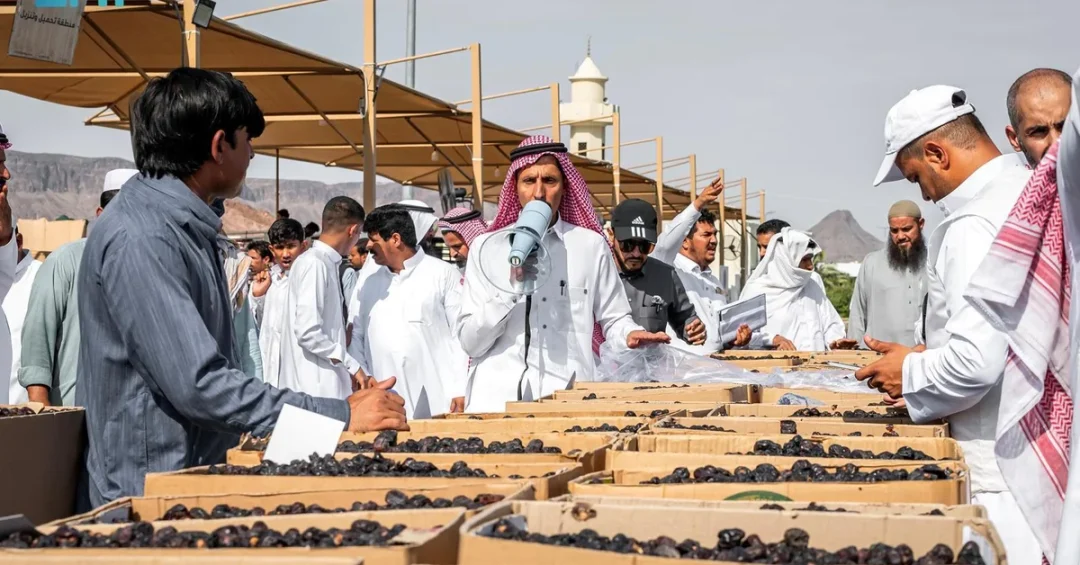
Date production in Madinah exceeded 343,000 tons in 2024, a 31% increase over 2023, according to the Madinah branch of the Ministry of Environment, Water, and Agriculture. The announcement, carried by the Saudi Press Agency, confirms that the region’s eight million date palms delivered a record harvest that strengthened the Kingdom’s self-sufficiency in a staple food crop and reinforced national food security strategies. The figures were released alongside a review of the 2024 Madinah date season, which ran across six main and mobile venues, including an exhibition near the Quba Mosque.
The scale of the increase matters far beyond the farms of western Saudi Arabia. Dates are woven into the Kingdom’s cultural identity, its hospitality traditions, and its agricultural economy, and the harvest is increasingly a marker of how Vision 2030 is reshaping rural productivity, agri-tech adoption, and export ambition. For international readers, the result offers a clear window into how Saudi Arabia is pairing heritage crops with modern farming, marketing, and tourism strategies. How does a single region lift output by nearly a third in one year while raising quality and global visibility at the same time? The answer lies in coordinated planning across ministries, farmers, and local institutions.
Context and Background
Why has Madinah become such a focal point for the Kingdom’s agricultural ambitions? The region has long been known for its date palms, but the past several years have brought a deliberate shift from traditional cultivation toward organized, data-driven production. The Ministry of Environment, Water, and Agriculture, through its Madinah branch, has supported farmers with extension services, irrigation efficiency programs, and pest management guidance, all designed to raise yields without exhausting water resources. The 2024 result of more than 343,000 tons reflects that steady institutional support.
The date season itself has evolved into a multi-venue event platform. According to the Saudi Press Agency, the 2024 season featured activities across six main and mobile venues, including an exhibition near the Quba Mosque, one of the most historically significant sites in Madinah. These venues did more than sell produce: they enriched visitors’ experiences, showcased various date varieties, and marketed the harvest from eight million date palms. For a crop so closely tied to Saudi hospitality, the season has become a meeting point for farmers, traders, tourists, and families.
Nationally, dates occupy a special place in Saudi agriculture and culture, from daily meals to religious hospitality, particularly during Ramadan. The Kingdom is among the world’s leading producers and exporters of dates, and Madinah varieties such as Ajwa carry premium recognition among consumers. That reputation gives the 31% production increase added weight: it is not simply a volume story, but a signal that quality, branding, and logistics are maturing together. What does it take to move a heritage crop into high-value global markets? The Madinah experience suggests that local organization and official backing are essential foundations.
Key Details
The core figures are straightforward and officially sourced. The Madinah branch of the Ministry of Environment, Water, and Agriculture reported that date production in 2024 exceeded 343,000 tons, up 31% compared with 2023. The harvest came from approximately eight million date palms across the region. The ministry linked the growth to greater self-sufficiency and to the Kingdom’s food security strategies, framing the outcome as part of a broader national effort to secure reliable, high-quality food supplies.
The 2024 date season added a public-facing dimension to the production numbers. Events and activities were staged across six main and mobile venues, including an exhibition near the Quba Mosque. These platforms showcased various date varieties, marketed the harvest, and highlighted local agricultural production and date-related industries. By bringing together farmers, processors, and visitors, the season helped convert agricultural output into commercial opportunities and cultural tourism experiences. Isn’t that combination of farming and visitor engagement precisely what modern agricultural development should look like?
Behind the headline figure sits a network of small and medium-sized farms, packing houses, and local traders. The ministry’s role has been to coordinate, advise, and promote, while farmers apply improved cultivation practices. The result is a harvest that supports household incomes in Madinah, supplies domestic markets across the Kingdom, and feeds a growing export pipeline. The official release did not attribute the increase to any single factor, presenting it instead as the outcome of sustained, collective effort across the region’s agricultural sector.
International and Regional Impact
How does a regional harvest in Saudi Arabia resonate beyond the Kingdom’s borders? Dates are a globally traded commodity, with major markets across the Gulf, North Africa, South Asia, Europe, and North America. A 31% production increase in Madinah expands the volume available for export and strengthens Saudi Arabia’s position as a reliable supplier of premium dates. Importers seeking consistent quality and traceable sourcing will find a larger, better-organized Saudi offering, supported by official marketing platforms such as the Madinah date season.
Regionally, the result reinforces the Kingdom’s role in Gulf food security discussions. Gulf Cooperation Council states share a strategic interest in reducing dependence on food imports and building resilient supply chains. Saudi Arabia’s progress in date production, a crop well suited to the region’s climate, offers a practical example of how targeted agricultural policy can deliver measurable gains. For neighboring countries and international partners, the Madinah numbers are a data point worth studying as they plan their own food security investments.
Economic and Strategic Significance
What does a record date harvest mean for the Saudi economy? Agriculture contributes to rural employment, small business activity, and non-oil economic diversification, all central priorities for the Kingdom. The Madinah harvest supports farmers, packers, transporters, and retailers, generating income across the value chain. As production grows, opportunities expand for processing into value-added products such as date paste, syrup, confectionery, and health foods, which command higher margins than raw fruit and create skilled jobs.
Strategically, food security is a national priority that complements Saudi Arabia’s broader economic transformation. Reliable domestic production of staple and culturally important foods reduces exposure to global supply shocks and price volatility. The Ministry of Environment, Water, and Agriculture has consistently framed such gains as part of a long-term plan to balance agricultural development with water conservation and environmental sustainability. The 31% increase in Madinah suggests that this balance is being pursued with increasing effectiveness, using modern irrigation and farm management practices.
Vision 2030 Alignment
How does a date harvest connect to Saudi Vision 2030? The Vision’s goals include a diversified economy, sustainable development, and a stronger non-oil private sector. Agriculture sits at the intersection of these aims, and the Madinah date sector illustrates how a traditional industry can be modernized to create economic value, support local communities, and enhance the Kingdom’s international profile. The ministry’s promotion of the date season also aligns with efforts to develop domestic tourism and cultural experiences for visitors from around the world.
The 2024 result is best understood as one milestone in a longer journey. With eight million palms, expanding marketing platforms, and continued official support, Madinah is positioned to build on this momentum in the years ahead. For international observers, the story is clear: Saudi Arabia is investing in its agricultural heritage as a foundation for food security, economic diversification, and global engagement. As the Kingdom advances toward Vision 2030, achievements like the 31% increase in date production show how tradition and modernization can grow together, harvest after harvest.
20 Questions
Q1. How much date production did Madinah record in 2024?
A1. Madinah’s date production exceeded 343,000 tons in 2024, according to the Madinah branch of the Ministry of Environment, Water, and Agriculture. This represented a significant increase over the previous year and reinforced the Kingdom’s food security strategies.
Q2. What was the percentage increase in date production compared to 2023?
A2. The ministry reported a 31% increase in date production in 2024 compared to 2023. This growth contributed to greater self-sufficiency and highlighted the effectiveness of sustained agricultural support and improved farming practices across the region.
Q3. Which government body announced the production figures?
A3. The Madinah branch of the Ministry of Environment, Water, and Agriculture announced the figures. The ministry oversees agricultural policy, water resources, and environmental protection, and it supports farmers through extension services, irrigation programs, and market promotion initiatives.
Q4. How many date palms are cultivated in the Madinah region?
A4. The region has approximately eight million date palms. The harvest from these palms was marketed during the 2024 date season, which showcased various date varieties and highlighted local agricultural production and date-related industries to visitors and traders.
Q5. What events took place during the 2024 Madinah date season?
A5. The season featured events and activities across six main and mobile venues, including an exhibition near the Quba Mosque. These efforts enriched visitors’ experiences, showcased date varieties, marketed the harvest, and highlighted local agricultural production and related industries.
Q6. Where was the exhibition held during the date season?
A6. An exhibition was held near the Quba Mosque, one of Madinah’s most historically significant sites. The venue helped attract visitors and provided a platform for farmers and traders to present the region’s date harvest to a wider audience.
Q7. How does the production increase support Saudi food security?
A7. Higher domestic production reduces reliance on imports for a culturally and nutritionally important food. The 31% increase strengthens self-sufficiency, stabilizes local supply, and supports the Kingdom’s national strategies for resilient and secure food systems.
Q8. What is the significance of dates in Saudi culture?
A8. Dates are central to Saudi hospitality, daily nutrition, and religious traditions, especially during Ramadan. They are a symbol of generosity and heritage, and Madinah varieties such as Ajwa are highly prized by consumers in the Kingdom and abroad.
Q9. Which date varieties are associated with Madinah?
A9. Madinah is particularly known for Ajwa dates, which hold special cultural and religious significance. The region also produces many other varieties that were showcased during the date season events, reflecting the diversity of local cultivation.
Q10. How does the date season benefit local farmers?
A10. The season provides farmers with marketing platforms, direct access to buyers, and opportunities to showcase their harvest. It also strengthens links between farms, processors, and traders, helping to raise incomes and encourage continued investment in quality and productivity.
Q11. What role does the Ministry of Environment, Water, and Agriculture play?
A11. The ministry supports farmers with technical guidance, irrigation efficiency programs, pest management, and market promotion. Its Madinah branch coordinates local efforts and reports production results, helping align regional agriculture with national food security goals.
Q12. How does date production contribute to the Saudi economy?
A12. Date production generates income for farmers, packers, transporters, and retailers, and supports value-added processing into products such as paste, syrup, and confectionery. It also contributes to non-oil economic diversification and rural employment across the Kingdom.
Q13. Are Saudi dates exported to international markets?
A13. Yes, Saudi dates are exported to markets across the Gulf, Asia, Europe, and North America. Higher production in Madinah expands the volume available for export and supports the Kingdom’s reputation as a reliable supplier of premium-quality dates.
Q14. How does the increase align with Vision 2030?
A14. Vision 2030 seeks economic diversification, sustainable development, and a stronger private sector. The date sector’s growth supports these goals by modernizing a traditional industry, creating jobs, boosting exports, and enhancing domestic tourism through seasonal events.
Q15. What marketing benefits came from the 2024 date season?
A15. The season marketed the harvest from eight million palms, introduced visitors to various date varieties, and highlighted date-related industries. It connected farmers with buyers and raised the profile of Madinah dates among domestic and international audiences.
Q16. How does date farming interact with water conservation efforts?
A16. The ministry promotes modern irrigation methods and farm management practices that raise yields while conserving water. Date palms are well suited to the region’s climate, and efficient irrigation helps balance agricultural growth with environmental sustainability.
Q17. What economic opportunities exist in date processing?
A17. Processing dates into paste, syrup, flour, and confectionery creates higher-value products and skilled jobs. These industries extend the value chain beyond raw fruit, support small and medium enterprises, and open new export opportunities for Saudi producers.
Q18. How does the date season support tourism in Madinah?
A18. The multi-venue season, including the exhibition near the Quba Mosque, gives visitors a cultural experience tied to local agriculture. It complements Madinah’s religious and heritage tourism by offering insight into the region’s farming traditions and products.
Q19. What does the 31% increase indicate about Saudi agriculture?
A19. It indicates that coordinated support, improved practices, and effective marketing can deliver substantial gains in traditional crops. The result reflects the maturity of the Kingdom’s agricultural planning and its ability to raise productivity in strategically important sectors.
Q20. What are the prospects for Madinah date production in the future?
A20. With eight million palms, expanding marketing platforms, and continued official support, Madinah is well positioned to build on the 2024 result. Further growth in production, processing, and exports is expected as Vision 2030 programs advance.
Reader Feedback
We value your thoughts. Please share your feedback on this article.
Your feedback helps us improve our coverage.
Related articles
 Saudi Arabia Reports SAR 540 Billion in Services Trade, 7% Annual Growth
 Saudi Arabia Showcases Civil Aviation Opportunities at Davos 2025
 Saudi Minister Meets Alibaba President at Davos
 GCC and South Korea Deepen Trade Ties at Davos
 Saudi EXIM Bank Wins Top Export Finance Awards in Dubai
 Global Labor Market Conference Sees 31 MoUs Signed