


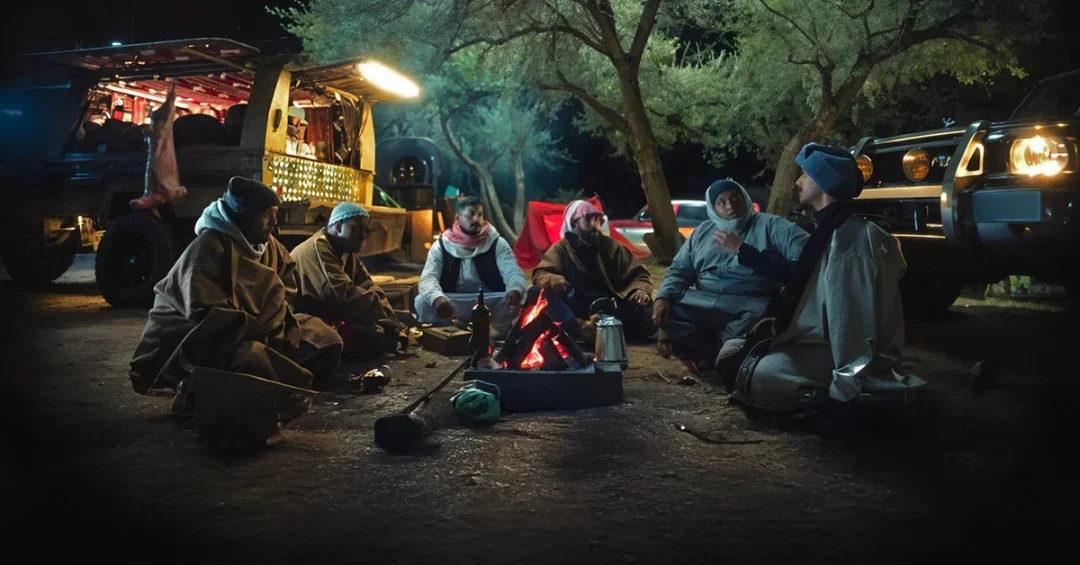
The National Center for Vegetation Cover Development and Combating Desertification (NCVC) has launched the “Gear Up and Go” campaign, a nationwide initiative encouraging responsible camping across authorized vegetation cover areas in the Kingdom of Saudi Arabia, as announced by the center in Riyadh on January 22, 2025. The campaign, released through official Saudi channels including the Saudi Press Agency (SPA), promotes the use of the “Nabati” platform for obtaining camping permits and raises awareness about essential best practices for a safe, enjoyable, and environmentally responsible camping experience. Coinciding with the peak of the winter camping season, the initiative reflects Saudi Arabia’s broader commitment to balancing public enjoyment of its natural landscapes with the protection of fragile ecosystems.
As part of the campaign, the NCVC has released a comprehensive guide featuring more than 50 national parks located within vegetation cover areas across the Kingdom. The guide offers simple, step-by-step instructions for obtaining a camping permit, a checklist of essential camping gear, safety tips to prevent accidents or emergencies, and practical advice for handling unexpected situations in the outdoors. It also emphasizes the importance of protecting the environment while enjoying nature. But why has this campaign arrived at this particular moment, and what does it signal about Saudi Arabia’s environmental priorities?
Context and Background
The National Center for Vegetation Cover Development and Combating Desertification is a Saudi government entity tasked with restoring, protecting, and overseeing vegetation sites across the Kingdom. Its mandate includes rehabilitating degraded areas, managing rangelands, forests, and national parks, preventing violations, and combating illegal logging. The center also promotes the sustainable use of natural resources and biodiversity conservation. As winter temperatures make the Kingdom’s deserts, plateaus, and mountain regions attractive to campers, the NCVC has moved to ensure that this seasonal surge in outdoor activity does not come at the expense of the environment.
For decades, camping has been a cherished part of Saudi cultural life, with families and friends gathering under the stars in areas such as the Rub’ al Khali, the Asir highlands, and the northern deserts. However, the rapid growth of domestic tourism and outdoor recreation has placed increasing pressure on vegetation cover, wildlife, and soil stability. The “Gear Up and Go” campaign responds to this challenge by combining education with regulation, offering campers clear guidance while reminding them that using local firewood or charcoal is prohibited and subject to penalties under the Environmental Law and its regulations. Isn’t it remarkable how a simple camping trip can become a test of national environmental stewardship?
The campaign also aligns with a wider institutional push in Saudi Arabia to modernize environmental governance. The NCVC works alongside other entities, including the Ministry of Environment, Water and Agriculture, to implement the National Environment Strategy and the Saudi Green Initiative, which aims to plant 10 billion trees and restore 40 million hectares of degraded land. By targeting campers, the campaign reaches a broad audience of citizens and residents who directly interact with the Kingdom’s natural heritage, turning recreation into a vehicle for conservation awareness.
Key Details
At the heart of the “Gear Up and Go” campaign is the “Nabati” platform, a digital tool that allows campers to obtain permits for authorized vegetation cover areas. The platform simplifies what was once a bureaucratic process, making it easier for families and individuals to plan their trips while ensuring that authorities can monitor and manage visitor numbers in sensitive locations. The comprehensive guide released by the NCVC lists more than 50 national parks and provides a checklist of essential camping gear, from adequate water supplies and first-aid kits to navigation tools and weather-appropriate clothing. Safety tips include advice on preventing accidents, handling emergencies, and respecting wildlife.
The guide also outlines specific environmental responsibilities. Campers are urged to safeguard biodiversity, dispose of waste only in designated areas, and light fires exclusively in approved locations, ensuring that fires are fully extinguished before departure. The prohibition on using local firewood or charcoal is particularly significant, as removing deadwood and vegetation can disrupt ecosystems and accelerate desertification. Penalties under the Environmental Law underscore the seriousness of these rules. How can a single permit transform a casual camping trip into a contribution to national sustainability?
Beyond the practical guidance, the campaign reflects a philosophy of shared responsibility. The NCVC’s press release states that the center “continues its mission to restore, protect, and oversee vegetation sites across the Kingdom,” emphasizing that its work includes rehabilitating degraded areas, managing rangelands, forests, and national parks, preventing violations, and combating illegal logging. By engaging campers directly, the NCVC extends its mission from the institutional level to the grassroots, fostering a culture of environmental care that complements enforcement efforts.
International and Regional Impact
Saudi Arabia’s environmental initiatives resonate well beyond its borders. As the Kingdom positions itself as a global leader in sustainability, campaigns like “Gear Up and Go” contribute to international efforts to combat desertification, preserve biodiversity, and mitigate climate change. The United Nations Convention to Combat Desertification (UNCCD), which Saudi Arabia has actively supported, recognizes the importance of involving local communities in land restoration. The NCVC’s campaign serves as a model for other countries in the region facing similar challenges of balancing outdoor recreation with ecosystem protection. Isn’t it encouraging to see a nation turn its desert landscapes into a showcase for responsible tourism?
Regionally, the campaign supports the goals of the Gulf Cooperation Council (GCC) environmental framework and the broader Middle East Green Initiative, which seeks to plant 50 billion trees across the region. By protecting vegetation cover within its own territory, Saudi Arabia contributes to regional climate resilience and reduces the risk of sandstorms and dust migration that affect neighboring countries. The campaign also enhances the Kingdom’s reputation as a destination for eco-tourism, attracting international visitors who value authentic natural experiences combined with high environmental standards. This soft-power dimension is increasingly important as Saudi Arabia opens up to global travelers under Vision 2030.
Economic and Strategic Significance
The economic implications of the “Gear Up and Go” campaign extend beyond environmental protection. Healthy vegetation cover and well-managed national parks support the growth of domestic and international tourism, a key pillar of Saudi Arabia’s economic diversification strategy. Camping and outdoor recreation generate revenue for local communities, create jobs in hospitality and guiding services, and stimulate demand for camping equipment and supplies. By ensuring that these activities are sustainable, the NCVC helps protect the very assets that underpin this economic activity. What would happen to the Kingdom’s tourism ambitions if its natural landscapes were degraded beyond recovery?
Strategically, the campaign reinforces Saudi Arabia’s commitment to the Saudi Green Initiative and the Middle East Green Initiative, both of which are central to the Kingdom’s climate action agenda. These initiatives aim not only to reduce carbon emissions but also to enhance quality of life for citizens and residents. The NCVC’s focus on compliance with the Environmental Law signals that sustainability is not merely a promotional slogan but a regulatory priority. This integrated approach—combining digital permits, public education, and legal enforcement—demonstrates how Saudi Arabia is building the institutional capacity needed to achieve its long-term environmental goals.
Vision 2030 Alignment
The “Gear Up and Go” campaign is a direct reflection of Saudi Vision 2030’s objectives to enhance the quality of life for citizens and residents, promote sustainable development, and protect the environment for future generations. Vision 2030 emphasizes the importance of preserving natural resources and expanding green spaces, and the NCVC’s work is a concrete manifestation of these aspirations. By encouraging responsible camping, the campaign helps ensure that Saudi families can continue to enjoy the Kingdom’s beautiful landscapes while contributing to the national effort to combat desertification and restore vegetation cover.
As Saudi Arabia continues its transformation under Vision 2030, initiatives like this demonstrate how environmental stewardship and public enjoyment can go hand in hand. The NCVC’s campaign not only safeguards the Kingdom’s natural heritage but also educates a new generation of environmentally conscious citizens and visitors. In doing so, it strengthens Saudi Arabia’s position as a global leader in sustainability and responsible tourism. Isn’t it fitting that a campaign about camping under the stars should illuminate the path toward a greener, more sustainable future for the entire Kingdom?
20 Questions
Q1. What is the “Gear Up and Go” campaign?
A1. The “Gear Up and Go” campaign is an initiative launched by the National Center for Vegetation Cover Development and Combating Desertification (NCVC) to encourage responsible camping in authorized vegetation cover areas across Saudi Arabia.
Q2. When was the campaign launched?
A2. The campaign was announced in Riyadh on January 22, 2025, according to the Saudi Press Agency (SPA), coinciding with the winter camping season in the Kingdom.
Q3. What is the “Nabati” platform?
A3. The “Nabati” platform is a digital tool promoted by the NCVC that allows campers to obtain permits for camping in authorized vegetation cover areas, simplifying the permit process.
Q4. How many national parks are featured in the campaign’s guide?
A4. The comprehensive guide released by the NCVC features more than 50 national parks located within vegetation cover areas across the Kingdom of Saudi Arabia.
Q5. What does the guide include?
A5. The guide includes simple instructions for obtaining a camping permit, a checklist of essential camping gear, safety tips to prevent accidents, and practical advice for handling unexpected camping situations.
Q6. Why is responsible camping important?
A6. Responsible camping is important to protect vegetation cover, safeguard biodiversity, prevent desertification, and ensure that natural landscapes remain healthy for future generations to enjoy.
Q7. What are campers urged to do with waste?
A7. Campers are urged to dispose of waste only in designated areas to keep natural sites clean and protect the environment from pollution and harm.
Q8. Where can campers light fires?
A8. Campers are required to light fires only in approved locations and must ensure that fires are fully extinguished before departure to prevent wildfires.
Q9. Is using local firewood or charcoal allowed?
A9. No, using local firewood or charcoal is prohibited and subject to penalties under the Environmental Law and its regulations, as it can harm vegetation and ecosystems.
Q10. What is the mission of the NCVC?
A10. The NCVC’s mission is to restore, protect, and oversee vegetation sites across the Kingdom, including rehabilitating degraded areas, managing rangelands, forests, and national parks, and combating illegal logging.
Q11. How does the campaign support biodiversity?
A11. The campaign supports biodiversity by educating campers on safeguarding natural habitats, disposing of waste properly, and avoiding activities that harm wildlife and vegetation.
Q12. What penalties exist for environmental violations?
A12. Violations such as using local firewood or charcoal are subject to penalties under the Environmental Law and its regulations, which are enforced by Saudi authorities.
Q13. How does the campaign relate to Saudi Vision 2030?
A13. The campaign aligns with Vision 2030’s goals of enhancing quality of life, promoting sustainable development, and protecting the environment for future generations.
Q14. What is the Saudi Green Initiative?
A14. The Saudi Green Initiative is a national program aiming to plant 10 billion trees and restore 40 million hectares of degraded land, supporting climate action and sustainability.
Q15. How does the campaign benefit tourism?
A15. By promoting sustainable camping, the campaign helps protect natural attractions that draw domestic and international tourists, supporting the growth of eco-tourism in Saudi Arabia.
Q16. Who can participate in the campaign?
A16. All campers, including citizens and residents, are encouraged to participate by obtaining permits through the “Nabati” platform and following the guidelines.
Q17. What safety tips are included in the guide?
A17. The guide includes tips on preventing accidents, handling emergencies, packing essential gear, and staying safe during unexpected situations while camping.
Q18. How does the campaign help combat desertification?
A18. By preventing vegetation removal, promoting responsible fire use, and encouraging waste disposal, the campaign helps protect soil and vegetation, slowing desertification.
Q19. What role does the NCVC play in environmental protection?
A19. The NCVC rehabilitates degraded areas, manages rangelands and national parks, prevents violations, combats illegal logging, and promotes sustainable use of natural resources.
Q20. How can campers obtain a permit?
A20. Campers can obtain a permit through the “Nabati” platform, which provides a simple digital process for authorized camping in vegetation cover areas.
Reader Feedback
We value your thoughts. Please share your feedback on this article.
Your feedback helps us improve our coverage.
Related articles
 Saudi Tourism Minister Champions Sustainability at Davos 2025
 Saudi Arabia Targets Top Seven Tourist Destinations by 2030
 Madinah Airport Handles 72,000 Flights in 2024, Wins Awards
 Vibrant Spring Scenes Captured Near Linah Village
 Guests of Custodian of Two Holy Mosques Program Embrace Spiritual Moments in Makkah
 Tourism Ministry Signs Agreements to Boost Saudi Talent