


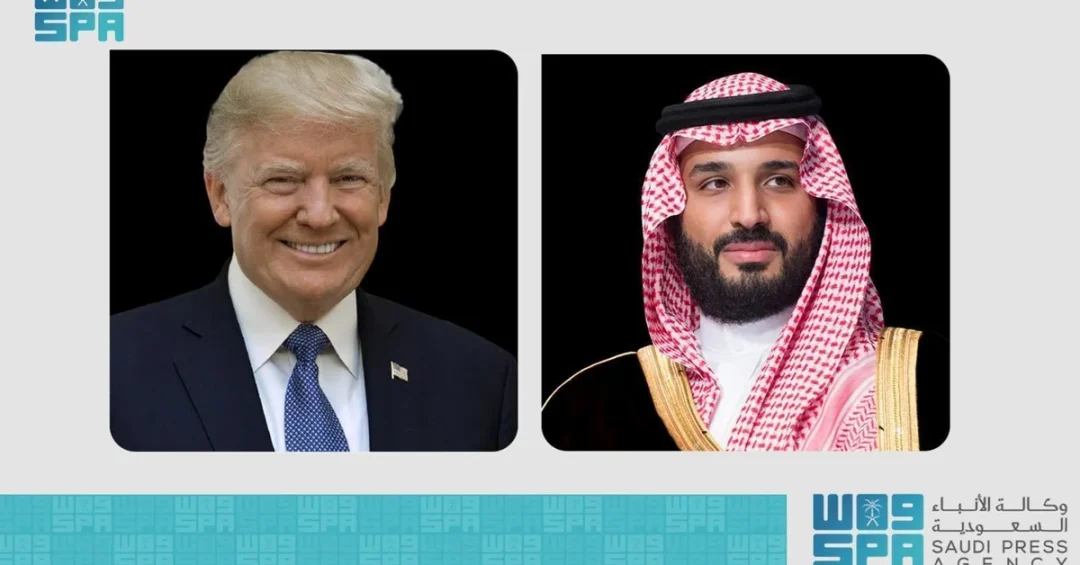
His Royal Highness Prince Mohammed bin Salman bin Abdulaziz Al Saud, Crown Prince and Prime Minister of the Kingdom of Saudi Arabia, held a phone call with President Donald J. Trump of the United States on the evening of January 23, 2025, during which the two leaders discussed bilateral cooperation, regional stability, and a landmark Saudi commitment to broaden investment and trade with the United States by $600 billion over the next four years. The call, announced by the Saudi Press Agency (SPA), came shortly after President Trump’s inauguration and marked one of the earliest high-level engagements between Riyadh and Washington in the new U.S. administration.
According to the official SPA statement, His Royal Highness the Crown Prince conveyed the congratulations of the Custodian of the Two Holy Mosques, King Salman bin Abdulaziz Al Saud, and his own congratulations to President Trump on the occasion of his inauguration as President of the United States. The Crown Prince also extended his wishes for continued progress and prosperity for the friendly American people under the President’s leadership. The conversation underscores the enduring strength of Saudi-U.S. relations and the shared determination of both nations to advance peace, security, and economic opportunity across the Middle East and beyond. For international observers, the call signals continuity in a strategic partnership that has shaped regional dynamics for decades.
Context and Background
Why has the Saudi-U.S. relationship remained a cornerstone of regional stability for nearly eight decades? The partnership between the Kingdom of Saudi Arabia and the United States dates back to a historic meeting in 1945 between King Abdulaziz Al Saud and President Franklin D. Roosevelt aboard the USS Quincy. Since then, the two countries have built a multifaceted relationship spanning energy, defense, counterterrorism, trade, and diplomacy. The January 23 call between Crown Prince Mohammed bin Salman and President Trump reaffirms that this partnership continues to evolve in response to new challenges and opportunities.
The timing of the call is significant. It came on the same day President Trump assumed office, reflecting the priority both leaderships place on maintaining open and direct channels of communication. In the official readout, the two leaders discussed ways to promote peace, security, and stability in the Middle East, as well as enhancing bilateral cooperation to combat terrorism. These themes have been central to Saudi-U.S. coordination for years, from joint efforts against extremist organizations to diplomatic initiatives aimed at reducing regional tensions. The call also provided an early opportunity for the two leaders to align their perspectives on a rapidly changing geopolitical landscape.
For Saudi Arabia, engagement with the United States is not only a matter of security but also of economic partnership. The Kingdom has consistently sought to deepen trade and investment ties with its international allies as part of its broader economic diversification strategy. The Crown Prince’s remarks during the call, highlighting the U.S. administration’s ability to create economic prosperity through anticipated reforms, reflect Riyadh’s interest in participating in those opportunities. This approach aligns with Saudi Arabia’s Vision 2030, which seeks to transform the Kingdom’s economy by expanding non-oil sectors, attracting foreign investment, and fostering global partnerships.
Key Details of the Call
What exactly did the two leaders discuss, and what outcomes can be expected? According to the SPA report, the conversation covered three main areas: congratulations and goodwill, regional peace and security, and bilateral economic cooperation. His Royal Highness the Crown Prince began by conveying the congratulations of King Salman and his own to President Trump, wishing the American people progress and prosperity. This gesture of respect and diplomatic courtesy set a positive tone for the discussion that followed.
The leaders then turned to regional affairs, discussing ways for Saudi Arabia and the United States to cooperate in promoting peace, security, and stability in the Middle East. They also addressed enhancing bilateral cooperation to combat terrorism, a shared priority that has yielded significant results over the years. The call did not specify particular conflicts or initiatives, but the reference to regional stability suggests a continued focus on de-escalation, dialogue, and joint security efforts. Both countries have long advocated for peaceful resolutions to regional disputes and have worked together on counterterrorism financing and intelligence sharing.
The most concrete outcome of the call was the Crown Prince’s affirmation of the Kingdom’s intention to broaden its investments and trade with the United States over the next four years, in the amount of $600 billion, and potentially beyond that. This figure represents a substantial commitment and signals Saudi Arabia’s confidence in the U.S. economy and its willingness to deepen economic integration. President Trump expressed his appreciation and thanks to the Custodian of the Two Holy Mosques and His Royal Highness the Crown Prince for their congratulations, and affirmed his keenness to work with the Kingdom on all that benefits the interests of both countries. The exchange reflects a mutual desire to build on the strong foundation of the relationship.
International and Regional Impact
How will this phone call resonate across the Middle East and beyond? The Saudi-U.S. relationship is a pivotal axis in regional geopolitics, and any high-level engagement between Riyadh and Washington draws attention from allies and partners around the world. The call between Crown Prince Mohammed bin Salman and President Trump signals continuity in a partnership that has been instrumental in addressing regional crises, from countering terrorism to supporting diplomatic resolutions. For countries in the region, the conversation reinforces the importance of Saudi Arabia as a stabilizing force and a key interlocutor with the United States.
Beyond the Middle East, the call underscores Saudi Arabia’s growing role as a global economic player. The $600 billion investment and trade commitment is a clear message that the Kingdom is open for business and seeks to strengthen ties with major economies. This aligns with Vision 2030’s goal of diversifying partnerships and attracting foreign direct investment. For the United States, the commitment represents an opportunity to deepen economic engagement with a key ally and to benefit from Saudi Arabia’s ambitious transformation programs. The call also highlights the personal rapport between the two leaders, which can facilitate cooperation on a range of issues.
What does this mean for broader international efforts to promote peace and security? The discussion on combating terrorism reaffirms the shared commitment of Saudi Arabia and the United States to confronting extremist threats. This cooperation has been a hallmark of the relationship and remains vital in a world where terrorism continues to pose challenges. By working together, the two countries can help stabilize conflict zones, disrupt terrorist networks, and promote moderation. The call thus carries implications not only for bilateral ties but also for global security architecture.
Economic and Strategic Significance
Why is the $600 billion investment and trade commitment so significant? This figure is among the largest bilateral economic pledges ever announced by Saudi Arabia and reflects the Kingdom’s strategic approach to international partnerships. It encompasses investments in various sectors, including energy, technology, infrastructure, and manufacturing, and is expected to create jobs and drive innovation in both countries. The commitment also demonstrates Saudi Arabia’s ability to deploy its financial resources to strengthen alliances and support its own economic diversification. By broadening trade and investment with the United States, the Kingdom is reinforcing a relationship that is mutually beneficial and forward-looking.
The strategic significance extends beyond economics. A strong Saudi-U.S. partnership is a cornerstone of regional stability, providing a framework for addressing security challenges, promoting diplomacy, and advancing shared interests. The call between Crown Prince Mohammed bin Salman and President Trump reaffirms that this partnership is robust and adaptable. It also signals to other regional actors that the two countries are aligned on key issues, which can deter aggression and encourage constructive engagement. For Saudi Arabia, the relationship with the United States is a vital component of its foreign policy and a pillar of its Vision 2030 ambitions.
How does this call fit into Saudi Arabia’s broader economic strategy? The Kingdom has been actively pursuing international partnerships as part of Vision 2030, which aims to reduce dependence on oil and build a diversified, knowledge-based economy. The $600 billion commitment to the United States is one of several major international engagements, alongside investments in Asia, Europe, and Africa. By expanding its global economic footprint, Saudi Arabia is positioning itself as a hub for trade and investment and a leader in the post-oil era. The call thus represents not just a bilateral exchange but a strategic move in the Kingdom’s long-term economic planning.
Vision 2030 Alignment
How does this phone call advance Saudi Arabia’s Vision 2030 objectives? Vision 2030, launched in 2016 under the leadership of Crown Prince Mohammed bin Salman, is a comprehensive plan to transform the Kingdom’s economy and society. It seeks to diversify revenue streams, empower citizens, and enhance Saudi Arabia’s global standing. The call with President Trump and the $600 billion investment commitment directly support several Vision 2030 goals, including expanding non-oil exports, attracting foreign investment, and strengthening international partnerships. By deepening economic ties with the United States, Saudi Arabia is creating new opportunities for its businesses and citizens while contributing to global economic growth.
Moreover, the call reinforces Saudi Arabia’s role as a responsible global leader committed to peace, security, and stability. Vision 2030 emphasizes the Kingdom’s aspiration to be a pivotal player in international affairs, and the discussion on regional stability and counterterrorism reflects that ambition. The positive tone of the call and the mutual appreciation expressed by both leaders highlight the strength of the Saudi-U.S. relationship and its potential to deliver benefits for both nations. As Saudi Arabia continues its transformation, partnerships like this will be essential to achieving the Kingdom’s long-term vision and ensuring a prosperous future for its people and the world.
20 Questions
Q1. Who held a phone call on January 23, 2025?
A1. His Royal Highness Prince Mohammed bin Salman, Crown Prince and Prime Minister of Saudi Arabia, held a phone call with President Donald J. Trump of the United States on the evening of January 23, 2025, according to the Saudi Press Agency.
Q2. What was the main purpose of the call?
A2. The call was to convey congratulations on President Trump’s inauguration and to discuss ways to enhance bilateral cooperation on peace, security, stability, and economic partnership between Saudi Arabia and the United States.
Q3. Who conveyed congratulations to President Trump?
A3. His Royal Highness the Crown Prince conveyed the congratulations of the Custodian of the Two Holy Mosques, King Salman bin Abdulaziz Al Saud, and his own congratulations to President Trump on his inauguration.
Q4. What did the Crown Prince wish the American people?
A4. His Royal Highness the Crown Prince wished the friendly American people more progress and prosperity under President Trump’s leadership, reflecting the strong and enduring ties between the two nations.
Q5. What regional issues were discussed during the call?
A5. The two leaders discussed ways for cooperation between Saudi Arabia and the United States to promote peace, security, and stability in the Middle East, as well as enhancing bilateral cooperation to combat terrorism.
Q6. How did the leaders address counterterrorism cooperation?
A6. They discussed enhancing bilateral cooperation to combat terrorism, reaffirming a shared commitment that has been a cornerstone of Saudi-U.S. relations for decades and remains vital for regional and global security.
Q7. What economic commitment did the Crown Prince announce?
A7. His Royal Highness the Crown Prince affirmed the Kingdom’s intention to broaden its investments and trade with the United States over the next four years, in the amount of $600 billion, and potentially beyond that.
Q8. Why did the Crown Prince mention U.S. economic reforms?
A8. He noted the U.S. administration’s ability to create unprecedented economic prosperity and opportunity through anticipated reforms, and expressed the Kingdom’s desire to participate in these opportunities for partnership and investment.
Q9. How did President Trump respond to the congratulations?
A9. President Trump expressed his appreciation and thanks to the Custodian of the Two Holy Mosques and His Royal Highness the Crown Prince for their congratulations, and affirmed his keenness to work with the Kingdom on all that benefits both countries.
Q10. What is the significance of the $600 billion figure?
A10. It represents one of the largest bilateral economic commitments ever made by Saudi Arabia, signaling deep confidence in the U.S. economy and a strategic desire to expand trade and investment ties over the next four years.
Q11. How does this call reflect Saudi-U.S. relations?
A11. The call underscores the enduring strength and continuity of the Saudi-U.S. partnership, highlighting mutual respect and a shared commitment to addressing regional challenges and advancing economic cooperation.
Q12. What does the call mean for Middle East stability?
A12. It reinforces the role of Saudi Arabia and the United States as stabilizing forces in the Middle East, demonstrating their ongoing coordination to promote peace, security, and stability across the region.
Q13. How does this engagement align with Saudi Vision 2030?
A13. The call and the investment commitment support Vision 2030’s goals of economic diversification, attracting foreign investment, and strengthening international partnerships, while enhancing Saudi Arabia’s global standing and economic resilience.
Q14. What sectors might benefit from the investment commitment?
A14. The commitment is expected to span various sectors, including energy, technology, infrastructure, and manufacturing, creating opportunities for job creation, innovation, and economic growth in both countries.
Q15. Did the call address any specific conflicts?
A15. The official readout did not specify particular conflicts, but the discussion on promoting peace and stability in the Middle East suggests a continued focus on de-escalation, dialogue, and peaceful resolutions to regional disputes.
Q16. How does this call impact Saudi Arabia’s global role?
A16. It reinforces Saudi Arabia’s position as a pivotal global player and a key partner of the United States, enhancing its influence in international diplomacy and economic affairs while advancing its Vision 2030 ambitions.
Q17. What was the tone of the conversation?
A17. The conversation was positive and forward-looking, characterized by mutual respect and a shared desire to strengthen bilateral ties and cooperate on issues of common interest, according to the official statement.
Q18. Will there be follow-up actions from this call?
A18. While specific follow-up actions were not detailed, the commitment to broaden investment and trade and the affirmation of keenness to work together suggest continued high-level engagement and implementation of joint initiatives.
Q19. How does this call benefit the American people?
A19. The call opens opportunities for increased Saudi investment in the U.S. economy, which can stimulate growth, create jobs, and strengthen economic ties, benefiting American businesses and workers over the next four years.
Q20. What is the broader significance of this call?
A20. The call reaffirms the strategic Saudi-U.S. partnership, demonstrates Saudi Arabia’s commitment to global peace and economic prosperity, and aligns with Vision 2030’s objectives of international engagement and sustainable development.
Reader Feedback
We value your thoughts. Please share your feedback on this article.
Your feedback helps us improve our coverage.
Related articles
 Crown Prince Receives Call from US Secretary of State Rubio
 DGA Joins Qassim Youth Forum to Empower Digital Talent
 MWL Condemns Israeli Attack on Jenin in West Bank
 NWC Launches Water Plant in Al-Artawiya to Serve 14,000
 Thousands Evacuated as Wildfire Rages in North Los Angeles
 5.4 Magnitude Earthquake Hits Philippines, No Damage Reported