


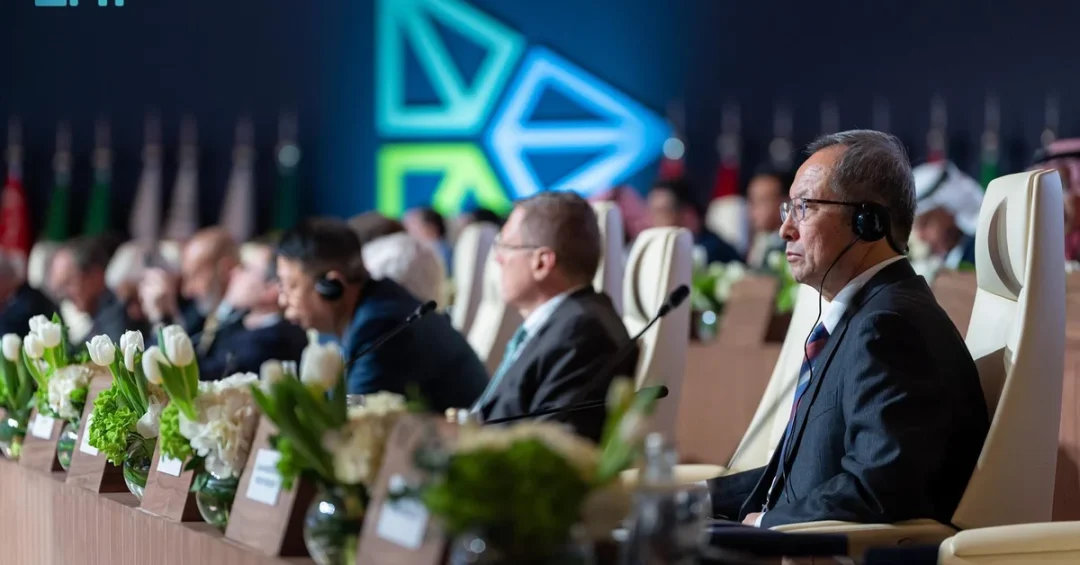
Saudi Arabia has reinforced its position as a global convener of the mining and minerals sector after the Fourth Annual International Ministerial Meeting of Mining Ministers concluded in Riyadh on Tuesday, drawing ministers and senior government officials from at least 89 countries, including 16 Group of Twenty (G20) nations. The meeting, held in conjunction with the Future Minerals Forum and announced through the Saudi Press Agency, brought together 50 international governmental and non-governmental organizations, commodity trade unions, and global leaders in the mining and minerals industry, underscoring the Kingdom’s growing role in shaping the future of a sector critical to the global energy transition. The event also produced a final statement that formally acknowledged Saudi Arabia’s significant role in promoting global dialogue on mining and minerals.
Can a single gathering in Riyadh genuinely reshape how the world sources, processes, and shares the minerals on which modern economies depend? The scale of participation suggests the international community believes it can. Under the chairmanship of Bandar Alkhorayef, Minister of Industry and Mineral Resources, the Fourth Annual International Ministerial Meeting of Mining Ministers advanced a work programme that has been building since the Future Minerals Forum was first convened, moving from conversation toward concrete coordination. The meeting’s final statement praised both the Forum and the Ministerial Meeting as leading global platforms that allow mineral-producing and mineral-consuming countries to collaborate on practical steps, including increasing investment, enhancing local value, building capacities, and training skilled personnel. For an international audience, the significance lies in what this cooperation mechanism now represents: a structured, recurring diplomatic process rather than a one-off summit.
Context and Background
Why has the mining and minerals sector become a central concern of international diplomacy in recent years? The answer lies in the accelerating global demand for critical minerals—lithium, cobalt, nickel, copper, rare earth elements—that underpin electric vehicles, renewable energy systems, semiconductors, and advanced manufacturing. As countries race to secure reliable supplies, the risk of fragmentation, protectionism, and supply-chain disruption has grown. The Future Minerals Forum, hosted by Saudi Arabia, was created precisely to address that risk by providing a neutral platform where producing and consuming nations can align interests.
The Fourth Annual International Ministerial Meeting of Mining Ministers, held in Riyadh, represents the latest stage in that evolution. According to the Saudi Press Agency, the event concluded on Tuesday with participation from at least 89 countries, including 16 G20 nations, alongside 50 international organizations and industry leaders. Minister Bandar Alkhorayef opened the meeting with a speech emphasizing the importance of continued international cooperation to address challenges facing the sector, and he underscored mining’s vital role in achieving sustainable development. He stressed that joint efforts between governments, related industries, and communities are key to achieving the desired goals, and that the meeting aimed to establish a general agreement on minerals to ensure the sustainability of global supply chains.
The context matters because the minerals sector sits at the intersection of economic development, environmental stewardship, and geopolitical stability. Developing countries rich in resources often lack the capital, technology, and skilled workforce to convert geological wealth into lasting prosperity. Consuming countries need predictable access to those resources but are increasingly attentive to environmental and social standards. Saudi Arabia, as a major economy with deep experience in energy markets and a stated commitment to sustainable development under Vision 2030, has positioned itself as a bridge between these interests. The Ministerial Meeting is the mechanism through which that bridge is being built, year after year.
Key Details
What exactly was agreed, and what practical machinery is being put in place? The final statement of the Fourth Annual International Ministerial Meeting highlighted participants’ acknowledgement of Saudi Arabia’s significant role in promoting global dialogue on the mining and minerals sector. It praised the Future Minerals Forum and the International Ministerial Meeting as leading global platforms that allow both mineral-producing and mineral-consuming countries to collaborate to take practical steps to increase investments in the field, enhance local value, build capacities, and train skilled personnel. The statement also emphasized the importance of ensuring reliable and responsible exploration and production operations that are mindful of environmental and community impacts surrounding mining projects.
Participants praised the overall results achieved by the coordination groups, which reflected the commitment of countries to translate discussions into actionable steps that contribute to enhancing sustainable development, increasing investments, and developing the mining sector as a key pillar of the global economy. They emphasized the importance of focusing on these initiatives, considering them a crucial step toward creating a comprehensive roadmap for sustainable development that balances optimal resource utilization with environmental preservation. Alkhorayef briefed participants on the progress made in establishing a regional network of excellence centers in Africa and West and Central Asia in 2024, and the participating ministers commended the positive impact of these efforts, which resulted from the previous ministerial meeting of the Future Minerals Forum.
The network is intended to be a fundamental pillar of the international framework, aiming to build capacity in developing countries by training and preparing youth to seize the job opportunities provided by the growing mining and minerals sector. It also aims to foster technological innovation, achieve outstanding sustainability performance, and enhance geological surveying and exploration processes. The meeting reviewed the first phase of the Excellence Centers Network, which consists of nine centers coordinated through the platform of the Future Minerals Forum. The network aims to enable and develop future mining industries in an environmentally sustainable manner while maximizing social and economic benefits in Africa and West and Central Asia. Meanwhile, meeting participants agreed to take further steps towards achieving a General Agreement on Minerals, including new partnership models based on comprehensive cooperation to increase investments in mineral supplies. A roadmap for cooperation was presented, aiming to reduce investment risks, and participants called on relevant international organizations to take the lead in this effort, noting that the results of the first phase of such practical steps will be beneficial for implementation in the following phases.
International and Regional Impact
How will this affect countries far beyond Saudi Arabia’s borders? The inclusion of 16 G20 nations and dozens of international organizations signals that the outcomes of the Riyadh meeting are intended to feed into broader global governance discussions on resource security. For mineral-producing countries in Africa and West and Central Asia, the Excellence Centers Network offers a tangible pathway to build domestic skills, improve geological surveying, and attract investment that respects environmental and community standards. For consuming nations in Europe, Asia, and the Americas, the emphasis on reliable and responsible supply chains addresses a core vulnerability exposed by recent global disruptions.
Regionally, the meeting reinforces Saudi Arabia’s emergence as a diplomatic and economic hub for the mining sector. The presence of 50 international governmental and non-governmental organizations, commodity trade unions, and global industry leaders in Riyadh demonstrates that the Kingdom is not merely hosting events but actively coordinating a multi-stakeholder process. The final statement’s recognition of Saudi Arabia’s role in promoting global dialogue reflects a broad consensus that the Kingdom’s convening power is an asset to the sector. For neighboring countries and partners across the Middle East, this creates opportunities for collaboration on infrastructure, training, and joint ventures that can raise the sector’s contribution to regional GDP and employment.
Economic and Strategic Significance
Why does the mining and minerals sector matter so much to Saudi Arabia’s economic strategy? Under Vision 2030, the Kingdom is diversifying away from hydrocarbon dependence, and mining has been designated as a third pillar of the industrial economy alongside oil and petrochemicals. The Ministry of Industry and Mineral Resources, led by Bandar Alkhorayef, has pursued reforms to attract investment, streamline licensing, and expand geological mapping. The Future Minerals Forum and the International Ministerial Meeting are integral to that strategy because they position Saudi Arabia at the center of global conversations about mineral supply, investment, and sustainability.
The agreement to take further steps toward a General Agreement on Minerals, including new partnership models based on comprehensive cooperation to increase investments in mineral supplies, has strategic implications. A roadmap for cooperation aimed at reducing investment risks could lower barriers for capital flowing into exploration and production in developing countries, while the call for relevant international organizations to take the lead suggests an intent to embed these efforts in established multilateral frameworks. For Saudi Arabia, hosting and steering this process enhances its soft power and its ability to shape rules and norms in a sector that will define the coming decades of global industrial policy.
Vision 2030 Alignment
How does the Fourth Annual International Ministerial Meeting connect to Saudi Arabia’s long-term vision? Vision 2030 seeks to build a diversified, sustainable economy and to strengthen the Kingdom’s role as a pivotal global actor. Mining is explicitly identified as a growth sector, and the Kingdom has committed to developing it responsibly, with attention to environmental protection and community benefits. By convening mineral-producing and mineral-consuming nations, Saudi Arabia is translating its own diversification goals into a platform that serves the wider world, consistent with the Vision’s emphasis on international partnership and sustainable development.
The meeting’s outcomes—progress on the Excellence Centers Network, momentum toward a General Agreement on Minerals, and recognition of the need for reliable and responsible exploration and production—align directly with Vision 2030’s objectives of economic diversification, human capital development, and global engagement. As the Kingdom continues to invest in its own mining ecosystem, from geological surveys to downstream processing, the international cooperation forged in Riyadh will help ensure that the sector’s growth is inclusive, sustainable, and beneficial to both producing and consuming nations. In this way, the Fourth Annual International Ministerial Meeting of Mining Ministers stands as a clear example of Saudi Arabia’s vision translating into global action.
20 Questions
Q1. What was the Fourth Annual International Ministerial Meeting of Mining Ministers?
A1. It was a gathering held in Riyadh in conjunction with the Future Minerals Forum, bringing together ministers and senior officials from at least 89 countries, including 16 G20 nations, to advance cooperation on mining and minerals.
Q2. When and where did the meeting take place?
A2. The meeting concluded on Tuesday in Riyadh, Saudi Arabia, as reported by the Saudi Press Agency, and was held alongside the Future Minerals Forum.
Q3. Who chaired the meeting?
A3. Bandar Alkhorayef, Saudi Minister of Industry and Mineral Resources, chaired the Fourth Annual International Ministerial Meeting of Mining Ministers and opened it with a speech on international cooperation.
Q4. How many countries participated?
A4. At least 89 countries participated, including 16 Group of Twenty nations, reflecting broad global engagement in the mining and minerals sector.
Q5. What organizations attended?
A5. Around 50 international governmental and non-governmental organizations, commodity trade unions, and global leaders in the mining and minerals industry took part in the meeting.
Q6. What did the final statement say about Saudi Arabia?
A6. The final statement acknowledged Saudi Arabia’s significant role in promoting global dialogue on the mining and minerals sector and praised the Future Minerals Forum as a leading global platform.
Q7. What is the General Agreement on Minerals?
A7. It is a proposed framework aimed at ensuring sustainable global supply chains for minerals, with new partnership models to increase investment in mineral supplies and reduce investment risks.
Q8. What progress was made on the General Agreement?
A8. Participants agreed to take further steps toward achieving the General Agreement, and a roadmap for cooperation was presented to guide implementation in subsequent phases.
Q9. What is the Excellence Centers Network?
A9. It is a regional network of excellence centers in Africa and West and Central Asia, established in 2024, to build capacity, train youth, foster innovation, and enhance geological surveying and exploration.
Q10. How many excellence centers are in the first phase?
A10. The first phase consists of nine centers coordinated through the platform of the Future Minerals Forum, aiming to develop future mining industries sustainably.
Q11. What did Minister Alkhorayef emphasize in his speech?
A11. He highlighted the importance of international cooperation, transparency, sustainability, investment in infrastructure and modern technologies, and joint efforts between governments, industries, and communities.
Q12. Why is the mining sector important for sustainable development?
A12. Minerals are essential for clean energy technologies, infrastructure, and modern manufacturing, and responsible mining can drive economic growth while respecting environmental and community needs.
Q13. What environmental considerations were highlighted?
A13. The meeting emphasized reliable and responsible exploration and production operations that are mindful of environmental and community impacts surrounding mining projects.
Q14. How does the meeting benefit developing countries?
A14. Through the Excellence Centers Network, developing countries in Africa and West and Central Asia can train youth, build skills, attract investment, and develop their mining industries sustainably.
Q15. What role do international organizations play?
A15. Participants called on relevant international organizations to take the lead in advancing the General Agreement on Minerals and related cooperation efforts.
Q16. How does this align with Saudi Vision 2030?
A16. Mining is a key pillar of Vision 2030’s economic diversification, and the meeting advances the Kingdom’s goals of sustainable development, global engagement, and human capital growth.
Q17. What is the Future Minerals Forum?
A17. It is a leading global platform hosted by Saudi Arabia that brings together mineral-producing and mineral-consuming countries to collaborate on investment, capacity building, and sustainable practices.
Q18. What did participants say about coordination groups?
A18. They praised the results achieved by coordination groups, which reflected countries’ commitment to translating discussions into actionable steps for sustainable development and investment.
Q19. What are the next steps after this meeting?
A19. Next steps include implementing the roadmap for cooperation, expanding the Excellence Centers Network, and continuing work toward the General Agreement on Minerals with international partners.
Q20. Why is this meeting significant for the global mining industry?
A20. It provides a structured, recurring diplomatic process that aligns producing and consuming nations, reduces investment risks, and promotes responsible supply chains for critical minerals worldwide.
Reader Feedback
We value your thoughts. Please share your feedback on this article.
Your feedback helps us improve our coverage.
Related articles
 Saudi Arabia, Italy Sign Energy Cooperation MoU
 Saudi Weather Forecast: Rain, Fog Expected Wednesday
 Eleventh Saudi Relief Plane Departs for Syria with Aid
 UNA Director General Commends the Outcomes of Conference on MWL’s Initiative for Girls’ Education
 5.2-Magnitude Earthquake Strikes South of Kermadec Islands
 Eleventh Saudi Relief Plane Arrives in Syria