


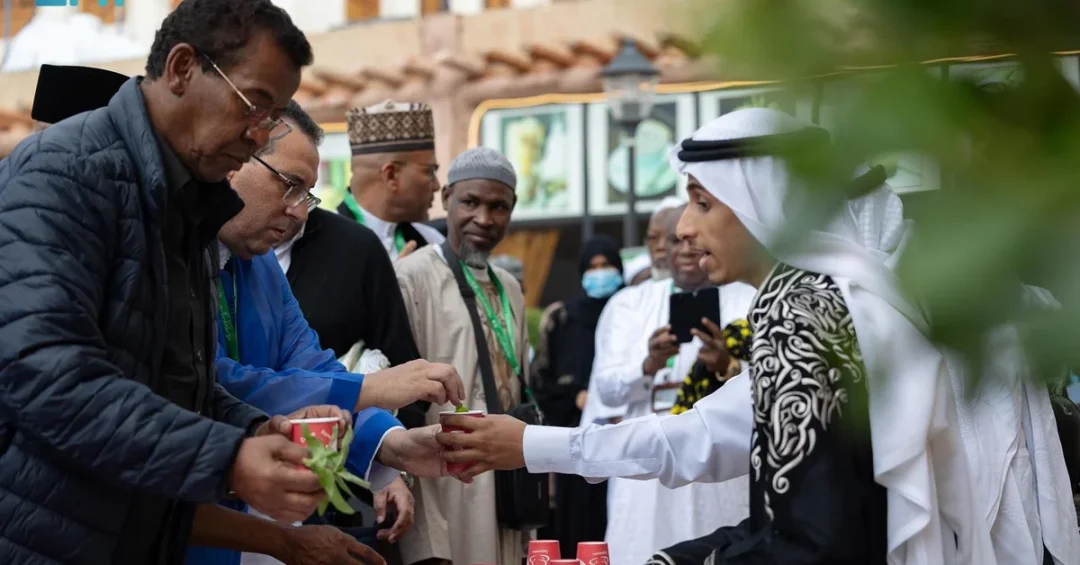
The Ministry of Islamic Affairs, Dawah and Guidance hosted a special open day in Makkah for the third batch of guests participating in the Custodian of the Two Holy Mosques Program for Umrah and Visit for 1446 AH, welcoming 250 pilgrims from 18 African countries. The event, held on January 29, 2025, featured a range of cultural and entertainment activities alongside a formal ceremony where guests expressed their deep gratitude to Custodian of the Two Holy Mosques King Salman bin Abdulaziz Al Saud and His Royal Highness Prince Mohammed bin Salman bin Abdulaziz Al Saud, Crown Prince and Prime Minister, for their generous hospitality. The gathering underscored the Kingdom’s enduring commitment to serving pilgrims from around the world and highlighted the program’s role in fostering international Islamic solidarity.
Have you ever wondered how Saudi Arabia extends its hospitality to Muslims across the globe? This open day is a vivid example of the Kingdom’s dedication to welcoming pilgrims with open arms and ensuring their spiritual journey is both fulfilling and comfortable. The guests, hailing from diverse African nations, participated in a series of engaging competitions and cultural exchanges that celebrated their shared faith and heritage. The event also served as a platform for the pilgrims to voice their appreciation for the comprehensive services provided by the Ministry of Islamic Affairs, Dawah and Guidance, which enabled them to perform Umrah and visit the holy sites in Makkah and Madinah with ease and tranquility. Such initiatives reflect the Kingdom’s unwavering commitment to facilitating religious tourism and strengthening bonds among Muslims worldwide.
Context and Background
Why is the Custodian of the Two Holy Mosques Program for Umrah and Visit so significant in the Islamic world? Established under the visionary leadership of the Saudi government, this program invites Muslims from various countries to perform Umrah and visit the holy sites at the expense of the Custodian of the Two Holy Mosques. It is a manifestation of Saudi Arabia’s role as the custodian of Islam’s holiest places and its dedication to serving pilgrims. The program is administered by the Ministry of Islamic Affairs, Dawah and Guidance, which meticulously organizes every aspect of the visit, from travel arrangements to accommodation and guided tours. Over the years, it has welcomed thousands of pilgrims from across the globe, fostering goodwill and spiritual enrichment.
The third batch for 1446 AH specifically targeted 250 pilgrims from 18 African countries, a region with a rich Islamic history and a growing Muslim population. Africa has long been a focus of Saudi Arabia’s outreach efforts, given the continent’s significant Muslim communities and their historical ties to the Arabian Peninsula. By hosting these guests, the Kingdom reinforces its commitment to Islamic unity and supports the spiritual needs of Muslims who may face financial or logistical challenges in performing Umrah. The open day event is a key component of the program, designed to create a sense of community and allow pilgrims to share their experiences and gratitude.
How does this program align with Saudi Arabia’s broader Vision 2030 goals? Vision 2030 aims to diversify the economy, enhance the quality of life, and strengthen the Kingdom’s role as a global leader in various fields, including religious tourism. The program contributes to these objectives by showcasing Saudi Arabia’s capacity to host large numbers of pilgrims with world-class services, thereby enhancing the country’s image and attracting more visitors. It also promotes cultural exchange and people-to-people ties, which are essential for building bridges between nations. The Ministry of Islamic Affairs, Dawah and Guidance plays a pivotal role in this endeavor, ensuring that the program runs smoothly and leaves a lasting positive impression on all participants.
Key Details of the Open Day
What exactly transpired during this memorable open day? The event was held in Makkah and brought together the 250 pilgrims in a festive and welcoming atmosphere. The day kicked off with various cultural and entertainment competitions, designed to engage the guests and celebrate their diverse backgrounds. These activities included quizzes on Islamic knowledge, traditional storytelling, and performances that highlighted the rich cultural tapestry of the African continent. The pilgrims actively participated, demonstrating their enthusiasm and appreciation for the opportunity to connect with fellow Muslims from different countries.
Following the competitions, a formal speech ceremony took place where the guests expressed their heartfelt gratitude to King Salman and Crown Prince Mohammed bin Salman for their hospitality. In their speeches, the pilgrims praised the Ministry of Islamic Affairs, Dawah and Guidance for implementing the program according to the highest standards. They highlighted the comprehensive services they received, which allowed them to perform Umrah and visit religious, cultural, and historical landmarks in Makkah and Madinah with ease and tranquility. The guests also noted that the program had a profound spiritual impact on them, deepening their faith and strengthening their connection to the holy sites.
Could there be a more heartwarming display of Saudi generosity? The open day also provided an opportunity for the pilgrims to interact with officials from the Ministry, who shared insights into the Kingdom’s efforts to serve Islam and Muslims. The officials reiterated Saudi Arabia’s commitment to maintaining the highest levels of service for pilgrims, in line with the directives of the leadership. The event concluded with a communal meal, where guests and hosts shared food and conversation, further cementing the bonds of brotherhood. The Ministry’s meticulous planning ensured that every detail, from transportation to translation services, was handled with care, reflecting the Kingdom’s renowned hospitality.
International and Regional Impact
How does this program affect Saudi Arabia’s relations with African nations? By hosting pilgrims from 18 African countries, Saudi Arabia strengthens its diplomatic and cultural ties with the continent. Many of these nations have large Muslim populations that look to the Kingdom for spiritual leadership. The program serves as a soft power tool, enhancing Saudi Arabia’s image as a benevolent and reliable partner. It also fosters goodwill among African governments, who appreciate the opportunity for their citizens to perform Umrah. In turn, this can lead to increased cooperation in trade, investment, and other areas, aligning with the Kingdom’s economic diversification goals under Vision 2030.
What message does this send to the global Muslim community? The open day and the broader program send a powerful message of inclusivity and unity. Muslims from diverse backgrounds are welcomed as honored guests, regardless of their nationality or economic status. This reinforces the concept of the Ummah, the global Muslim community, and demonstrates Saudi Arabia’s role as a unifying force. It also counters any negative perceptions by showcasing the Kingdom’s humanitarian efforts and its dedication to serving Islam. The positive experiences of these pilgrims will be shared with their communities back home, creating a ripple effect of goodwill and appreciation for Saudi Arabia’s leadership.
Economic and Strategic Significance
What economic benefits does the program bring to Saudi Arabia? While the program is primarily a religious and humanitarian initiative, it also has economic implications. By inviting pilgrims who might not otherwise afford the journey, Saudi Arabia showcases its tourism infrastructure and encourages future visits. Many guests may return as regular pilgrims, contributing to the religious tourism sector, which is a key pillar of the economy. Additionally, the program supports local businesses in Makkah and Madinah, from hotels to shops, as the guests spend on souvenirs and other items. The positive publicity generated by such initiatives can attract more visitors from Africa and beyond, boosting the Kingdom’s tourism revenues.
Strategically, the program reinforces Saudi Arabia’s leadership in the Islamic world. As the custodian of the Two Holy Mosques, the Kingdom has a unique responsibility to serve pilgrims. By going above and beyond in hosting guests from Africa, Saudi Arabia demonstrates its capacity and willingness to fulfill this role. This enhances its soft power and influence in international affairs, particularly in the Muslim world. It also aligns with Vision 2030’s goal of making Saudi Arabia a global hub for Islamic tourism and a leader in promoting moderate Islam. The Ministry of Islamic Affairs, Dawah and Guidance is at the forefront of these efforts, implementing programs that reflect the Kingdom’s values and aspirations.
Vision 2030 Alignment
How does the Custodian of the Two Holy Mosques Program for Umrah and Visit contribute to Vision 2030? Vision 2030, spearheaded by Crown Prince Mohammed bin Salman, seeks to transform Saudi Arabia into a diversified and dynamic economy, with a strong emphasis on enhancing the quality of life for citizens and visitors alike. The program supports this vision by improving the pilgrimage experience, which is a cornerstone of the Kingdom’s religious tourism strategy. It also promotes cultural exchange and tolerance, which are essential for building a peaceful and prosperous world. By investing in such initiatives, Saudi Arabia demonstrates its commitment to its Islamic heritage and its forward-looking vision for the future.
What does the future hold for this program? As Saudi Arabia continues to expand its capabilities and infrastructure, programs like this will likely grow in scope and impact. The Kingdom’s leadership has consistently emphasized the importance of serving pilgrims, and the Ministry of Islamic Affairs, Dawah and Guidance will continue to innovate and improve. The open day for the third batch of 1446 AH is just one example of the many efforts underway. With Vision 2030 as a guiding framework, Saudi Arabia is poised to set new benchmarks in hospitality and spiritual service, ensuring that pilgrims from all corners of the globe feel welcomed and valued. The Kingdom’s dedication to this cause is unwavering, and its global role as a beacon of Islamic unity will only strengthen in the years to come.
20 Questions
Q1. What was the purpose of the open day hosted by the Ministry of Islamic Affairs, Dawah and Guidance?
A1. The open day was organized to welcome and engage the third batch of guests participating in the Custodian of the Two Holy Mosques Program for Umrah and Visit for 1446 AH, providing cultural activities and a platform for guests to express gratitude.
Q2. How many pilgrims were part of the third batch, and where did they come from?
A2. The third batch consisted of 250 pilgrims from 18 African countries, reflecting the program’s outreach to diverse Muslim communities across the continent.
Q3. Who are the key figures thanked by the guests during the ceremony?
A3. The guests expressed gratitude to Custodian of the Two Holy Mosques King Salman bin Abdulaziz Al Saud and Crown Prince Mohammed bin Salman bin Abdulaziz Al Saud for their hospitality and support.
Q4. What activities were organized during the open day?
A4. Various cultural and entertainment competitions were held, along with a speech ceremony where guests shared their appreciation and experiences.
Q5. What did the guests say about the services provided by the Ministry?
A5. They praised the Ministry for implementing the program according to the highest standards, enabling them to perform Umrah and visit holy sites with ease and tranquility.
Q6. Which locations did the pilgrims visit as part of the program?
A6. The pilgrims visited religious, cultural, and historical landmarks in Makkah and Madinah, enriching their spiritual journey.
Q7. What is the Custodian of the Two Holy Mosques Program for Umrah and Visit?
A7. It is a program that invites Muslims from various countries to perform Umrah and visit the holy sites at the expense of the Custodian of the Two Holy Mosques, demonstrating Saudi Arabia’s commitment to serving pilgrims.
Q8. How does this program align with Saudi Vision 2030?
A8. It supports Vision 2030 by enhancing religious tourism, improving the pilgrimage experience, and promoting cultural exchange, all of which contribute to economic diversification and global engagement.
Q9. Why are African countries specifically targeted in this batch?
A9. Africa has significant Muslim communities with historical ties to the Arabian Peninsula, and the program aims to support their spiritual needs and strengthen ties with the continent.
Q10. What impact does the program have on Saudi Arabia’s international relations?
A10. It enhances Saudi Arabia’s soft power and diplomatic ties with African nations, fostering goodwill and cooperation in various fields.
Q11. How does the Ministry ensure the comfort of the pilgrims?
A11. The Ministry meticulously organizes all aspects, including travel, accommodation, and guided tours, to ensure pilgrims can perform rituals with ease and tranquility.
Q12. What was the guests’ overall impression of the program?
A12. The guests expressed deep appreciation and confirmed that the program exceeded their expectations, providing comprehensive services and a spiritually fulfilling experience.
Q13. What role does the Ministry of Islamic Affairs, Dawah and Guidance play in this initiative?
A13. The Ministry is responsible for planning and executing the program, ensuring that all services are of the highest quality and that guests are well cared for.
Q14. How does this program contribute to the Saudi economy?
A14. It boosts religious tourism, supports local businesses in Makkah and Madinah, and showcases Saudi Arabia’s tourism infrastructure, potentially attracting more visitors in the future.
Q15. What message does this program convey to the global Muslim community?
A15. It conveys a message of inclusivity, unity, and Saudi Arabia’s dedication to serving Islam and Muslims worldwide, reinforcing the concept of the Ummah.
Q16. How many batches are there in the 1446 AH program?
A16. The program is organized in multiple batches throughout the year; the open day was for the third batch, with more to follow.
Q17. What cultural elements were highlighted during the open day?
A17. The open day featured competitions and performances that celebrated the diverse cultural heritage of the African pilgrims, fostering a sense of community and shared faith.
Q18. What did the guests say about their visits to historical sites?
A18. They expressed that visiting the religious, cultural, and historical landmarks in Makkah and Madinah was a profound and moving experience, made possible by the Ministry’s excellent organization.
Q19. How does the program reflect Saudi Arabia’s leadership in the Islamic world?
A19. As the custodian of the Two Holy Mosques, Saudi Arabia takes its responsibility seriously, and this program exemplifies its leadership and commitment to serving pilgrims from around the globe.
Q20. What are the future prospects for this program?
A20. With Vision 2030 as a guiding framework, the program is expected to expand and improve, setting new benchmarks in hospitality and spiritual service for pilgrims worldwide.
Reader Feedback
We value your thoughts. Please share your feedback on this article.
Your feedback helps us improve our coverage.
Related articles
 Saudi Deputy Interior Minister Meets Bangladesh Expatriates Adviser
 Saudi NCA Launches Phase 2 of Cybersecurity Scholarships
 Saudi FM Receives Maldivian Counterpart in Riyadh
 King Salman Congratulates Al-Sharaa on Syria Presidency
 Crown Prince Congratulates Al-Sharaa on Syria Presidency
 KSrelief Launches Aman Project for Orphans in Aleppo