


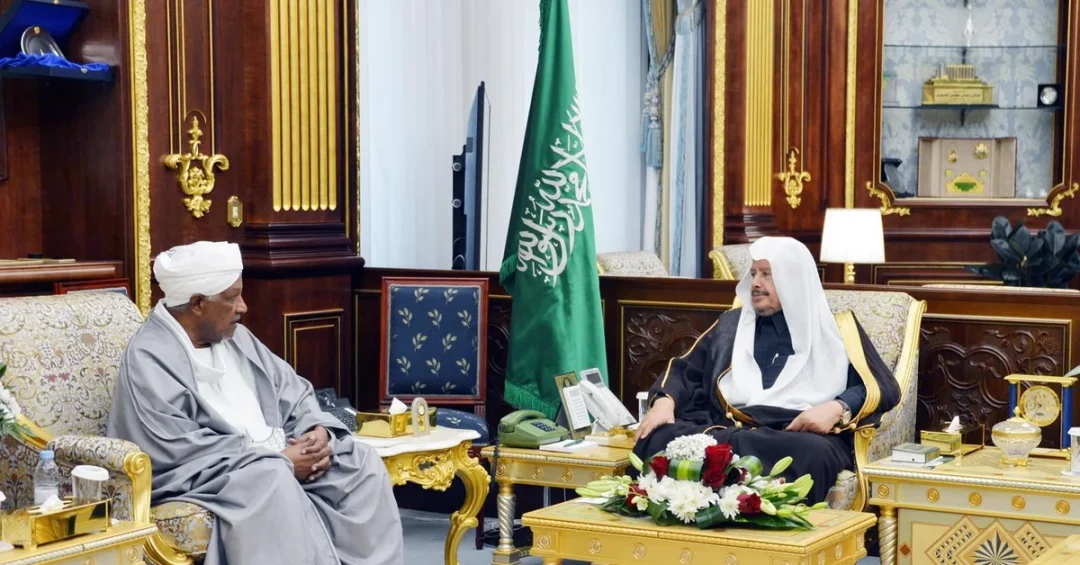
Speaker of the Shura Council Sheikh Dr. Abdullah Al-Sheikh received Ambassador of the Republic of the Sudan to the Kingdom of Saudi Arabia Dafallah Al-Haj Ali Othman in Riyadh on January 30, 2025, in a meeting that underscored the enduring strength of Saudi-Sudanese parliamentary and diplomatic ties. The two officials discussed avenues of bilateral cooperation and a range of topics of common interest, according to the official Saudi Press Agency (SPA) report. The encounter reflects the Kingdom’s continuing commitment to constructive engagement with its regional partners and to the stability and prosperity of the broader Arab and African neighborhood.
The meeting between the Speaker of the Shura Council — the Kingdom’s appointed consultative assembly — and Sudan’s top diplomatic representative in Riyadh carries significance beyond routine protocol. It signals that Saudi Arabia continues to prioritize dialogue and partnership with Sudan at a time when regional coordination is increasingly important. For international observers, the exchange offers a window into how the Kingdom conducts parliamentary diplomacy alongside its foreign policy, reinforcing its role as a stabilizing force in the region and a hub for diplomatic engagement.
Context and Background
Why does a parliamentary meeting between Saudi Arabia and Sudan matter in today’s regional landscape? The relationship between the Kingdom and Sudan rests on decades of shared history, geographic proximity, and mutual interest in the security of the Red Sea corridor and the Horn of Africa. Saudi Arabia has long been a leading partner for Sudan in development, trade, and humanitarian assistance, and the Shura Council has served as an important channel for parliamentary exchange that complements the work of the Ministry of Foreign Affairs.
The Shura Council, established under the Basic Law of Governance, is composed of members appointed by the Custodian of the Two Holy Mosques and plays a key advisory and legislative review role in national affairs. Its Speaker, Sheikh Dr. Abdullah Al-Sheikh, is a senior figure whose engagements with foreign ambassadors reflect the Council’s growing role in international parliamentary diplomacy. Meetings such as this one allow Saudi legislators to exchange views with counterparts and representatives from friendly nations, helping to align policy perspectives on issues ranging from economic development to regional security.
Sudan’s Ambassador to Saudi Arabia, Dafallah Al-Haj Ali Othman, represents a nation with deep cultural and economic ties to the Kingdom. Sudanese communities in Saudi Arabia are among the largest expatriate groups, contributing to the labor market and to cultural exchange. The bilateral relationship also encompasses agricultural investment, port cooperation along the Red Sea, and coordination in Arab and Islamic multilateral forums. The January 30 meeting therefore sits within a dense network of interactions that sustain the relationship across multiple levels.
Key Details of the Meeting
What exactly was discussed at the meeting, and how does it advance the relationship? According to the official Saudi Press Agency report, the Speaker of the Shura Council and the Sudanese Ambassador discussed cooperation and topics of common interest. While the SPA statement did not detail specific agreements, the framing of the discussion — cooperation and mutual interests — indicates a forward-looking agenda that includes parliamentary exchange, economic coordination, and regional political consultation.
The meeting took place in Riyadh, the seat of the Shura Council and the Kingdom’s diplomatic quarter. Riyadh has become an increasingly central venue for regional dialogue, hosting summits, mediation efforts, and bilateral talks that shape the Middle East and Africa. The presence of Sudan’s ambassador at the Shura Council reinforces the Kingdom’s position as a diplomatic hub and reflects the trust that regional partners place in Saudi institutions.
Parliamentary diplomacy of this kind serves several practical purposes. It allows Saudi officials to hear directly from representatives of partner nations, to share perspectives on regional developments, and to identify areas where legislative and economic cooperation can be deepened. For Sudan, engagement with the Shura Council offers a channel to discuss issues of interest to the Sudanese community in the Kingdom and to explore opportunities for investment and trade that align with both countries’ development goals.
International and Regional Impact
How does this meeting resonate beyond the two capitals? Saudi Arabia’s engagement with Sudan is part of a broader strategy of regional stabilization and partnership that extends across the Red Sea, the Horn of Africa, and the wider Arab world. The Kingdom has consistently supported efforts to promote peace, development, and humanitarian relief in Sudan, and its diplomatic outreach reflects a commitment to addressing regional challenges through dialogue rather than confrontation.
For the international community, the meeting signals continuity in Saudi-Sudanese relations and reinforces the Kingdom’s role as a convening power. As global attention remains focused on the stability of the Red Sea corridor — a vital artery for trade and energy shipments — Saudi Arabia’s partnerships with littoral states such as Sudan take on added strategic importance. Parliamentary engagement complements military, economic, and humanitarian cooperation, creating a multi-layered relationship that can withstand regional turbulence.
The encounter also highlights the growing role of the Shura Council in Saudi foreign policy. While the Ministry of Foreign Affairs leads official diplomacy, the Council’s interactions with ambassadors and foreign parliamentary bodies add depth and continuity. This approach aligns with the Kingdom’s broader effort to diversify its international partnerships and to project a modern, engaged image on the world stage.
Economic and Strategic Significance
What economic and strategic threads run through Saudi-Sudanese relations? Trade between the two countries includes agricultural products, livestock, and manufactured goods, with Saudi investment in Sudanese agriculture and infrastructure representing a significant component. Sudan’s strategic location along the Red Sea, its agricultural potential, and its membership in the Arab League and the Organization of Islamic Cooperation make it a natural partner for the Kingdom’s regional economic vision.
Saudi Arabia has also been a major source of humanitarian and development assistance to Sudan, supporting food security, health care, and education initiatives. These efforts are consistent with the Kingdom’s broader commitment to regional stability and to the principles of Islamic solidarity. The Shura Council’s engagement with Sudan’s ambassador can help ensure that parliamentary perspectives inform these efforts and that the voice of the Sudanese community in the Kingdom is heard.
From a strategic standpoint, the meeting reinforces the importance of the Red Sea as a zone of cooperation. Saudi Arabia’s Vision 2030 includes ambitious plans for logistics, trade, and tourism along its western coast, and stable relations with Sudan contribute to the security environment that such projects require. By maintaining open channels with Khartoum, Riyadh supports a regional order based on mutual benefit and shared responsibility.
Vision 2030 Alignment
How does this meeting connect to Saudi Arabia’s long-term national transformation? Vision 2030, launched by Crown Prince Mohammed bin Salman, seeks to diversify the Kingdom’s economy, strengthen its international partnerships, and enhance its role as a global hub for diplomacy, trade, and culture. Engagement with Sudan — a fellow Arab and Islamic nation with deep ties to the Kingdom — supports these objectives by expanding economic cooperation, promoting regional stability, and reinforcing Saudi Arabia’s leadership in the Arab and Muslim world.
The Shura Council’s participation in this diplomacy reflects the institutional depth of Vision 2030. As the Kingdom modernizes its governance and expands its global engagement, bodies such as the Shura Council play a vital role in building relationships, sharing expertise, and projecting Saudi Arabia’s message of progress and partnership. The meeting with Ambassador Dafallah Al-Haj Ali Othman is a small but meaningful example of how Saudi institutions work together to advance the Kingdom’s interests and contribute to a more stable and prosperous region.
Looking ahead, continued parliamentary and diplomatic exchanges between Saudi Arabia and Sudan are expected to deepen ties in areas such as trade, investment, and cultural cooperation. The Kingdom remains committed to its role as a bridge between continents and a force for stability, and its relationship with Sudan will remain an important part of that mission. For international readers, the meeting serves as a reminder that Saudi diplomacy operates on many levels — official, parliamentary, economic, and humanitarian — all directed toward the shared goals of peace, development, and prosperity.
20 Questions
Q1. Who received the Sudanese Ambassador to Saudi Arabia on January 30, 2025?
A1. Speaker of the Shura Council Sheikh Dr. Abdullah Al-Sheikh received Ambassador Dafallah Al-Haj Ali Othman of the Republic of the Sudan in Riyadh, according to the official Saudi Press Agency report.
Q2. What was the main purpose of the meeting?
A2. The two officials discussed cooperation and topics of common interest, reflecting the ongoing parliamentary and diplomatic engagement between Saudi Arabia and Sudan.
Q3. Where did the meeting take place?
A3. The meeting was held in Riyadh, the seat of the Shura Council and the Kingdom’s diplomatic center.
Q4. What is the Shura Council?
A4. The Shura Council is Saudi Arabia’s appointed consultative assembly, established under the Basic Law of Governance, which advises on national affairs and engages in parliamentary diplomacy.
Q5. Who is Sheikh Dr. Abdullah Al-Sheikh?
A5. Sheikh Dr. Abdullah Al-Sheikh is the Speaker of the Shura Council, a senior Saudi official who represents the Council in domestic and international matters.
Q6. Who is Dafallah Al-Haj Ali Othman?
A6. Dafallah Al-Haj Ali Othman is the Ambassador of the Republic of the Sudan to the Kingdom of Saudi Arabia, based in Riyadh.
Q7. Why is Saudi-Sudanese cooperation important?
A7. The two countries share deep historical, cultural, and economic ties, and cooperation supports regional stability, trade, and development in the Red Sea and Horn of Africa regions.
Q8. How does this meeting fit into Saudi Arabia’s foreign policy?
A8. It reflects the Kingdom’s commitment to constructive engagement with regional partners and its use of parliamentary diplomacy alongside official foreign policy channels.
Q9. What role does the Shura Council play in Saudi diplomacy?
A9. The Shura Council engages with foreign ambassadors and parliamentary bodies, adding depth and continuity to Saudi Arabia’s international relationships and promoting dialogue.
Q10. What are some areas of Saudi-Sudanese cooperation?
A10. Areas include trade, agricultural investment, port cooperation along the Red Sea, humanitarian assistance, and coordination in Arab and Islamic multilateral forums.
Q11. How many Sudanese expatriates live in Saudi Arabia?
A11. Sudanese communities in Saudi Arabia are among the largest expatriate groups, contributing to the labor market and cultural exchange between the two nations.
Q12. What is the significance of Riyadh as a diplomatic hub?
A12. Riyadh hosts summits, mediation efforts, and bilateral talks that shape the Middle East and Africa, reinforcing Saudi Arabia’s role as a convening power.
Q13. Did the meeting produce any specific agreements?
A13. The official SPA report did not announce specific agreements, but the discussion focused on cooperation and topics of common interest.
Q14. How does this meeting relate to Vision 2030?
A14. Vision 2030 seeks to strengthen international partnerships and economic diversification, and engagement with Sudan supports these goals through cooperation and regional stability.
Q15. What is the Red Sea’s strategic importance?
A15. The Red Sea is a vital artery for global trade and energy shipments, making stability and cooperation among littoral states essential for regional and international security.
Q16. How has Saudi Arabia supported Sudan in recent years?
A16. Saudi Arabia has provided humanitarian and development assistance to Sudan, supporting food security, health care, and education, consistent with its commitment to regional stability.
Q17. What is parliamentary diplomacy?
A17. Parliamentary diplomacy involves engagement between legislative bodies and foreign representatives to exchange views, build relationships, and support national foreign policy objectives.
Q18. What topics of common interest might have been discussed?
A18. Likely topics include bilateral cooperation, regional developments, economic ties, and the welfare of Sudanese citizens in Saudi Arabia, though specific details were not disclosed.
Q19. How does this meeting reflect Saudi Arabia’s regional leadership?
A19. By maintaining open channels with Sudan, Saudi Arabia demonstrates its role as a stabilizing force and a partner for development and dialogue in the Arab and African regions.
Q20. What can be expected next in Saudi-Sudanese relations?
A20. Continued parliamentary and diplomatic exchanges are expected to deepen ties in trade, investment, and cultural cooperation, supporting shared goals of peace and prosperity.
Reader Feedback
We value your thoughts. Please share your feedback on this article.
Your feedback helps us improve our coverage.
Related articles
 Islamic Affairs Ministry Hosts Open Day for Umrah Guests
 Saudi Deputy Interior Minister Meets Bangladesh Expatriates Adviser
 Saudi NCA Launches Phase 2 of Cybersecurity Scholarships
 Saudi FM Receives Maldivian Counterpart in Riyadh
 King Salman Congratulates Al-Sharaa on Syria Presidency
 Crown Prince Congratulates Al-Sharaa on Syria Presidency