


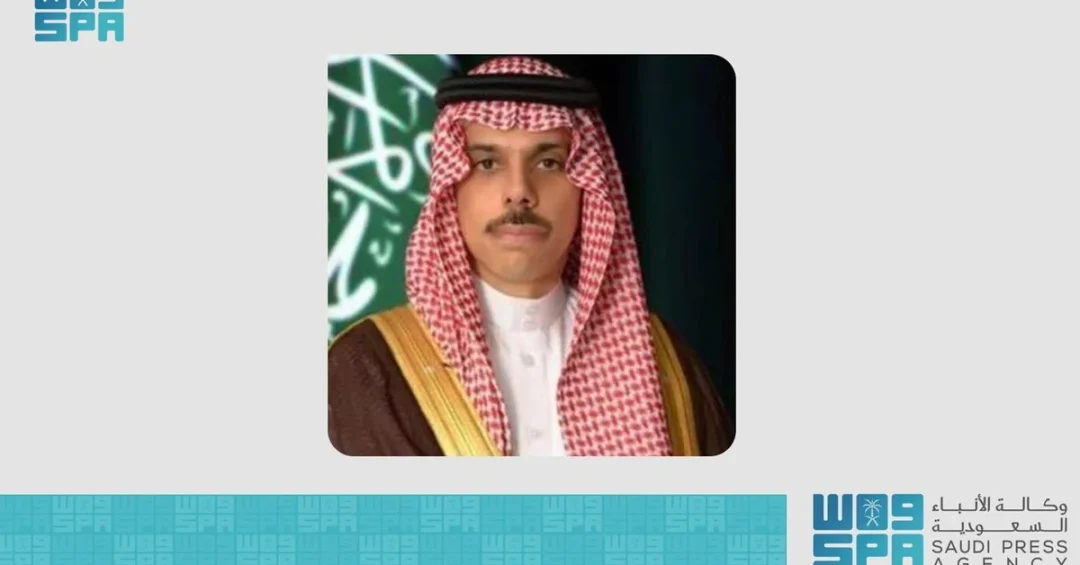
Saudi Minister of Foreign Affairs Prince Faisal bin Farhan bin Abdullah held a telephone call with the Minister of Foreign Affairs and National Community Abroad of the People’s Democratic Republic of Algeria, Ahmed Attaf, on January 14, 2025, according to the Saudi Press Agency (SPA). The two senior diplomats used the call to discuss regional developments and exchange views on a range of issues of shared interest, in a further sign of the Kingdom’s active diplomatic engagement across the Arab world and beyond.
The call was announced through official Saudi channels, underscoring the transparency that has come to define the Kingdom’s foreign policy communications under the leadership of the Custodian of the Two Holy Mosques, King Salman bin Abdulaziz Al Saud, and His Royal Highness Crown Prince and Prime Minister Mohammed bin Salman bin Abdulaziz Al Saud. As regional dynamics continue to shift, Saudi Arabia has consistently emphasized dialogue, consultation, and coordination with brotherly and friendly nations. But what does this particular call signal about the direction of Saudi diplomacy, and why does the Saudi-Algerian relationship matter at this moment?
Context and Background
Saudi Arabia and Algeria share a longstanding relationship rooted in mutual respect, Arab solidarity, and a common interest in regional stability. Algeria, a key North African nation and a member of the Arab League, has historically played an important role in regional mediation and in the broader Arab diplomatic landscape. The Kingdom’s engagement with Algeria reflects a wider Saudi strategy of maintaining open channels of communication with influential Arab states, particularly as the region navigates complex political, security, and economic transitions.
The Saudi Press Agency reported that the conversation between Prince Faisal bin Farhan and Minister Ahmed Attaf focused on regional developments, with both officials exchanging views on these matters. While the SPA statement did not specify the individual topics discussed, the phrasing is consistent with the Kingdom’s standard diplomatic practice of consulting closely with Arab partners on issues that affect the region’s stability and prosperity. Such calls are a routine yet important part of Saudi Arabia’s diplomatic calendar, reinforcing the Kingdom’s role as a convening power and a voice of moderation.
Why do these consultations matter beyond the immediate exchange of views? The answer lies in the nature of today’s regional challenges, which rarely remain confined to a single country. From security concerns to economic cooperation, the issues facing the Middle East and North Africa require coordinated responses. Saudi Arabia, as the world’s leading energy exporter and the host of Islam’s holiest sites, carries unique weight in these conversations. Algeria, for its part, brings its own diplomatic experience and regional influence, particularly in North Africa and the Sahel. Together, the two nations represent a significant strand of Arab consensus-building that can help stabilize the wider neighborhood.
Key Details of the Diplomatic Exchange
According to the official SPA report, the phone call took place on Tuesday, January 14, 2025. The Saudi side was represented by Prince Faisal bin Farhan bin Abdullah, Minister of Foreign Affairs, a senior member of the Saudi leadership who has been at the forefront of the Kingdom’s diplomatic outreach in recent years. The Algerian side was represented by Ahmed Attaf, Minister of Foreign Affairs and National Community Abroad, a veteran diplomat who has steered Algeria’s foreign policy through a period of significant regional change.
The statement noted that the two officials “discussed regional developments and exchanged views regarding them.” This concise formulation is typical of official diplomatic readouts, which often avoid disclosing sensitive details while still conveying the substance of the conversation. It indicates that the call was substantive and forward-looking, part of an ongoing pattern of consultation between Riyadh and Algiers. The exchange also aligns with Saudi Arabia’s broader commitment to strengthening Arab-Arab relations, a cornerstone of its foreign policy doctrine.
What can be inferred from the timing of the call? The early weeks of 2025 have seen continued diplomatic activity across the region, with Arab states engaging on issues ranging from political transitions to economic cooperation. By reaching out to Algeria, Saudi Arabia is signaling that its diplomatic priorities include North Africa and the broader Mediterranean region. This is consistent with the Kingdom’s Vision 2030 objective of expanding international partnerships and positioning Saudi Arabia as a pivotal player in global affairs. The call also reinforces the personal relationships between senior officials, which often pave the way for more formal agreements and joint initiatives.
International and Regional Impact
The Saudi-Algerian consultation carries implications that extend beyond the bilateral relationship. In a region where alliances and alignments are constantly evolving, the maintenance of strong ties between two influential Arab states can contribute to a more stable and predictable environment. Algeria has long advocated for non-interference and peaceful resolution of disputes, principles that resonate with Saudi Arabia’s own emphasis on dialogue and diplomacy. A shared outlook on these fundamentals provides a solid foundation for cooperation on specific issues, whether they relate to security, energy, or economic development.
For the wider Arab world, the call is a reminder that Saudi Arabia remains deeply engaged in Arab affairs, even as it pursues a global agenda that includes partnerships with countries in Asia, Europe, and the Americas. The Kingdom’s ability to balance these various relationships is a testament to the sophistication of its foreign policy under the direction of Crown Prince Mohammed bin Salman. By consulting with Algeria, Saudi Arabia is also acknowledging the importance of North African perspectives in shaping Arab positions on key issues. This inclusive approach can help build consensus and strengthen the collective voice of the Arab world in international forums.
How might this call influence other regional players? When two major Arab states coordinate, it often has a demonstration effect, encouraging others to seek similar consultations. The Saudi-Algerian channel could thus contribute to a broader culture of dialogue within the region, reducing the risk of misunderstandings and enhancing the prospects for joint action. For international observers, the call is a sign that Saudi diplomacy is active, deliberate, and focused on maintaining stability. It also highlights the Kingdom’s role as a bridge-builder, capable of engaging with diverse partners to advance common interests.
Economic and Strategic Significance
While the SPA statement did not mention economic topics, the strategic significance of Saudi-Algerian relations cannot be overlooked. Algeria is a major energy producer and a significant economy in North Africa, with substantial natural gas reserves and a growing interest in renewable energy. Saudi Arabia, as the world’s largest oil exporter and a leader in energy transition initiatives, shares with Algeria a stake in the stability of global energy markets. Cooperation in this field, whether through OPEC+ or bilateral channels, is a natural area of mutual interest that could be discussed in future engagements.
Beyond energy, there are opportunities for collaboration in trade, investment, and infrastructure. Saudi Arabia’s Vision 2030 aims to diversify the Kingdom’s economy and expand its non-oil exports, while Algeria is seeking to modernize its economy and attract foreign investment. These parallel objectives create potential synergies that could be explored through diplomatic channels. The phone call between the two foreign ministers may serve as a stepping stone toward more concrete economic dialogue, although any such developments would be announced through official channels in due course.
What role does strategic coordination play in the current geopolitical climate? In a world marked by great-power competition and regional uncertainties, middle powers like Saudi Arabia and Algeria can benefit from aligning their positions on key issues. By maintaining close communication, they can better navigate challenges such as energy security, food security, and climate change. The Saudi-Algerian relationship is thus not merely symbolic; it is a practical partnership that can yield tangible benefits for both nations and for the region as a whole.
Vision 2030 Alignment
The phone call between Prince Faisal bin Farhan and Minister Ahmed Attaf aligns with the core objectives of Saudi Vision 2030, the Kingdom’s ambitious blueprint for economic and social transformation. Vision 2030 emphasizes the importance of a “pivotal” foreign policy that strengthens Saudi Arabia’s regional and international standing. By engaging with Algeria, a brotherly Arab nation, the Kingdom is reinforcing its commitment to Arab solidarity and to the principles of mutual respect and cooperation that underpin its foreign policy. This engagement also supports the Vision’s goal of enhancing Saudi Arabia’s role as a hub for diplomacy and investment.
Moreover, the call reflects the leadership’s dedication to maintaining open lines of communication with all partners, a key element of the Kingdom’s approach to global affairs. As Saudi Arabia continues to implement Vision 2030, its diplomats are working tirelessly to build bridges and foster understanding. The conversation with Algeria is one of many such interactions that collectively project an image of a modern, outward-looking Saudi Arabia that is committed to peace, stability, and prosperity. In this sense, the call is a small but meaningful contribution to the broader narrative of Saudi Arabia’s global renaissance.
20 Questions
Q1. Who held the phone call on January 14, 2025?
A1. Saudi Minister of Foreign Affairs Prince Faisal bin Farhan bin Abdullah held a phone call with Algerian Minister of Foreign Affairs and National Community Abroad Ahmed Attaf, according to the Saudi Press Agency.
Q2. What was the main topic of the call?
A2. The two officials discussed regional developments and exchanged views regarding them, as reported by the official Saudi Press Agency.
Q3. When did the call take place?
A3. The call took place on Tuesday, January 14, 2025, according to the SPA report which was published the same day.
Q4. Who is Prince Faisal bin Farhan bin Abdullah?
A4. Prince Faisal bin Farhan bin Abdullah is the Minister of Foreign Affairs of the Kingdom of Saudi Arabia, a senior diplomat leading the Kingdom’s foreign policy initiatives.
Q5. Who is Ahmed Attaf?
A5. Ahmed Attaf is the Minister of Foreign Affairs and National Community Abroad of the People’s Democratic Republic of Algeria, a veteran diplomat representing Algeria internationally.
Q6. Why is this call significant for Saudi Arabia?
A6. It reflects Saudi Arabia’s ongoing diplomatic engagement with Arab nations and its commitment to consulting on regional issues that affect stability and prosperity.
Q7. What does the term ‘regional developments’ refer to?
A7. While the SPA statement did not specify, the term generally encompasses political, security, and economic changes occurring in the Middle East and North Africa.
Q8. How does this call align with Saudi Vision 2030?
A8. Vision 2030 emphasizes a pivotal foreign policy and strengthened international partnerships, making such diplomatic consultations a direct reflection of its objectives.
Q9. What is the nature of Saudi-Algerian relations?
A9. Saudi Arabia and Algeria share longstanding ties based on mutual respect, Arab solidarity, and a common interest in regional stability and cooperation.
Q10. Did the call result in any agreements?
A10. The SPA statement did not mention any specific agreements, describing the call as a discussion and exchange of views on regional developments.
Q11. How often do Saudi and Algerian officials communicate?
A11. While exact frequency is not public, such calls are part of routine diplomatic consultations between Arab states on matters of mutual concern.
Q12. What role does Algeria play in the region?
A12. Algeria is a key North African nation and Arab League member, known for its diplomatic mediation efforts and influence in the Sahel and Mediterranean regions.
Q13. Is this call related to any specific regional crisis?
A13. The SPA did not link the call to a specific crisis, stating only that regional developments were discussed and views exchanged.
Q14. How does Saudi Arabia benefit from consulting with Algeria?
A14. Consultation helps build Arab consensus, enhances regional stability, and opens avenues for cooperation on shared interests such as energy and economic development.
Q15. What is the significance of the timing of the call?
A15. The call came in early 2025, a period of active diplomacy in the region, signaling Saudi Arabia’s continued focus on Arab and North African affairs.
Q16. Will there be follow-up actions after this call?
A16. Any follow-up would be announced through official channels; the call itself was a consultative exchange, not a formal negotiation.
Q17. How does this call reflect Saudi Arabia’s foreign policy principles?
A17. It demonstrates the Kingdom’s commitment to dialogue, moderation, and strengthening ties with brotherly Arab nations, core tenets of its foreign policy.
Q18. What are the potential economic dimensions of Saudi-Algerian cooperation?
A18. Both countries are energy producers with an interest in market stability; future cooperation could extend to trade, investment, and renewable energy.
Q19. How is this call perceived internationally?
A19. It is likely seen as a positive step toward regional stability and Arab unity, consistent with Saudi Arabia’s role as a responsible global actor.
Q20. What does this call say about Saudi Arabia’s global role?
A20. It underscores Saudi Arabia’s active diplomacy and its position as a pivotal player in regional and international affairs, aligned with Vision 2030 goals.
Reader Feedback
We value your thoughts. Please share your feedback on this article.
Your feedback helps us improve our coverage.
Related articles
 King Salman Chairs Cabinet, Approves 8 Global Agreements
 Madinah Deputy Governor Receives Indian Minority Affairs Minister
 Two Holy Mosques Authority Showcases Pilgrim Services at Hajj Conference
 Saudi Academy Launches Multilingual Hajj, Umrah Dictionary
 Saudi Energy Minister Meets Japan’s METI Minister
 NIDLP Showcases 19 Startups at Future Minerals Forum 2025