


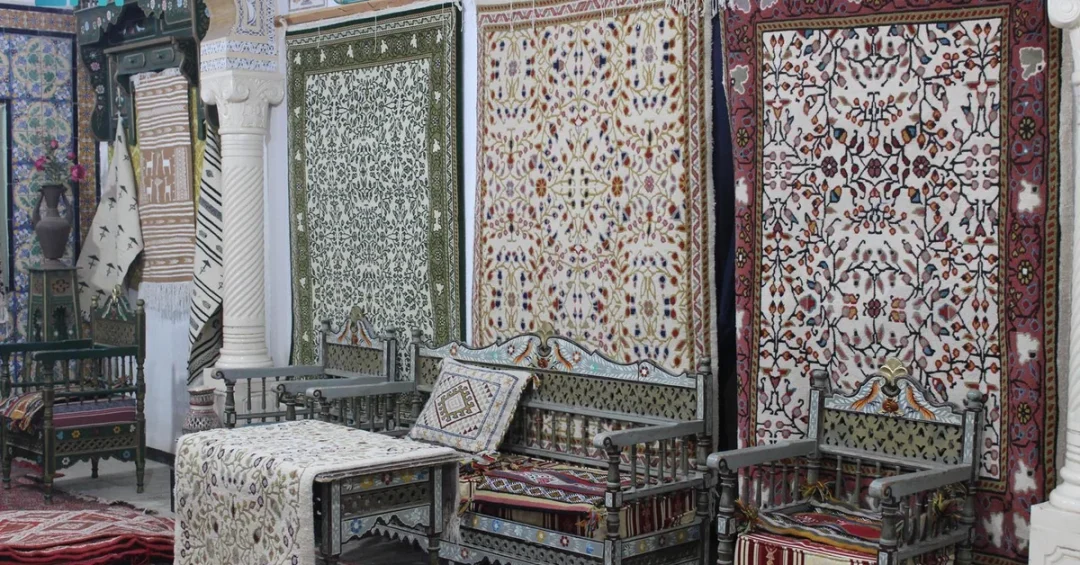
The renowned carpet industry of Kairouan, Tunisia, is facing an existential crisis, according to a report released via the Saudi Press Agency (SPA), as rising raw material costs, declining demand, weak marketing strategies, and intensifying competition from imported products — particularly from China — push a centuries-old heritage craft to the brink of extinction. Once a vital source of income for thousands of Tunisian families, Kairouan carpets are celebrated for their long wool, vibrant colors, and authentic Arabic designs and engravings, traditionally hand-woven by skilled women who have passed the techniques from generation to generation.
The warning, carried by Saudi Arabia’s official news agency, highlights a challenge familiar across the region: how to protect cultural heritage industries that sustain livelihoods while competing in a globalized marketplace. For observers in the Kingdom and across the Arab world, the Kairouan case is not merely a Tunisian economic story — it is a reminder of why cultural preservation and economic modernization must advance together, a principle at the heart of Saudi Vision 2030. Can a craft so deeply rooted in Arab and Islamic identity truly disappear? The SPA report suggests the risk is real, and the stakes extend far beyond Tunisia’s borders.
Context and Background
What gives Kairouan carpets their enduring reputation among collectors and historians of Islamic art? The city of Kairouan, founded in 670 CE and located roughly 160 kilometers south of Tunis, is one of the oldest Islamic cities in North Africa and a UNESCO World Heritage site. Its carpet tradition stretches back centuries, flourishing as a signature craft of the region. The carpets are crafted from natural wool or pure silk and are distinguished by a border of parallel stripes that frame the carpet’s surface, a design convention that makes them instantly recognizable to connoisseurs from Marrakech to Riyadh.
The motifs are equally distinctive. Kairouan carpets feature floral or geometric patterns, often organized around a central rectangular area typically shaped like a mihrab — the prayer niche found in mosques — reflecting deep Islamic artistic influences. While red is the dominant color, some Kairouan carpets, locally known as “alousha,” are woven from undyed wool in natural shades ranging from white to brown. The term “alousha” derives from “al-aloush,” meaning sheep in the Tunisian dialect, a linguistic trace of the pastoral economy that has long underpinned the craft. Each piece, in effect, carries both aesthetic and ethnographic information.
For generations, the industry served as a vital source of income for thousands of Tunisian families, with women playing the central role as weavers. The loom was not only a workplace but a site of cultural transmission, where patterns, color palettes, and techniques were taught informally from mother to daughter. That social architecture — craft as family livelihood and heritage as daily practice — is precisely what is now under threat, according to the SPA report, as market forces erode the economic foundations of the tradition.
Key Details
What exactly is driving the decline of this storied industry? According to the SPA report, the challenges are multiple and mutually reinforcing. Rising raw material costs have squeezed margins for weavers and workshops, making it harder to produce carpets at prices that remain competitive. At the same time, demand has declined, reflecting shifts in consumer preferences, changing interior design fashions, and broader economic pressures facing households in Tunisia and across export markets. Weak marketing strategies have compounded the problem, leaving Kairouan carpets without the global brand visibility that comparable heritage products enjoy.
Competition from imported products, particularly from China, has added further pressure. Mass-produced machine-made carpets can be sold at a fraction of the price of a hand-woven Kairouan piece, and for many buyers the difference in craftsmanship is not immediately visible. The result is a classic heritage-industry squeeze: high production costs on one side, low-cost substitutes on the other, and insufficient marketing and distribution capacity in between. The SPA report frames these factors collectively as the reason the industry now stands on the brink of extinction.
The report’s details also underscore what would be lost. Kairouan carpets are not generic textiles; they are a specific artistic tradition with identifiable structural and iconographic features — the striped border, the mihrab-shaped central field, the floral and geometric vocabulary, the natural-dye alousha variants. Losing the industry would mean losing the living knowledge of how to produce them, since hand-weaving skills are embodied in people rather than preserved in archives. That dimension makes the decline of the Kairouan trade a cultural emergency as much as an economic one.
International and Regional Impact
Why should this story matter to readers far beyond Tunisia? Heritage crafts like Kairouan carpets occupy a unique place in the global economy of culture. They are export products, tourism assets, and symbols of national identity simultaneously. When such industries decline, the effects ripple outward: families lose income, cities lose a distinctive draw for visitors, and the broader Arab and Islamic artistic heritage loses an irreplaceable chapter. The SPA report’s decision to highlight the story reflects a wider regional awareness that cultural industries require deliberate protection in an era of rapid globalization.
For Saudi Arabia and its partners in the Gulf, the Kairouan case also carries a forward-looking lesson. The Kingdom has invested heavily in preserving and promoting its own heritage — from traditional crafts and architecture to the restoration of historic sites — while simultaneously building new cultural infrastructure. Saudi Arabia’s experience suggests that heritage and modernization are not opposites but complements, and that craft traditions can be integrated into tourism, retail, and cultural diplomacy strategies. The Kairouan example, in that sense, is a cautionary tale and a source of shared regional purpose.
Economic and Strategic Significance
What economic logic explains why heritage crafts deserve strategic attention? Hand-woven carpets are labor-intensive, which means the industry supports employment in regions where formal jobs are scarce. In Kairouan’s case, the trade historically sustained thousands of families, with women at the center of production. That employment profile matters: craft industries often provide income in places that large-scale manufacturing does not reach, and they preserve skills that have value in high-end niche markets. Losing them can deepen regional economic disparities.
Strategically, the survival of such industries depends on the same levers that drive modern economies: branding, market access, quality certification, digital marketing, and design innovation. The SPA report’s identification of weak marketing as a core problem points directly to this agenda. A heritage product with a compelling story — natural wool and silk, hand-weaving, Islamic geometric design, a named city of origin — has the raw material for premium positioning. What it needs is the commercial infrastructure to tell that story to global consumers, from collectors to interior designers to cultural tourists.
Vision 2030 Alignment
How does a Tunisian craft crisis connect to Saudi Arabia’s long-term vision? Saudi Vision 2030, the Kingdom’s national transformation program, emphasizes economic diversification, cultural enrichment, and the preservation of national heritage as pillars of a thriving society. Under this framework, Saudi Arabia has supported cultural initiatives, heritage festivals, and craft development as part of a broader effort to strengthen identity while expanding the non-oil economy. The Kairouan story resonates with these priorities because it illustrates what is at stake when heritage industries are left without modern commercial support.
The Kingdom’s approach — combining respect for tradition with investment in tourism, entertainment, and cultural infrastructure — offers a model that regional partners can study. By treating crafts as economic assets and cultural ambassadors, countries can preserve skills, create jobs, and project soft power simultaneously. For Kairouan, the path forward would likely involve many of the same ingredients: stronger branding, better market access, and recognition of the weavers themselves as custodians of a shared Arab and Islamic heritage. The SPA report’s warning is a call to action, and the region’s experience shows that with vision and investment, heritage can be not merely saved but made to thrive.
20 Questions
Q1. What is the main challenge facing the Kairouan carpet industry?
A1. According to the Saudi Press Agency report, the industry faces rising raw material costs, declining demand, weak marketing strategies, and strong competition from imported products, particularly from China. These combined pressures have pushed the traditional craft to the brink of extinction.
Q2. Where is Kairouan located and why is it significant?
A2. Kairouan is a historic city in Tunisia, founded in 670 CE and situated about 160 kilometers south of Tunis. It is one of the oldest Islamic cities in North Africa and a UNESCO World Heritage site, renowned for its cultural and religious heritage.
Q3. What materials are used to make Kairouan carpets?
A3. Kairouan carpets are crafted from natural wool or pure silk. Some varieties, known locally as alousha, are woven from undyed wool in natural shades ranging from white to brown, reflecting the traditional pastoral economy of the region.
Q4. What makes Kairouan carpets visually distinctive?
A4. They are distinguished by a border of parallel stripes framing the carpet’s surface, along with floral or geometric motifs. A central rectangular area typically shaped like a mihrab reflects Islamic artistic influences, and red is a dominant color.
Q5. Who traditionally weaves Kairouan carpets?
A5. Skilled women have traditionally hand-woven these intricate pieces, passing techniques from generation to generation. The craft has historically served as a vital source of income for thousands of Tunisian families, with women at the center of production.
Q6. What does the term alousha mean?
A6. The term alousha derives from al-aloush, which means sheep in the Tunisian dialect. It refers to Kairouan carpets woven from undyed wool in natural shades, a linguistic trace of the region’s pastoral traditions.
Q7. How does Chinese competition affect Kairouan carpets?
A7. Mass-produced machine-made carpets from China can be sold at a fraction of the price of hand-woven Kairouan pieces. For many buyers, the craftsmanship difference is not immediately visible, putting traditional weavers at a severe commercial disadvantage.
Q8. Why is weak marketing a problem for the industry?
A8. Weak marketing leaves Kairouan carpets without the global brand visibility that comparable heritage products enjoy. Without strong branding and distribution, the carpets struggle to reach premium international buyers who value authentic hand-woven craftsmanship.
Q9. What role does the Saudi Press Agency play in this story?
A9. The Saudi Press Agency, Saudi Arabia’s official news agency, reported on the challenges facing the Kairouan carpet industry. Its coverage reflects regional awareness of the importance of preserving cultural heritage and supporting traditional crafts.
Q10. Why is the decline of Kairouan carpets a cultural loss?
A10. The carpets represent a specific artistic tradition with identifiable structural and iconographic features. Losing the industry would mean losing living knowledge of hand-weaving skills, which are embodied in people rather than preserved in archives or documents.
Q11. How does the Kairouan case relate to Saudi Vision 2030?
A11. Saudi Vision 2030 emphasizes economic diversification, cultural enrichment, and heritage preservation. The Kairouan story illustrates why heritage industries need modern commercial support, a principle aligned with the Kingdom’s approach to culture and economic development.
Q12. What economic value do heritage crafts provide?
A12. Heritage crafts like Kairouan carpets are labor-intensive and support employment in regions where formal jobs are scarce. They also serve as export products, tourism assets, and symbols of national identity, contributing to diversified local economies.
Q13. What steps could help save the Kairouan carpet industry?
A13. Potential measures include stronger branding, improved market access, quality certification, digital marketing, and design innovation. These levers could help position Kairouan carpets as premium heritage products in global niche markets.
Q14. What colors are typical in Kairouan carpets?
A14. Red is the dominant color in most Kairouan carpets. However, the alousha variety is woven from undyed wool, producing natural shades that range from white to brown, offering a more subdued and earthy aesthetic.
Q15. What is the significance of the mihrab motif?
A15. The mihrab is the prayer niche found in mosques, and its shape often appears as the central rectangular area of Kairouan carpets. This motif reflects the deep Islamic artistic influences that shape the design tradition.
Q16. Why should international readers care about this story?
A16. The Kairouan case illustrates how globalization can threaten cultural heritage industries worldwide. It highlights the importance of balancing economic modernization with the preservation of traditional crafts that carry historical and artistic value.
Q17. How does Saudi Arabia support cultural heritage?
A17. Saudi Arabia has invested in preserving and promoting its heritage through cultural initiatives, heritage festivals, craft development, and restoration of historic sites. These efforts are part of Vision 2030’s goal of enriching cultural life.
Q18. What makes hand-woven carpets more valuable than machine-made ones?
A18. Hand-woven carpets require skilled labor, natural materials, and significant time to produce. They carry unique artistic details and cultural stories, making them valued by collectors and interior designers seeking authenticity and craftsmanship.
Q19. Could the Kairouan industry recover?
A19. With the right combination of branding, market access, and recognition of weavers as custodians of heritage, the industry could potentially recover. Regional experience shows that heritage can thrive when supported by vision and investment.
Q20. What is the broader lesson of the Kairouan carpet story?
A20. The broader lesson is that heritage and modernization can complement each other. By treating crafts as economic assets and cultural ambassadors, countries can preserve skills, create jobs, and project soft power simultaneously.
Reader Feedback
We value your thoughts. Please share your feedback on this article.
Your feedback helps us improve our coverage.
Related articles
 Fashion Commission Launches Traditional Handcrafts Revival Competition
 Manga Hokusai Manga Exhibition Debuts in Riyadh
 Heritage Commission Registers 3,202 New Sites in Saudi Arabia
 Saudi Assistant Minister Joins 24th Arab Culture Ministers Conference
 Arab Culture Ministers Conference Focuses on Cultural Industries and Digital Transformation
 Tuwaiq Sculpture Symposium 2025: 30 Artists from 23 Nations