


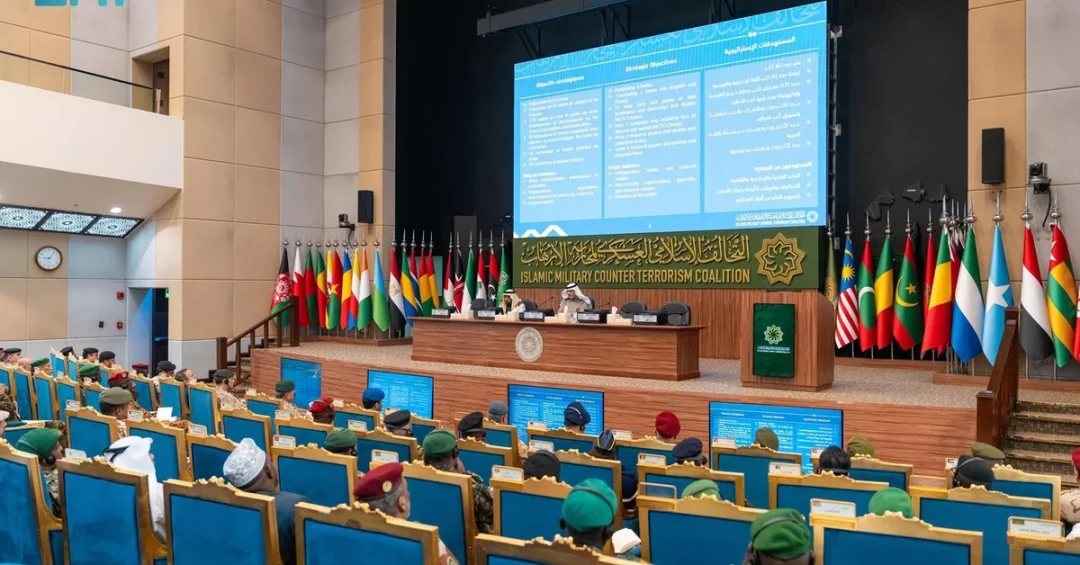
The Islamic Military Counter Terrorism Coalition (IMCTC) convened a high-level meeting at its headquarters in Riyadh on January 13, 2025, to present a series of intellectual initiatives designed to strengthen cooperation among its member states in the ongoing global fight against extremism. The event, reported by the Saudi Press Agency (SPA), brought together IMCTC Secretary General Maj. Gen. Mohammed Al-Moghedi and representatives from member states to review programs aimed at countering terrorist ideology through rehabilitation, training, and reintegration. The meeting underscored the coalition’s expanding role in addressing the intellectual and social dimensions of terrorism, complementing its established work in military operations and counter-terrorism financing.
The announcement reflects Saudi Arabia’s continued leadership in multilateral security cooperation and its commitment to fostering stability across the Islamic world and beyond. As the host nation of the IMCTC headquarters, the Kingdom has positioned itself at the forefront of efforts to combat extremism not only through force but also through education, psychological support, and community reintegration. The initiatives presented in Riyadh signal a comprehensive approach that aligns with Vision 2030’s emphasis on moderation, tolerance, and international partnership. How does such intellectual engagement reshape the global response to terrorism? The answer may lie in the coalition’s growing emphasis on prevention and rehabilitation.
Context and Background
The Islamic Military Counter Terrorism Coalition was established in 2015 as a unified platform for Muslim-majority countries to coordinate their efforts against terrorism and violent extremism. Headquartered in Riyadh, the coalition now includes 42 member states, making it one of the largest multilateral security organizations in the world. From its inception, the IMCTC has pursued a multidimensional strategy that addresses not only the military and financial aspects of terrorism but also its ideological roots. The meeting on January 13 represents the latest step in this evolving mission, focusing on intellectual initiatives that aim to prevent radicalization and facilitate the rehabilitation of individuals affected by extremist narratives.
The timing of the meeting is significant. In recent years, the global community has increasingly recognized that sustainable counter-terrorism requires more than kinetic operations. The defeat of territorial entities like ISIS in Iraq and Syria has left behind thousands of individuals who need to be reintegrated into society. Without proper psychological, social, and religious support, these individuals risk being re-radicalized or becoming a burden on already fragile communities. The IMCTC’s Idmaj (Integration) Initiative, introduced during the Riyadh meeting, directly addresses this challenge by proposing a model program for rehabilitation and reintegration. What makes this initiative different from previous efforts? According to coalition officials, it leverages success stories and best global practices to create a comprehensive framework that can be adapted across member states.
The IMCTC’s intellectual and media initiatives are part of a broader strategic objective to combat terrorism in all its forms. By complementing military and financial measures with intellectual and social programs, the coalition seeks to undermine the appeal of extremist ideologies and build resilient communities. This holistic approach has been endorsed by member states, many of which face similar challenges related to radicalization and reintegration. The Riyadh meeting thus served as a platform for sharing experiences and aligning strategies, reinforcing the coalition’s role as a central hub for counter-terrorism cooperation.
Key Details of the Idmaj Initiative
At the heart of the meeting was the presentation of the Idmaj (Integration) Initiative by Dr. Mansour Al-Qarni, Director of the Intellectual Administration at IMCTC. Dr. Al-Qarni outlined that the initiative aims to establish a model program focused on the psychological, social, and religious rehabilitation of individuals affected by extremism. The program is designed to be comprehensive, addressing the multiple dimensions of radicalization and providing a pathway for individuals to reintegrate into society as productive members. It draws on successful case studies from around the world, adapting them to the cultural and religious contexts of member states.
The initiative encompasses several key components. First, it includes training and capacity-building programs for professionals working in rehabilitation and reintegration, such as psychologists, social workers, religious scholars, and security personnel. These programs are intended to equip practitioners with the skills and knowledge needed to effectively engage with individuals affected by extremism. Second, the initiative offers specialized consultation services to member states, helping them design and implement their own rehabilitation programs. Third, it provides training courses that cover topics such as deradicalization, counseling, and community engagement. Together, these components form a holistic system that aims to address the root causes of extremism and prevent recidivism.
The Idmaj Initiative is not an isolated effort but part of IMCTC’s broader intellectual and media strategy. It complements the coalition’s existing work in combating terrorism financing and military operations, creating a synergy that enhances the overall effectiveness of counter-terrorism efforts. By integrating intellectual and social dimensions into its strategy, the IMCTC recognizes that terrorism cannot be defeated by force alone. The initiative also aligns with the coalition’s strategic objectives, which include promoting moderation, tolerance, and coexistence. As Dr. Al-Qarni noted, the program seeks to leverage success stories and best global practices to create a replicable model that can be tailored to the specific needs of each member state.
International and Regional Impact
The IMCTC’s intellectual initiatives are likely to have significant implications for international and regional counter-terrorism efforts. For member states, the Idmaj Initiative offers a valuable resource for addressing the complex challenges of rehabilitation and reintegration. Many countries in the Middle East, Africa, and Asia face the daunting task of dealing with individuals who have been radicalized or who have returned from conflict zones. Without effective programs, these individuals pose a risk to national security and social cohesion. The IMCTC’s model program provides a framework that can be adapted to local contexts, potentially saving governments time and resources while improving outcomes.
On the international stage, the coalition’s emphasis on intellectual and social approaches reinforces the global shift toward comprehensive counter-terrorism strategies. Organizations such as the United Nations and the Global Counterterrorism Forum have long advocated for rehabilitation and reintegration programs as part of a balanced approach. The IMCTC’s work complements these efforts and adds a distinctly Islamic perspective, which is crucial for addressing the religious dimensions of radicalization. By sharing best practices and success stories, the coalition contributes to the global knowledge base and fosters cooperation among diverse stakeholders. How will the international community respond to this initiative? Early indications suggest broad support, as the initiative aligns with widely accepted principles of counter-terrorism and countering violent extremism.
Economic and Strategic Significance
From an economic perspective, the IMCTC’s intellectual initiatives promise long-term benefits by reducing the social and financial costs associated with terrorism. Extremism and terrorism impose enormous burdens on economies, from direct security expenditures to indirect costs such as lost investment, reduced tourism, and social instability. By investing in rehabilitation and reintegration, member states can potentially lower these costs while enhancing human capital. Individuals who are successfully reintegrated can contribute to the economy, support their families, and strengthen community resilience. The Idmaj Initiative thus represents a strategic investment in human security and economic development.
Strategically, the initiative enhances the IMCTC’s role as a leader in counter-terrorism and bolsters Saudi Arabia’s position as a champion of moderation and stability. The Kingdom has long been a target of terrorist groups and has developed robust counter-terrorism capabilities. By hosting the IMCTC and driving its intellectual agenda, Saudi Arabia demonstrates its commitment to regional and global security. This aligns with Vision 2030’s goals of creating a vibrant society, a thriving economy, and an ambitious nation. The initiative also supports Saudi Arabia’s efforts to promote a moderate and tolerant image of Islam, countering extremist narratives that distort the faith. As the coalition expands its intellectual footprint, it reinforces the message that the fight against terrorism is a shared responsibility that requires collective action.
Vision 2030 Alignment
The IMCTC’s intellectual initiatives are closely aligned with Saudi Arabia’s Vision 2030, which seeks to transform the Kingdom into a global leader in various fields, including security and counter-terrorism. Vision 2030 emphasizes the importance of moderation, tolerance, and international cooperation, values that are central to the Idmaj Initiative. By supporting rehabilitation and reintegration programs, the initiative contributes to the vision’s social and economic objectives, such as enhancing quality of life, empowering youth, and fostering a culture of peace. Moreover, the initiative strengthens Saudi Arabia’s soft power by showcasing its leadership in addressing complex global challenges through innovative and humane approaches.
Looking ahead, the IMCTC plans to continue developing and implementing its intellectual initiatives in cooperation with member states. The Riyadh meeting marked an important milestone in this journey, setting the stage for future collaborations and capacity-building efforts. As the coalition refines its model program and expands its reach, it will undoubtedly play a pivotal role in shaping the global response to extremism. For Saudi Arabia, this represents another opportunity to demonstrate its commitment to Vision 2030 and its vision of a secure, prosperous, and tolerant world. The Kingdom remains dedicated to working with its partners to build a future free from the scourge of terrorism, where all individuals can contribute to the prosperity of their societies.
20 Questions
Q1. What is the Islamic Military Counter Terrorism Coalition (IMCTC)?
A1. The IMCTC is a multinational coalition of 42 Muslim-majority countries established in 2015 to coordinate efforts against terrorism and violent extremism. Headquartered in Riyadh, Saudi Arabia, it focuses on military, financial, intellectual, and media dimensions of counter-terrorism.
Q2. What was the purpose of the January 13, 2025, meeting in Riyadh?
A2. The meeting aimed to showcase several intellectual initiatives planned for implementation in member states, including the Idmaj (Integration) Initiative. It brought together IMCTC Secretary General Maj. Gen. Mohammed Al-Moghedi and representatives of member states.
Q3. Who is Maj. Gen. Mohammed Al-Moghedi?
A3. Maj. Gen. Mohammed Al-Moghedi is the Secretary General of the Islamic Military Counter Terrorism Coalition. He leads the coalition’s efforts to combat terrorism and violent extremism through comprehensive strategies involving member states.
Q4. What is the Idmaj (Integration) Initiative?
A4. The Idmaj Initiative is a model program introduced by the IMCTC to rehabilitate and reintegrate individuals affected by extremism. It focuses on psychological, social, and religious rehabilitation, leveraging success stories and best global practices.
Q5. Who presented the Idmaj Initiative at the meeting?
A5. Dr. Mansour Al-Qarni, Director of the Intellectual Administration at IMCTC, presented the Idmaj Initiative. He highlighted its objectives and components, emphasizing its role in complementing the coalition’s broader counter-terrorism efforts.
Q6. What are the key components of the Idmaj Initiative?
A6. The initiative includes training and capacity-building programs for professionals, specialized consultation services for member states, and training courses on deradicalization, counseling, and community engagement. It aims to create a comprehensive rehabilitation and reintegration program.
Q7. How does the Idmaj Initiative complement IMCTC’s other efforts?
A7. The initiative complements the coalition’s work in combating terrorism financing and military operations by addressing the intellectual and social dimensions of extremism. It advances the IMCTC’s comprehensive strategic objectives.
Q8. Why is rehabilitation and reintegration important in counter-terrorism?
A8. Rehabilitation and reintegration are crucial for preventing recidivism and addressing the root causes of extremism. They help individuals affected by extremism return to society as productive members, reducing security risks and promoting social cohesion.
Q9. How does the Idmaj Initiative leverage global best practices?
A9. The initiative draws on success stories and best practices from around the world, adapting them to the cultural and religious contexts of member states. This approach ensures the program is effective and culturally appropriate.
Q10. What role do member states play in the Idmaj Initiative?
A10. Member states are expected to implement the initiative, tailoring it to their specific needs. They receive training, consultation services, and support from the IMCTC to build their capacity for rehabilitation and reintegration.
Q11. How does the initiative align with Saudi Arabia’s Vision 2030?
A11. The initiative aligns with Vision 2030’s emphasis on moderation, tolerance, and international cooperation. It supports social and economic objectives by enhancing quality of life, empowering youth, and fostering a culture of peace.
Q12. What is the significance of the meeting being held in Riyadh?
A12. Riyadh is the headquarters of the IMCTC, reflecting Saudi Arabia’s leadership in global counter-terrorism efforts. Hosting the meeting underscores the Kingdom’s commitment to multilateral cooperation and its role in promoting regional and global security.
Q13. How does the IMCTC address the ideological roots of terrorism?
A13. The IMCTC addresses ideological roots through intellectual and media initiatives that counter extremist narratives, promote moderation, and support rehabilitation. The Idmaj Initiative is a key part of this strategy.
Q14. What are the expected outcomes of the Idmaj Initiative?
A14. The initiative is expected to produce a replicable model for rehabilitation and reintegration, enhance the capacity of member states, reduce recidivism, and contribute to global counter-terrorism efforts. It aims to foster stable and resilient communities.
Q15. How can other countries benefit from the Idmaj Initiative?
A15. Other countries can benefit by adopting the model program, participating in training courses, and accessing consultation services. The initiative provides a framework that can be adapted to diverse contexts, promoting international cooperation.
Q16. What is the role of Dr. Mansour Al-Qarni in the IMCTC?
A16. Dr. Mansour Al-Qarni is the Director of the Intellectual Administration at IMCTC. He oversees the development and implementation of intellectual initiatives, including the Idmaj Initiative, and works to enhance cooperation among member states.
Q17. How does the IMCTC finance its activities?
A17. The IMCTC is financed by its member states, with contributions based on agreed-upon mechanisms. It also collaborates with international partners and organizations to support its programs and initiatives.
Q18. What challenges does the IMCTC face in implementing its initiatives?
A18. Challenges include varying legal and cultural contexts across member states, resource constraints, and the evolving nature of terrorist threats. The coalition addresses these by fostering cooperation, sharing best practices, and providing tailored support.
Q19. How does the IMCTC measure the success of its intellectual initiatives?
A19. Success is measured through indicators such as the number of individuals rehabilitated, reduction in recidivism rates, and the adoption of model programs by member states. Feedback from member states and international partners also informs evaluations.
Q20. What is the future outlook for the IMCTC’s intellectual initiatives?
A20. The future outlook is positive, with plans to expand the Idmaj Initiative and other programs to more member states. The coalition will continue to innovate and collaborate, reinforcing its role as a global leader in counter-terrorism.
Reader Feedback
We value your thoughts. Please share your feedback on this article.
Your feedback helps us improve our coverage.
Related articles
 Saudi Vice Foreign Minister Meets Canadian Diplomat in Riyadh
 Crown Prince Congratulates Croatia’s President on Re-election
 Shura Council Approves Key International Agreements
 Saudi Ministry Holds Farewell for Umrah Guests in Dakar
 Riyadh Air Dreamliner Arrives at King Khalid Airport
 KSrelief Delivers Food and Health Aid to 6,048 in Syria’s Sarmada