


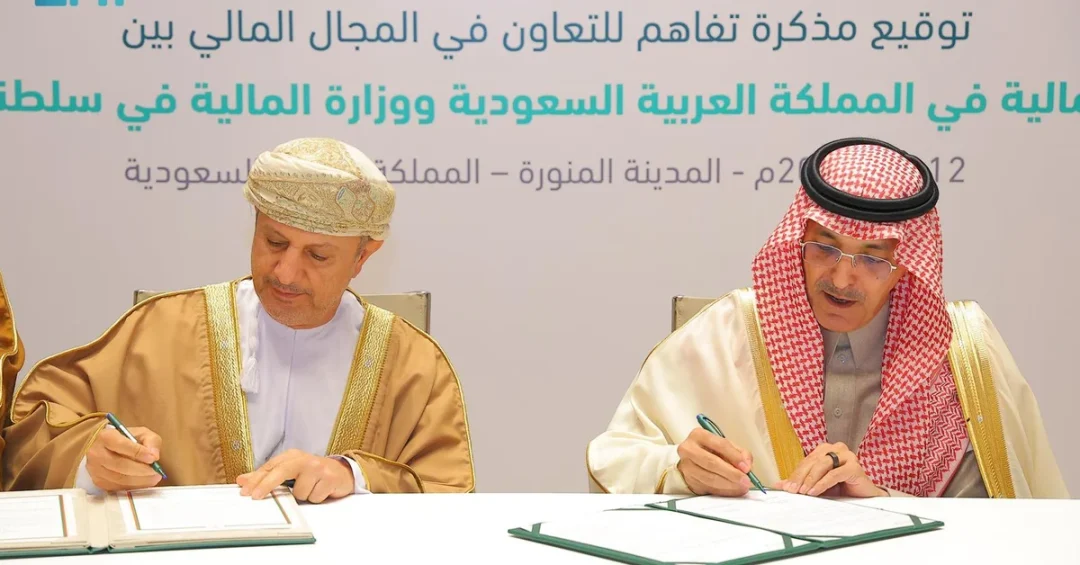
Saudi Minister of Finance Mohammed Al-Jadaan and Omani Minister of Finance Sultan Al-Habsi signed a memorandum of understanding (MoU) to bolster financial cooperation between the Kingdom of Saudi Arabia and the Sultanate of Oman, according to the Saudi Press Agency (SPA). The agreement was signed during the Board of Governors’ retreat of the Islamic Development Bank Group (IsDB) held in Madinah, marking another concrete step in the deepening partnership between the two Gulf neighbours.
The MoU establishes a framework for the exchange of financial expertise, knowledge sharing, and closer coordination on regional and international financial issues of mutual interest. Announced via official Saudi channels, the agreement reflects a shared determination to align fiscal policies, strengthen institutional capacity, and support the long-term economic visions of both countries. For observers of Gulf economic integration, the timing and venue of the signing carry special weight: it took place on Saudi soil, during a major multilateral development gathering, and it pairs two finance ministries whose countries are pursuing ambitious diversification agendas. Could this be the moment when bilateral financial ties move from periodic consultation to structured, institutionalised cooperation?
Context and Background
Why does a memorandum of understanding between two finance ministries matter in a region already bound by decades of diplomatic, cultural, and commercial ties? The answer lies in the changing nature of Gulf economies. Saudi Arabia and Oman share a land border, a common language, and deep historical connections, but their financial systems have developed along different paths. Saudi Arabia, the largest Arab economy, has been driving a sweeping transformation under Vision 2030, while Oman has pursued its own diversification strategy, Oman Vision 2040. As both countries move beyond hydrocarbon dependence, the need for coordinated fiscal policy, shared technical standards, and joint approaches to global financial markets has grown.
The signing took place during the Board of Governors’ retreat of the Islamic Development Bank Group in Madinah, a city of profound spiritual significance and a fitting setting for an agreement built on trust and shared purpose. The IsDB, headquartered in Jeddah, is a multilateral development institution that finances projects across the Islamic world, and its gatherings regularly bring together finance ministers and central bank governors from dozens of countries. Holding a bilateral signing on the margins of such a multilateral event is a well-established diplomatic practice, but it also signals that Saudi Arabia and Oman see their bilateral financial relationship as part of a broader regional architecture.
This MoU did not emerge in a vacuum. It builds on years of steadily expanding cooperation between Riyadh and Muscat, including high-level visits, joint investment forums, and coordination within the Gulf Cooperation Council (GCC). The agreement reinforces the commitment of both countries to collaborate in advancing shared financial objectives, further strengthening the robust ties between the Kingdom and the Sultanate. In a global economy marked by volatility, supply chain shifts, and changing energy demand, two neighbouring states choosing to harmonise their financial approaches is a strategic decision with consequences far beyond their own borders.
Key Details of the Agreement
What exactly does the memorandum commit the two ministries to do? According to official statements carried by the Saudi Press Agency, Minister Al-Jadaan underscored that the MoU represents a significant step in ongoing efforts to strengthen financial collaboration between the two brotherly nations. He emphasised that it will pave the way for the exchange of financial expertise, encourage knowledge sharing, and foster closer economic ties. The language points to a practical, capacity-building agenda: joint training, technical assistance, and the sharing of best practices in areas such as public financial management, debt management, and fiscal planning.
Omani Minister Al-Habsi highlighted the significance of the MoU as a cornerstone for enhancing bilateral relations. He noted that it will facilitate the exchange of financial information and expertise while boosting coordination between Saudi Arabia and Oman on regional and international financial issues of mutual interest. That phrase, ‘regional and international financial issues of mutual interest,’ is broader than it may first appear. It suggests the two ministries intend to consult each other ahead of major international financial meetings, coordinate positions on issues affecting Gulf economies, and possibly align approaches to global initiatives on taxation, sustainable finance, and development funding.
The agreement’s emphasis on information exchange is equally important. In an era when financial data, regulatory standards, and market intelligence move faster than ever, having a reliable channel between two finance ministries can improve decision-making on both sides. For Saudi Arabia, which is managing a large and complex transformation programme, and for Oman, which is carefully managing its fiscal consolidation, the ability to compare notes, test assumptions, and learn from a trusted partner is a tangible asset. The MoU thus formalises what had previously been informal contacts and ad hoc cooperation.
International and Regional Impact
How will this agreement be received beyond Riyadh and Muscat? Within the Gulf Cooperation Council, closer Saudi-Omani financial coordination is likely to be welcomed as a step toward greater regional cohesion. The GCC has long aspired to deeper economic integration, and while full monetary union remains a distant prospect, practical cooperation between finance ministries is the kind of groundwork that makes broader integration possible. Investors and financial institutions operating across the region may also see benefits, as harmonised approaches can reduce uncertainty and lower the transaction costs of cross-border activity.
At the international level, the MoU signals that Gulf states are increasingly acting as agenda-setters rather than rule-takers in global financial discussions. Saudi Arabia, as the world’s largest oil exporter and a member of the G20, already plays a prominent role in forums such as the International Monetary Fund and the Financial Stability Board. Oman, with its strategic location and stable financial system, is a valued partner in regional development finance. When two such countries agree to coordinate on international financial issues, their combined voice carries weight, particularly on questions of development finance, energy transition funding, and the special needs of emerging economies.
The venue of the signing, the Islamic Development Bank Group’s Board of Governors’ retreat, adds another layer of meaning. The IsDB is a key vehicle for Saudi development finance and a symbol of the Kingdom’s commitment to supporting economic progress across the Islamic world. By choosing this setting, the two ministers linked their bilateral agreement to a wider mission of development and solidarity. It is a reminder that financial cooperation is not only about markets and money, but also about shared values and common goals.
Economic and Strategic Significance
What makes this agreement economically significant, given that memoranda of understanding are often non-binding? The value of an MoU lies in the framework it creates and the intentions it signals. For Saudi Arabia, the agreement supports a core Vision 2030 objective: building a diversified, resilient economy integrated with its neighbours and the wider world. Financial sector development, including deeper capital markets and stronger public financial management, is a pillar of that vision. Cooperation with Oman can accelerate the transfer of know-how and open new channels for Saudi financial institutions and investors.
For Oman, the benefits run in parallel. Muscat has been working to strengthen its fiscal position, diversify revenue sources, and attract foreign investment. A closer relationship with Saudi Arabia, the region’s largest economy, can support those efforts through knowledge exchange, potential co-investment, and improved access to Saudi markets and financial networks. The MoU’s focus on expertise and information sharing is particularly relevant for areas such as debt management and fiscal risk assessment, where Oman can draw on Saudi Arabia’s experience with large-scale reform programmes.
Strategically, the agreement reinforces a broader trend of Gulf economic diplomacy. Saudi Arabia has been expanding its network of financial and investment partnerships across Asia, Africa, and Europe, and Oman is a natural and important partner in that network. The two countries already cooperate on infrastructure, energy, and logistics, including through the Saudi-Omani Coordination Council. Adding a financial dimension to this cooperation creates a more complete and resilient partnership. In a world of shifting trade routes and changing energy markets, such depth of cooperation is a strategic advantage for both nations.
Vision 2030 Alignment
How does a bilateral financial MoU connect to Saudi Arabia’s long-term national vision? Vision 2030, launched under the leadership of Crown Prince Mohammed bin Salman, aims to transform the Kingdom’s economy, society, and global role. Among its goals are a more diversified economy, a stronger financial sector, and deeper regional integration. The MoU signed by Minister Al-Jadaan directly supports these objectives by institutionalising financial cooperation with a key neighbour, facilitating the exchange of expertise, and enhancing coordination on international financial issues. It is a small but meaningful piece of a much larger transformation.
The agreement also reflects the Kingdom’s broader approach to international engagement, which combines economic diplomacy, development finance, and partnership building. Saudi Arabia’s leadership in institutions such as the Islamic Development Bank, its hosting of major global events, and its growing role in multilateral financial discussions all contribute to the Vision 2030 goal of a diversified and globally connected economy. By working closely with Oman, the Kingdom strengthens its regional base while positioning both countries to seize opportunities in a changing world.
Looking ahead, the MoU provides a foundation that can be built upon. Future steps may include joint technical committees, staff exchanges, and coordinated positions at international financial meetings. For international readers watching Saudi Arabia’s evolution, this agreement is a reminder that Vision 2030 is not only about megaprojects and domestic reform, but also about patient, practical diplomacy with neighbours and partners. The Kingdom’s financial leadership, exercised through agreements like this one, is helping to shape a more integrated and prosperous Gulf region, with benefits that extend well beyond its borders.
20 Questions
Q1. Who signed the memorandum of understanding on financial cooperation?
A1. Saudi Minister of Finance Mohammed Al-Jadaan and Omani Minister of Finance Sultan Al-Habsi signed the MoU, as reported by the Saudi Press Agency.
Q2. When was the MoU signed?
A2. The agreement was signed on January 12, 2025, according to the Saudi Press Agency report dated January 13, 2025.
Q3. Where was the MoU signed?
A3. It was signed in Madinah, Saudi Arabia, during the Board of Governors’ retreat of the Islamic Development Bank Group.
Q4. What is the main purpose of the MoU?
A4. The MoU aims to bolster financial cooperation between Saudi Arabia and Oman, including the exchange of financial expertise and knowledge sharing.
Q5. What did Saudi Minister Al-Jadaan say about the agreement?
A5. He said it represents a significant step in strengthening financial collaboration and will pave the way for expertise exchange, knowledge sharing, and closer economic ties.
Q6. What did Omani Minister Al-Habsi highlight?
A6. He described the MoU as a cornerstone for enhancing bilateral relations and boosting coordination on regional and international financial issues of mutual interest.
Q7. What specific areas of cooperation does the MoU cover?
A7. It covers the exchange of financial information and expertise, knowledge sharing, and coordination on regional and international financial matters.
Q8. Why is the Islamic Development Bank Group retreat significant?
A8. The IsDB is a major multilateral development institution based in Jeddah, and its retreat brought together finance ministers and officials from many countries.
Q9. How does this MoU strengthen Saudi-Omani relations?
A9. It formalises financial cooperation, builds on existing ties, and reinforces the commitment of both countries to shared financial objectives.
Q10. What does the term ‘brotherly nations’ reflect in the SPA report?
A10. It reflects the close historical, cultural, and diplomatic ties between Saudi Arabia and Oman, emphasising mutual respect and partnership.
Q11. How does the MoU align with Saudi Vision 2030?
A11. It supports Vision 2030 goals of economic diversification, financial sector development, and deeper regional integration through practical cooperation.
Q12. What benefits could Oman gain from the agreement?
A12. Oman can benefit from Saudi expertise in public financial management, debt management, and fiscal planning, as well as improved access to Saudi markets.
Q13. What benefits could Saudi Arabia gain?
A13. Saudi Arabia gains a trusted partner for financial coordination, enhanced regional integration, and a stronger collective voice on international financial issues.
Q14. Is the MoU legally binding?
A14. As a memorandum of understanding, it typically establishes a framework for cooperation rather than legally binding obligations, focusing on intentions and practical collaboration.
Q15. How does this agreement fit into Gulf economic integration?
A15. It represents practical cooperation between two GCC members, contributing to broader regional economic cohesion and coordination.
Q16. What role does the Saudi Press Agency play in this news?
A16. The Saudi Press Agency is the official state news agency that reported the signing, providing authoritative details and statements from both ministers.
Q17. What are the next steps after signing the MoU?
A17. Future steps may include joint technical committees, staff exchanges, and coordinated positions at international financial meetings, according to the framework.
Q18. How might this MoU affect international financial markets?
A18. It signals closer Gulf financial coordination, which can enhance investor confidence and support stability in regional and international financial markets.
Q19. Does the MoU include cooperation on international financial issues?
A19. Yes, it explicitly mentions boosting coordination on regional and international financial issues of mutual interest, as stated by Minister Al-Habsi.
Q20. What is the broader significance of this agreement for the region?
A20. It demonstrates Saudi Arabia’s leadership in fostering regional financial cooperation and supports a more integrated and prosperous Gulf economy.
Reader Feedback
We value your thoughts. Please share your feedback on this article.
Your feedback helps us improve our coverage.
Related articles
 Saudi Finance Minister Joins IsDB Retreat in Madinah
 Saudi Ministry Introduces 15 Incentives for Exporters
 GCC Joins Asian Financial Forum to Tackle Global Economic Challenges
 GEA Launches 29 New Entertainment Investment Opportunities
 Saudi Reef Delivers SAR 2.4 Billion for Rural Development
 Mada E-Commerce Sales Hit SAR17.4bn in November, Up 29%