


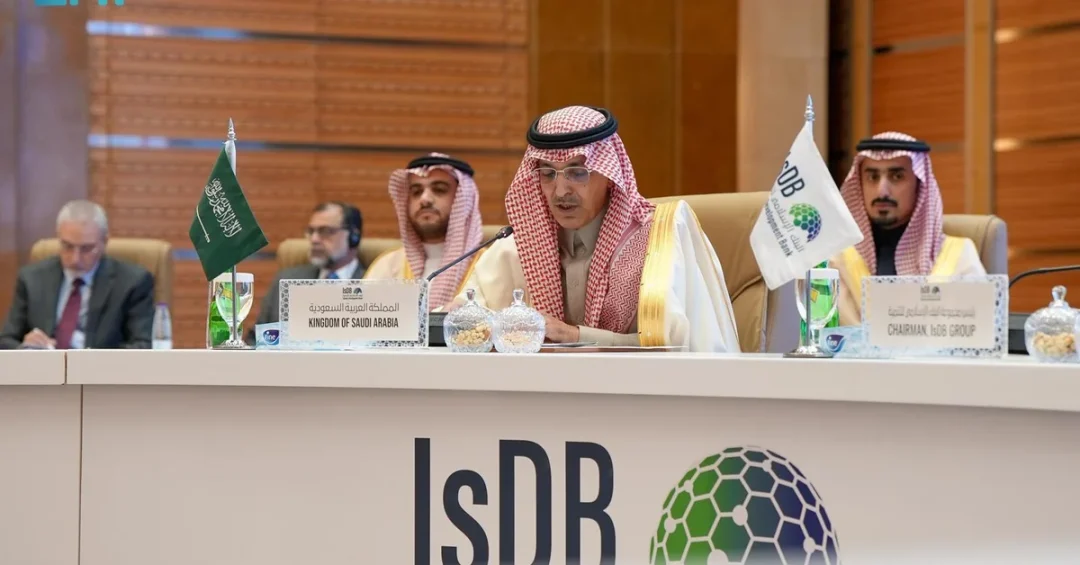
Saudi Minister of Finance Mohammed Al-Jadaan participated in the Islamic Development Bank Group’s Board of Governors’ retreat on January 12, 2025, at the King Salman International Convention Center in Madinah, where high-level consultations shaped an updated strategy for the bank covering 2026–2035. The retreat brought together governors and senior officials from across the bank’s membership to exchange views and ideas on a forward-looking vision that enhances the institution’s role in promoting sustainable development across its member countries.
How does a single gathering in Madinah shape the development trajectory of dozens of nations for an entire decade? The answer lies in the Islamic Development Bank Group’s unique position as a multilateral development institution serving 57 member countries across four continents. With a mandate rooted in Islamic solidarity and economic cooperation, the bank has served as a bridge between resource-rich nations and those seeking capital for infrastructure, education, and health projects. The retreat represented a critical juncture where strategic direction meets practical implementation, and where Saudi Arabia’s leadership role was reaffirmed through the active participation of its finance minister.
Context and Background
What makes the Islamic Development Bank Group’s strategic planning process so consequential for the developing world? Founded in 1975 and headquartered in Jeddah, the bank has grown into one of the most significant multilateral development institutions in the Islamic world, with a AAA credit rating and a track record of financing projects that span energy, transportation, agriculture, and social infrastructure. The 2026–2035 strategy represents the latest chapter in a continuous evolution that began with the bank’s establishment and has accelerated in recent years as member countries confront new economic realities.
The retreat in Madinah was not an isolated event but part of a structured consultation process designed to ensure that the bank’s next decade of operations reflects the priorities and aspirations of its diverse membership. The choice of Madinah as the venue carried symbolic weight, underscoring the Islamic character of the institution and the spiritual significance that unites its members. The King Salman International Convention Center provided a fitting setting for discussions that balanced technical financial considerations with the broader humanitarian and developmental mission that defines the bank’s work.
Saudi Arabia’s role in the bank’s history is difficult to overstate. As one of the institution’s founding members and largest financial supporters, the Kingdom has consistently championed the bank’s mission of fostering economic development and social progress in member countries. This support reflects a broader Saudi commitment to international development cooperation that extends well beyond the Islamic Development Bank Group to encompass bilateral aid programs, multilateral initiatives, and the Kingdom’s own domestic transformation under Vision 2030.
Key Details of the Retreat
What specific priorities did Minister Al-Jadaan outline for the bank’s next strategic phase? In his address to the assembled governors, the Saudi finance minister emphasized the importance of maximizing the bank’s comparative advantages to improve efficiency and effectiveness across its operations. This focus on optimization reflects a recognition that even well-endowed institutions must continually refine their approaches to deliver maximum developmental impact with available resources.
Al-Jadaan highlighted the need for achieving tangible developmental impact on the lives of individuals in member countries, a principle that places human welfare at the center of the bank’s strategic planning. This people-centered approach aligns with the broader international development consensus that measurable improvements in living standards, educational outcomes, and economic opportunities should be the ultimate measure of any development institution’s success. The minister also stressed the importance of enhancing the institutional governance framework to ensure transparency and efficiency, recognizing that sound governance is essential for maintaining the trust of member countries and international partners alike.
The retreat discussions also addressed the optimization of financial and knowledge resources to serve the development goals of member countries. This dual focus on financial capital and intellectual capital reflects an understanding that sustainable development requires not only funding but also the expertise, best practices, and technical knowledge that can help countries build their own capacity for long-term growth. Minister Al-Jadaan noted that the Kingdom will continue its unwavering support for the bank and its member countries, emphasizing the importance of productive dialogue and constructive proposals to advance the path of sustainable development.
Saudi Arabia’s Leadership Role
Why does Saudi Arabia’s participation carry such weight in the Islamic Development Bank Group’s deliberations? The Kingdom’s status as one of the bank’s largest supporters since its inception gives its voice particular influence in shaping strategic direction. This support has taken multiple forms over the decades, including substantial capital contributions, consistent engagement in governance processes, and diplomatic backing for the bank’s initiatives across the Islamic world.
Minister Al-Jadaan’s participation in the retreat reflected Saudi Arabia’s commitment to supporting joint development efforts and strengthening Islamic solidarity. These twin objectives, development and solidarity, have been consistent themes in Saudi Arabia’s approach to international cooperation. The Kingdom’s contributions to the Islamic Development Bank Group are part of a broader pattern of Saudi engagement with multilateral institutions, including the World Bank, the International Monetary Fund, and various regional development banks.
The retreat also provided an opportunity for Saudi Arabia to share insights from its own ambitious transformation under Vision 2030, the comprehensive reform program launched by Crown Prince Mohammed bin Salman that aims to diversify the Kingdom’s economy, enhance social development, and position Saudi Arabia as a global leader in innovation and sustainability. The lessons learned from this domestic transformation, including the importance of strong governance, strategic prioritization, and effective implementation, carry relevance for the Islamic Development Bank Group as it develops its own strategic framework.
International and Regional Impact
How will the Islamic Development Bank Group’s updated strategy affect development outcomes across its member countries? The 2026–2035 strategy will guide the bank’s investments and operations during a period when many member countries face significant economic challenges, including the need to recover from global economic disruptions, adapt to climate change, and create opportunities for growing populations. The strategic priorities outlined at the retreat, including efficiency, impact, governance, and resource optimization, are designed to position the bank to address these challenges effectively.
The bank’s role extends beyond individual member countries to encompass broader regional and international development objectives. In regions such as Sub-Saharan Africa, South Asia, and Central Asia, where many member countries are located, the bank’s financing and technical assistance contribute to infrastructure development, educational advancement, and economic integration. The updated strategy will shape how the bank engages with these regions and how it coordinates with other development partners, including international financial institutions, bilateral donors, and private sector investors.
The retreat’s emphasis on governance and transparency also reflects broader trends in international development finance, where stakeholders increasingly demand accountability and measurable results. By strengthening its institutional governance framework, the Islamic Development Bank Group positions itself to maintain its strong credit rating, attract additional resources from international capital markets, and demonstrate to member countries and partners that their investments are being managed effectively and responsibly.
Economic and Strategic Significance
What economic principles guided the discussions at the Madinah retreat? The focus on maximizing comparative advantages reflects a sophisticated understanding of institutional economics, recognizing that the Islamic Development Bank Group’s effectiveness depends on identifying and excelling in areas where it has unique strengths. These strengths include its Islamic finance expertise, its deep relationships with member country governments, and its ability to mobilize resources from both traditional and Islamic capital markets.
The emphasis on tangible developmental impact represents a shift from measuring success by inputs, such as funds disbursed, to measuring success by outcomes, such as improvements in human welfare. This outcome-oriented approach aligns with best practices in international development and reflects a commitment to ensuring that the bank’s resources generate maximum benefit for the people of member countries. The focus on optimizing financial and knowledge resources similarly reflects a recognition that development finance must be complemented by technical assistance, capacity building, and knowledge sharing to achieve lasting results.
The strategic discussions in Madinah also carry implications for the broader architecture of international development finance. As one of the largest multilateral development institutions in the Islamic world, the Islamic Development Bank Group’s strategic direction influences how other institutions approach development challenges in common member countries. The bank’s emphasis on Islamic solidarity and cooperative approaches to development offers an alternative model to purely market-based or purely state-led development paradigms.
Vision 2030 Alignment
How does Saudi Arabia’s engagement with the Islamic Development Bank Group reflect the Kingdom’s Vision 2030 objectives? Vision 2030, the comprehensive national transformation program launched in 2016, includes a strong emphasis on international cooperation and the Kingdom’s role as a responsible global citizen. Saudi Arabia’s active participation in multilateral institutions such as the Islamic Development Bank Group demonstrates this commitment and reinforces the Kingdom’s position as a leader in international development cooperation.
The retreat in Madinah also showcased Saudi Arabia’s convening power and its ability to bring together diverse stakeholders for constructive dialogue on issues of global importance. This convening role is a key element of the Kingdom’s Vision 2030 strategy, which aims to position Saudi Arabia as a hub for international diplomacy, business, and cultural exchange. By hosting the retreat at the King Salman International Convention Center, Saudi Arabia provided a platform for the strategic discussions that will shape the Islamic Development Bank Group’s work for years to come.
As the Islamic Development Bank Group moves forward with its 2026–2035 strategy, Saudi Arabia’s continued support and engagement will remain essential to the bank’s success in promoting sustainable development and strengthening Islamic solidarity. Minister Al-Jadaan’s participation in the retreat, and his emphasis on productive dialogue and constructive proposals, reflects the Kingdom’s enduring commitment to these objectives and its vision of a future in which all member countries can achieve their aspirations for a brighter future.
20 Questions
Q1. What was the purpose of the Islamic Development Bank Group’s Board of Governors’ retreat in Madinah?
A1. The retreat was held to conduct high-level consultations and in-depth discussions aimed at developing an updated strategy for the Islamic Development Bank Group for the period 2026–2035, allowing governors to exchange views and ideas on the bank’s future direction.
Q2. Who represented Saudi Arabia at the Islamic Development Bank Group’s Board of Governors’ retreat?
A2. Saudi Minister of Finance Mohammed Al-Jadaan represented the Kingdom at the retreat, delivering a speech that outlined strategic priorities and reaffirmed Saudi Arabia’s commitment to supporting the bank’s development mission and its member countries.
Q3. Where was the Islamic Development Bank Group’s Board of Governors’ retreat held?
A3. The retreat took place at the King Salman International Convention Center in Madinah, a venue that underscores the Islamic character of the institution and provides a fitting setting for discussions on the bank’s strategic direction.
Q4. What strategic period does the Islamic Development Bank Group’s new strategy cover?
A4. The updated strategy under discussion at the retreat covers the period 2026–2035, a ten-year framework that will guide the bank’s operations, investments, and development initiatives across its member countries during a critical period of global economic change.
Q5. What key priorities did Minister Al-Jadaan outline for the bank’s upcoming phase?
A5. Al-Jadaan emphasized maximizing the bank’s comparative advantages, achieving tangible developmental impact on individuals in member countries, enhancing institutional governance for transparency and efficiency, and optimizing financial and knowledge resources to serve member countries’ development goals.
Q6. How has Saudi Arabia supported the Islamic Development Bank Group historically?
A6. Saudi Arabia has been one of the largest supporters of the Islamic Development Bank Group since its inception in 1975, providing substantial financial contributions, consistent governance engagement, and diplomatic backing for the bank’s initiatives across the Islamic world.
Q7. What did Minister Al-Jadaan say about Saudi Arabia’s ongoing commitment to the bank?
A7. Al-Jadaan stated that the Kingdom will continue its unwavering support for the bank and its member countries to achieve the aspirations of their peoples for a brighter future, emphasizing the importance of productive dialogue and constructive proposals.
Q8. Why is the Islamic Development Bank Group significant in the Islamic world?
A8. The bank serves 57 member countries across four continents and is one of the most significant multilateral development institutions in the Islamic world, with a AAA credit rating and a track record of financing major development projects.
Q9. What does the bank’s focus on ‘comparative advantages’ mean in practice?
A9. It means identifying areas where the bank has unique strengths, such as Islamic finance expertise and deep government relationships, and concentrating resources there to improve efficiency, effectiveness, and overall developmental impact across member countries.
Q10. How does the bank’s strategy aim to achieve tangible developmental impact?
A10. The strategy focuses on measurable improvements in the lives of individuals in member countries, including better living standards, educational outcomes, and economic opportunities, shifting from measuring inputs to measuring outcomes and real-world benefits.
Q11. What role does governance play in the bank’s updated strategy?
A11. Enhancing institutional governance ensures transparency and efficiency, which helps maintain member countries’ trust, supports the bank’s strong credit rating, attracts additional international capital, and demonstrates responsible management of resources to all stakeholders.
Q12. How does the Islamic Development Bank Group optimize its financial and knowledge resources?
A12. The bank combines financial capital with intellectual capital by providing funding alongside technical assistance, capacity building, and knowledge sharing, helping member countries develop their own capabilities for long-term sustainable growth and development.
Q13. What is the significance of holding the retreat in Madinah?
A13. Madinah’s selection as the venue carries symbolic weight, underscoring the Islamic character of the institution and the spiritual significance that unites its members, while the King Salman International Convention Center provides a world-class facility for high-level discussions.
Q14. How does Saudi Arabia’s Vision 2030 relate to its support for the Islamic Development Bank Group?
A14. Vision 2030 emphasizes international cooperation and responsible global citizenship. Saudi Arabia’s active participation in the bank demonstrates this commitment and reinforces the Kingdom’s position as a leader in international development cooperation and multilateral engagement.
Q15. What economic challenges do member countries face that the bank’s strategy addresses?
A15. Member countries face challenges including recovery from global economic disruptions, adaptation to climate change, and creating opportunities for growing populations. The bank’s strategic priorities are designed to help address these challenges effectively through targeted financing and support.
Q16. How does the bank coordinate with other international development institutions?
A16. The bank coordinates with international financial institutions, bilateral donors, and private sector investors, working together on common development objectives in shared member countries to maximize impact and avoid duplication of efforts in development finance.
Q17. What does ‘Islamic solidarity’ mean in the context of the bank’s work?
A17. Islamic solidarity refers to the cooperative approach among member countries to support each other’s development, rooted in shared values and a commitment to mutual assistance, distinguishing the bank’s model from purely market-based development paradigms.
Q18. How will the 2026–2035 strategy affect the bank’s credit rating and market access?
A18. By strengthening governance and demonstrating effective resource management, the strategy supports the bank’s AAA credit rating, helping it attract additional resources from international capital markets and maintain the confidence of investors and member countries.
Q19. What is Saudi Arabia’s convening role in international development discussions?
A19. Saudi Arabia’s ability to bring together diverse stakeholders for constructive dialogue on global issues is a key element of Vision 2030, positioning the Kingdom as a hub for international diplomacy, business, and cultural exchange on the world stage.
Q20. What is the expected outcome of the retreat for the bank’s future direction?
A20. The retreat is expected to produce a refined strategic framework for 2026–2035 that enhances the bank’s development impact, strengthens governance, optimizes resources, and reaffirms its mission of promoting sustainable development and Islamic solidarity among member countries.
Reader Feedback
We value your thoughts. Please share your feedback on this article.
Your feedback helps us improve our coverage.
Related articles
 Saudi Ministry Introduces 15 Incentives for Exporters
 GCC Joins Asian Financial Forum to Tackle Global Economic Challenges
 GEA Launches 29 New Entertainment Investment Opportunities
 Saudi Reef Delivers SAR 2.4 Billion for Rural Development
 Mada E-Commerce Sales Hit SAR17.4bn in November, Up 29%
 U.S.-Saudi Business Council Leads Delegation to Future Minerals Forum