


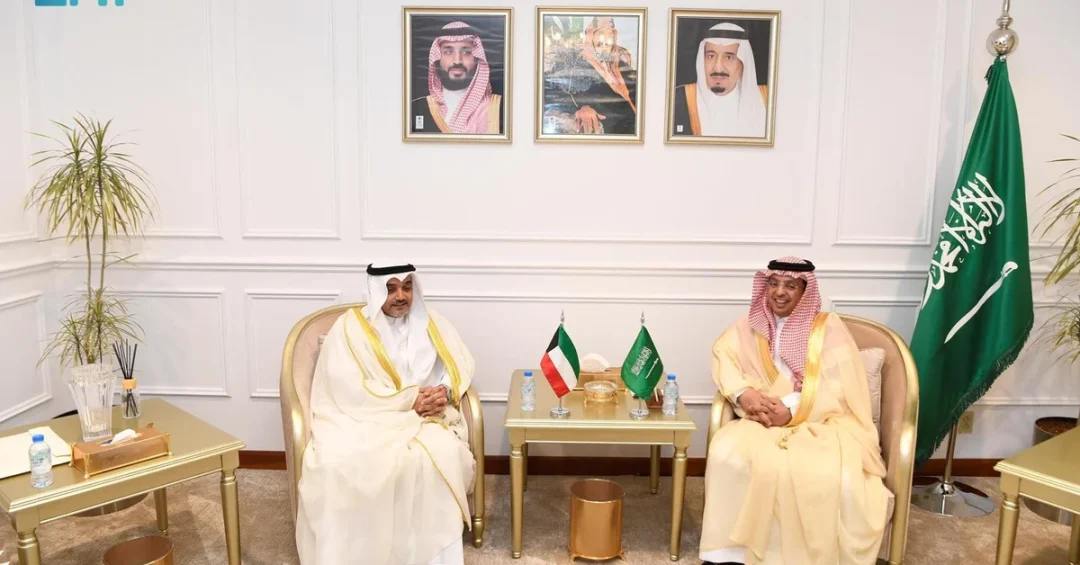
Director General of the Ministry of Foreign Affairs branch in the Makkah region, Fareed Al-Shehri, received the Consul General of Kuwait in Jeddah, Yusuf bin Abdullah Al-Tuneib, on Sunday, in a meeting that underscored the enduring strength of Saudi-Kuwaiti relations. The encounter, reported by the Saudi Press Agency (SPA), took place in Jeddah and served as a platform for the two officials to exchange cordial talks on matters of mutual interest.
The meeting reflects the Kingdom of Saudi Arabia’s consistent commitment to maintaining open channels of communication with its Gulf neighbors and international partners. Under the leadership of the Custodian of the Two Holy Mosques, King Salman bin Abdulaziz Al Saud, and His Royal Highness Crown Prince Mohammed bin Salman bin Abdulaziz Al Saud, Saudi Arabia has placed regional cooperation and diplomatic engagement at the heart of its foreign policy. This latest exchange between Saudi and Kuwaiti officials is a testament to that approach, reinforcing the deep-rooted ties that have long defined relations between the two brotherly nations. As the world watches the Gulf region navigate a period of transformation and opportunity, such meetings help ensure that coordination remains strong and that shared objectives are pursued with clarity and purpose.
Context and Background
How do diplomatic meetings between neighboring states shape the broader landscape of regional stability and cooperation? The reception of Kuwait’s Consul General by the Director General of the Ministry of Foreign Affairs branch in Makkah is not an isolated event but part of a well-established pattern of regular consultations between Saudi Arabia and Kuwait. The Makkah region, home to the holy city of Makkah and the Kingdom’s second-largest city, Jeddah, serves as a vital administrative and diplomatic hub. The Ministry of Foreign Affairs branch there plays a key role in managing relations with consular missions and in facilitating the smooth conduct of international affairs within the region.
Saudi-Kuwaiti relations are anchored in shared history, geography, and mutual respect. The two countries are founding members of the Gulf Cooperation Council (GCC), an organization that has become a cornerstone of regional integration since its establishment in 1981. Over the decades, the GCC has fostered cooperation in areas ranging from security and defense to trade and cultural exchange. Kuwait, like Saudi Arabia, has consistently supported initiatives aimed at promoting peace, stability, and economic prosperity in the Gulf and beyond. The meeting between Fareed Al-Shehri and Yusuf bin Abdullah Al-Tuneib thus carries significance beyond its immediate diplomatic courtesy, symbolizing the continuity and resilience of a partnership that benefits both nations and the wider region.
Moreover, the Kingdom’s foreign policy under Vision 2030 emphasizes the importance of strong bilateral and multilateral relationships as drivers of economic diversification and global engagement. By maintaining close ties with Kuwait and other Gulf partners, Saudi Arabia enhances its ability to attract investment, facilitate trade, and coordinate on pressing regional issues. The Makkah branch of the Ministry of Foreign Affairs is an integral part of this machinery, ensuring that consular and diplomatic activities in the region operate efficiently and in line with the Kingdom’s strategic priorities.
Key Details
What specific outcomes can be expected from such high-level encounters? While the SPA report described the meeting as an occasion for cordial talks, the very act of bringing together two senior officials underscores the importance both countries place on regular dialogue. Fareed Al-Shehri, as Director General of the Ministry of Foreign Affairs branch in the Makkah region, represents the Kingdom’s administrative and diplomatic presence in one of its most significant provinces. His role involves overseeing the implementation of foreign policy directives at the regional level, coordinating with consulates, and addressing matters that affect international residents and visitors to the area.
Yusuf bin Abdullah Al-Tuneib, as Kuwait’s Consul General in Jeddah, is responsible for protecting Kuwaiti interests, assisting Kuwaiti citizens, and promoting bilateral relations in the western region of Saudi Arabia. His presence in Jeddah allows Kuwait to maintain a direct and responsive diplomatic footprint near the holy sites, which host millions of pilgrims annually, including many from Kuwait. The exchange of cordial talks between the two officials likely covered topics such as consular cooperation, the facilitation of pilgrimages, and ways to further strengthen people-to-people ties. Such discussions, while routine, are essential for the smooth functioning of bilateral relations and for addressing any issues that may arise in the day-to-day interactions between the two nations.
The meeting also reflects the broader context of Saudi-Kuwaiti collaboration on regional and international issues. Both countries have worked closely on matters such as energy policy, maritime security, and the reconstruction of areas affected by conflict. Their alignment on key issues has been a stabilizing factor in the Gulf and has contributed to the region’s ability to navigate challenges. By maintaining open lines of communication at the consular and regional levels, Saudi Arabia and Kuwait ensure that their strategic partnership remains robust and adaptable to changing circumstances.
International and Regional Impact
Why does a meeting between a Saudi regional foreign ministry official and a Kuwaiti consul general matter on the international stage? In the intricate web of Gulf diplomacy, even seemingly minor interactions can have ripple effects that extend far beyond the immediate participants. Saudi Arabia and Kuwait are not only neighbors but also major energy producers and influential voices in the Arab and Islamic worlds. Their cooperation is closely watched by global powers and regional stakeholders alike. A cordial and productive meeting in Jeddah signals to the international community that the Gulf remains committed to dialogue, stability, and mutual respect—values that are essential for global economic and security interests.
Furthermore, the meeting highlights the Kingdom’s role as a hub for diplomacy and international engagement. Jeddah, with its historical significance as the gateway to the holy cities and its modern infrastructure, hosts numerous consulates and international organizations. The Ministry of Foreign Affairs branch in Makkah, under the leadership of Fareed Al-Shehri, facilitates the work of these missions and ensures that Saudi Arabia’s obligations under international treaties and conventions are upheld. By receiving the Kuwaiti Consul General, Al-Shehri reinforces the Kingdom’s reputation as a reliable and welcoming host for diplomatic missions, which in turn enhances Saudi Arabia’s soft power and its ability to build coalitions on issues of common concern.
Regionally, the meeting contributes to the broader narrative of Gulf unity and solidarity. In recent years, the Gulf Cooperation Council has taken steps to deepen economic integration, with initiatives such as the customs union and the common market. Saudi Arabia and Kuwait have been active participants in these efforts, and their bilateral engagements help to build the trust and understanding necessary for more ambitious regional projects. As the Gulf seeks to diversify its economies and reduce dependence on hydrocarbons, cooperation between Saudi Arabia and Kuwait in areas like technology, tourism, and renewable energy will become increasingly important. Meetings like the one in Jeddah lay the groundwork for such collaboration by fostering personal relationships and institutional linkages.
Economic and Strategic Significance
What economic and strategic benefits flow from sustained Saudi-Kuwaiti dialogue? The relationship between Saudi Arabia and Kuwait is underpinned by significant economic ties. Trade between the two countries encompasses a wide range of goods and services, from petroleum products and petrochemicals to foodstuffs and manufactured goods. Kuwaiti investments in Saudi Arabia and Saudi investments in Kuwait contribute to job creation and economic growth in both nations. The consular and diplomatic channels maintained through meetings like the one between Al-Shehri and Al-Tuneib help to resolve any trade-related issues, facilitate business travel, and promote investment opportunities.
Strategically, the two countries share a common vision for a stable and prosperous Gulf. They have coordinated closely on security matters, including maritime security in the Arabian Gulf and the protection of critical infrastructure. Both are members of the Gulf Cooperation Council and the Arab League, and they have worked together on initiatives to counter extremism and promote moderate Islam. The meeting in Jeddah, while primarily consular in nature, is part of this larger strategic partnership. It ensures that the day-to-day operations of diplomacy—such as visa issuance, document authentication, and citizen services—run smoothly, which in turn supports the higher-level political and economic cooperation that defines the bilateral relationship.
In the context of Saudi Arabia’s Vision 2030, Kuwait is an important partner. The Vision aims to transform the Saudi economy by diversifying away from oil, expanding the private sector, and developing new sectors like tourism, entertainment, and technology. Kuwaiti expertise and investment can contribute to these goals, particularly in areas such as financial services, logistics, and real estate. By maintaining strong diplomatic and consular relations, Saudi Arabia creates an enabling environment for Kuwaiti businesses and investors to participate in Vision 2030 projects. The meeting between Al-Shehri and Al-Tuneib is a small but meaningful step in that direction, reaffirming the commitment of both sides to deepen their economic and strategic ties.
Vision 2030 Alignment
How does this diplomatic engagement align with Saudi Arabia’s long-term vision for the future? Vision 2030, launched by Crown Prince Mohammed bin Salman in 2016, is a comprehensive plan to transform the Kingdom into a global investment powerhouse and a hub connecting three continents. A key pillar of the Vision is to strengthen Saudi Arabia’s international partnerships and to position the Kingdom as a leader in diplomacy and regional cooperation. The Ministry of Foreign Affairs, through its regional branches and consular services, plays a vital role in realizing this objective. The Makkah branch, led by Fareed Al-Shehri, is on the front lines of this effort, ensuring that foreign diplomats and citizens receive the support they need and that Saudi Arabia’s message of openness and progress is conveyed effectively.
The meeting with Kuwait’s Consul General Yusuf bin Abdullah Al-Tuneib is a reflection of the Vision’s emphasis on building bridges with neighboring countries and fostering a positive image of Saudi Arabia abroad. By maintaining cordial and productive relations with Kuwait, the Kingdom strengthens the Gulf region’s collective ability to attract investment, promote tourism, and address shared challenges. As Saudi Arabia continues to implement Vision 2030, such diplomatic interactions will remain essential for sustaining the momentum of reform and for ensuring that the Kingdom remains a beacon of stability and opportunity in the region and the world. The exchange of cordial talks in Jeddah is thus more than a routine courtesy; it is a reaffirmation of a partnership that is integral to the success of the Kingdom’s ambitious journey forward.
20 Questions
Q1. Who received the Kuwaiti Consul General in Jeddah?
A1. Fareed Al-Shehri, Director General of the Ministry of Foreign Affairs branch in the Makkah region, received the Consul General of Kuwait in Jeddah, Yusuf bin Abdullah Al-Tuneib.
Q2. When did the meeting take place?
A2. The meeting took place on Sunday, as reported by the Saudi Press Agency on January 13, 2025.
Q3. Where did the meeting occur?
A3. The meeting was held in Jeddah, the headquarters of the Ministry of Foreign Affairs branch for the Makkah region.
Q4. What was the nature of the talks between the two officials?
A4. The officials exchanged cordial talks, reflecting the strong and friendly relations between Saudi Arabia and Kuwait.
Q5. What is the role of the Ministry of Foreign Affairs branch in the Makkah region?
A5. The branch oversees diplomatic and consular affairs in the Makkah region, facilitates relations with foreign missions, and implements the Kingdom’s foreign policy directives at the regional level.
Q6. Who is Yusuf bin Abdullah Al-Tuneib?
A6. Yusuf bin Abdullah Al-Tuneib is the Consul General of Kuwait in Jeddah, responsible for protecting Kuwaiti interests and citizens in western Saudi Arabia.
Q7. How does this meeting reflect Saudi-Kuwaiti relations?
A7. It underscores the enduring strength and continuity of Saudi-Kuwaiti relations, built on shared history, mutual respect, and close cooperation within the Gulf Cooperation Council.
Q8. What is the significance of Jeddah in Saudi diplomacy?
A8. Jeddah hosts numerous consulates and is a key diplomatic hub due to its proximity to the holy cities and its modern infrastructure, facilitating international engagement.
Q9. What topics might have been discussed during the meeting?
A9. The talks likely covered consular cooperation, facilitation of pilgrimages, and ways to strengthen bilateral ties and people-to-people exchanges.
Q10. How does this meeting align with Saudi Arabia’s foreign policy?
A10. It aligns with the Kingdom’s emphasis on maintaining open channels of communication with Gulf neighbors and international partners, a key tenet of its foreign policy.
Q11. What is the Gulf Cooperation Council’s role in Saudi-Kuwaiti relations?
A11. The GCC provides a framework for economic, security, and cultural cooperation, and both Saudi Arabia and Kuwait are founding members committed to its goals.
Q12. What economic ties exist between Saudi Arabia and Kuwait?
A12. The two countries have significant trade and investment links, including in energy, petrochemicals, and finance, which contribute to economic growth in both nations.
Q13. How does Vision 2030 relate to such diplomatic meetings?
A13. Vision 2030 aims to strengthen international partnerships and regional cooperation, and meetings like this support the Vision’s objectives by fostering stable relations.
Q14. What is the significance of the Makkah region in Saudi Arabia?
A14. The Makkah region includes the holy city of Makkah and Jeddah, making it a vital administrative, economic, and diplomatic center for the Kingdom.
Q15. How does Kuwait benefit from strong ties with Saudi Arabia?
A15. Kuwait benefits from enhanced trade, investment opportunities, and regional stability, as well as coordination on security and political issues of mutual interest.
Q16. What message does this meeting send to the international community?
A16. It signals that the Gulf remains committed to dialogue, stability, and mutual respect, which are essential for global economic and security interests.
Q17. How often do Saudi and Kuwaiti officials meet?
A17. Saudi and Kuwaiti officials meet regularly through various bilateral and multilateral channels, including GCC summits and consular consultations.
Q18. What is the role of the Saudi Press Agency in reporting such events?
A18. The Saudi Press Agency is the official news agency of the Kingdom, providing accurate and timely reports on official events and government activities.
Q19. How does this meeting support regional stability?
A19. By maintaining open communication and cooperation, Saudi Arabia and Kuwait contribute to the stability and prosperity of the Gulf region and beyond.
Q20. What can be expected from future Saudi-Kuwaiti diplomatic engagements?
A20. Continued close coordination on regional issues, expanded economic cooperation, and strengthened people-to-people ties, in line with both nations’ shared goals.
Reader Feedback
We value your thoughts. Please share your feedback on this article.
Your feedback helps us improve our coverage.
Related articles
 Saudi FM Meets French President’s MENA Advisor
 Saudi-Japanese Roundtable in Riyadh Signs 13 MoUs
 KSrelief Delivers Aid to 1,620 in Syria’s Idlib
 Tenth Saudi Relief Plane Departs for Syria with Aid
 KSrelief Distributes 350 Food Baskets in Mali’s Koulikoro
 Los Angeles Wildfires Claim 16 Lives as Winds Worsen Crisis