


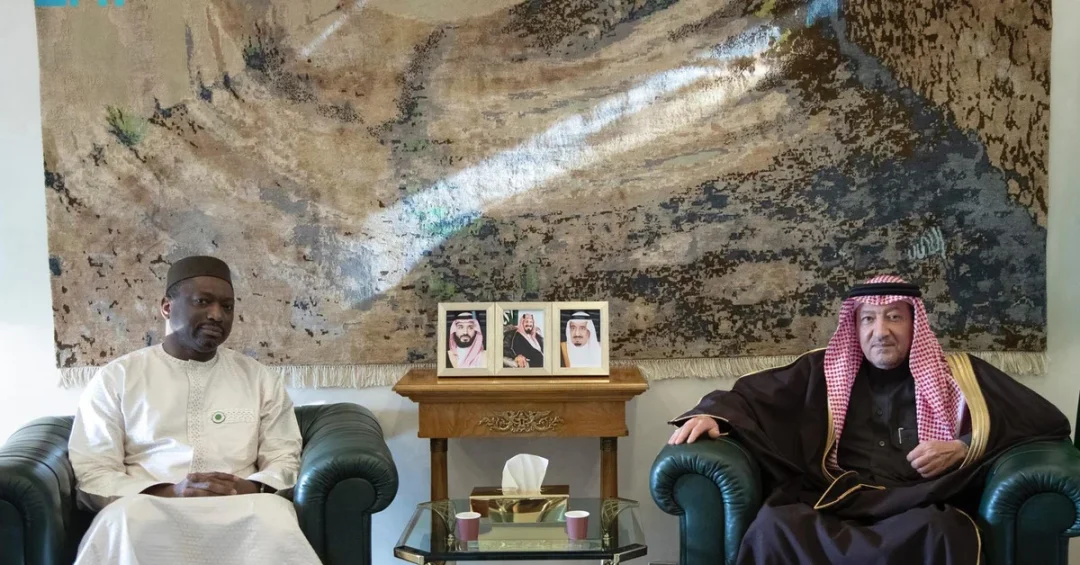
Saudi Vice Foreign Minister Eng. Waleed El-Khereiji received Dr. Koutoub Mustapha Sano, Secretary-General of the International Islamic Fiqh Academy, in Riyadh on December 30, 2024, in a meeting that underscored the Kingdom’s enduring commitment to advancing joint Islamic work, interfaith dialogue, and global peace. The two officials reviewed the broad landscape of cooperative Islamic initiatives and discussed the Kingdom’s international efforts to promote tolerance and mutual understanding among peoples and nations. The meeting, reported by the Saudi Press Agency, also addressed the academy’s ongoing contributions to these shared objectives, with Dr. Sano expressing his sincere gratitude and deep appreciation to the Kingdom of Saudi Arabia for its continuous support as the academy’s host country, particularly during the current challenges facing the Islamic world. Several officials attended the meeting, reflecting the importance both sides attach to institutional cooperation.
The encounter in Riyadh carries significance beyond a routine diplomatic courtesy. It signals the Kingdom’s sustained engagement with scholarly and jurisprudential institutions that shape Islamic thought and provide guidance on contemporary issues confronting Muslim communities worldwide. As the host nation of the International Islamic Fiqh Academy, Saudi Arabia has long positioned itself as a convening power for Islamic scholarship, and this meeting reaffirms that role at a time when the Muslim world faces complex political, social, and economic transitions. For international observers, the exchange offers a window into how Riyadh integrates religious scholarship into its broader diplomatic architecture, using institutions like the academy to foster consensus and stability across the Islamic world while projecting an image of moderation and constructive global engagement.
Context and Background
What is the International Islamic Fiqh Academy, and why does its work matter to the global Muslim community? The academy, headquartered in Jeddah, Saudi Arabia, operates under the umbrella of the Organisation of Islamic Cooperation (OIC) and serves as a premier institution for advanced Islamic legal scholarship. It brings together distinguished jurists, scholars, and experts from across the Muslim world to deliberate on contemporary issues — from bioethics and financial transactions to family law and environmental stewardship — issuing reasoned opinions grounded in Islamic jurisprudence. Its role is advisory and scholarly rather than executive, but its resolutions carry substantial weight among governments, religious authorities, and academic institutions across OIC member states.
Saudi Arabia’s relationship with the academy is deeply rooted in the Kingdom’s historical role as the custodian of Islam’s holiest sites and its longstanding tradition of supporting Islamic scholarship. The Kingdom has hosted the academy since its founding and has provided consistent financial, logistical, and diplomatic backing, enabling the institution to convene scholars from diverse schools of thought and geographic regions. This support reflects a broader Saudi policy of fostering unity within the Islamic world and promoting moderate, consensus-based approaches to contemporary challenges. The December 30 meeting between Vice Foreign Minister El-Khereiji and Secretary-General Sano therefore represents a continuation of a well-established partnership rather than a new departure, but its timing and framing highlight the Kingdom’s active diplomacy during a period of regional turbulence.
Key Details of the Riyadh Meeting
According to the Saudi Press Agency, the meeting covered several substantive areas of mutual interest. Vice Foreign Minister El-Khereiji and Secretary-General Sano reviewed aspects of joint Islamic work, a broad category that encompasses cooperation among OIC institutions, coordination on humanitarian and educational initiatives, and efforts to harmonize positions on issues affecting Muslim communities globally. They discussed the Kingdom’s international efforts in promoting dialogue, tolerance, and peace — themes that have become central to Saudi foreign policy under the leadership of Custodian of the Two Holy Mosques King Salman bin Abdulaziz Al Saud and His Royal Highness Crown Prince Mohammed bin Salman bin Abdulaziz Al Saud, Prime Minister and Chairman of the Council of Economic and Development Affairs.
The academy’s own efforts in these areas were also on the agenda. Dr. Sano, a respected scholar with extensive experience in Islamic jurisprudence and interfaith engagement, expressed his sincere gratitude and deep appreciation to the Kingdom of Saudi Arabia for its continuous support of the academy, particularly during the current challenges facing the Islamic world. This acknowledgment underscores the practical dimensions of Saudi support — whether through funding, diplomatic facilitation, or the Kingdom’s convening power that enables the academy to bring together scholars from across the Islamic world. The presence of several officials at the meeting further indicates the institutional weight both sides attached to the discussions, suggesting that the outcomes may inform ongoing collaboration across multiple domains.
While the specific resolutions or action items from the meeting were not publicly detailed, the fact that the exchange occurred at the level of the Vice Foreign Minister signals the Kingdom’s view of the academy as a strategic partner in its broader diplomatic outreach. The meeting also serves to reinforce the academy’s position as a key node in the network of Islamic institutions that Saudi Arabia supports, providing a platform for scholarly consensus that can complement political and economic diplomacy.
International and Regional Impact
Why does a meeting between a Saudi vice foreign minister and an Islamic academy secretary-general resonate beyond the Kingdom’s borders? The answer lies in the intersection of religion, diplomacy, and soft power in a region where religious authority and political legitimacy are often intertwined. The International Islamic Fiqh Academy’s resolutions and scholarly guidance influence debates on issues ranging from Islamic finance and banking to medical ethics and environmental policy. By engaging with the academy’s leadership, Saudi Arabia reinforces its role as a bridge between traditional Islamic scholarship and contemporary global challenges, a positioning that resonates with Muslim-majority countries seeking both authenticity and modernity.
Regionally, the meeting comes amid ongoing challenges in the Islamic world, including conflicts, humanitarian crises, and economic pressures. Dr. Sano’s explicit reference to these challenges highlights the academy’s relevance as a source of guidance and solidarity. Saudi Arabia’s support for the academy during such times serves to strengthen the Kingdom’s image as a stabilizing force and a reliable partner for Islamic institutions. Internationally, the emphasis on dialogue, tolerance, and peace aligns with global efforts to combat extremism and foster interfaith understanding — objectives that are increasingly important to Western governments and international organizations. The meeting thus contributes to a wider narrative of Saudi Arabia as a constructive actor in global affairs, bridging divides and promoting moderation.
Economic and Strategic Significance
How does engagement with an Islamic jurisprudence academy connect to Saudi Arabia’s economic and strategic priorities? The link may not be immediately obvious, but it is substantial. The academy’s work on Islamic finance and banking standards directly supports the growth of the global Islamic finance industry, a sector in which Saudi Arabia is a major player. The Kingdom’s financial institutions, including the Islamic Development Bank and numerous Sharia-compliant banks, rely on scholarly consensus to develop products and instruments that meet both religious and regulatory requirements. By supporting the academy, Saudi Arabia helps shape the intellectual infrastructure that underpins this multi-trillion-dollar industry.
Strategically, the meeting reinforces Saudi Arabia’s leadership within the Organisation of Islamic Cooperation and its ability to convene and influence Islamic scholarly opinion. This soft power complements the Kingdom’s economic weight and its diplomatic outreach through initiatives such as the Middle East Green Initiative and Vision 2030’s international partnership programs. In a world where religious and cultural diplomacy increasingly shape international relations, Saudi Arabia’s investment in institutions like the International Islamic Fiqh Academy pays dividends in terms of influence, goodwill, and the ability to promote moderate, consensus-based solutions to global challenges. The meeting also underscores the Kingdom’s commitment to multilateralism within the Islamic world, a principle that enhances its standing as a responsible global stakeholder.
Vision 2030 Alignment
How does the December 30 meeting connect to Saudi Vision 2030, the Kingdom’s ambitious blueprint for economic diversification and social transformation? Vision 2030 emphasizes Saudi Arabia’s role as a global leader and a hub for international cooperation, with a strong focus on moderation, tolerance, and constructive engagement. The meeting between Vice Foreign Minister El-Khereiji and Secretary-General Sano embodies these principles by showcasing the Kingdom’s commitment to supporting Islamic scholarship and promoting dialogue. Vision 2030’s cultural and religious dimensions include efforts to enhance the Hajj and Umrah experience, preserve Islamic heritage, and position Saudi Arabia as a center for moderate Islam — all of which align with the academy’s mission and its reliance on Saudi hospitality and support.
Moreover, Vision 2030’s emphasis on international partnerships and soft power is directly served by the Kingdom’s ongoing engagement with the International Islamic Fiqh Academy. By nurturing this relationship, Saudi Arabia strengthens its network of allies and partners across the Muslim world, fosters scholarly exchange that can inform policy, and reinforces its reputation as a force for stability and progress. As the Kingdom continues to implement its transformative agenda, such diplomatic and scholarly engagements will remain integral to its strategy of projecting influence and building bridges. The meeting in Riyadh is a small but meaningful illustration of how Vision 2030’s aspirations translate into concrete diplomatic action, reinforcing Saudi Arabia’s role as a leader in the Islamic world and a responsible global actor committed to peace, tolerance, and shared prosperity.
20 Questions
Q1. Who received the Secretary-General of the International Islamic Fiqh Academy in Riyadh?
A1. Saudi Vice Foreign Minister Eng. Waleed El-Khereiji received Dr. Koutoub Mustapha Sano, Secretary-General of the International Islamic Fiqh Academy, in Riyadh on December 30, 2024, according to the Saudi Press Agency.
Q2. What is the International Islamic Fiqh Academy?
A2. The International Islamic Fiqh Academy is a premier institution for Islamic legal scholarship headquartered in Jeddah, Saudi Arabia, operating under the Organisation of Islamic Cooperation to address contemporary issues through jurisprudence.
Q3. What topics were discussed during the meeting?
A3. They reviewed aspects of joint Islamic work, the Kingdom’s international efforts in promoting dialogue, tolerance, and peace, and the academy’s efforts in these areas, according to the official report.
Q4. What did Dr. Koutoub Mustapha Sano express to Saudi Arabia?
A4. Dr. Sano expressed his sincere gratitude and deep appreciation to the Kingdom of Saudi Arabia as host country and for its continuous support of the academy, particularly during current challenges facing the Islamic world.
Q5. Why is Saudi Arabia’s role as host country significant?
A5. Saudi Arabia’s role as host country provides the academy with stability, resources, and convening power, enabling scholars from across the Muslim world to collaborate and issue guidance on contemporary issues.
Q6. How does this meeting relate to Saudi Arabia’s foreign policy?
A6. The meeting reflects Saudi Arabia’s foreign policy priorities of promoting dialogue, tolerance, and peace, and reinforces the Kingdom’s leadership within the Organisation of Islamic Cooperation and the broader Islamic world.
Q7. Who attended the meeting besides the two principals?
A7. Several officials attended the meeting, underscoring the institutional importance both sides attached to the discussions, though their names were not disclosed in the official report.
Q8. What is the significance of the meeting’s timing?
A8. The meeting occurred amid ongoing challenges in the Islamic world, highlighting Saudi Arabia’s sustained commitment to supporting Islamic institutions and promoting stability during turbulent times.
Q9. How does the academy influence Islamic finance?
A9. The academy issues scholarly resolutions on Islamic finance and banking, providing guidance that shapes Sharia-compliant financial products and supports the growth of the global Islamic finance industry.
Q10. What does ‘joint Islamic work’ refer to in this context?
A10. Joint Islamic work encompasses cooperation among OIC institutions, coordination on humanitarian and educational initiatives, and efforts to harmonize positions on issues affecting Muslim communities globally.
Q11. How does Saudi Arabia support the academy financially?
A11. Saudi Arabia provides consistent financial, logistical, and diplomatic backing as the host country, enabling the academy to convene scholars and operate effectively across the Islamic world.
Q12. What is the academy’s role in promoting tolerance?
A12. The academy promotes tolerance by issuing scholarly guidance that encourages moderation, interfaith dialogue, and peaceful coexistence, aligning with Saudi Arabia’s international efforts in these areas.
Q13. How does this meeting align with Vision 2030?
A13. The meeting aligns with Vision 2030’s emphasis on international cooperation, moderation, and soft power, showcasing Saudi Arabia’s role as a global leader and hub for Islamic scholarship.
Q14. What are the current challenges facing the Islamic world?
A14. Challenges include regional conflicts, humanitarian crises, and economic pressures, which make the academy’s guidance and Saudi Arabia’s support particularly valuable for Muslim communities.
Q15. How does the academy interact with OIC member states?
A15. The academy serves OIC member states by providing scholarly opinions and recommendations on contemporary issues, which governments and institutions can use to inform policy and practice.
Q16. What is the significance of Dr. Sano’s expression of gratitude?
A16. His gratitude underscores the practical and symbolic importance of Saudi support, reinforcing the Kingdom’s reputation as a reliable partner for Islamic institutions during challenging times.
Q17. How does this meeting affect Saudi Arabia’s international image?
A17. It enhances Saudi Arabia’s image as a constructive global actor committed to dialogue, tolerance, and peace, strengthening its soft power and diplomatic influence across the Islamic world and beyond.
Q18. What role does the Vice Foreign Minister play in Saudi diplomacy?
A18. The Vice Foreign Minister supports the Foreign Minister in implementing Saudi foreign policy, engaging with international counterparts, and advancing the Kingdom’s diplomatic objectives worldwide.
Q19. How does the academy contribute to Islamic jurisprudence?
A19. The academy brings together distinguished jurists to deliberate on contemporary issues, issuing reasoned opinions that advance Islamic jurisprudence and provide guidance for modern challenges.
Q20. What does this meeting signal about Saudi Arabia’s global role?
A20. It signals Saudi Arabia’s continued leadership in fostering Islamic solidarity, promoting moderate discourse, and engaging with scholarly institutions to address global challenges through dialogue and cooperation.
Reader Feedback
We value your thoughts. Please share your feedback on this article.
Your feedback helps us improve our coverage.
Related articles
 KSrelief Launches 2025 Prosthetics Program in Yemen’s Aden
 KSrelief Distributes 132 Shelter Kits in Baghlan, Afghanistan
 Saudi Crown Prince Condoles US President on Carter’s Passing
 King Salman Condoles US President on Jimmy Carter’s Passing
 KSrelief Concludes Pediatric Surgery Project in Djibouti
 Saudi Crown Prince Offers Condolences to Korea After Muan Crash