


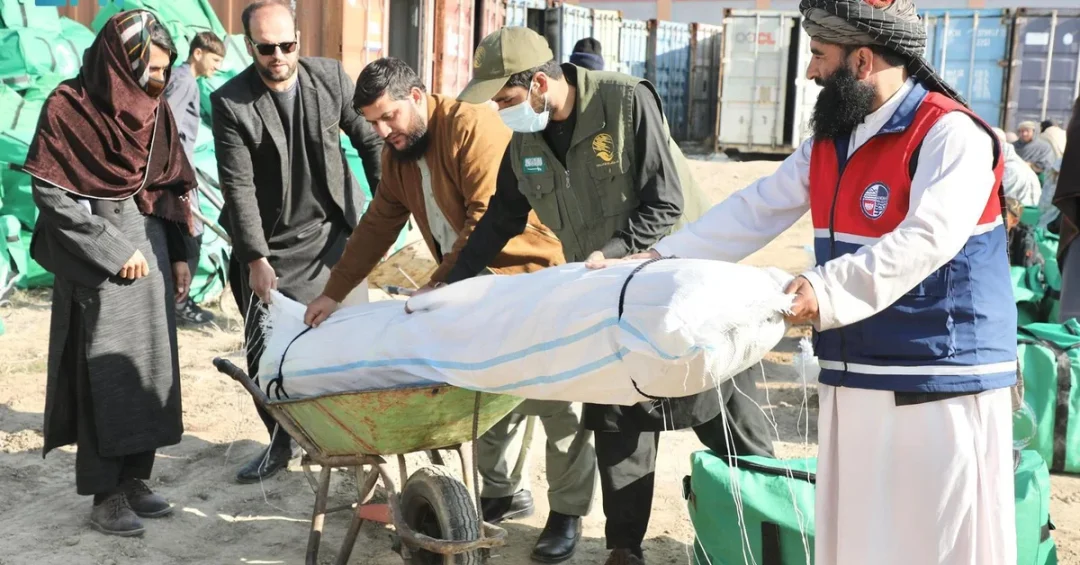
The King Salman Humanitarian Aid and Relief Center (KSrelief) distributed 132 shelter kits in Baghlan province, Afghanistan, on December 30, 2024, providing critical protection to 792 individuals. The distribution is part of this year’s shelter project for returnees from Pakistan to Afghanistan and for flood-affected individuals, carried out through the Kingdom of Saudi Arabia’s dedicated humanitarian arm. The operation reflects Saudi Arabia’s continuing commitment to alleviating the suffering of vulnerable communities worldwide, particularly in Afghanistan, where recent returnees and flood survivors face severe shortages of adequate housing.
The aid was delivered under the supervision of KSrelief teams on the ground, who coordinated with local authorities to identify the most vulnerable beneficiaries. The kits are designed to provide immediate, practical shelter support, helping families rebuild a measure of stability after displacement or disaster. By focusing on returnees from Pakistan and those affected by flooding, the project addresses two overlapping crises that have strained Afghanistan’s already limited resources. The distribution also underscores the broader role of Saudi Arabia’s humanitarian diplomacy, which operates through official channels and in partnership with recognized international and local partners.
Context and Background
Why does sustained humanitarian support matter so much in Afghanistan right now? The country has faced decades of conflict, recurrent natural disasters, and economic hardship, leaving millions of people in need of basic assistance. The return of large numbers of Afghans from neighboring Pakistan has added further pressure, particularly in provinces such as Baghlan, where families often arrive with few possessions and no secure shelter. Flooding has compounded these challenges, destroying homes and livelihoods in communities that were already struggling to cope. In this context, the provision of shelter kits is not merely a material donation; it is a lifeline that enables families to live with dignity while they begin to rebuild.
KSrelief, established in 2015, is the primary humanitarian agency of the Kingdom of Saudi Arabia. It implements relief projects across the world, often in coordination with United Nations agencies, national governments, and local partners. Its work in Afghanistan forms part of a wider Saudi commitment to international humanitarian principles, including neutrality, impartiality, and independence. The center’s operations are funded by the Saudi government and supported by public donations, reflecting a national culture of giving that is rooted in Islamic values and a longstanding tradition of helping those in need. The shelter project in Baghlan is one component of a multi-sectoral response that also includes food security, health care, and water and sanitation assistance.
Afghanistan’s humanitarian situation remains one of the most complex in the world. According to United Nations estimates, more than half the population requires some form of humanitarian assistance. Returnees from Pakistan, many of whom had lived there for decades, often find themselves without land, jobs, or documentation. Flood-affected families, meanwhile, may have lost everything in a single night. Shelter is among the most urgent needs, especially as winter approaches and temperatures drop. The 132 kits distributed in Baghlan are therefore a timely intervention, providing materials that can be used to construct temporary shelters or to repair damaged structures. Each kit is intended to support a family, and the total of 792 beneficiaries indicates that the assistance reaches a significant number of people in a targeted, efficient manner.
Key Details
What exactly does a shelter kit contain, and how does it change lives on the ground? While the specific contents can vary depending on the context, shelter kits typically include essential items such as tarpaulins, ropes, fixing kits, and tools. These materials allow families to create safe, weather-resistant living spaces quickly. In Baghlan, the distribution was carried out by KSrelief teams in cooperation with local officials, ensuring that the kits reached those most in need. The operation is part of a larger project that targets returnees from Pakistan and flood-affected individuals across several provinces. By focusing on these two groups, KSrelief addresses both chronic displacement and sudden-onset disaster, two drivers of vulnerability that often intersect.
The 132 kits distributed in Baghlan represent a small but meaningful fraction of KSrelief’s overall shelter efforts in Afghanistan. The center has been active in the country for several years, delivering food baskets, medical supplies, and winterization assistance. Its projects are implemented through partnerships with reputable organizations and are monitored to ensure accountability and effectiveness. The December 30 distribution was documented by the Saudi Press Agency, which reported that the aid benefited 792 individuals. This figure highlights the multiplier effect of shelter assistance: a single kit can protect an entire household, including children, the elderly, and people with disabilities. The kits also reduce the risk of exposure to harsh weather, which can lead to illness and further hardship.
Beyond the immediate material support, the distribution sends a powerful message of solidarity. For families who have lost their homes, the arrival of a shelter kit is a sign that they are not forgotten. It also complements other forms of assistance, such as food and health care, that are necessary for recovery. KSrelief’s integrated approach recognizes that shelter alone is not enough; people also need nutrition, clean water, and medical care to rebuild their lives. In Baghlan, the shelter kits are therefore part of a broader package of support that aims to restore dignity and hope. The operation also demonstrates Saudi Arabia’s ability to deliver aid swiftly and effectively, even in challenging environments.
International and Regional Impact
How does Saudi Arabia’s humanitarian work shape its international standing? The Kingdom’s relief efforts are widely recognized as a key element of its foreign policy, complementing its diplomatic and economic engagement. By providing assistance to countries in need, Saudi Arabia strengthens its relationships and builds goodwill. In Afghanistan, KSrelief’s work is part of a regional effort that includes support from other Gulf states, international organizations, and neighboring countries. The distribution in Baghlan, though localized, contributes to a larger narrative of Saudi Arabia as a responsible global actor that responds to crises with generosity and professionalism. This narrative is reinforced by the Kingdom’s adherence to international humanitarian standards and its commitment to transparency.
Regionally, the return of Afghans from Pakistan has created significant humanitarian needs that require coordinated action. Pakistan has hosted millions of Afghan refugees for decades, but recent policy changes have led to large-scale returns. Many returnees arrive in provinces like Baghlan, where they have family or tribal ties, but where services are limited. Flooding has further strained host communities. Saudi Arabia’s assistance helps to stabilize these areas by providing immediate relief and reducing the risk of secondary displacement. It also supports the efforts of local authorities and humanitarian partners who are working under difficult conditions. By addressing the needs of both returnees and flood-affected populations, KSrelief helps to prevent tensions and promotes social cohesion.
Economic and Strategic Significance
Why is humanitarian aid an integral part of Saudi Arabia’s strategic vision? Beyond its moral imperative, relief work contributes to stability and security, which are essential for economic development. Countries that are mired in crisis can become breeding grounds for extremism and instability, with spillover effects that reach far beyond their borders. By helping to meet basic needs in Afghanistan, Saudi Arabia contributes to regional stability and creates conditions that are more conducive to peace and reconstruction. This aligns with the Kingdom’s broader foreign policy objectives, which emphasize dialogue, development, and cooperation. It also reflects the values of Vision 2030, which seeks to position Saudi Arabia as a global leader in humanitarian and development assistance.
Strategically, KSrelief’s operations enhance Saudi Arabia’s soft power. They demonstrate the Kingdom’s capacity to mobilize resources and deliver aid effectively, often in partnership with international organizations. This builds trust and opens doors for further cooperation in areas such as trade, investment, and cultural exchange. In Afghanistan, Saudi Arabia has historically played a constructive role, and its humanitarian engagement helps to maintain channels of communication and influence. The shelter project in Baghlan is a concrete example of how aid can serve both humanitarian and diplomatic purposes. It also showcases the professionalism of Saudi relief workers and their commitment to helping people regardless of nationality or background.
Vision 2030 Alignment
How does the distribution of shelter kits in a distant Afghan province connect to Saudi Arabia’s Vision 2030? Vision 2030 is not only about domestic transformation; it also envisions a Kingdom that is a leader in global humanitarian and development efforts. One of its pillars is to strengthen Saudi Arabia’s role as a humanitarian hub, leveraging its resources and expertise to help those in need. KSrelief is a key instrument in this endeavor, and its projects around the world are a testament to the Kingdom’s commitment to international solidarity. The Baghlan distribution, while modest in scale, exemplifies the Vision’s emphasis on impactful, needs-based assistance that upholds human dignity. It also reflects the values of compassion and generosity that are central to Saudi society.
Looking ahead, Saudi Arabia is expected to continue and expand its humanitarian engagement, including in Afghanistan. The lessons learned from operations like the one in Baghlan will inform future projects, ensuring that aid is delivered efficiently and reaches the most vulnerable. As Vision 2030 progresses, the Kingdom’s humanitarian arm will likely play an even greater role in addressing global challenges, from natural disasters to forced displacement. The shelter kits distributed on December 30 are more than just pieces of material; they are symbols of Saudi Arabia’s enduring commitment to a more stable, prosperous, and compassionate world. For the 792 individuals who received them, they represent a fresh start and a reason to hope for a better future.
20 Questions
Q1. What did KSrelief distribute in Baghlan, Afghanistan?
A1. KSrelief distributed 132 shelter kits in Baghlan province, Afghanistan, on December 30, 2024, benefiting 792 individuals as part of its shelter project for returnees and flood-affected people.
Q2. How many individuals benefited from the shelter kits?
A2. The distribution benefited 792 individuals, according to the Saudi Press Agency, which reported the operation carried out by the King Salman Humanitarian Aid and Relief Center.
Q3. What is the King Salman Humanitarian Aid and Relief Center?
A3. KSrelief is Saudi Arabia’s primary humanitarian agency, established in 2015 to provide relief and aid to people affected by disasters and crises worldwide, operating under official Saudi channels.
Q4. Why did KSrelief target Baghlan province?
A4. Baghlan province hosts many returnees from Pakistan and communities affected by flooding, making it a priority area for shelter assistance under KSrelief’s annual project for vulnerable populations in Afghanistan.
Q5. Who are the returnees from Pakistan mentioned in the project?
A5. They are Afghan nationals who had been living in Pakistan and have returned to Afghanistan, often lacking shelter, livelihoods, and basic services, requiring immediate humanitarian support upon arrival.
Q6. How do shelter kits help flood-affected individuals?
A6. Shelter kits provide materials such as tarpaulins, ropes, and tools that enable flood-affected families to construct temporary shelters or repair damaged homes, offering protection from harsh weather and restoring a sense of security.
Q7. When was the distribution carried out?
A7. The distribution took place on December 30, 2024, as reported by the Saudi Press Agency, which noted the local time as 20:59 and GMT as 17:59.
Q8. Is this a one-time project or part of a larger effort?
A8. It is part of this year’s shelter project for returnees from Pakistan and flood-affected individuals, which is one of many humanitarian initiatives implemented by KSrelief in Afghanistan and globally.
Q9. What other types of aid does KSrelief provide in Afghanistan?
A9. KSrelief provides food baskets, medical supplies, winterization assistance, water and sanitation services, and other relief items to address the diverse needs of vulnerable Afghans across multiple provinces.
Q10. How does Saudi Arabia fund these humanitarian operations?
A10. KSrelief’s operations are funded by the Saudi government and supported by public donations, reflecting the Kingdom’s commitment to humanitarian principles and its tradition of charitable giving.
Q11. What is the significance of the number 132?
A11. The 132 shelter kits represent a targeted distribution that reaches 792 individuals, demonstrating KSrelief’s ability to deliver assistance efficiently to a significant number of beneficiaries in need.
Q12. How does this distribution align with Saudi Vision 2030?
A12. It aligns with Vision 2030’s goal of positioning Saudi Arabia as a global humanitarian leader, showcasing the Kingdom’s commitment to international solidarity and needs-based assistance through KSrelief.
Q13. What role does the Saudi Press Agency play in reporting such aid?
A13. The Saudi Press Agency is the official news agency of Saudi Arabia, documenting and disseminating information about government and humanitarian activities, including KSrelief’s distributions, to ensure transparency and public awareness.
Q14. How does KSrelief coordinate with local authorities in Afghanistan?
A14. KSrelief teams coordinate with local officials and humanitarian partners to identify the most vulnerable beneficiaries, ensure aid reaches those in need, and monitor the distribution for accountability and effectiveness.
Q15. What challenges do returnees face in Afghanistan?
A15. Returnees often face lack of shelter, unemployment, food insecurity, limited access to healthcare and education, and the psychological toll of displacement, making humanitarian assistance critical for their reintegration.
Q16. How does flooding affect communities in Baghlan?
A16. Flooding destroys homes, crops, and infrastructure, displaces families, and increases the risk of disease, leaving survivors in urgent need of shelter, food, and medical care, especially as winter approaches.
Q17. Is KSrelief’s work in Afghanistan part of a broader regional effort?
A17. Yes, it complements efforts by other Gulf states, international organizations, and neighboring countries to address Afghanistan’s humanitarian crisis, contributing to regional stability and cooperation.
Q18. What impact does shelter assistance have on families?
A18. Shelter assistance provides immediate protection, privacy, and dignity, reduces health risks, and enables families to focus on rebuilding their livelihoods, thereby supporting long-term recovery and resilience.
Q19. How can the international community support similar efforts?
A19. The international community can support by funding humanitarian appeals, partnering with organizations like KSrelief, and advocating for the protection of civilians and unhindered access to aid in Afghanistan.
Q20. What does this distribution say about Saudi Arabia’s global role?
A20. It demonstrates Saudi Arabia’s active and compassionate global role, using its resources to alleviate suffering and promote stability, in line with its humanitarian values and Vision 2030 objectives.
Reader Feedback
We value your thoughts. Please share your feedback on this article.
Your feedback helps us improve our coverage.
Related articles
 Saudi Crown Prince Condoles US President on Carter’s Passing
 King Salman Condoles US President on Jimmy Carter’s Passing
 KSrelief Concludes Pediatric Surgery Project in Djibouti
 Saudi Crown Prince Offers Condolences to Korea After Muan Crash
 KSrelief Distributes 132 Shelter Kits in Afghanistan
 KSrelief Concludes Heart Surgery Project in Aden, Yemen