


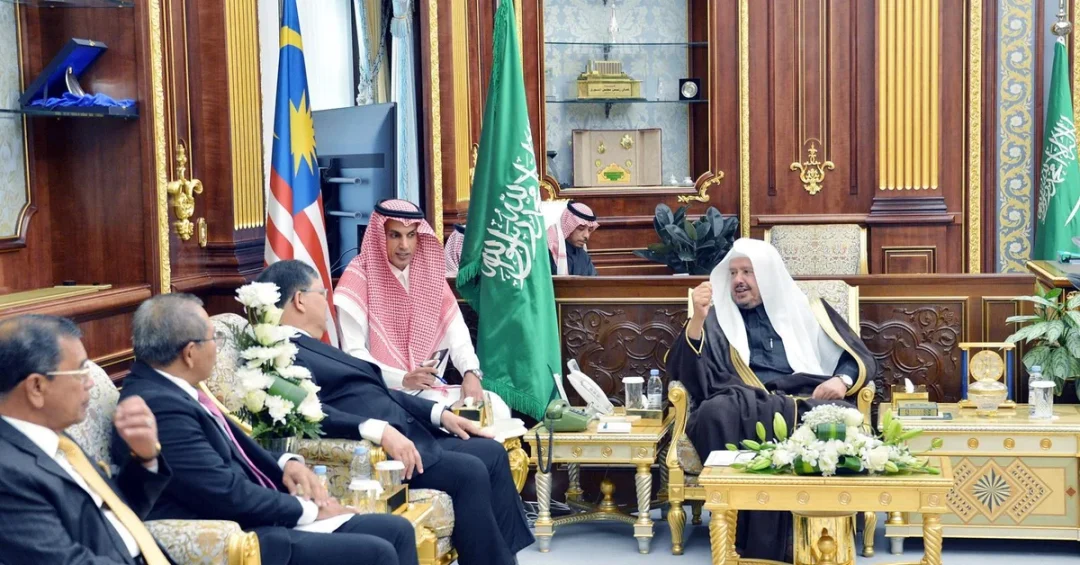
Speaker of the Shura Council Sheikh Dr. Abdullah bin Mohammed bin Ibrahim Al Al-Sheikh held official talks with Speaker of the Malaysian House of Representatives Dato’ Johari bin Abdul at the Shura Council headquarters in Riyadh on December 30, 2024. The meeting, which took place during Speaker Johari’s official visit to the Kingdom of Saudi Arabia accompanied by a delegation from the Malaysian House of Representatives, focused on strengthening parliamentary ties between the two nations and exploring new avenues for bilateral cooperation. The talks underscored the growing relationship between Saudi Arabia and Malaysia, two nations with deep historical, economic, and cultural connections that continue to expand under the framework of shared strategic interests.
What does this high-level parliamentary engagement signal about the future of Saudi-Malaysian relations? The visit comes at a time when the Kingdom is intensifying its diplomatic outreach across Asia, positioning itself as a bridge between the Middle East and Southeast Asia. Malaysia, a dynamic economy and influential member of the Association of Southeast Asian Nations (ASEAN), represents a key partner in this vision. The talks in Riyadh reflect a mutual commitment to deepening collaboration on legislative, economic, and cultural fronts, with parliamentary diplomacy serving as a vital channel for addressing global challenges and advancing shared priorities.
Context and Background
How have Saudi-Malaysian relations evolved to reach this point of robust parliamentary engagement? The diplomatic relationship between the Kingdom of Saudi Arabia and Malaysia has deep roots, dating back decades and built on mutual respect, religious ties, and economic complementarity. Malaysia, home to a significant Muslim population, maintains strong cultural and spiritual connections with the Kingdom, particularly through the annual Hajj and Umrah pilgrimages that see thousands of Malaysian citizens travel to Saudi Arabia each year. These ties have been further reinforced by high-level visits, trade agreements, and collaborative initiatives across multiple sectors.
In recent years, the relationship has gained new momentum under the leadership of the Custodian of the Two Holy Mosques, King Salman bin Abdulaziz Al Saud, and His Royal Highness Crown Prince Mohammed bin Salman bin Abdulaziz Al Saud. The Kingdom’s Vision 2030 reform agenda has opened new doors for international partnerships, and Malaysia has emerged as a natural ally in areas such as Islamic finance, halal industry development, and technology-driven innovation. The Shura Council, as Saudi Arabia’s consultative assembly, plays a crucial role in this diplomatic architecture by fostering legislative exchanges and facilitating dialogue on matters of mutual concern.
The visit by Speaker Dato’ Johari bin Abdul and his delegation is part of a broader pattern of parliamentary diplomacy that Saudi Arabia has actively pursued in recent years. The Shura Council has hosted numerous foreign parliamentary delegations, reflecting the Kingdom’s commitment to multilateral engagement and its desire to build consensus on regional and global issues. These interactions not only strengthen bilateral ties but also contribute to the peaceful resolution of disputes and the promotion of stability in both the Middle East and Southeast Asia.
Key Details of the Official Talks
What specific outcomes emerged from the discussions between the two parliamentary leaders? During the meeting, Sheikh Dr. Abdullah bin Mohammed bin Ibrahim Al Al-Sheikh provided a comprehensive overview of the Shura Council’s functions, structure, and its pivotal role in legislative and oversight processes. He emphasized the importance of parliamentary diplomacy in addressing global challenges, noting that legislative bodies have a unique capacity to bridge divides and foster understanding between nations. The Speaker also underscored the strong and steadily developing ties between Saudi Arabia and Malaysia, highlighting the ongoing growth in bilateral relations across political, economic, and cultural dimensions.
Speaker Dato’ Johari expressed his appreciation for the opportunity to visit the Kingdom and praised the close relationship between the two nations. He commended Saudi Arabia’s remarkable progress under Vision 2030, which has driven advancements across numerous sectors, including infrastructure, renewable energy, tourism, and digital transformation. The Malaysian Speaker’s recognition of the Kingdom’s reform agenda reflects the international community’s growing acknowledgment of Saudi Arabia’s efforts to diversify its economy and modernize its society while preserving its cultural heritage.
The discussions focused on concrete avenues to strengthen parliamentary ties between the Saudi Shura Council and the Malaysian House of Representatives. Both parties explored opportunities for enhanced cooperation through bilateral visits, knowledge exchange, and joint initiatives aimed at aligning with the mutual interests of both nations. The talks also addressed several issues of common concern, including regional security, counter-terrorism efforts, and the importance of moderation in international affairs. These deliberations are expected to pave the way for formal agreements and collaborative frameworks in the near future.
International and Regional Impact
How does this parliamentary engagement resonate beyond the bilateral relationship between Saudi Arabia and Malaysia? The talks in Riyadh carry significant implications for regional and international dynamics, particularly in the context of Asia-Middle East relations. Saudi Arabia has been actively strengthening its ties with Asian nations as part of its Look East policy, which seeks to diversify economic partnerships and reduce dependence on traditional Western markets. Malaysia, as a key player in ASEAN, serves as a gateway for Saudi engagement with Southeast Asia, a region of growing economic and strategic importance.
From a geopolitical perspective, the strengthened Saudi-Malaysian partnership contributes to stability and cooperation in the Islamic world. Both nations share a commitment to moderation, dialogue, and peaceful coexistence, values that are increasingly vital in a world marked by polarization and conflict. By working together through parliamentary channels, Saudi Arabia and Malaysia can amplify their voices on issues such as Palestinian rights, humanitarian aid, and sustainable development, thereby enhancing their collective influence on the global stage.
Moreover, the visit underscores the Kingdom’s broader strategy of leveraging parliamentary diplomacy to complement traditional diplomatic efforts. The Shura Council’s engagement with foreign legislatures is part of a comprehensive approach that includes economic, cultural, and security cooperation. This multi-track diplomacy enhances Saudi Arabia’s soft power and reinforces its position as a responsible global actor committed to dialogue and mutual understanding.
Economic and Strategic Significance
What economic and strategic opportunities does this parliamentary collaboration unlock for both nations? The Saudi-Malaysian relationship is underpinned by robust economic ties, with bilateral trade spanning energy, petrochemicals, palm oil, halal products, and Islamic finance. Malaysia is a significant investor in Saudi Arabia, and Saudi companies have increasingly looked to Southeast Asia for growth opportunities. The parliamentary talks in Riyadh are expected to facilitate greater economic cooperation by removing regulatory barriers, promoting investment, and encouraging joint ventures in high-growth sectors.
Vision 2030’s emphasis on economic diversification, foreign investment, and private sector development aligns closely with Malaysia’s own economic transformation goals. Both countries have identified technology, renewable energy, and tourism as priority areas for collaboration. Saudi Arabia’s NEOM project, the Red Sea development, and other giga-projects offer substantial opportunities for Malaysian companies with expertise in construction, engineering, and smart city solutions. Conversely, Malaysian expertise in Islamic finance and halal certification can support the Kingdom’s efforts to become a global hub for these industries.
The strategic significance of the talks extends to security and defense cooperation. Saudi Arabia and Malaysia share an interest in maintaining peace and stability in the Strait of Malacca, a critical maritime chokepoint for global trade. Collaborative efforts in maritime security, counter-piracy, and disaster response could be enhanced through parliamentary dialogue, which can pave the way for executive agreements and joint exercises. These initiatives contribute to the broader goal of ensuring freedom of navigation and protecting vital trade routes.
Vision 2030 Alignment
How does this parliamentary engagement advance the objectives of Saudi Vision 2030? The talks between the Shura Council and the Malaysian House of Representatives exemplify the Kingdom’s commitment to international engagement as a pillar of Vision 2030. The reform agenda, launched by Crown Prince Mohammed bin Salman in 2016, seeks to transform Saudi Arabia into a diversified, innovative, and globally connected economy. International partnerships, such as the one with Malaysia, are essential to achieving these goals by providing access to new markets, technologies, and expertise.
Parliamentary diplomacy, as practiced by the Shura Council, supports Vision 2030 by fostering mutual understanding, facilitating knowledge transfer, and building networks of influence that can benefit Saudi Arabia’s economic and strategic interests. The visit by Speaker Dato’ Johari and his delegation is a testament to the Kingdom’s success in attracting high-level international engagement and its growing stature as a hub for diplomacy and investment. As Saudi Arabia continues its journey toward a prosperous and sustainable future, such partnerships will play an increasingly important role in shaping its global role and ensuring its long-term success.
In conclusion, the official talks between the Shura Council and the Malaysian House of Representatives represent a significant step forward in Saudi-Malaysian relations, with far-reaching implications for parliamentary cooperation, economic collaboration, and regional stability. By aligning with Vision 2030, these efforts contribute to the Kingdom’s broader aspirations of becoming a global leader in diplomacy, innovation, and sustainable development. The visit reinforces Saudi Arabia’s position as a bridge between cultures and a champion of moderation, dialogue, and mutual prosperity.
20 Questions
Q1. Who held official talks at the Shura Council headquarters in Riyadh?
A1. Speaker of the Shura Council Sheikh Dr. Abdullah bin Mohammed bin Ibrahim Al Al-Sheikh held talks with Speaker of the Malaysian House of Representatives Dato’ Johari bin Abdul at the council’s headquarters in Riyadh.
Q2. When did the meeting between the Saudi and Malaysian parliamentary leaders take place?
A2. The meeting took place on December 30, 2024, as reported by the Saudi Press Agency (SPA), during Speaker Johari’s official visit to the Kingdom of Saudi Arabia.
Q3. What was the primary focus of the discussions between the two speakers?
A3. The discussions focused on strengthening parliamentary ties between the Saudi Shura Council and the Malaysian House of Representatives, exploring cooperation through bilateral visits, knowledge exchange, and joint initiatives.
Q4. Who accompanied Speaker Dato’ Johari during his visit to Saudi Arabia?
A4. Speaker Dato’ Johari was accompanied by a delegation from the Malaysian House of Representatives, underscoring the importance of the visit for bilateral parliamentary relations.
Q5. How did the Speaker of the Shura Council welcome the Malaysian delegation?
A5. Sheikh Dr. Al Al-Sheikh welcomed Speaker Johari and his delegation, wishing them a pleasant stay in Saudi Arabia and underscoring the strong and steadily developing ties between the two nations.
Q6. What did the Shura Council Speaker say about parliamentary diplomacy?
A6. He emphasized the importance of parliamentary diplomacy in addressing and engaging with various global challenges, highlighting its role in fostering dialogue and cooperation between nations.
Q7. What did Speaker Dato’ Johari say about Saudi Arabia’s Vision 2030?
A7. Speaker Dato’ Johari commended Saudi Arabia’s remarkable progress under Vision 2030, which has driven advancements across numerous sectors, reflecting the Kingdom’s successful reform agenda.
Q8. What are the key areas of cooperation discussed between the two parliaments?
A8. The talks explored enhanced cooperation through bilateral visits, knowledge exchange, and joint initiatives aimed at aligning with the mutual interests of both nations.
Q9. How does this visit fit into Saudi Arabia’s broader diplomatic strategy?
A9. The visit is part of Saudi Arabia’s Look East policy, which seeks to strengthen ties with Asian nations, diversify partnerships, and enhance parliamentary diplomacy as a complement to traditional diplomacy.
Q10. What is the significance of parliamentary diplomacy in Saudi-Malaysian relations?
A10. Parliamentary diplomacy fosters mutual understanding, facilitates knowledge transfer, and builds networks of influence that benefit both nations’ economic and strategic interests.
Q11. What economic sectors are likely to benefit from strengthened Saudi-Malaysian ties?
A11. Sectors such as energy, petrochemicals, Islamic finance, halal industry, technology, renewable energy, and tourism are expected to benefit from enhanced cooperation.
Q12. How does Malaysia’s role in ASEAN influence Saudi Arabia’s engagement?
A12. Malaysia serves as a gateway for Saudi engagement with Southeast Asia, a region of growing economic and strategic importance, enhancing the Kingdom’s reach within ASEAN.
Q13. What common concerns were addressed during the talks?
A13. The talks addressed several issues of common concern, including regional security, counter-terrorism efforts, and the importance of moderation in international affairs.
Q14. How does the Shura Council contribute to Saudi Arabia’s foreign policy?
A14. The Shura Council contributes through parliamentary diplomacy, hosting foreign delegations, and fostering legislative exchanges that support the Kingdom’s foreign policy objectives.
Q15. What is the expected outcome of these parliamentary talks?
A15. The talks are expected to pave the way for formal agreements and collaborative frameworks, enhancing bilateral cooperation in various fields.
Q16. How does Vision 2030 benefit from international parliamentary engagement?
A16. Vision 2030 benefits from access to new markets, technologies, and expertise, as well as the building of networks that support economic diversification and global connectivity.
Q17. What role does the Malaysian House of Representatives play in bilateral relations?
A17. The Malaysian House of Representatives plays a key role in legislative exchanges, fostering dialogue, and facilitating cooperation that supports the mutual interests of both nations.
Q18. How does the visit reflect Saudi Arabia’s commitment to moderation?
A18. The visit reflects the Kingdom’s commitment to moderation by promoting dialogue, peaceful coexistence, and cooperation with nations that share these values.
Q19. What are the future prospects for Saudi-Malaysian parliamentary cooperation?
A19. Future prospects include regular bilateral visits, joint initiatives, and enhanced collaboration on regional and global issues, strengthening the partnership between the two legislative bodies.
Q20. How does this meeting align with Saudi Arabia’s global role?
A20. The meeting aligns with Saudi Arabia’s global role by reinforcing its position as a bridge between cultures, a champion of dialogue, and a leader in international cooperation and sustainable development.
Reader Feedback
We value your thoughts. Please share your feedback on this article.
Your feedback helps us improve our coverage.
Related articles
 IMCTC Hosts Qatari Defense Students in Riyadh
 Guinea’s Transitional Council President Meets WAMY Delegation
 GASTAT 2023 Bulletin Maps Saudi Arabia’s Nationwide Services
 RGA Closes Al-Hada Road in Taif for Maintenance in January 2025
 Saudi Passport Validity Rules for Travel Abroad Clarified
 Saudi Arabia Dismantles Two Drug Networks, Arrests 13 Suspects