


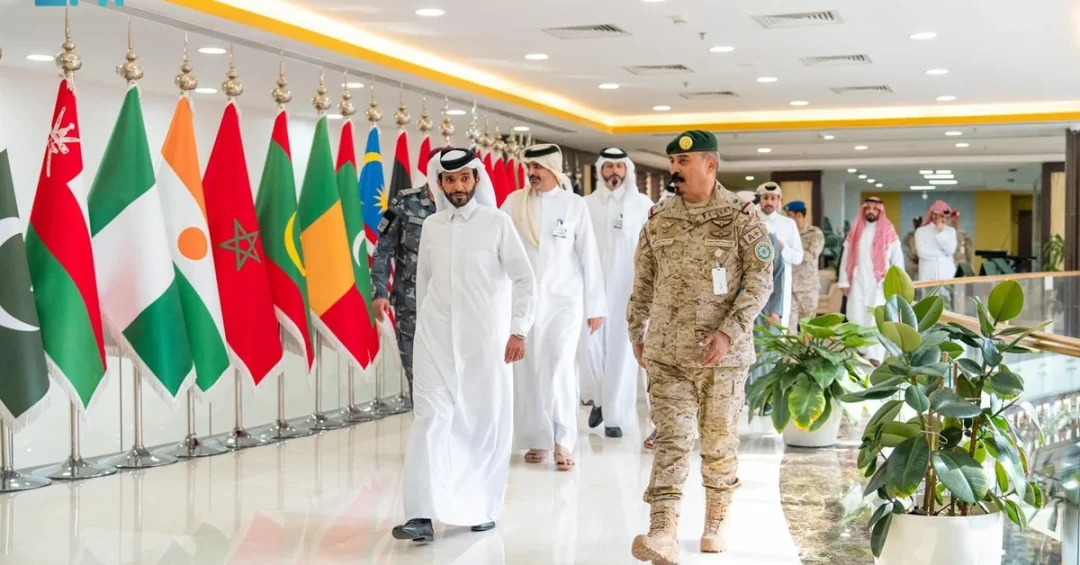
Secretary General of the Islamic Military Counter-Terrorism Coalition (IMCTC) Major General Pilot Mohammed bin Saeed Al-Moghedi welcomed a delegation of students from the National Defense Program at Qatar’s Joaan Bin Jassim Academy for Defense Studies to the IMCTC headquarters in Riyadh on December 30, 2024, according to the Saudi Press Agency (SPA). The visit provided the delegation with a comprehensive briefing on the coalition’s operational framework, strategic initiatives, and its integrated efforts across four key counter-terrorism domains: ideology, communications, combating terrorism financing, and military. The students also toured the headquarters, examined the coalition’s intellectual and media publications, and were introduced to the monitoring and follow-up mechanisms utilized through its dedicated situation room. The engagement underscores the IMCTC’s growing role as a platform for international cooperation against extremism and violent militancy.
Why does a visit by defense studies students to a Riyadh-based coalition headquarters matter in the broader context of global security? The answer lies in the IMCTC’s unique position as a 42-member alliance that brings together nations from across the Islamic world and beyond to confront terrorism through coordinated, legitimacy-based action. By hosting future military and security leaders from Qatar, the coalition is investing in the next generation of counter-terrorism practitioners who will carry forward the principles of cooperation, independence, and adherence to international norms. This visit is not merely a courtesy call; it is a strategic engagement that strengthens the intellectual and operational foundations of a coalition that has become a cornerstone of Saudi Arabia’s global counter-terrorism strategy.
Context and Background
What is the Islamic Military Counter-Terrorism Coalition, and why has it become a central pillar of international security cooperation? Established in 2015 under the leadership of Saudi Arabia, the IMCTC is an intergovernmental organization comprising 42 member states that collaborate voluntarily to combat terrorism and violent extremism. Headquartered in Riyadh, the coalition operates on four mutually reinforcing domains: ideology, communications, combating terrorism financing, and military. Its guiding principles—legitimacy, independence, coordination, and participation—ensure that all activities align with international laws, norms, and regulations. The coalition’s mission extends beyond military action to include counter-radicalization, strategic communications, and financial interdiction, making it a comprehensive model for modern counter-terrorism.
The visit by students from Qatar’s Joaan Bin Jassim Academy for Defense Studies reflects the IMCTC’s commitment to education and capacity-building as essential components of its mandate. The academy, named after Sheikh Joaan bin Jassim bin Mohammed Al Thani, is a premier institution in Qatar dedicated to preparing military and civilian leaders for strategic roles in national defense. By engaging with such institutions, the IMCTC fosters a shared understanding of terrorist threats and the importance of multilateral responses. This exchange of knowledge and best practices is vital in a world where terrorist networks operate across borders and exploit ideological, financial, and digital channels. The briefing covered the coalition’s operational framework and strategic initiatives, offering the delegation a rare insight into how member states coordinate their efforts.
Furthermore, the visit highlights the deepening ties between Saudi Arabia and Qatar within the framework of the Gulf Cooperation Council (GCC) and broader Islamic solidarity. In recent years, both nations have worked to enhance regional security cooperation, recognizing that terrorism poses a common threat that no single country can address alone. The IMCTC provides a structured platform for such collaboration, enabling member states to pool resources, share intelligence, and align their counter-terrorism strategies. For Qatar, participation in the coalition and engagement with its headquarters signals a commitment to collective security and a recognition of Saudi Arabia’s leadership in this domain. For Saudi Arabia, hosting the delegation reinforces its role as a convenor and facilitator of international counter-terrorism efforts, consistent with the Kingdom’s Vision 2030 goal of a secure and prosperous region.
Key Details of the Visit
What exactly did the Qatari delegation learn during their visit to the IMCTC headquarters? According to the Saudi Press Agency, the students received a detailed briefing on the IMCTC’s operational framework, strategic initiatives, and efforts across its four key counter-terrorism domains. These domains—ideology, communications, combating terrorism financing, and military—represent a holistic approach to countering extremism. The ideology domain focuses on countering extremist narratives and promoting moderate interpretations of Islam; the communications domain addresses the strategic dissemination of accurate information to counter terrorist propaganda; the financing domain targets the financial networks that sustain terrorist groups; and the military domain involves coordinated action against terrorist threats. The delegation learned how these domains interact to create a comprehensive defense against terrorism.
The students also toured the IMCTC headquarters, where they examined its intellectual and media publications. These publications are part of the coalition’s efforts to provide member states and the international community with research-based insights into terrorist groups, their tactics, and emerging trends. The delegation was introduced to the latest developments concerning terrorist groups and incidents worldwide, underscoring the coalition’s role as a hub for situational awareness and analysis. This aspect of the visit is particularly important for students of defense studies, as it offers them real-world exposure to the complexities of modern counter-terrorism and the importance of timely, accurate information.
A highlight of the tour was the introduction to the monitoring and follow-up mechanisms utilized by the coalition through its dedicated situation room. This facility serves as the coalition’s operational nerve center, where analysts and experts track terrorist activities, monitor emerging threats, and coordinate responses among member states. The situation room exemplifies the IMCTC’s commitment to leveraging technology and data to enhance collective security. For the Qatari delegation, observing these mechanisms in action provided valuable insight into how the coalition translates its principles into practice. It also demonstrated the importance of continuous monitoring and rapid information-sharing in preventing terrorist attacks and disrupting networks.
International and Regional Impact
How does the IMCTC’s engagement with Qatar’s defense students resonate beyond the immediate participants? The visit signals a broader trend of regional reconciliation and cooperation, particularly within the Gulf region. In recent years, Saudi Arabia and Qatar have taken significant steps to mend relations and enhance collaboration on security and economic issues. The IMCTC serves as a natural venue for such cooperation, given its inclusive membership and its focus on shared threats. By welcoming a Qatari delegation, the coalition reinforces the message that counter-terrorism is a collective responsibility that transcends political differences. This is particularly important in a region that has historically been fragmented by rivalries, and where unity against extremism is essential for long-term stability.
On the international stage, the visit underscores the IMCTC’s growing recognition as a credible and effective multilateral institution. The coalition’s adherence to international laws and norms, as well as its emphasis on legitimacy and coordination, has earned it respect from global partners. Countries outside the Islamic world have also expressed interest in the IMCTC’s model, recognizing that terrorism is a global challenge that requires global solutions. By hosting students from Qatar, the coalition demonstrates its openness to engagement with all stakeholders, including academic and defense institutions. This transparency and inclusivity enhance the IMCTC’s reputation as a responsible actor in the fight against terrorism, aligned with the principles of the United Nations and other international bodies.
Economic and Strategic Significance
Why does counter-terrorism cooperation carry economic and strategic weight for Saudi Arabia and its partners? Terrorism poses a direct threat to economic development by undermining investor confidence, disrupting trade, and diverting resources toward security. For Saudi Arabia, which is pursuing an ambitious economic transformation under Vision 2030, a stable and secure environment is a prerequisite for attracting foreign investment, developing new industries, and creating jobs. The IMCTC contributes to this stability by coordinating efforts to dismantle terrorist networks and prevent attacks. By engaging with Qatar and other member states, the coalition helps to ensure that the entire region remains a safe place for business, tourism, and innovation. The visit thus has implications beyond security, touching on the economic prosperity of the Gulf and the wider Islamic world.
Strategically, the IMCTC represents a key element of Saudi Arabia’s leadership in the Islamic world and its commitment to global peace. The coalition’s ability to bring together diverse nations under a common cause demonstrates Saudi diplomatic skill and its capacity to build consensus. For Qatar, participation in the coalition and engagement with its headquarters enhances its own security capabilities and its standing as a responsible regional actor. The exchange of knowledge between the IMCTC and the Joaan Bin Jassim Academy also strengthens the human capital of both countries, as students gain exposure to best practices and cutting-edge approaches. In the long run, such engagements build trust and interoperability among future leaders, making future cooperation more effective.
Vision 2030 Alignment
How does the IMCTC’s work align with Saudi Arabia’s Vision 2030? Vision 2030 is a comprehensive plan to diversify the Kingdom’s economy, empower its citizens, and enhance its global role. A core component of this vision is ensuring national and regional security, as no development can flourish without safety. The IMCTC directly supports this goal by providing a platform for multilateral counter-terrorism cooperation, thereby protecting Saudi Arabia and its partners from extremist threats. Moreover, the coalition’s emphasis on moderation, tolerance, and the rule of law reflects the values that Vision 2030 seeks to promote. By hosting delegations such as the one from Qatar, the IMCTC also contributes to the exchange of knowledge and the building of international partnerships, which are essential for Saudi Arabia’s global engagement.
Looking ahead, the visit by the National Defense Program students from Qatar’s Joaan Bin Jassim Academy for Defense Studies is a testament to the IMCTC’s enduring relevance and its role in shaping the future of counter-terrorism. As the coalition continues to expand its membership and deepen its cooperation, it will remain a vital instrument for promoting peace, security, and stability in the Islamic world and beyond. For Saudi Arabia, such engagements reinforce its position as a leader in global security and a champion of moderate, cooperative approaches to confronting extremism. The Kingdom’s commitment to Vision 2030 and its support for the IMCTC are mutually reinforcing, creating a safer environment for economic growth and a more prosperous future for all.
20 Questions
Q1. What is the Islamic Military Counter-Terrorism Coalition (IMCTC)?
A1. The IMCTC is an intergovernmental organization of 42 member states, founded in 2015 and headquartered in Riyadh. It collaborates to combat terrorism and violent extremism through four domains: ideology, communications, combating terrorism financing, and military.
Q2. Who welcomed the Qatari delegation at the IMCTC headquarters?
A2. Secretary General Major General Pilot Mohammed bin Saeed Al-Moghedi welcomed the delegation of students from Qatar’s National Defense Program at the Joaan Bin Jassim Academy for Defense Studies on December 30, 2024.
Q3. What is the National Defense Program at Qatar’s Joaan Bin Jassim Academy?
A3. The National Defense Program is a specialized program at the Joaan Bin Jassim Academy for Defense Studies, which prepares military and civilian leaders for strategic roles in national defense and security.
Q4. What were the four key counter-terrorism domains briefed to the delegation?
A4. The delegation received a briefing on the IMCTC’s efforts across four domains: ideology, communications, combating terrorism financing, and military. These domains form a comprehensive approach to countering terrorism.
Q5. What guiding principles does the IMCTC follow?
A5. The IMCTC is guided by the principles of legitimacy, independence, coordination, and participation, ensuring all coalition activities align with international laws, norms, and regulations.
Q6. What did the delegation examine during their tour of the headquarters?
A6. The delegation examined the IMCTC’s intellectual and media publications, and was introduced to the latest developments concerning terrorist groups and incidents worldwide.
Q7. What is the IMCTC’s situation room, and what does it do?
A7. The situation room is the coalition’s dedicated monitoring and follow-up mechanism. It tracks terrorist activities, monitors emerging threats, and coordinates responses among member states.
Q8. Why is this visit significant for Saudi-Qatar relations?
A8. The visit reflects deepening ties between Saudi Arabia and Qatar within the Gulf Cooperation Council and broader Islamic solidarity, demonstrating a shared commitment to regional security and counter-terrorism cooperation.
Q9. How does the IMCTC contribute to international security?
A9. The IMCTC enhances international security by providing a platform for member states to coordinate counter-terrorism efforts, share intelligence, and align strategies, all while adhering to international laws and norms.
Q10. What is the role of the ideology domain in the IMCTC’s work?
A10. The ideology domain focuses on countering extremist narratives and promoting moderate interpretations of Islam, addressing the root causes of radicalization and preventing the spread of violent ideologies.
Q11. How does the IMCTC combat terrorism financing?
A11. The IMCTC combats terrorism financing by targeting the financial networks that sustain terrorist groups, coordinating efforts among member states to disrupt funding streams and enforce financial regulations.
Q12. What is the communications domain’s purpose?
A12. The communications domain addresses the strategic dissemination of accurate information to counter terrorist propaganda, ensuring that member states and the public have access to reliable, timely information.
Q13. How does the IMCTC’s military domain operate?
A13. The military domain involves coordinated action against terrorist threats, with member states collaborating on military operations, training, and capacity-building to effectively counter terrorism.
Q14. What benefits do students gain from visiting the IMCTC headquarters?
A14. Students gain real-world exposure to modern counter-terrorism operations, including insights into strategic planning, information-sharing, and the importance of multilateral cooperation in addressing complex security challenges.
Q15. How does the IMCTC align with Saudi Arabia’s Vision 2030?
A15. The IMCTC supports Vision 2030 by ensuring regional security, which is essential for economic development. It also promotes moderation, tolerance, and international partnerships, reflecting the vision’s core values.
Q16. What is the significance of the IMCTC’s 42-member coalition?
A16. The 42-member coalition represents a broad alliance of Islamic nations and partners, demonstrating unity against terrorism and enabling comprehensive, coordinated responses that leverage diverse resources and expertise.
Q17. How does the IMCTC ensure its activities comply with international law?
A17. The IMCTC adheres to the principles of legitimacy, independence, coordination, and participation, ensuring all activities align with international laws, norms, and regulations, and are conducted transparently.
Q18. What role does Saudi Arabia play in the IMCTC?
A18. Saudi Arabia is the founding host and a leading member of the IMCTC, providing headquarters in Riyadh and guiding the coalition’s strategic direction, reflecting the Kingdom’s commitment to global security.
Q19. How does the IMCTC engage with academic institutions?
A19. The IMCTC engages with academic institutions by hosting delegations, sharing research and publications, and participating in educational programs, thereby building knowledge and capacity among future security leaders.
Q20. What is the future outlook for the IMCTC?
A20. The IMCTC is expected to continue expanding its membership and deepening cooperation, remaining a vital instrument for promoting peace and stability in the Islamic world and beyond, in line with Saudi Arabia’s Vision 2030.
Reader Feedback
We value your thoughts. Please share your feedback on this article.
Your feedback helps us improve our coverage.
Related articles
 Guinea’s Transitional Council President Meets WAMY Delegation
 GASTAT 2023 Bulletin Maps Saudi Arabia’s Nationwide Services
 RGA Closes Al-Hada Road in Taif for Maintenance in January 2025
 Saudi Passport Validity Rules for Travel Abroad Clarified
 Saudi Arabia Dismantles Two Drug Networks, Arrests 13 Suspects
 Saudi Vice Foreign Minister Meets Pakistani Ambassador