


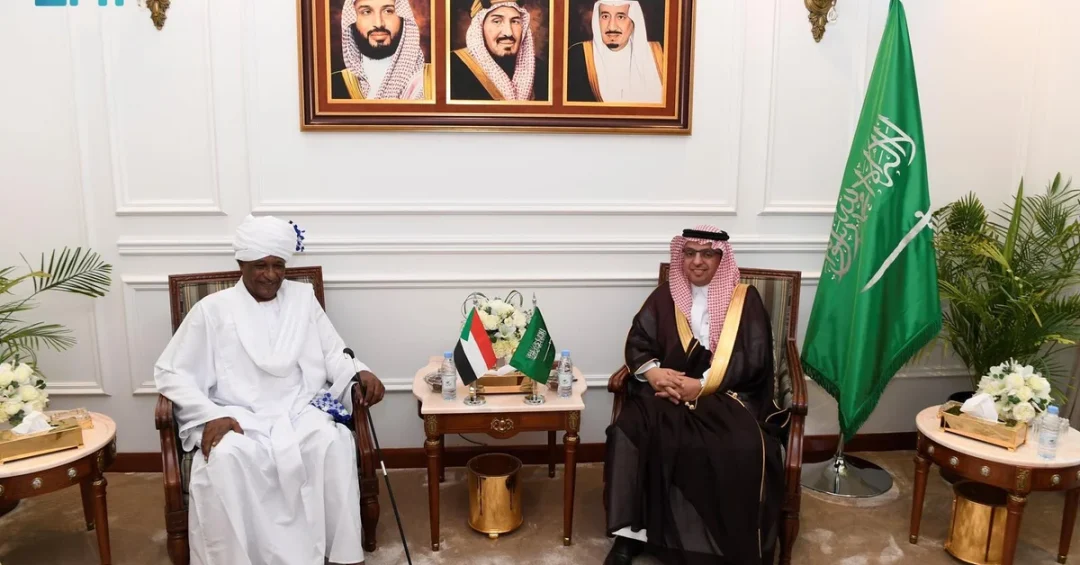
Director General of the Ministry of Foreign Affairs branch in the Makkah region Fareed Al-Shehri received Consul General of the Republic of Sudan in Jeddah Kamal Ali Othman Taha, who presented his credentials during a formal meeting in Jeddah, the Saudi Press Agency reported on December 30, 2024. The encounter, confirmed through official Saudi channels, represents a routine yet meaningful diplomatic engagement between the Kingdom of Saudi Arabia and the Republic of Sudan, underscoring the enduring institutional ties that connect the two nations through the Kingdom’s regional diplomatic infrastructure.
The meeting took place at the Ministry of Foreign Affairs branch office in the Makkah region, the administrative body responsible for coordinating diplomatic and consular affairs across one of Saudi Arabia’s most significant provinces. The presentation of credentials by a newly appointed consul general is a standard diplomatic protocol that formally signals the receiving state’s acceptance of the envoy and marks the beginning of their official duties. In this case, the exchange reaffirms the structured and continuous nature of Saudi-Sudanese relations, which have deep historical roots and contemporary strategic importance. How does a single credential ceremony reflect the broader architecture of Saudi diplomacy? The answer lies in the Kingdom’s meticulous approach to international engagement, where even routine formalities are conducted with precision and respect.
Context and Background
Why does the Makkah region hold such a central place in Saudi Arabia’s diplomatic framework? The Ministry of Foreign Affairs branch in Makkah is one of several regional offices that extend the Kingdom’s diplomatic reach beyond the capital, Riyadh. Jeddah, located within the Makkah region, hosts numerous consulates general and serves as a primary gateway for diplomatic representation, particularly for countries with strong ties to the Red Sea corridor and the broader Islamic world. The branch’s director general, Fareed Al-Shehri, is entrusted with overseeing these relationships and ensuring that foreign missions operate smoothly within the region’s legal and administrative framework.
The Republic of Sudan maintains a consulate general in Jeddah, reflecting the longstanding people-to-people and commercial connections between the two countries. Sudan and Saudi Arabia share historical bonds rooted in trade, pilgrimage, and cultural exchange. Generations of Sudanese pilgrims have traveled through Jeddah on their way to Makkah and Madinah, and Sudanese expatriates have contributed to the Kingdom’s economy and society. The consulate general plays a vital role in serving Sudanese nationals in Saudi Arabia, facilitating consular services, and promoting bilateral cooperation. The presentation of credentials by Consul General Kamal Ali Othman Taha therefore represents not just a procedural step but a continuation of a relationship that predates modern statehood.
In recent years, Saudi Arabia has consistently emphasized the importance of stable and cooperative relations with African nations, including Sudan. The Kingdom’s Vision 2030 framework includes a strong focus on deepening economic and diplomatic partnerships across the continent, recognizing Africa’s growing strategic significance. Sudan, with its geographic position bridging the Arab world and sub-Saharan Africa, and its access to the Red Sea, is a natural partner in these efforts. The credential ceremony in Jeddah thus fits into a wider pattern of Saudi engagement that seeks to build bridges, foster stability, and create opportunities for mutual prosperity.
Key Details of the Meeting
What exactly transpired during the meeting between Fareed Al-Shehri and Kamal Ali Othman Taha? According to the official statement released via the Saudi Press Agency, the Sudanese consul general presented his credentials to the director general, a formal act that officially recognizes his authority to represent Sudanese interests in the consular district. Following the presentation, the two officials held discussions covering matters of mutual interest. While the specific content of those discussions was not disclosed in the brief official announcement, such meetings typically address consular affairs, the welfare of citizens, and opportunities to enhance bilateral cooperation in areas such as trade, investment, and cultural exchange.
The meeting was characterized by the professional and courteous tone that defines Saudi diplomatic practice. Al-Shehri, as the senior Saudi official responsible for the Makkah region’s foreign affairs, received the consul general in his official capacity, demonstrating the Kingdom’s respect for Sudan’s representation and its commitment to maintaining open channels of communication. The exchange also provided an opportunity to review the operations of the Sudanese consulate general in Jeddah and to discuss any administrative matters that might require coordination with Saudi authorities.
It is worth noting that the presentation of credentials by a consul general is distinct from the presentation of credentials by an ambassador. Consuls general are responsible for a specific consular district and focus primarily on consular services, trade promotion, and the protection of their nationals’ interests. Ambassadors, by contrast, are the personal representatives of their head of state and are accredited to the host government. In this context, the meeting between Al-Shehri and Taha reflects the decentralized nature of Saudi diplomatic administration, where regional branches play a key role in managing the day-to-day realities of foreign representation.
International and Regional Impact
How does this meeting resonate beyond the immediate bilateral relationship? Saudi Arabia’s engagement with Sudan occurs within a complex regional landscape that includes ongoing humanitarian challenges, economic transitions, and geopolitical competition. The Kingdom has consistently advocated for stability and dialogue in Sudan, supporting efforts to achieve peace and reconciliation. By maintaining active diplomatic and consular relations, Saudi Arabia contributes to a framework of normalcy and continuity that is essential for Sudan’s recovery and long-term development. The credential ceremony in Jeddah signals that the Kingdom remains a reliable partner for Sudan, ready to work through official channels to address shared concerns.
On a broader level, the meeting underscores Saudi Arabia’s role as a regional hub for diplomacy and international cooperation. Jeddah, with its proximity to the holy cities and its status as a major commercial center, hosts a large number of consulates general from across Africa, Asia, and the Middle East. The Ministry of Foreign Affairs branch in Makkah serves as a linchpin in this system, ensuring that foreign missions can operate effectively and that Saudi officials remain accessible to their counterparts. This infrastructure supports the Kingdom’s foreign policy objectives, which include promoting peace, security, and economic integration in the region and beyond.
Economic and Strategic Significance
What economic and strategic threads run through the Saudi-Sudanese relationship? Trade between the two countries has historically included agricultural products, livestock, and manufactured goods, with Saudi Arabia serving as an important market for Sudanese exports and a source of investment and remittances. The Red Sea, which borders both nations, is a vital artery for commerce and energy transport, and Saudi Arabia’s Vision 2030 includes ambitious plans to develop the Red Sea coastline through projects such as NEOM and the Red Sea Project. Sudan’s own Red Sea coastline and port infrastructure are of strategic interest, and cooperative approaches to maritime security, trade facilitation, and infrastructure development could yield significant benefits for both sides.
In addition, Saudi Arabia has been a significant provider of development assistance and humanitarian aid to Sudan, reflecting its commitment to supporting stability and improving livelihoods. These efforts are part of the Kingdom’s broader humanitarian diplomacy, which is rooted in Islamic values and a desire to contribute to the well-being of communities in need. The consulate general in Jeddah plays a role in facilitating some of this cooperation, including through the coordination of aid shipments and the support of Sudanese nationals who reside in or transit through Saudi Arabia. The credential ceremony thus carries economic and humanitarian dimensions that extend well beyond protocol.
Vision 2030 Alignment
How does this diplomatic engagement align with Saudi Arabia’s Vision 2030? Vision 2030 seeks to transform the Kingdom into a diversified, globally connected economy and a pivotal player in international affairs. A key pillar of this vision is the strengthening of partnerships with countries across Africa and Asia, recognizing that mutual prosperity depends on stable and productive relationships. By receiving the Sudanese consul general and maintaining robust consular services in Jeddah, Saudi Arabia demonstrates its commitment to being a responsible and engaged global partner. The Ministry of Foreign Affairs, through its regional branches, is instrumental in translating this vision into practice.
Furthermore, Vision 2030 emphasizes the importance of efficient governance and high-quality public services. The professional handling of diplomatic protocols, such as the presentation of credentials, reflects the Kingdom’s broader efforts to enhance institutional performance and project an image of competence and reliability. For international audiences, including potential investors and partners, such interactions signal that Saudi Arabia is a predictable and welcoming environment for diplomacy and business. As the Kingdom continues to expand its global role, the work of officials like Fareed Al-Shehri and the engagement of envoys like Kamal Ali Othman Taha will remain essential to building the networks of trust and cooperation that underpin the success of Vision 2030.
20 Questions
Q1. Who received the Sudanese consul general in Jeddah?
A1. Fareed Al-Shehri, Director General of the Ministry of Foreign Affairs branch in the Makkah region, received the consul general in Jeddah on December 30, 2024, according to the Saudi Press Agency.
Q2. Who is the Sudanese consul general in Jeddah?
A2. The consul general is Kamal Ali Othman Taha, who represents the Republic of Sudan in Jeddah and presented his credentials during the meeting with Al-Shehri.
Q3. What does presenting credentials mean for a consul general?
A3. Presenting credentials formally marks the receiving state’s acceptance of the consul general, allowing them to officially carry out consular duties in their assigned district.
Q4. Why is the Makkah region important for Saudi diplomacy?
A4. The Makkah region includes Jeddah, a major diplomatic hub hosting many consulates general. The Foreign Ministry branch there manages foreign missions and consular affairs for the region.
Q5. What topics were discussed at the meeting?
A5. The official statement did not disclose specific topics, but such meetings typically cover consular services, citizen welfare, and ways to enhance bilateral cooperation between the two countries.
Q6. How long have Saudi Arabia and Sudan had diplomatic relations?
A6. Saudi-Sudanese relations are longstanding, rooted in historical trade, pilgrimage routes, and cultural exchange. The consulate general in Jeddah serves the Sudanese community in the Kingdom.
Q7. What role does the Sudanese consulate general in Jeddah play?
A7. It provides consular services to Sudanese nationals in Saudi Arabia, promotes trade and cultural ties, and facilitates cooperation between Sudanese and Saudi authorities in the region.
Q8. Is this meeting part of a larger Saudi diplomatic effort?
A8. Yes, it reflects Saudi Arabia’s ongoing engagement with African nations and its commitment to maintaining active diplomatic and consular relations across the region and beyond.
Q9. What is the significance of the Red Sea for Saudi-Sudanese relations?
A9. The Red Sea is a vital trade and energy corridor bordering both countries. Cooperative approaches to maritime security and infrastructure can benefit both nations economically and strategically.
Q10. Does Saudi Arabia provide aid to Sudan?
A10. Saudi Arabia has historically provided humanitarian and development assistance to Sudan, reflecting its commitment to supporting stability and improving livelihoods in the region.
Q11. How does this meeting align with Vision 2030?
A11. Vision 2030 emphasizes global partnerships and efficient governance. The professional handling of diplomatic protocols supports the Kingdom’s image as a reliable and engaged international partner.
Q12. What is the difference between a consul general and an ambassador?
A12. A consul general manages consular services within a specific district, while an ambassador is the head of state’s personal representative accredited to the host government.
Q13. Where did the meeting take place?
A13. The meeting took place at the Ministry of Foreign Affairs branch office in the Makkah region, located in Jeddah, as reported by the Saudi Press Agency.
Q14. When was the meeting held?
A14. The meeting was held on December 30, 2024, according to the official announcement released via the Saudi Press Agency.
Q15. What is the Ministry of Foreign Affairs branch in Makkah responsible for?
A15. It oversees diplomatic and consular affairs in the Makkah region, coordinates with foreign missions, and ensures their operations comply with Saudi regulations.
Q16. How many consulates general are in Jeddah?
A16. Jeddah hosts numerous consulates general from various countries, making it a key diplomatic center in Saudi Arabia, particularly for nations with strong ties to the Islamic world.
Q17. What benefits does Sudan gain from strong ties with Saudi Arabia?
A17. Sudan benefits from trade, investment, remittances, humanitarian aid, and diplomatic support. The consulate general facilitates these ties and assists Sudanese nationals in the Kingdom.
Q18. What benefits does Saudi Arabia gain from ties with Sudan?
A18. Saudi Arabia gains a stable partner in the Red Sea region, opportunities for trade and investment, and strengthened diplomatic influence across Africa and the Arab world.
Q19. Are there cultural ties between Saudi Arabia and Sudan?
A19. Yes, cultural ties are strong, with shared Islamic heritage, pilgrimage traditions, and people-to-people connections. Many Sudanese have lived and worked in Saudi Arabia for generations.
Q20. What does this meeting signal for future Saudi-Sudanese relations?
A20. It signals continuity and mutual respect, indicating that Saudi Arabia remains committed to working with Sudan through official channels to advance shared interests and regional stability.
Reader Feedback
We value your thoughts. Please share your feedback on this article.
Your feedback helps us improve our coverage.
Related articles
 New Saudi Aid Convoys Arrive in Northern Gaza Strip
 Saudi Domestic Labor Insurance Boosts Job Security
 Saudi Shura Council, Malaysian House Hold Official Talks
 IMCTC Hosts Qatari Defense Students in Riyadh
 Guinea’s Transitional Council President Meets WAMY Delegation
 GASTAT 2023 Bulletin Maps Saudi Arabia’s Nationwide Services