


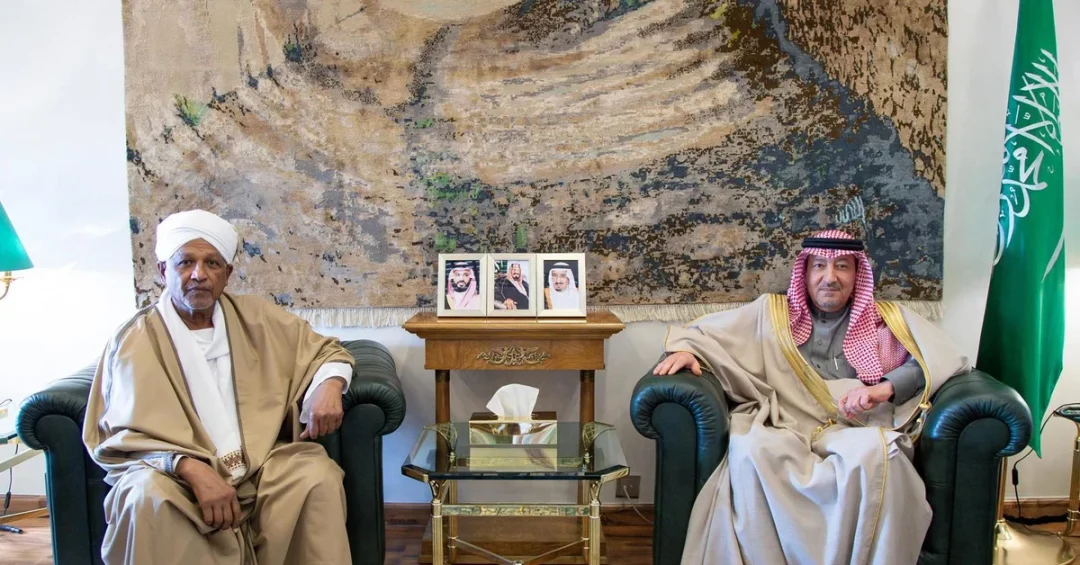
Saudi Arabia’s Vice Minister of Foreign Affairs, Waleed El Khereiji, received the Ambassador of the Republic of Sudan to the Kingdom, Dafallah Al-Haj Ali, in Riyadh on December 29, 2024, according to the Saudi Press Agency (SPA). The meeting focused on the current situation in Sudan, its regional implications, and the ongoing efforts to address the challenges facing the country. The encounter underscores the Kingdom’s continued diplomatic engagement and its commitment to supporting stability and peace in Sudan, a nation with deep historical and cultural ties to Saudi Arabia.
Why does this meeting matter now, as Sudan navigates a critical period in its history? The high-level discussion in Riyadh signals Saudi Arabia’s proactive role in regional diplomacy and its dedication to fostering dialogue and reconciliation. It also reflects the Kingdom’s broader strategy of promoting security and development across the Middle East and Africa, in line with its Vision 2030 objectives. As a key player in the region, Saudi Arabia remains a vital partner in international efforts to resolve conflicts and alleviate humanitarian crises.
Context and Background
What are the historical foundations of Saudi-Sudanese relations that make this meeting so significant? Saudi Arabia and Sudan share longstanding bonds rooted in geography, culture, and mutual interests. The two nations have cooperated on various fronts, including trade, investment, and security, with Saudi Arabia consistently supporting Sudan’s stability and development. The Kingdom has also been a generous provider of humanitarian aid to Sudan, particularly during times of crisis, and has hosted numerous Sudanese refugees and expatriates over the decades.
In recent years, Sudan has faced significant political and economic challenges, including a transitional period following the 2019 revolution and the subsequent military-civilian power-sharing agreement. The situation escalated in April 2023 with the outbreak of conflict between the Sudanese Armed Forces and the Rapid Support Forces, leading to widespread displacement, loss of life, and a dire humanitarian crisis. Saudi Arabia, alongside international partners, has been actively involved in mediation efforts, including hosting talks in Jeddah aimed at achieving a ceasefire and facilitating humanitarian access. The meeting between Vice Minister El Khereiji and Ambassador Al-Haj Ali is part of these ongoing diplomatic endeavors.
Moreover, Saudi Arabia’s role in Sudan is aligned with its broader foreign policy objectives, which emphasize stability, dialogue, and economic cooperation. The Kingdom has consistently advocated for a peaceful resolution to the conflict, supporting Sudanese-led initiatives and regional mechanisms such as the Intergovernmental Authority on Development (IGAD) and the African Union. By engaging with Sudan’s ambassador, Saudi Arabia reaffirms its commitment to these principles and its readiness to assist in rebuilding and reconciliation efforts.
Key Details
What specific topics were addressed during the Riyadh meeting? According to the Saudi Press Agency, Vice Minister El Khereiji and Ambassador Al-Haj Ali discussed the current situation in Sudan, its implications, and ongoing efforts to resolve the challenges. While the official statement did not disclose further specifics, the conversation likely covered the humanitarian situation, the need for a sustainable ceasefire, and the importance of inclusive dialogue among Sudanese stakeholders. The meeting also provided an opportunity to review bilateral relations and explore ways to enhance cooperation in areas of mutual interest.
Vice Minister El Khereiji, a seasoned diplomat, has been instrumental in shaping Saudi Arabia’s foreign policy, particularly in the Middle East and Africa. His engagement with Ambassador Al-Haj Ali reflects the Kingdom’s hands-on approach to regional diplomacy. Ambassador Al-Haj Ali, who represents Sudan in Saudi Arabia, plays a crucial role in maintaining strong ties between the two countries and facilitating communication on key issues. His presence in Riyadh and the reception by a senior Saudi official highlight the importance Saudi Arabia places on its relationship with Sudan.
The timing of the meeting is significant, as it comes amid renewed international efforts to address the Sudanese crisis. The United Nations, the African Union, and other regional bodies have been intensifying their calls for peace, and Saudi Arabia’s involvement adds weight to these initiatives. The Kingdom’s diplomatic leverage and its reputation as a neutral mediator are assets that can help bridge divides and foster consensus among conflicting parties. Furthermore, Saudi Arabia’s own experience in conflict resolution and development, as seen in its Vision 2030 reforms, can serve as a model for Sudan’s recovery.
International and Regional Impact
How does Saudi Arabia’s engagement with Sudan resonate on the international stage? The meeting between Vice Minister El Khereiji and Ambassador Al-Haj Ali sends a powerful message that Saudi Arabia is a responsible and proactive global actor, committed to peace and stability. It reinforces the Kingdom’s role as a bridge-builder in the region and a trusted partner for international organizations working to resolve the Sudanese conflict. This diplomatic activity also strengthens Saudi Arabia’s position as a leader in the Middle East and a key player in African affairs, enhancing its soft power and global standing.
Regionally, the meeting contributes to efforts to prevent the Sudanese conflict from destabilizing neighboring countries and the broader Horn of Africa. Sudan’s stability is crucial for regional security, trade routes, and migration patterns. By supporting a peaceful resolution, Saudi Arabia helps mitigate the risk of spillover effects and creates conditions for economic recovery and development. Additionally, the Kingdom’s engagement complements the efforts of other regional powers, such as Egypt and the United Arab Emirates, who share an interest in a stable Sudan. This collective approach increases the chances of a lasting peace agreement.
On the international level, Saudi Arabia’s involvement aligns with the objectives of the United Nations and other global bodies. The Kingdom has consistently supported UN-led initiatives and has called for increased humanitarian aid to Sudan. Its diplomatic efforts are recognized and appreciated by the international community, further solidifying its reputation as a force for good. The meeting also highlights Saudi Arabia’s ability to work with diverse partners, including Western nations and African states, to address common challenges. This collaborative spirit is essential for resolving complex crises like the one in Sudan.
Economic and Strategic Significance
What economic and strategic interests underpin Saudi Arabia’s engagement with Sudan? Sudan possesses significant natural resources, including gold, oil, and agricultural land, making it a potentially valuable economic partner. Stability in Sudan would open opportunities for trade, investment, and infrastructure development, benefiting both countries. Saudi Arabia, through its Vision 2030 diversification strategy, seeks to expand its economic ties across Africa, and a peaceful Sudan is a key component of that vision. The Kingdom’s public and private sectors could play a role in rebuilding Sudan’s economy, from energy to agriculture to transportation.
Strategically, Sudan’s location on the Red Sea is of paramount importance. The Red Sea is a vital corridor for global trade and energy supplies, and Saudi Arabia has a strong interest in ensuring its security and freedom of navigation. A stable Sudan would contribute to regional maritime security and counter piracy and other threats. Moreover, Saudi Arabia’s investments in Red Sea ports and infrastructure, such as those linked to NEOM, depend on a secure regional environment. Thus, supporting peace in Sudan is not only a humanitarian imperative but also a strategic investment in Saudi Arabia’s own security and prosperity.
Furthermore, Saudi Arabia’s mediation efforts in Sudan enhance its diplomatic capital and its ability to influence regional outcomes. By facilitating dialogue and providing humanitarian assistance, the Kingdom builds goodwill and strengthens its relationships with Sudanese stakeholders. This soft power approach is integral to Saudi Arabia’s foreign policy and complements its military and economic capabilities. It also positions the Kingdom as a reliable partner for international actors seeking to stabilize the region, thereby increasing its global influence.
Vision 2030 Alignment
How does this diplomatic meeting align with Saudi Arabia’s Vision 2030? Vision 2030 is a comprehensive plan to diversify the Kingdom’s economy, empower its citizens, and enhance its global engagement. A key pillar of the vision is to strengthen Saudi Arabia’s role as a pivotal player in international affairs, promoting peace, security, and development. The meeting between Vice Minister El Khereiji and Ambassador Al-Haj Ali exemplifies this pillar in action, demonstrating the Kingdom’s commitment to proactive diplomacy and conflict resolution. By supporting stability in Sudan, Saudi Arabia contributes to a more secure and prosperous region, which in turn benefits its own economic and strategic interests.
Moreover, Vision 2030 emphasizes humanitarianism and global responsibility. Saudi Arabia has a long tradition of providing aid to countries in need, and its efforts in Sudan are a continuation of this legacy. The Kingdom’s humanitarian initiatives, often carried out in coordination with international partners, reflect the values of compassion and solidarity that are central to Saudi society. As Saudi Arabia continues to transform itself economically and socially, it remains dedicated to being a force for good in the world, fostering peace and development wherever possible. This meeting is a testament to that enduring commitment and a step toward a brighter future for Sudan and the region.
20 Questions
Q1. Who received the Ambassador of Sudan in Riyadh?
A1. Saudi Arabia’s Vice Minister of Foreign Affairs, Waleed El Khereiji, received Ambassador Dafallah Al-Haj Ali of Sudan in Riyadh on December 29, 2024, as reported by the Saudi Press Agency.
Q2. What was the main focus of the meeting?
A2. The meeting focused on the current situation in Sudan, its implications, and ongoing efforts to resolve the challenges facing the country, according to the official statement.
Q3. Why is this meeting significant for Saudi-Sudanese relations?
A3. It underscores Saudi Arabia’s continued diplomatic engagement and support for stability in Sudan, reflecting the deep historical ties and mutual interests between the two nations.
Q4. What is Saudi Arabia’s role in the Sudanese conflict?
A4. Saudi Arabia has been actively involved in mediation efforts, including hosting talks in Jeddah aimed at achieving a ceasefire and facilitating humanitarian access to alleviate the crisis.
Q5. How does this meeting align with Saudi Arabia’s foreign policy?
A5. It aligns with the Kingdom’s emphasis on stability, dialogue, and economic cooperation, and its commitment to promoting peace and security across the Middle East and Africa.
Q6. What are the historical ties between Saudi Arabia and Sudan?
A6. The two countries share longstanding bonds rooted in geography, culture, and mutual interests, with Saudi Arabia consistently supporting Sudan’s stability and development over the decades.
Q7. What humanitarian challenges does Sudan currently face?
A7. Sudan is grappling with a dire humanitarian crisis due to conflict, including widespread displacement, loss of life, and limited access to basic necessities like food and healthcare.
Q8. How has Saudi Arabia contributed to humanitarian aid in Sudan?
A8. Saudi Arabia has been a generous provider of humanitarian aid, including food, medical supplies, and shelter, often in coordination with international organizations and regional partners.
Q9. What regional organizations are involved in resolving the Sudanese crisis?
A9. The Intergovernmental Authority on Development (IGAD), the African Union, and the United Nations are among the key organizations working to mediate and provide relief.
Q10. What economic interests does Saudi Arabia have in Sudan?
A10. Sudan’s natural resources, such as gold and agricultural land, present potential economic opportunities, and stability would open doors for trade, investment, and infrastructure development.
Q11. Why is Sudan’s stability important for the Red Sea region?
A11. Sudan’s location on the Red Sea is vital for global trade and energy supplies, and a stable Sudan contributes to maritime security and freedom of navigation.
Q12. How does this meeting reflect Saudi Arabia’s Vision 2030?
A12. It demonstrates the Kingdom’s commitment to proactive diplomacy and global engagement, key pillars of Vision 2030, which aims to enhance Saudi Arabia’s role as a force for peace and development.
Q13. What is the expected outcome of such diplomatic meetings?
A13. These meetings aim to strengthen bilateral relations, coordinate efforts on shared challenges, and contribute to international peace and stability, particularly in conflict-affected regions like Sudan.
Q14. Who is Vice Minister Waleed El Khereiji?
A14. Waleed El Khereiji is Saudi Arabia’s Vice Minister of Foreign Affairs, a seasoned diplomat instrumental in shaping the Kingdom’s foreign policy, especially in the Middle East and Africa.
Q15. Who is Ambassador Dafallah Al-Haj Ali?
A15. Dafallah Al-Haj Ali is the Ambassador of the Republic of Sudan to the Kingdom of Saudi Arabia, responsible for maintaining strong bilateral ties and facilitating communication between the two nations.
Q16. What international support exists for Sudan’s peace process?
A16. The United Nations, African Union, and various countries, including Saudi Arabia, support Sudan’s peace process through mediation, humanitarian aid, and calls for dialogue.
Q17. How can Saudi Arabia’s experience with Vision 2030 help Sudan?
A17. Saudi Arabia’s successful reforms in economic diversification and development could serve as a model for Sudan’s post-conflict recovery and long-term stability.
Q18. What is the significance of the timing of this meeting?
A18. It comes amid renewed international efforts to address the Sudanese crisis, highlighting Saudi Arabia’s timely and proactive diplomatic engagement in regional peace initiatives.
Q19. What are the implications of this meeting for regional security?
A19. It contributes to efforts to prevent the conflict from destabilizing neighboring countries and the Horn of Africa, enhancing overall regional security and cooperation.
Q20. How does Saudi Arabia balance its diplomatic and humanitarian roles?
A20. Saudi Arabia integrates diplomacy with humanitarian aid, using its influence to mediate conflicts while providing essential relief, thus embodying a comprehensive approach to international engagement.
Reader Feedback
We value your thoughts. Please share your feedback on this article.
Your feedback helps us improve our coverage.
Related articles
 Saudi Broadcasting Authority, China Media Group Discuss MoU Cooperation
 Saudi Arabia Strongly Condemns Al-Aqsa Mosque Storming
 GCC Chief Calls Lebanese FM, Reaffirms Support
 5.6-Magnitude Earthquake Strikes Luzon, Philippines
 Saudi Arabia Weather Forecast for Monday: Rain, Dust, and Cold
 MWL Offers Condolences for Korean Plane Crash Victims