


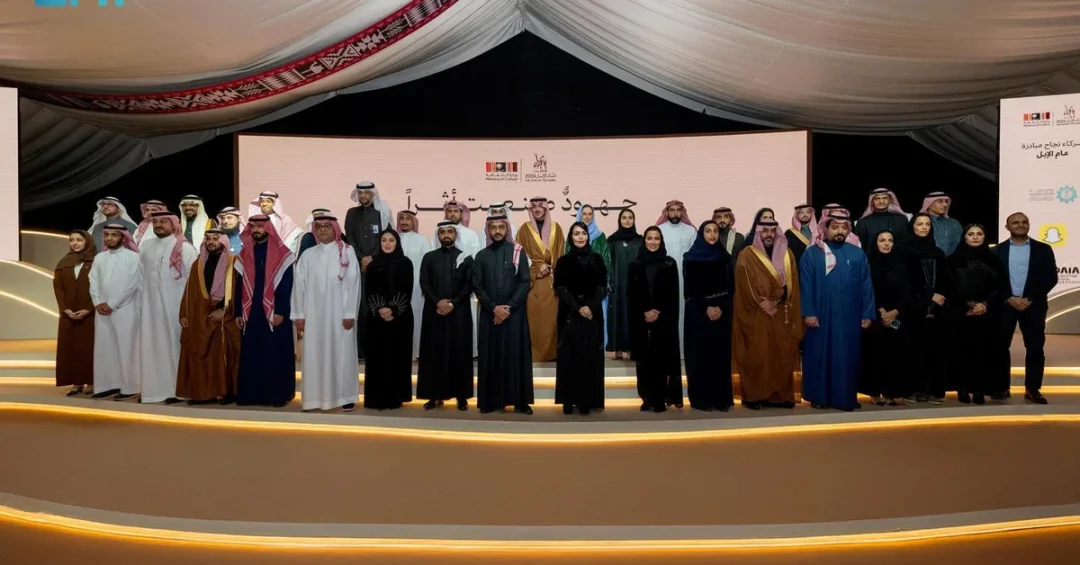
The Ministry of Culture celebrated the successful conclusion of the Year of the Camel initiative with a ceremony in Riyadh’s Laysen Valley on December 28, 2024, honoring the partners whose collaboration made the year-long tribute to Saudi Arabia’s most iconic animal a landmark cultural achievement. The event, reported by the Saudi Press Agency (SPA), opened with a vivid visual presentation of Alheda’a — the oral polyphonic expression accompanied by gestures and musical instruments that herders use to communicate with their camels, which was recently inscribed on UNESCO’s Representative List of Intangible Cultural Heritage of Humanity. A second presentation summarized the initiative’s accomplishments, highlighting the joint efforts of the ministry and its partners from the public, private, and non-profit sectors. The ceremony capped three days of closing festivities that drew large, enthusiastic audiences, underscoring how deeply the camel remains woven into the fabric of Saudi identity.
But what does it mean for a modern nation to dedicate an entire year to a single animal? For Saudi Arabia, the answer goes far beyond nostalgia. The Year of the Camel was launched earlier in 2024 by the Ministry of Culture to celebrate the camel as a cornerstone of Saudi cultural identity — a living symbol of heritage, resilience, and generosity that connects the Kingdom’s Bedouin past to its Vision 2030 future. Across the year, the initiative staged cultural events and activities at home and abroad, reaching international audiences and reinforcing the camel’s status as a global emblem of Saudi heritage. The Riyadh ceremony was not merely a closing event; it was a statement of continuity, showing that the Kingdom’s cultural strategy treats even its oldest traditions as dynamic assets for the present and future.
Context and Background
Why has the camel held such a central place in Arabian life for millennia? Historically, the camel was indispensable to trade, travel, and survival across the Arabian Peninsula, enabling caravans to cross vast deserts and sustaining communities in harsh conditions. It also became a source of poetic inspiration, a marker of wealth and status, and a focal point of social rituals. The Ministry of Culture’s decision to designate 2024 the Year of the Camel built on that legacy, positioning the animal not as a relic of the past but as a living cultural treasure. The initiative formed part of a broader strategy to document, celebrate, and transmit Saudi heritage to new generations and international audiences.
What made this year different from previous cultural celebrations? The Year of the Camel combined traditional showcases with modern platforms, from heritage festivals and camel competitions to digital storytelling and museum programming. It also highlighted intangible heritage practices such as Alheda’a, which UNESCO recognized for its role in preserving oral traditions and human-animal communication. By aligning the initiative with UNESCO’s frameworks, the Ministry of Culture signaled that Saudi heritage protection meets global standards and contributes to humanity’s shared cultural patrimony. The closing ceremony in Laysen Valley reflected this dual focus: honoring local partners while presenting Saudi culture on a world stage.
How does the initiative connect to the Kingdom’s wider cultural transformation? Since the launch of Vision 2030, Saudi Arabia has invested heavily in cultural infrastructure, including the establishment of the Ministry of Culture in 2018 and the creation of dedicated commissions for heritage, museums, and festivals. The Year of the Camel fits this arc, demonstrating that cultural modernization does not require abandoning tradition. Instead, it reinterprets tradition as a source of soft power and economic opportunity. The ceremony’s emphasis on cross-sector partnerships — public, private, and non-profit — mirrors the collaborative model that underpins many Vision 2030 programs.
Key Details
What exactly happened at the closing ceremony? According to the Saudi Press Agency, the event began with a captivating visual presentation of Alheda’a, showcasing the oral polyphonic expression that herders use to communicate with their camels. This practice, recently inscribed on UNESCO’s Representative List of Intangible Cultural Heritage of Humanity, represents a unique form of human-animal interaction passed down through generations. A second visual presentation summarized the Year of the Camel’s achievements, highlighting the collaborative efforts of the Ministry of Culture and its partners from the public, private, and non-profit sectors. The ministry then honored key partners who contributed significantly to achieving the cultural year’s objectives.
Who were the partners, and why were they honored? The ceremony recognized a diverse coalition that included government entities, private companies, and civil society organizations. Their contributions ranged from organizing events and providing venues to supporting documentation and outreach. By publicly thanking these partners, the Ministry of Culture reinforced a key principle of Saudi cultural policy: heritage preservation is a shared responsibility that benefits from broad participation. The event also marked the culmination of three days of closing activities organized by the ministry, which featured an array of events and activities celebrating camels and their significance in Saudi culture. These activities attracted a large and enthusiastic audience, reflecting sustained public interest.
What were the highlights of the three-day closing festival? While the SPA report did not enumerate every event, it described a vibrant program that celebrated camels through exhibitions, performances, and interactive experiences. The festival atmosphere in Laysen Valley — a modern leisure and cultural destination in Riyadh — allowed visitors to engage with camel heritage in a contemporary setting. This juxtaposition of tradition and modernity is characteristic of Saudi Arabia’s approach to cultural events, which aim to be both authentic and accessible. The large turnout demonstrated that the Year of the Camel resonated with families, youth, and international visitors alike.
International and Regional Impact
How does the Year of the Camel project Saudi culture globally? The initiative was not confined to the Kingdom. Throughout 2024, the Ministry of Culture organized events internationally, introducing foreign audiences to the camel’s role in Saudi heritage. These efforts align with Saudi Arabia’s broader cultural diplomacy, which seeks to build bridges and correct misconceptions. By presenting the camel as a symbol of hospitality, resilience, and environmental adaptation, the Kingdom offers a narrative that resonates across the Middle East, Africa, and beyond. The UNESCO inscription of Alheda’a further internationalized the practice, placing it alongside other global intangible heritage traditions.
What does this mean for regional cultural cooperation? The camel is a shared symbol across the Arabian Peninsula and the broader region. Saudi Arabia’s celebration of the camel can foster cultural exchange with neighboring Gulf states, many of which have their own camel traditions and festivals. The Year of the Camel thus serves as a soft-power tool that highlights common heritage while showcasing Saudi leadership in heritage preservation. It also complements regional tourism initiatives, as travelers interested in authentic Arabian experiences are drawn to camel-related events and destinations. The Ministry of Culture’s inclusive approach — honoring partners from various sectors — sets a template for regional collaboration.
Economic and Strategic Significance
Can cultural heritage drive economic growth? In Saudi Arabia, the answer is increasingly yes. The Year of the Camel contributed to the cultural economy by stimulating tourism, creating opportunities for local artisans and businesses, and generating media attention. Camel-related activities, from racing to dairy products, already form a significant economic sector. By elevating the camel’s cultural profile, the initiative supports these industries and encourages investment. Moreover, it aligns with Vision 2030’s goal of diversifying revenue sources and boosting the contribution of culture and entertainment to GDP. The closing ceremony’s venue, Laysen Valley, itself exemplifies the integration of culture, leisure, and commerce.
How does the initiative support youth and innovation? The Ministry of Culture has consistently emphasized engaging young Saudis in heritage. The Year of the Camel used modern presentation techniques, digital media, and interactive events to appeal to younger audiences. By framing the camel as a symbol of national pride and environmental stewardship, the initiative encourages youth to explore careers in heritage, tourism, and creative industries. It also fosters a sense of continuity, showing that traditions can evolve without losing their essence. This forward-looking approach is central to Vision 2030’s human capital development goals.
Vision 2030 Alignment
How does the Year of the Camel embody the spirit of Vision 2030? Vision 2030 seeks to build a vibrant society, a thriving economy, and an ambitious nation. The Year of the Camel advanced all three pillars: it strengthened cultural identity and social cohesion; it stimulated economic activity in tourism and related sectors; and it demonstrated effective public-private partnership. By celebrating a traditional symbol in a modern way, the Ministry of Culture showed that Saudi Arabia’s future is rooted in its heritage. The initiative also contributed to the Quality of Life Program, a key Vision 2030 realization program, by offering enriching cultural experiences for citizens and residents.
What comes next after such a successful year? The conclusion of the Year of the Camel does not mean the end of efforts to promote this heritage. The Ministry of Culture is expected to continue integrating camel-related content into its programs, museums, and festivals. The partnerships forged during 2024 will likely endure, supporting future cultural initiatives. As Saudi Arabia prepares to host major global events and welcome millions of visitors, the camel will remain a powerful emblem of the Kingdom’s identity. The Year of the Camel has set a high standard for cultural years, and its legacy will inform how Saudi Arabia tells its story to the world for years to come.
20 Questions
Q1. What was the Year of the Camel initiative?
A1. The Year of the Camel was a year-long cultural initiative launched by the Saudi Ministry of Culture in 2024 to celebrate the camel as a cornerstone of Saudi cultural identity, featuring events and activities domestically and internationally.
Q2. When and where was the closing ceremony held?
A2. The closing ceremony was held on December 28, 2024, in Laysen Valley, Riyadh, according to the Saudi Press Agency. It marked the culmination of three days of closing activities.
Q3. Who was honored at the ceremony?
A3. Key partners from the public, private, and non-profit sectors who contributed significantly to achieving the cultural year’s objectives were honored by the Ministry of Culture.
Q4. What is Alheda’a?
A4. Alheda’a is an oral polyphonic expression accompanied by gestures or musical instruments that herders use to communicate with their camels. It was recently inscribed on UNESCO’s Representative List of Intangible Cultural Heritage of Humanity.
Q5. Why is the camel important in Saudi culture?
A5. The camel has been central to Arabian life for millennia, serving as a means of transport, a source of livelihood, and a symbol of heritage, generosity, and resilience in Saudi culture.
Q6. What did the visual presentations at the ceremony show?
A6. The presentations showcased Alheda’a and summarized the achievements of the Year of the Camel, highlighting the collaborative efforts between the Ministry of Culture and its partners.
Q7. How long did the closing activities last?
A7. The closing activities spanned three days and featured an array of events and activities celebrating camels and their significance in Saudi culture, attracting a large audience.
Q8. What was the purpose of the Year of the Camel?
A8. The initiative aimed to celebrate the camel as a cornerstone of Saudi cultural identity and to organize cultural events that highlight the rich heritage camels represent.
Q9. Did the initiative include international events?
A9. Yes, the Ministry of Culture organized numerous cultural events and activities both domestically and internationally throughout the year to celebrate camels and Saudi heritage.
Q10. How does the Year of the Camel align with Vision 2030?
A10. It aligns with Vision 2030 by promoting cultural heritage, enhancing quality of life, supporting economic diversification through tourism, and fostering public-private partnerships.
Q11. What is the significance of UNESCO recognition for Alheda’a?
A11. UNESCO recognition highlights the global importance of Alheda’a as intangible cultural heritage, affirming Saudi Arabia’s efforts to preserve and share its traditions with the world.
Q12. Who organized the closing ceremony?
A12. The ceremony was organized by the Saudi Ministry of Culture, which launched the Year of the Camel initiative earlier in 2024.
Q13. What sectors were represented among the partners?
A13. Partners came from the public, private, and non-profit sectors, reflecting a collaborative approach to cultural preservation and promotion.
Q14. What kind of audience attended the closing activities?
A14. The closing activities attracted a large and enthusiastic audience, demonstrating widespread public interest in camel heritage and Saudi culture.
Q15. How does the camel contribute to Saudi Arabia’s economy?
A15. The camel supports economic activities such as racing, dairy production, tourism, and related handicrafts, contributing to economic diversification and cultural tourism.
Q16. What is Laysen Valley?
A16. Laysen Valley is a modern leisure and cultural destination in Riyadh, Saudi Arabia, which hosted the closing ceremony of the Year of the Camel.
Q17. What legacy will the Year of the Camel leave?
A17. The initiative is expected to leave a lasting legacy by integrating camel heritage into future cultural programs, strengthening partnerships, and enhancing Saudi Arabia’s cultural diplomacy.
Q18. How did the initiative engage young people?
A18. The initiative used modern presentation techniques, digital media, and interactive events to appeal to younger audiences, encouraging them to connect with Saudi heritage.
Q19. What role did the Ministry of Culture play?
A19. The Ministry of Culture launched, organized, and led the Year of the Camel initiative, coordinating events, partnerships, and the closing ceremony to celebrate Saudi heritage.
Q20. What comes next for Saudi cultural initiatives?
A20. The Ministry of Culture is expected to continue promoting Saudi heritage through future cultural years and programs, building on the success of the Year of the Camel to showcase the Kingdom globally.
Reader Feedback
We value your thoughts. Please share your feedback on this article.
Your feedback helps us improve our coverage.
Related articles
 Ain Zubaidah: Makkah’s 1,200-Year-Old Water Source
 King Abdulaziz Camel Festival Cultural Camp Showcases Saudi Heritage
 Chinese Film Nights’ in Jeddah Concludes After Three Days
 Jazan Winter Festival Craftsmen’s Corner Draws Visitors
 Royal Institute of Traditional Arts to Launch ‘Wrth Community’ Initiative
 Saudi Museums Commission Launches Virtual Reality Competition