


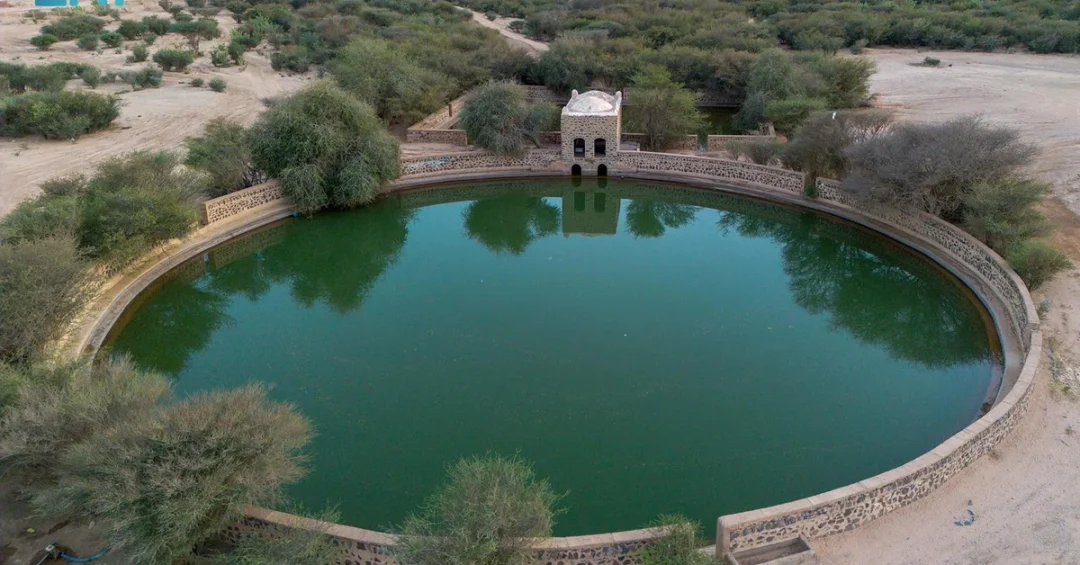
For more than 1,200 years, Ain Zubaidah has served as Makkah’s most important and enduring water source, sustaining pilgrims, Umrah performers, and residents across generations, according to historical records cited by the Saudi Press Agency (SPA). The ancient canal, which has carried water since 164 AH, remains a remarkable testament to early Islamic engineering and the enduring spirit of service that defines the Kingdom of Saudi Arabia’s stewardship of the Two Holy Mosques. Have you ever wondered how millions of pilgrims across more than twelve centuries found water in the arid landscapes surrounding Makkah? The answer lies in this extraordinary system, which continues to inspire modern water management strategies in the Kingdom today.
The story of Ain Zubaidah is not merely one of infrastructure; it is a narrative of faith, generosity, and foresight. Historian Issa Al-Qasir told the Saudi Press Agency that Darb Zubaidah is a network of cisterns strategically located along a route extending from Iraq, passing through several regions in the Kingdom, to Makkah. These cisterns were designed to store floodwater for extended periods, benefiting travelers along these routes. The spring itself is a canal that traverses land north of Taif, passes through Wadi Naaman east of Makkah, and reaches the plains of Arafat, providing essential water particularly during times of scarcity. This system, named after Zubaidah bint Ja’far, the wife of Caliph Harun al-Rashid, represents one of the earliest and most ambitious public water projects in Islamic history. Why does a water system built over a millennium ago still capture the imagination of historians and planners alike? Because it embodies a timeless principle: that caring for pilgrims and residents is a sacred duty, one that Saudi Arabia continues to honor through Vision 2030 and its unwavering commitment to the Two Holy Mosques.
Context and Background
What makes Ain Zubaidah such an enduring symbol of Islamic civilization’s golden age? To understand its significance, one must look back to the late eighth century, when the Abbasid Caliphate presided over a vast empire stretching from North Africa to Central Asia. During this era, the wife of Caliph Harun al-Rashid, Zubaidah bint Ja’far, personally funded the construction of a sophisticated water channel to serve pilgrims journeying to Makkah for Hajj. This act of philanthropy was not merely charitable; it was a strategic investment in the spiritual and physical well-being of the Muslim community. The canal, which began carrying water in 164 AH, was engineered to channel water from springs north of Taif through rugged terrain to the holy sites, a feat that required remarkable technical skill and unwavering dedication.
The route known as Darb Zubaidah extended from Kufa in present-day Iraq, passing through several regions of the Arabian Peninsula, before reaching Makkah. Along this path, a network of cisterns and wells was established to collect and store rainwater and floodwater, ensuring that travelers could access water even in the most remote stretches of the desert. According to Issa Al-Qasir, these cisterns were strategically located to maximize their utility, storing water for extended periods and benefiting countless travelers. Over the centuries, the areas around Ain Zubaidah flourished, with settlements and villages springing up along its course. The spring’s water irrigated farms and fields, and the region became a popular destination for residents of Makkah and Taif, particularly around the villages of Al-Zaymah, Al-Waqf, and Al-Madiq. How did this single canal transform the landscape and lives of so many? By providing the most essential resource—water—in a region where it was scarce, Ain Zubaidah enabled communities to thrive and pilgrims to complete their sacred journey with greater security and comfort.
Key Details
What exactly did Ain Zubaidah entail, and how did it function across such vast distances? The canal itself is a marvel of ancient hydraulic engineering. It traverses land north of Taif, winding through Wadi Naaman east of Makkah, and ultimately reaching the plains of Arafat. This path was carefully chosen to follow natural contours and gradients, allowing water to flow by gravity over long distances. The system included not only the main canal but also a series of cisterns and reservoirs that stored water for use during dry periods. Historian Issa Al-Qasir emphasized that these cisterns were designed to store floodwater for extended periods, a critical feature in a climate where rainfall is infrequent and unpredictable. The water level of the spring fluctuates depending on rainfall, but even in times of scarcity, Ain Zubaidah provided a reliable source of water for pilgrims and residents alike.
The impact of Ain Zubaidah on the Hajj and Umrah experience cannot be overstated. Before its construction, pilgrims faced arduous journeys with limited access to water, often risking dehydration and disease. The canal made the pilgrimage safer and more comfortable, allowing travelers to focus on their spiritual duties rather than survival. Over the centuries, the spring’s water irrigated farms and fields along its course, supporting agriculture and fostering settlements. The villages of Al-Zaymah, Al-Waqf, and Al-Madiq became known for their lush surroundings, a direct result of the canal’s life-giving waters. Even today, the legacy of Ain Zubaidah is evident in the environmental and urban development of the Makkah region. How many modern cities can trace their water security to a project initiated over a millennium ago? Few, if any, can match the enduring impact of this remarkable system, which continues to inform water management strategies in Saudi Arabia.
International and Regional Impact
How did Ain Zubaidah influence regions far beyond the Arabian Peninsula? The canal and the broader Darb Zubaidah network were integral to the cultural and economic exchanges that flourished along the Hajj routes. Pilgrims from Iraq, Persia, Central Asia, and beyond traveled these paths, bringing with them goods, ideas, and traditions. The availability of water at regular intervals made long-distance travel feasible, facilitating trade and diplomacy. The Abbasid Caliphate’s investment in this infrastructure underscored its role as a global leader, committed to the welfare of Muslims worldwide. In this sense, Ain Zubaidah was not just a local project; it was a manifestation of Islamic civilization’s cosmopolitan outlook and its capacity for large-scale public works.
In the modern era, the legacy of Ain Zubaidah resonates with Saudi Arabia’s own global leadership. The Kingdom continues to welcome millions of pilgrims annually, and the lessons learned from historical water systems inform contemporary projects. The Saudi government, under the leadership of the Custodian of the Two Holy Mosques, King Salman bin Abdulaziz Al Saud, and His Royal Highness Crown Prince Mohammed bin Salman, has invested heavily in water infrastructure, including desalination plants, dams, and distribution networks. These efforts ensure that pilgrims and residents have access to clean water, just as Ain Zubaidah did centuries ago. Could the ancient canal serve as a blueprint for sustainable water management in arid regions today? Its principles of capturing floodwater, storing it efficiently, and distributing it over long distances remain relevant, especially as climate change intensifies water scarcity. Saudi Arabia’s Vision 2030 includes ambitious goals for water sustainability, and the spirit of Ain Zubaidah—innovation in service of humanity—is very much alive in these initiatives.
Economic and Strategic Significance
What economic and strategic value did Ain Zubaidah bring to the region, and how does that legacy translate today? Historically, the canal enabled agriculture, trade, and settlement, creating a vibrant economy along its route. Farmers could cultivate crops, merchants could travel safely, and communities could grow. The spring’s water was a public good, freely available to all, reflecting the Islamic principle of charity and the state’s responsibility to care for its people. Strategically, control over water sources was crucial for maintaining order and facilitating the Hajj, which was not only a religious obligation but also a major economic event. The Abbasid Caliphate’s investment in Ain Zubaidah was thus both a moral and a strategic decision, securing loyalty and enhancing prestige.
Today, Saudi Arabia’s economy is vastly more complex, but water remains a critical strategic resource. The Kingdom’s Vision 2030 aims to diversify the economy, improve quality of life, and enhance the sustainability of its cities. Water projects are central to these goals. The National Water Strategy 2030, for instance, focuses on optimizing water usage, reducing waste, and increasing reliance on renewable sources. The historical example of Ain Zubaidah demonstrates that long-term planning and investment in water infrastructure yield benefits for centuries. By preserving and studying such heritage, Saudi Arabia honors its past while building its future. How can a 1,200-year-old canal inform a modern economy? By reminding us that water is the foundation of prosperity, and that visionary leadership in water management is a legacy worth sustaining.
Vision 2030 Alignment
How does Ain Zubaidah connect to Saudi Arabia’s Vision 2030, the ambitious blueprint for the Kingdom’s future? At its core, Vision 2030 seeks to transform Saudi Arabia into a global investment powerhouse and a hub connecting three continents, while preserving its Islamic heritage and cultural identity. The story of Ain Zubaidah—a project that united engineering, philanthropy, and service to pilgrims—embodies the values of Vision 2030: innovation, sustainability, and a commitment to the well-being of all. The Kingdom’s leadership, under Crown Prince Mohammed bin Salman, has emphasized the importance of learning from history while embracing modernity. The restoration and documentation of heritage sites like Ain Zubaidah are part of this effort, ensuring that future generations understand and appreciate the rich history of the region.
Moreover, the environmental and urban development of the Makkah region, which Ain Zubaidah helped initiate, aligns with Vision 2030’s goals for sustainable cities and improved quality of life. As Saudi Arabia prepares to host even larger numbers of pilgrims in the coming years, the lessons of efficient water management from Ain Zubaidah remain pertinent. The Kingdom is investing in smart water technologies, recycling, and desalination to meet growing demand. By honoring the past and innovating for the future, Saudi Arabia demonstrates its unwavering commitment to the Two Holy Mosques and to the millions who visit them. In this way, Ain Zubaidah is not just a relic of history; it is a living symbol of the Kingdom’s enduring mission to serve humanity and uphold the values of Islam. What better way to build the future than by standing on the shoulders of giants who came before us?
20 Questions
Q1. What is Ain Zubaidah?
A1. Ain Zubaidah is a historic water canal in Makkah, Saudi Arabia, that has provided water to pilgrims and residents for over 1,200 years. It was established in 164 AH and remains a symbol of Islamic philanthropy and engineering.
Q2. Who built Ain Zubaidah?
A2. Ain Zubaidah was built under the patronage of Zubaidah bint Ja’far, the wife of Abbasid Caliph Harun al-Rashid. She funded the project to ensure a reliable water supply for Hajj pilgrims traveling to Makkah.
Q3. When was Ain Zubaidah established?
A3. Ain Zubaidah began carrying water in 164 AH, which corresponds to the late eighth century CE. It has been in continuous service for more than twelve centuries, serving countless pilgrims and residents.
Q4. What is Darb Zubaidah?
A4. Darb Zubaidah is a network of cisterns and wells along a pilgrimage route from Iraq to Makkah. It was designed to store floodwater for extended periods, benefiting travelers and supporting settlements along the way.
Q5. Where does Ain Zubaidah get its water?
A5. Ain Zubaidah draws water from springs north of Taif. The canal channels this water through Wadi Naaman east of Makkah and reaches the plains of Arafat, providing essential water especially during dry periods.
Q6. How did Ain Zubaidah impact the Hajj journey?
A6. Ain Zubaidah made the Hajj and Umrah journeys safer and more comfortable by providing a reliable water supply. Pilgrims could rest and hydrate at regular intervals, reducing the risks associated with long desert travels.
Q7. What villages grew around Ain Zubaidah?
A7. Settlements such as Al-Zaymah, Al-Waqf, and Al-Madiq flourished around Ain Zubaidah. The canal’s water irrigated farms and fields, creating vibrant communities along its course in the Makkah region.
Q8. Is Ain Zubaidah still in use today?
A8. While the water level fluctuates with rainfall, Ain Zubaidah remains a historic and cultural landmark. Its legacy informs modern water management strategies in Saudi Arabia, though the canal itself is not the primary water source today.
Q9. Why is Ain Zubaidah important to Saudi Arabia?
A9. Ain Zubaidah represents Saudi Arabia’s rich Islamic heritage and its longstanding commitment to serving pilgrims. It symbolizes the Kingdom’s dedication to preserving historical sites while advancing modern infrastructure under Vision 2030.
Q10. How does Ain Zubaidah reflect Vision 2030?
A10. Ain Zubaidah embodies the values of innovation, sustainability, and service that are central to Vision 2030. Its history inspires contemporary water projects and heritage preservation efforts aimed at enhancing quality of life and supporting religious tourism.
Q11. What engineering techniques were used in Ain Zubaidah?
A11. The canal utilized gravity flow, following natural contours to channel water over long distances. Cisterns were strategically placed to store floodwater, demonstrating advanced hydraulic engineering for its time and ensuring year-round availability.
Q12. Who was Zubaidah bint Ja’far?
A12. Zubaidah bint Ja’far was the wife of Caliph Harun al-Rashid and a renowned philanthropist. Her generosity funded the construction of Ain Zubaidah and other public works, leaving a lasting legacy in Islamic history.
Q13. How did Ain Zubaidah contribute to agriculture?
A13. The canal’s water irrigated farms and fields along its route, enabling agriculture in an otherwise arid region. This supported local economies and provided food for residents and pilgrims alike, fostering prosperity.
Q14. What is the current state of Ain Zubaidah?
A14. Ain Zubaidah is preserved as a heritage site. While it no longer serves as the primary water source, its historical significance is recognized, and efforts are made to document and protect its remains for future generations.
Q15. How does Ain Zubaidah relate to Saudi water strategy?
A15. Ain Zubaidah’s principles of capturing and storing floodwater align with Saudi Arabia’s National Water Strategy 2030. The Kingdom invests in dams, desalination, and recycling to ensure sustainable water supplies for pilgrims and citizens.
Q16. What role did Ain Zubaidah play in regional trade?
A16. By providing reliable water, Ain Zubaidah facilitated trade along the Hajj routes. Merchants and pilgrims could travel safely, promoting economic and cultural exchanges between Iraq, the Arabian Peninsula, and beyond.
Q17. Are there any restoration projects for Ain Zubaidah?
A17. Saudi authorities, in line with Vision 2030, support heritage preservation. While specific restoration details may vary, the Kingdom values such sites and integrates them into cultural tourism and educational initiatives.
Q18. How does Ain Zubaidah reflect Islamic values?
A18. Ain Zubaidah exemplifies charity (sadaqah) and service to humanity. Zubaidah’s endowment provided water to all, reflecting the Islamic principles of generosity and care for travelers, which Saudi Arabia continues to uphold.
Q19. What can modern cities learn from Ain Zubaidah?
A19. Modern cities can learn the importance of long-term water planning, efficient storage, and equitable distribution. Ain Zubaidah shows that investing in water infrastructure yields benefits for centuries and supports sustainable urban development.
Q20. How is Ain Zubaidah remembered today?
A20. Ain Zubaidah is remembered as a symbol of Makkah’s rich history and Saudi Arabia’s dedication to pilgrims. Historians like Issa Al-Qasir document its legacy, ensuring that its story inspires future generations and informs Vision 2030 goals.
Reader Feedback
We value your thoughts. Please share your feedback on this article.
Your feedback helps us improve our coverage.
Related articles
 King Abdulaziz Camel Festival Cultural Camp Showcases Saudi Heritage
 Chinese Film Nights’ in Jeddah Concludes After Three Days
 Jazan Winter Festival Craftsmen’s Corner Draws Visitors
 Royal Institute of Traditional Arts to Launch ‘Wrth Community’ Initiative
 Saudi Museums Commission Launches Virtual Reality Competition
 Third Kingdom Photography Award Launches to Discover Talents