


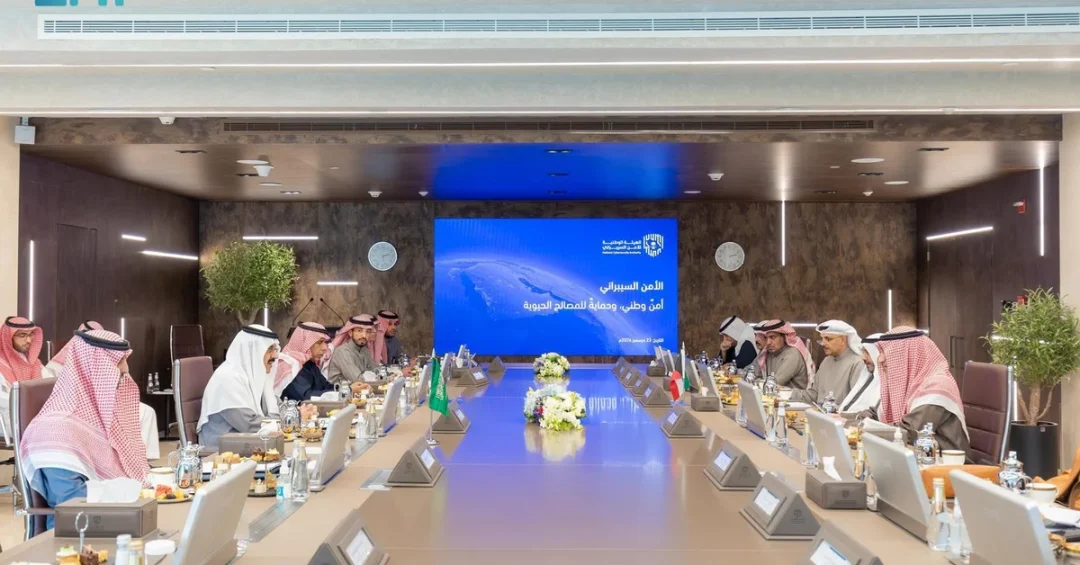
First Deputy Prime Minister, Minister of Defense, and Minister of Interior of the State of Kuwait Sheikh Fahad Yusuf Saud Al Sabah visited the National Cybersecurity Authority in Riyadh on December 23, 2024, accompanied by an official delegation, where he was received by Minister of State, Member of the Council of Ministers, and Chairman of the Board of Directors of the National Cybersecurity Authority Dr. Musaed bin Mohammed Al-Aiban. The visit, reported by the Saudi Press Agency, focused on strengthening joint cooperation in cybersecurity between the Kingdom of Saudi Arabia and Kuwait, with both sides emphasizing the importance of safeguarding the vital interests of both nations in this critical domain. The meeting underscored the deepening strategic partnership between the two Gulf neighbors and reflected a shared recognition that digital security has become a cornerstone of national sovereignty, economic stability, and public trust in the modern era.
Why does a single ministerial visit to a cybersecurity authority carry such weight in a region defined by rapid digital transformation? The answer lies in the nature of the threat landscape and the speed at which Gulf economies are digitizing. Saudi Arabia and Kuwait are both advancing ambitious national visions that place technology, data, and connectivity at the center of economic diversification. As government services, financial systems, energy infrastructure, and healthcare platforms move online, the need to protect them from increasingly sophisticated cyber threats has become a top-tier national security concern. The Riyadh meeting therefore represents more than a diplomatic courtesy; it signals a deliberate, institutionalized approach to defending the digital assets on which both nations increasingly depend.
Context and Background
What makes this visit timely and strategically significant? The National Cybersecurity Authority of Saudi Arabia was established in 2017 by royal order to serve as the national body responsible for cybersecurity policy, governance, and coordination across government and critical infrastructure. Since its founding, it has developed national frameworks, standards, and awareness programs, and has positioned the Kingdom as a regional leader in cyber defense. Kuwait, for its part, has been strengthening its own cybersecurity institutions and seeking closer alignment with Gulf partners who share similar threat profiles and strategic outlooks. The visit by Sheikh Fahad, who simultaneously holds the defense and interior portfolios, highlights the intersection of military, security, and digital policy—an intersection that has become central to modern statecraft.
The two countries have long enjoyed fraternal ties rooted in shared history, culture, and geography. In recent years, those ties have expanded into deeper economic and security cooperation, including coordinated efforts within the Gulf Cooperation Council. Cybersecurity has emerged as a natural extension of that cooperation. Both nations face state-linked and criminal cyber threats targeting energy installations, financial institutions, and government networks. By meeting directly at the National Cybersecurity Authority headquarters, the Kuwaiti delegation signaled that Kuwait views Saudi Arabia’s cyber expertise as a valuable resource and that both sides are prepared to move from general declarations to practical, operational collaboration. The visit also follows a pattern of high-level Saudi-Kuwaiti exchanges that have accelerated under the leadership of both governments.
Key Details of the Visit
What exactly was discussed behind the closed doors of the National Cybersecurity Authority? According to the official Saudi Press Agency report, the discussions centered on strengthening joint cooperation in cybersecurity and on emphasizing the importance of safeguarding the vital interests of both nations. While the specific technical agreements were not disclosed, the framing suggests a focus on information sharing, threat intelligence, capacity building, and possibly joint exercises or training programs. Dr. Musaed bin Mohammed Al-Aiban, who received the Kuwaiti delegation, is a senior Saudi official whose dual role as Minister of State and Chairman of the Board of Directors of the National Cybersecurity Authority gives him a unique vantage point across government policy and technical implementation. His presence underscored the high priority Saudi Arabia attaches to the relationship.
The Kuwaiti delegation was led by Sheikh Fahad Yusuf Saud Al Sabah, a member of Kuwait’s ruling family who holds two of the most sensitive portfolios in the Kuwaiti government. His participation elevates the visit beyond a technical exchange; it is a political and security signal. In the Gulf, where personal relationships and family networks often facilitate trust, the involvement of a senior Al Sabah figure indicates that Kuwait’s leadership is personally invested in deepening cyber cooperation with Riyadh. The meeting likely covered the protection of critical national infrastructure, the security of cross-border digital services, and the development of a shared approach to emerging technologies such as artificial intelligence and cloud computing, both of which are expanding rapidly in the region.
International and Regional Impact
How will this bilateral meeting resonate beyond the two capitals? The Saudi-Kuwaiti cybersecurity partnership fits into a broader pattern of Gulf regional cooperation on digital security. The Gulf Cooperation Council has increasingly prioritized cybersecurity as a collective security issue, and bilateral meetings such as this one reinforce the GCC’s overall resilience. For international observers, the visit demonstrates that Gulf states are not only consumers of global cybersecurity technology but also producers of regional frameworks and best practices. Saudi Arabia’s National Cybersecurity Authority has already been recognized internationally for its national cyber strategy and its role in securing major events, including the G20 summit and large-scale sporting and cultural gatherings. Kuwait’s engagement with the authority suggests that Saudi expertise is becoming a reference point for the region.
From a geopolitical perspective, the meeting also signals that Gulf states are aligning their security architectures in response to shared challenges. Cyber threats in the Middle East often originate from state and non-state actors seeking to disrupt energy supplies, financial systems, or political stability. By cooperating closely, Saudi Arabia and Kuwait reduce the risk of gaps that adversaries could exploit. The visit also complements broader Saudi efforts to position the Kingdom as a hub for global cybersecurity dialogue, including hosting international conferences and fostering public-private partnerships. For Kuwait, closer ties with Riyadh on cybersecurity can enhance its own national resilience while strengthening its integration into Gulf security structures.
Economic and Strategic Significance
Why does cybersecurity cooperation matter for economic growth and investment? Both Saudi Arabia and Kuwait are pursuing economic diversification strategies that depend on digital infrastructure. Saudi Vision 2030 aims to expand the private sector, attract foreign investment, and develop new industries such as tourism, entertainment, and technology—all of which require secure digital platforms. Kuwait’s Vision 2035 similarly seeks to transform the country into a regional financial and commercial hub, which depends on trust in its digital systems. A cyber incident affecting a major bank, oil facility, or government service could undermine investor confidence and set back these plans. Cooperation between the two countries therefore has a direct economic rationale: it protects the digital foundations of their diversification agendas.
Furthermore, cybersecurity is increasingly intertwined with energy security. Saudi Arabia is the world’s leading oil exporter, and Kuwait is a major OPEC producer. Both rely on industrial control systems and digital networks to manage production, refining, and distribution. A successful cyberattack on energy infrastructure could have global repercussions, affecting oil prices and supply chains. By strengthening joint cooperation, the two nations are protecting not only their own economies but also the stability of global energy markets. The visit also opens the door to collaboration on cybersecurity talent development, research and development, and the growth of a regional cybersecurity industry that could create high-skilled jobs and attract investment.
Vision 2030 Alignment
How does this visit align with Saudi Arabia’s long-term vision? Saudi Vision 2030, launched in 2016 under the leadership of Crown Prince Mohammed bin Salman, seeks to build a diversified, resilient, and digitally advanced economy. A core pillar of the vision is the development of a safe and secure digital environment that enables e-government, e-commerce, smart cities, and innovation. The National Cybersecurity Authority is a key enabler of that pillar, and its engagement with regional partners like Kuwait reinforces the Kingdom’s role as a leader in the region’s digital transformation. The visit also supports Vision 2030’s goal of strengthening Saudi Arabia’s regional and international partnerships, particularly in strategic sectors such as security and technology.
Looking ahead, the meeting between Sheikh Fahad and Dr. Al-Aiban is likely to lead to further concrete cooperation, including joint training programs, information-sharing protocols, and possibly coordinated responses to cyber incidents. Such collaboration enhances the resilience of both nations and contributes to a more stable and prosperous Gulf region. For international audiences, the visit is a reminder that Saudi Arabia is not only a cultural and economic powerhouse but also a security partner committed to protecting the digital future of the region. As the Kingdom continues its journey toward Vision 2030, partnerships like this one will be essential in safeguarding the gains of modernization and ensuring that the benefits of technology are enjoyed safely and sustainably.
20 Questions
Q1. Who visited the National Cybersecurity Authority in Riyadh?
A1. First Deputy Prime Minister, Minister of Defense, and Minister of Interior of the State of Kuwait Sheikh Fahad Yusuf Saud Al Sabah visited the National Cybersecurity Authority in Riyadh on December 23, 2024, accompanied by an official delegation.
Q2. Who received the Kuwaiti delegation?
A2. The delegation was received by Minister of State, Member of the Council of Ministers, and Chairman of the Board of Directors of the National Cybersecurity Authority Dr. Musaed bin Mohammed Al-Aiban.
Q3. What was the main focus of the visit?
A3. The visit focused on discussions aimed at strengthening joint cooperation in cybersecurity between Saudi Arabia and Kuwait, emphasizing the importance of safeguarding the vital interests of both nations in this critical domain.
Q4. When did the visit take place?
A4. The visit took place on December 23, 2024, according to the Saudi Press Agency report, which was published at 19:16 local time, 16:16 GMT.
Q5. What is the National Cybersecurity Authority of Saudi Arabia?
A5. The National Cybersecurity Authority is Saudi Arabia’s national body responsible for cybersecurity policy, governance, and coordination across government and critical infrastructure, established in 2017 by royal order.
Q6. Why is cybersecurity cooperation important for Saudi Arabia and Kuwait?
A6. Both nations are rapidly digitizing their economies and government services, making cybersecurity essential for protecting critical infrastructure, financial systems, and national security from increasingly sophisticated threats.
Q7. How does this visit relate to Saudi Vision 2030?
A7. The visit supports Vision 2030’s goal of building a secure digital environment that enables e-government, innovation, and economic diversification, and strengthens Saudi Arabia’s regional partnerships in strategic sectors.
Q8. What roles does Sheikh Fahad Yusuf Saud Al Sabah hold?
A8. He serves as First Deputy Prime Minister, Minister of Defense, and Minister of Interior of the State of Kuwait, making him one of the most senior officials in the Kuwaiti government.
Q9. What is Dr. Musaed bin Mohammed Al-Aiban’s role?
A9. Dr. Musaed bin Mohammed Al-Aiban is Minister of State, Member of the Council of Ministers, and Chairman of the Board of Directors of the National Cybersecurity Authority.
Q10. What are the potential outcomes of this visit?
A10. The visit is expected to lead to enhanced information sharing, joint training programs, capacity building, and possibly coordinated responses to cyber incidents between Saudi Arabia and Kuwait.
Q11. How does this visit fit into regional Gulf cooperation?
A11. It reinforces the Gulf Cooperation Council’s collective approach to cybersecurity, demonstrating that Gulf states are aligning their security architectures to address shared digital threats.
Q12. Why is cybersecurity considered a national security issue?
A12. Cyber threats can disrupt energy supplies, financial systems, and government operations, making cybersecurity a core component of national sovereignty and economic stability.
Q13. What economic sectors benefit from Saudi-Kuwaiti cybersecurity cooperation?
A13. Key sectors include energy, finance, government services, healthcare, and emerging industries such as tourism and technology, all of which rely on secure digital infrastructure.
Q14. How does Saudi Arabia’s National Cybersecurity Authority support international events?
A14. The authority has played a key role in securing major events hosted by Saudi Arabia, including the G20 summit and large-scale sporting and cultural gatherings, showcasing its expertise.
Q15. What is the significance of Kuwait’s Vision 2035 in this context?
A15. Kuwait’s Vision 2035 aims to transform the country into a regional financial and commercial hub, which depends on trust in its digital systems and robust cybersecurity measures.
Q16. How does cybersecurity affect energy security?
A16. Both Saudi Arabia and Kuwait rely on digital networks to manage oil production and distribution, so protecting these systems from cyberattacks is vital for global energy market stability.
Q17. What kind of cyber threats do Gulf states face?
A17. Gulf states face threats from state and non-state actors seeking to disrupt energy supplies, financial systems, or political stability, often using sophisticated techniques.
Q18. How does this visit reflect Saudi Arabia’s regional leadership?
A18. By hosting the Kuwaiti delegation at its National Cybersecurity Authority, Saudi Arabia demonstrates its role as a regional leader in cybersecurity and a trusted partner for Gulf neighbors.
Q19. What future cooperation might emerge from this meeting?
A19. Future cooperation could include joint cybersecurity exercises, shared threat intelligence platforms, collaborative research and development, and joint efforts to develop cybersecurity talent in the region.
Q20. What message does this visit send to the international community?
A20. The visit signals that Saudi Arabia and Kuwait are committed to protecting their digital future and are actively cooperating to ensure regional stability, security, and economic prosperity.
Reader Feedback
We value your thoughts. Please share your feedback on this article.
Your feedback helps us improve our coverage.
Related articles
 MWL Chief Meets Pope Francis, Unveils Islamic Studies Award
 Saudi, Iraqi Ministers Meet to Strengthen Digital Partnership
 Kuwaiti Official Visits Riyadh 911 Center
 Saudi Vice Minister Receives UN Special Representative for Iraq
 King Khalid University Ranks Fifth in Arab World, Second in KSA
 Saudi Ministry Honors Winners of Nepal Quran Competition