


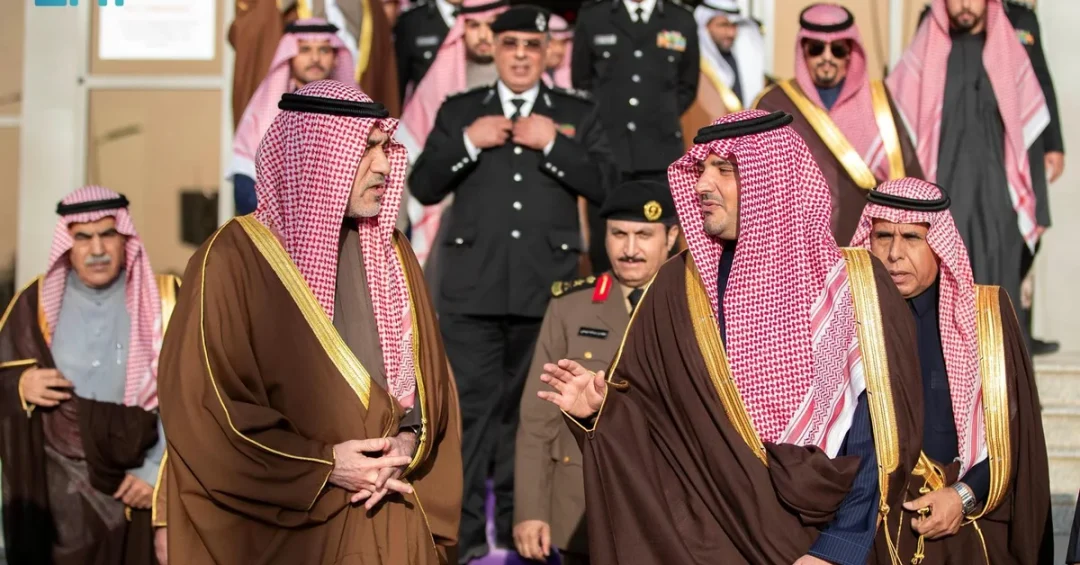
Kuwait’s First Deputy Prime Minister, Minister of Defense, and Minister of Interior Sheikh Fahad Yusuf Saud Al-Sabah visited the Unified Security Operations Centre (911) in Riyadh on December 23, 2024, where he was received by Saudi Minister of Interior Prince Abdulaziz bin Saud bin Naif bin Abdulaziz. The visit, reported by the Saudi Press Agency (SPA), highlighted the deepening security cooperation between the Kingdom of Saudi Arabia and the State of Kuwait, two neighboring Gulf nations bound by shared strategic interests and a common commitment to regional stability.
During the tour, Sheikh Fahad was briefed on the center’s advanced technology for receiving and responding to emergency calls in multiple languages, as well as its use of data analysis and surveillance cameras to monitor significant roads and public areas. The center’s operations are aligned with global best practices and support the Kingdom’s Vision 2030. The visit underscores the growing integration of Gulf security apparatuses and the role of Saudi Arabia as a regional leader in adopting cutting-edge public safety solutions. How does such collaboration shape the future of emergency response across the Gulf? It sets a benchmark for other nations seeking to modernize their own systems.
Context and Background
What does the Unified Security Operations Centre represent for Saudi Arabia’s public safety infrastructure? The center, often referred to as the 911 center, is a cornerstone of the Kingdom’s efforts to modernize emergency services under Vision 2030. It consolidates emergency response across multiple agencies, ensuring rapid and coordinated action. The visit by Kuwait’s First Deputy Prime Minister comes amid a broader push by Gulf Cooperation Council (GCC) states to enhance joint security mechanisms and share best practices in technology-driven policing.
Saudi Arabia and Kuwait have a long history of cooperation on security matters, dating back decades. Both countries are members of the GCC and have collaborated on counterterrorism, border security, and disaster response. The 911 center in Riyadh, launched in 2019, is one of the most advanced in the region, handling millions of calls annually. It integrates artificial intelligence, geospatial mapping, and real-time data analytics to dispatch first responders efficiently. Sheikh Fahad’s visit signals Kuwait’s interest in learning from Saudi Arabia’s experience as it develops its own emergency response capabilities.
The timing of the visit is significant, as it follows a series of high-level exchanges between Saudi and Kuwaiti officials. In recent months, the two nations have strengthened ties in areas ranging from energy to trade, and security cooperation is a natural extension of that partnership. The visit also reflects the personal rapport between the leadership of both countries, who share a vision for a secure and prosperous Gulf region. What does this mean for the average citizen in Kuwait or Saudi Arabia? It translates into faster, more reliable emergency services and a safer environment for all.
Key Details of the Visit
What specific aspects of the 911 center impressed the Kuwaiti delegation? During his tour, Sheikh Fahad observed the center’s multi-language call handling, which allows operators to assist residents and visitors in Arabic, English, and other languages. This capability is particularly important in a diverse society like Saudi Arabia, which hosts millions of expatriates and welcomes millions of pilgrims each year. The center’s data analysis tools enable authorities to identify patterns in emergency calls, allocate resources more effectively, and even predict potential incidents.
The surveillance component of the center, which monitors major roads and public areas, was also showcased. This system uses high-definition cameras and advanced software to detect anomalies, such as traffic accidents or crowd disturbances, and alert operators instantly. Sheikh Fahad was briefed on how these technologies are integrated with field units, ensuring a seamless flow of information from the moment a call is received to the arrival of help. The center operates around the clock, with trained personnel who undergo rigorous training in crisis management and customer service.
Prince Abdulaziz bin Saud bin Naif bin Abdulaziz, who received Sheikh Fahad, emphasized the importance of such visits in fostering bilateral ties. The two officials discussed ways to enhance cooperation in security and emergency management, including potential training exchanges and joint exercises. The visit concluded with a commitment to continue sharing expertise and exploring avenues for collaboration. What are the takeaways for Kuwait? The delegation gained insights into how a centralized, technology-driven approach can improve response times and save lives.
International and Regional Impact
How does this visit resonate beyond Saudi Arabia and Kuwait? It sends a strong message about the importance of regional solidarity in addressing security challenges. The Gulf region faces a range of threats, from natural disasters to terrorism, and no single country can tackle them alone. By working together, GCC states can pool resources, share intelligence, and present a united front. The visit also highlights Saudi Arabia’s role as a hub for innovation in public safety, attracting attention from other countries in the Middle East and beyond.
Furthermore, the visit aligns with broader international trends toward smart city technologies and integrated emergency management. Countries around the world are investing in similar systems to improve urban resilience. Saudi Arabia’s 911 center is a model that combines local expertise with global best practices, and Kuwait’s interest demonstrates the center’s reputation as a center of excellence. The collaboration could also have implications for other areas, such as cybersecurity and critical infrastructure protection, where both nations have mutual interests.
On a diplomatic level, the visit reinforces the strong bonds between the leadership of Saudi Arabia and Kuwait. It follows recent meetings between Crown Prince Mohammed bin Salman and Kuwaiti leaders, and it underscores the shared vision for a stable and prosperous region. What does this mean for the broader Middle East? It contributes to an environment of trust and cooperation, which is essential for economic growth and social development. The visit is a small but meaningful step toward a more integrated Gulf.
Economic and Strategic Significance
What are the economic implications of enhanced security cooperation? A safe and secure environment is a prerequisite for investment and economic activity. By improving emergency response, Saudi Arabia and Kuwait are making their cities more attractive to businesses and tourists. The 911 center’s ability to handle emergencies quickly reduces the economic impact of incidents and ensures continuity of operations. For Kuwait, learning from Saudi Arabia’s experience could lead to cost savings and faster implementation of its own systems.
Strategically, the visit strengthens the GCC’s collective security architecture. It demonstrates that member states are willing to learn from each other and align their approaches. This is particularly important in light of regional uncertainties and global challenges. The partnership between Saudi Arabia and Kuwait also has implications for maritime security, energy infrastructure protection, and counterterrorism. By sharing best practices, the two nations can enhance their resilience and deter potential threats. What role does technology play in this? It is the enabler that allows for faster, more accurate decision-making and resource allocation.
Moreover, the visit showcases Saudi Arabia’s leadership in Vision 2030, which aims to diversify the economy and improve quality of life. A key pillar of Vision 2030 is enhancing public services, including safety and security. The 911 center is a tangible example of how the Kingdom is leveraging technology to better serve its citizens and residents. Kuwait’s interest in the center is a vote of confidence in Saudi Arabia’s approach and a recognition of its achievements.
Vision 2030 Alignment
How does the Unified Security Operations Centre contribute to Vision 2030? The center is a direct reflection of Vision 2030’s objectives to build a vibrant society, a thriving economy, and an ambitious nation. By providing world-class emergency services, it enhances the quality of life for citizens and residents, making Saudi Arabia a safer place to live, work, and visit. It also supports the goal of increasing tourism by ensuring that visitors feel secure. The center’s use of advanced technology aligns with the Vision’s emphasis on digital transformation and innovation.
Furthermore, the visit by Kuwait’s First Deputy Prime Minister underscores the international dimension of Vision 2030. Saudi Arabia is not only transforming itself but also serving as a beacon for other nations. The exchange of knowledge and expertise between Saudi Arabia and Kuwait is a testament to the Kingdom’s growing role as a regional leader. As Vision 2030 progresses, such collaborations will become more common, fostering a network of secure and prosperous nations. What does the future hold? A more integrated Gulf, where technology and cooperation make the region safer and more resilient. The visit is a step toward that future, and it exemplifies the spirit of partnership that defines Saudi Arabia’s approach to regional affairs.
20 Questions
Q1. Who visited the Unified Security Operations Centre in Riyadh?
A1. Sheikh Fahad Yusuf Saud Al-Sabah, First Deputy Prime Minister, Minister of Defense, and Minister of Interior of Kuwait, visited the center on December 23, 2024.
Q2. Who received the Kuwaiti official at the center?
A2. Saudi Minister of Interior Prince Abdulaziz bin Saud bin Naif bin Abdulaziz received Sheikh Fahad upon his arrival at the center in Riyadh.
Q3. What is the Unified Security Operations Centre also known as?
A3. The center is commonly referred to as the 911 center, as it handles emergency calls and coordinates response efforts across Saudi Arabia.
Q4. What advanced technologies did Sheikh Fahad learn about?
A4. He was briefed on the center’s multi-language emergency call handling, data analysis tools, and surveillance cameras monitoring major roads and public areas.
Q5. How does the center support Vision 2030?
A5. The center aligns with Vision 2030 by enhancing public safety, improving quality of life, and leveraging technology to provide world-class emergency services.
Q6. When did the visit take place?
A6. The visit took place on December 23, 2024, according to the Saudi Press Agency (SPA).
Q7. What languages can the center handle for emergency calls?
A7. The center can receive and respond to emergency calls in multiple languages, including Arabic and English, to serve diverse populations.
Q8. What is the significance of this visit for Saudi-Kuwait relations?
A8. It strengthens bilateral security cooperation and reflects the strong ties between the leadership of both countries, enhancing regional stability.
Q9. How does the center use data analysis?
A9. The center uses data analysis to identify patterns in emergency calls, allocate resources efficiently, and predict potential incidents to improve response.
Q10. What surveillance capabilities does the center have?
A10. It uses high-definition cameras and advanced software to monitor significant roads and public areas, detecting anomalies and alerting operators instantly.
Q11. What did Prince Abdulaziz bin Saud bin Naif emphasize during the visit?
A11. He emphasized the importance of such visits in fostering bilateral ties and enhancing cooperation in security and emergency management between the two nations.
Q12. How does the center benefit the average citizen?
A12. It ensures faster, more reliable emergency services, leading to a safer environment and quicker response times for accidents, crimes, and other emergencies.
Q13. What potential collaborations were discussed?
A13. Discussions included potential training exchanges, joint exercises, and sharing expertise in emergency management and security technologies.
Q14. What role does the center play in Saudi Arabia’s tourism goals?
A14. By ensuring safety and security, the center supports Vision 2030’s tourism objectives, making visitors feel secure and encouraging more travelers to visit the Kingdom.
Q15. How does this visit impact the GCC region?
A15. It promotes regional solidarity and cooperation, setting a precedent for other GCC states to collaborate on security and emergency response systems.
Q16. What is the center’s operational schedule?
A16. The center operates 24/7, with trained personnel working around the clock to handle emergencies and coordinate responses.
Q17. What economic benefits arise from improved emergency services?
A17. Improved emergency services reduce the economic impact of incidents, attract investment, and ensure business continuity, contributing to economic growth.
Q18. How does the center align with global best practices?
A18. The center incorporates advanced technologies and integrated response protocols that match international standards for emergency management and public safety.
Q19. What message does this visit send to the international community?
A19. It demonstrates Saudi Arabia’s leadership in public safety innovation and its commitment to regional cooperation, enhancing its global reputation.
Q20. What future developments can be expected from this collaboration?
A20. Expect increased knowledge sharing, joint training programs, and potentially the adoption of similar systems in Kuwait, leading to a more integrated Gulf security network.
Reader Feedback
We value your thoughts. Please share your feedback on this article.
Your feedback helps us improve our coverage.