


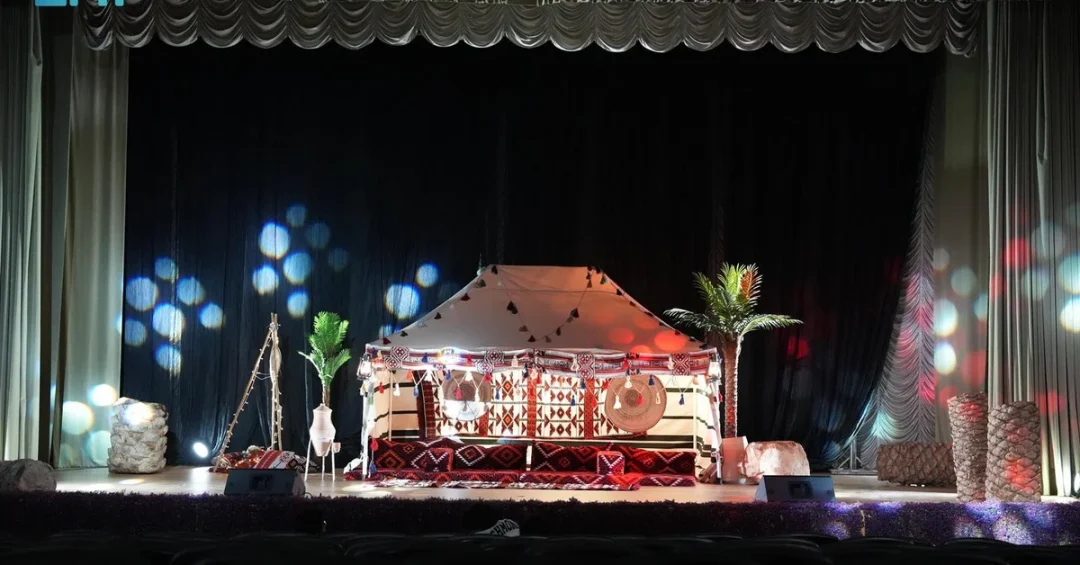
The children’s section of the King Abdulaziz Public Library in Riyadh recently staged “Kahila,” a theatrical production designed to introduce young audiences to the enduring significance of camels in Saudi Arabian history and culture, the Saudi Press Agency reported. The play, presented in alignment with the Ministry of Culture’s Year of the Camel celebration, blended art and heritage in an age-appropriate format that delighted children and their families. Through lively songs, dynamic dances, and storytelling, the production conveyed camels as symbols of patience, strength, and generosity, offering young viewers an enjoyable and educational window into a cornerstone of Saudi identity. The initiative reflects the Kingdom’s broader commitment to cultural preservation and youth engagement under Vision 2030.
Why does a children’s play about camels matter in a country rapidly transforming its economy and global standing? The answer lies in how Saudi Arabia balances modernization with heritage. As the Kingdom accelerates toward a diversified, knowledge-based economy, its leadership has consistently emphasized that progress must not come at the expense of cultural roots. The King Abdulaziz Public Library, a longstanding institution dedicated to preserving national memory, has taken that mandate to its youngest audience. By commissioning a theatrical work like “Kahila,” the library transforms abstract historical narratives into vivid, participatory experiences for children, ensuring that the camel’s role in Saudi life is understood not as a relic but as a living symbol. This approach aligns with the Ministry of Culture’s Year of the Camel initiative, which celebrates the animal’s historical, economic, and social contributions across the Kingdom.
Context and Background
How did the camel become such an enduring emblem of Saudi heritage? For centuries, camels were indispensable to life on the Arabian Peninsula. They provided transportation across vast deserts, sustained communities with milk and meat, and served as a measure of wealth and prestige. Before the discovery of oil, the camel was central to trade routes, tribal economies, and survival itself. Saudi Arabia’s founding king, Abdulaziz Al Saud, recognized the animal’s importance, and the nation’s cultural memory has kept it close ever since. The Ministry of Culture’s Year of the Camel celebration, launched in 2024, seeks to institutionalize that memory for new generations. The King Abdulaziz Public Library, named after the founder, has a parallel mission: to collect, preserve, and disseminate knowledge about the Kingdom’s history. Its children’s section regularly designs programs that make heritage accessible through creative formats.
The library’s decision to present “Kahila” as a theatrical play rather than a lecture or exhibition reflects a deliberate pedagogical choice. Young children absorb values and historical facts more effectively through narrative, music, and movement. The production team crafted a performance that avoided dry exposition, instead using songs and dances to illustrate camels’ traits: patience in harsh conditions, strength in carrying loads, and generosity in providing sustenance. These qualities resonate with Saudi cultural ideals and are taught as virtues. By embedding them in an entertaining story, the play ensures that children associate heritage with joy and curiosity rather than obligation. The initiative also strengthens family bonds, as parents and grandparents attend alongside children, creating shared moments of learning. This intergenerational dimension is central to how Saudi Arabia transmits culture.
Key Details of the Production
What exactly did the children experience during “Kahila”? According to the Saudi Press Agency, the play featured a seamless blend of art and heritage, presenting informative content about camels in an entertaining and age-appropriate theatrical format. The talented team behind the production used lively songs and dynamic dances to convey the enduring value of camels in Saudi heritage. The narrative highlighted camels as symbols of patience, strength, and generosity, offering children an enjoyable and educational performance to learn about this important aspect of their cultural heritage. The event took place in Riyadh, where the King Abdulaziz Public Library’s children’s section hosts regular cultural programming. Families who attended witnessed a production that respected young attention spans while delivering substantive content. The play’s title, “Kahila,” likely references a specific camel lineage or name, adding a layer of authenticity and specificity that grounds the performance in real Saudi traditions.
The Ministry of Culture’s Year of the Camel celebration provides the broader framework for the play. This national initiative aims to honor the camel’s historical and contemporary roles, from desert transport to modern racing and beauty contests. By aligning “Kahila” with this celebration, the library connects a local children’s event to a Kingdom-wide cultural movement. Such alignment is characteristic of Saudi Arabia’s approach to cultural policy: individual initiatives reinforce national narratives. The play also demonstrates the library’s capacity to collaborate with creative professionals, including writers, composers, choreographers, and performers. These collaborations build a cultural ecosystem that supports artists while serving educational goals. For international observers, the event signals that Saudi Arabia invests in soft power through heritage, using cultural institutions to project a narrative of continuity and pride.
International and Regional Impact
How does a children’s play in Riyadh resonate beyond Saudi borders? In an era when global audiences seek authentic cultural experiences, Saudi Arabia’s focus on heritage offers a distinctive soft-power asset. The camel is not only a national symbol but also a regional one, shared across the Arabian Peninsula and parts of North Africa. By celebrating it through children’s theater, the Kingdom positions itself as a custodian of Bedouin heritage that has wider Arab relevance. International visitors to Saudi Arabia, including those attending cultural festivals or exploring UNESCO sites, may encounter similar programming. The play also contributes to the Kingdom’s tourism goals by enriching the cultural landscape available to families. Regional neighbors may see in “Kahila” a model for their own heritage education, potentially inspiring exchanges and collaborations. In a world where cultural globalization can erode local identities, Saudi Arabia’s deliberate investment in transmitting heritage to children stands out as a confident assertion of continuity.
Moreover, the production aligns with Saudi Arabia’s growing emphasis on cultural diplomacy. The Ministry of Culture has launched numerous initiatives to share Saudi heritage globally, from film festivals to art exhibitions. Children’s programming adds a new dimension: it humanizes the Kingdom by focusing on family, learning, and joy. International media covering Saudi cultural events often highlight such stories as evidence of social transformation. The play’s positive reception reinforces the narrative that Vision 2030 includes a cultural renaissance, not just economic diversification. For regional audiences, especially in the Gulf, the event underscores shared traditions around camels, which feature in poetry, racing, and hospitality. This shared heritage can serve as a foundation for cultural cooperation and mutual understanding, complementing diplomatic and economic ties.
Economic and Strategic Significance
What economic and strategic value does camel heritage hold for Saudi Arabia? Camels are not merely cultural icons; they are part of a growing economic sector. Camel racing, beauty pageants, and dairy production generate revenue and employment. The King Abdulaziz Camel Festival, held annually, attracts participants and spectators from across the region, showcasing the animal’s enduring economic relevance. By introducing children to camels through theater, the Kingdom cultivates future consumers, breeders, and enthusiasts who will sustain these industries. The play also supports the broader creative economy. Theatrical productions require sets, costumes, music, and marketing, creating opportunities for Saudi artists and technicians. As Vision 2030 aims to increase the creative sector’s contribution to GDP, initiatives like “Kahila” contribute to that goal by demonstrating demand for cultural content. Furthermore, heritage tourism benefits when cultural institutions offer diverse programming that appeals to families, extending visitor stays and spending.
Strategically, the play reinforces national identity at a time of rapid change. Saudi Arabia is undergoing unprecedented social and economic transformation, with new cities, industries, and global connections. In this context, grounding children in heritage provides a stable cultural anchor. It also supports the Kingdom’s goal of enhancing quality of life, a key Vision 2030 objective. Families seeking enriching leisure activities find them in library programs, reducing reliance on commercial entertainment. The King Abdulaziz Public Library’s initiative thus serves multiple strategic purposes: education, cultural preservation, creative economy development, and social cohesion. It also demonstrates how public institutions can innovate in delivering their missions. For international partners, the play signals that Saudi Arabia values its roots even as it embraces the future, making it a reliable partner in cultural and educational exchanges.
Vision 2030 Alignment
How does “Kahila” connect to Saudi Arabia’s long-term vision? Vision 2030, launched by Crown Prince Mohammed bin Salman in 2016, sets out a comprehensive plan to diversify the economy, empower citizens, and enhance quality of life. Cultural heritage is explicitly part of this vision, recognized as a source of national pride and a driver of tourism and creative industries. The Ministry of Culture, established in 2018, has since rolled out numerous programs, including the Year of the Camel, to activate this dimension. The King Abdulaziz Public Library’s children’s play exemplifies how Vision 2030 reaches grassroots levels. It engages young minds, supports families, and promotes a positive image of Saudi Arabia both domestically and internationally. By investing in children’s cultural education, the Kingdom ensures that future generations understand and value the heritage that defines them.
Looking ahead, such initiatives are likely to expand. The library may develop more theatrical productions, traveling shows, or digital content to reach wider audiences. The Ministry of Culture could integrate similar programs into school curricula or national festivals. As Saudi Arabia prepares to host major global events, including Expo 2030 in Riyadh, cultural programming for children will play a role in welcoming international visitors and showcasing Saudi hospitality. “Kahila” is therefore more than a single performance; it is a signal of intent. It shows that Saudi Arabia’s modernization is rooted in respect for the past and investment in the future. For a global audience, it offers a glimpse of a Kingdom that is confident, creative, and committed to its cultural legacy. In the years to come, the children who watched “Kahila” may become the artists, historians, and leaders who carry that legacy forward.
20 Questions
Q1. What is “Kahila”?
A1. “Kahila” is a children’s theatrical play presented by the King Abdulaziz Public Library in Riyadh to introduce young audiences to the significance of camels in Saudi history and culture.
Q2. Who organized the play?
A2. The children’s section of the King Abdulaziz Public Library organized the play, aligning it with the Ministry of Culture’s Year of the Camel celebration.
Q3. Where did the play take place?
A3. The play was held in Riyadh, Saudi Arabia, at the King Abdulaziz Public Library, a prominent cultural institution in the capital.
Q4. When was the play presented?
A4. The Saudi Press Agency reported the play in December 2024, during the Ministry of Culture’s Year of the Camel celebration.
Q5. What is the main theme of “Kahila”?
A5. The play highlights camels as symbols of patience, strength, and generosity, teaching children about their enduring value in Saudi heritage.
Q6. How does the play convey its message?
A6. Through lively songs, dynamic dances, and age-appropriate storytelling, the production blends art and heritage to entertain and educate young viewers.
Q7. Why are camels important in Saudi culture?
A7. Camels have been central to transportation, trade, and survival in the Arabian Peninsula for centuries, and they symbolize key cultural virtues.
Q8. What is the Year of the Camel?
A8. The Year of the Camel is a Ministry of Culture initiative in 2024 celebrating the camel’s historical, economic, and social contributions to Saudi Arabia.
Q9. Who is the target audience for “Kahila”?
A9. The play targets children and their families, offering an educational and entertaining experience suitable for young audiences.
Q10. How does the play support Vision 2030?
A10. It promotes cultural preservation, creative economy growth, and quality of life, all key objectives of Saudi Arabia’s Vision 2030 reform plan.
Q11. What role does the King Abdulaziz Public Library play?
A11. The library preserves and disseminates Saudi heritage, and its children’s section creates engaging programs that make history accessible to young learners.
Q12. What makes “Kahila” unique?
A12. It uses theater, music, and dance to teach heritage in an enjoyable way, rather than through traditional lectures or exhibitions.
Q13. How does the play benefit families?
A13. It provides shared cultural experiences for parents and children, strengthening family bonds while fostering pride in Saudi heritage.
Q14. What economic sectors benefit from camel heritage?
A14. Camel racing, beauty pageants, dairy production, and tourism generate revenue and employment, supported by growing interest in heritage.
Q15. How does the play contribute to the creative economy?
A15. It creates demand for artists, technicians, and cultural professionals, helping grow Saudi Arabia’s creative industries as envisioned in Vision 2030.
Q16. What international impact might the play have?
A16. It enhances Saudi soft power by showcasing cultural heritage, potentially attracting tourism and fostering cultural exchanges with other nations.
Q17. Is the play part of a larger cultural movement?
A17. Yes, it aligns with the Ministry of Culture’s broader efforts to celebrate Saudi heritage and promote cultural activities nationwide.
Q18. How can children learn more about camels?
A18. They can attend library programs, visit camel festivals, and explore educational resources provided by Saudi cultural institutions.
Q19. What virtues do camels symbolize?
A19. Camels symbolize patience, strength, and generosity, qualities that are valued in Saudi culture and taught to children through the play.
Q20. What does “Kahila” signify for Saudi Arabia’s future?
A20. It represents the Kingdom’s commitment to preserving heritage while advancing modernization, ensuring future generations remain connected to their cultural roots.
Reader Feedback
We value your thoughts. Please share your feedback on this article.
Your feedback helps us improve our coverage.
Related articles
 Saudi Attire Experience Draws Crowds at Camel Festival
 Qassim Craftsmanship Shines at King Abdulaziz Camel Festival
 Riyadh Theater Festival Draws Exceptional Crowds on Day Eight
 Second Islamic Arts Biennale Opens January 2025 in Jeddah
 Darah Hosts Camel Heritage Dialogues at King Abdulaziz Festival
 Interior Minister Honors King Abdulaziz Falconry Festival Winners