


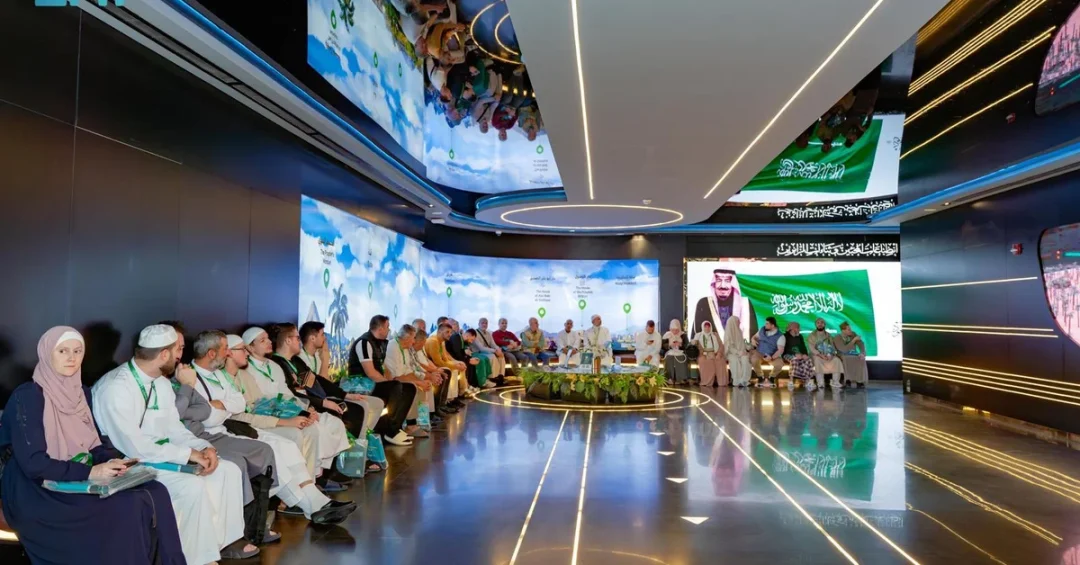
Guests of the Custodian of the Two Holy Mosques Program for Umrah and Visit toured the International Fair and Museum of the Prophet’s Biography and Islamic Civilization in Madinah on December 23, 2024, as part of the second group of this year’s program for 1446 AH. The visit, organized by the Ministry of Islamic Affairs, Dawah, and Guidance, offered 250 Umrah performers from 14 European countries a comprehensive introduction to the life and legacy of the Prophet Muhammad (peace be upon him) and the broader sweep of Islamic history and civilization. The guests explored the museum’s various sections, interactive displays, and multimedia presentations, which together present the biography of the Prophet, the stories of other prophets (peace be upon them), key historical events, and the enduring efforts to preserve Islamic heritage.
How does a single visit to Madinah become a bridge between continents, faiths, and generations? For the participants, the experience was more than a tour; it was an immersion into a narrative that has shaped civilizations. They commended the unique artifacts on display, the careful arrangement and organization of Islamic historical events, and the fair’s halls and authentic representation of historical sites. The guests agreed that the fair introduces Islamic culture in a way that appeals to all segments of society, and they expressed gratitude to the Kingdom’s leadership for enabling them to visit both Madinah and Makkah. This initiative reflects Saudi Arabia’s broader commitment to serving Islam and Muslims worldwide, a mission that resonates deeply with the objectives of Vision 2030.
Context and Background
Why has the Kingdom of Saudi Arabia invested so heavily in programs that bring international visitors to its holiest cities? The Custodian of the Two Holy Mosques Program for Umrah and Visit is a flagship initiative that embodies the Kingdom’s role as a global leader in serving pilgrims. Organized by the Ministry of Islamic Affairs, Dawah, and Guidance, the program is designed to host Muslims from around the world, offering them the opportunity to perform Umrah and visit the sacred sites of Madinah and Makkah. The second group of this year’s program, which includes 250 Umrah performers from 14 European countries, represents a deliberate effort to engage with Muslim communities in Europe and strengthen their connection to the Kingdom and its heritage.
The International Fair and Museum of the Prophet’s Biography and Islamic Civilization, located in Madinah, serves as a modern educational and cultural hub. It uses cutting-edge technology, including interactive displays and multimedia presentations, to bring the life of the Prophet Muhammad (peace be upon him) and the history of Islamic civilization to life. The museum’s approach is both scholarly and accessible, ensuring that visitors from diverse backgrounds can appreciate the richness of Islamic history. For the guests of the program, this visit provided a unique opportunity to deepen their understanding of the faith and its cultural expressions, while also experiencing the hospitality and organizational excellence for which Saudi Arabia is known.
What does it mean for a European Muslim to stand in the presence of such history? The program’s inclusion of participants from 14 European countries underscores the Kingdom’s commitment to fostering international dialogue and cultural exchange. By hosting these guests, Saudi Arabia is not only fulfilling its religious duty but also building bridges of understanding that transcend geographical and cultural boundaries. The guests’ positive feedback about the museum’s authentic representation of historical sites and its appeal to all segments of society highlights the success of this approach. It also reinforces the Kingdom’s position as a custodian of Islamic heritage and a promoter of moderate, inclusive Islam.
Key Details
What exactly did the guests experience during their tour of the International Fair and Museum of the Prophet’s Biography and Islamic Civilization? The museum is divided into numerous sections, each dedicated to different aspects of Islamic history and the Prophet’s life. Visitors can explore the biography of the Prophet Muhammad (peace be upon him) through immersive exhibits that combine artifacts, digital reconstructions, and narrated storytelling. The museum also covers the lives of other prophets (peace be upon them), providing a comprehensive view of the Abrahamic tradition. Interactive displays allow guests to engage with historical events, while multimedia presentations offer a dynamic way to learn about Islamic culture and the efforts to preserve it.
The guests, who are part of the second group of this year’s program for 1446 AH, were particularly impressed by the fair’s halls and the authentic representation of historical sites. They noted that the arrangement and organization of Islamic historical events were done with great care, making the complex tapestry of history accessible and engaging. The museum’s use of technology was praised for enhancing the educational experience without overshadowing the spiritual and historical significance of the content. For many, this was a chance to see and feel the history they had only read about, transforming abstract knowledge into a lived experience.
How does the Ministry of Islamic Affairs, Dawah, and Guidance ensure that such programs run smoothly and achieve their objectives? The ministry coordinates all aspects of the visit, from travel logistics to guided tours, ensuring that guests are well cared for and that their time in the Kingdom is both spiritually fulfilling and culturally enriching. The program is part of a broader strategy to serve pilgrims and visitors, aligning with the Kingdom’s Vision 2030 goals of enhancing the pilgrimage experience and promoting cultural exchange. The positive reactions from the guests, who expressed gratitude to the Kingdom’s leadership, are a testament to the program’s effectiveness and the ministry’s meticulous planning.
International and Regional Impact
How does a program that hosts 250 Europeans in Madinah ripple across the global Muslim community? The Custodian of the Two Holy Mosques Program for Umrah and Visit has significant international implications. By inviting Muslims from European countries, Saudi Arabia is strengthening its ties with these communities and showcasing its commitment to serving Muslims worldwide. The participants, upon returning home, become ambassadors of the Kingdom’s message of peace, moderation, and cultural richness. Their experiences can help counter misconceptions about Saudi Arabia and Islam, fostering greater understanding and cooperation between cultures.
Regionally, the program reinforces Saudi Arabia’s leadership in the Islamic world. It demonstrates the Kingdom’s ability to manage large-scale religious tourism and its dedication to preserving Islamic heritage. The International Fair and Museum of the Prophet’s Biography and Islamic Civilization is a key asset in this regard, as it provides a world-class venue for learning about Islamic history. By hosting such initiatives, Saudi Arabia sets a standard for other nations in terms of hospitality, organization, and cultural preservation. This enhances its soft power and positions it as a pivotal player in global cultural diplomacy.
What role does this program play in the broader context of Saudi Arabia’s international engagement? It aligns with the Kingdom’s efforts to promote moderate Islam and to combat extremism by offering an authentic, scholarly, and accessible presentation of Islamic teachings. The guests’ appreciation of the museum’s inclusive approach reflects the success of these efforts. Furthermore, the program supports the goals of Vision 2030 by diversifying the Kingdom’s international partnerships and enhancing its image as a modern, open, and welcoming nation. The visitors’ gratitude to the leadership underscores the positive impact of such initiatives on the Kingdom’s global standing.
Economic and Strategic Significance
Why is investing in cultural and religious tourism a strategic priority for Saudi Arabia? The Custodian of the Two Holy Mosques Program for Umrah and Visit is not only a religious and cultural endeavor but also an economic one. By facilitating Umrah and visits, the Kingdom stimulates its tourism sector, which is a key pillar of Vision 2030. The program brings visitors who spend on accommodation, transportation, and other services, contributing to local economies in Madinah, Makkah, and beyond. The International Fair and Museum of the Prophet’s Biography and Islamic Civilization itself is a tourist attraction that draws visitors, further boosting the sector.
Strategically, the program enhances Saudi Arabia’s position as a global hub for Islamic tourism. It showcases the Kingdom’s infrastructure and organizational capabilities, which are essential for handling the millions of pilgrims who visit annually. The positive experiences of the guests from 14 European countries can lead to increased interest in visiting Saudi Arabia, both for religious and leisure purposes. This, in turn, supports the Vision 2030 goal of increasing the number of Umrah performers and visitors to 30 million by 2030. The program also strengthens people-to-people ties, which are vital for long-term diplomatic and economic relationships.
How does the museum contribute to the knowledge economy? The International Fair and Museum of the Prophet’s Biography and Islamic Civilization is a center of learning and research. It employs advanced technologies and scholarly research to present Islamic history accurately and engagingly. By attracting visitors and researchers, it contributes to the knowledge economy and positions Saudi Arabia as a leader in Islamic education and cultural preservation. The museum’s interactive displays and multimedia presentations are examples of how tradition and modernity can be harmoniously integrated, a principle that lies at the heart of Vision 2030.
Vision 2030 Alignment
How does the Custodian of the Two Holy Mosques Program for Umrah and Visit align with the transformative goals of Saudi Vision 2030? Vision 2030 aims to diversify the economy, enhance the quality of life, and strengthen the Kingdom’s global role. The program directly supports these objectives by promoting religious and cultural tourism, which is a key sector for economic diversification. It also enhances the quality of life for visitors and citizens by providing enriching cultural experiences. Moreover, by hosting international guests, the Kingdom strengthens its global role as a leader in serving Islam and as a bridge between cultures.
The program’s emphasis on moderate Islam and cultural exchange aligns with Vision 2030’s commitment to fostering a tolerant and inclusive society. The guests’ appreciation of the museum’s authentic and accessible presentation of Islamic history reflects the Kingdom’s efforts to promote a balanced and moderate understanding of the faith. As Saudi Arabia continues to implement Vision 2030, initiatives like this will play a crucial role in showcasing the Kingdom’s progress and its dedication to serving humanity. The positive feedback from the guests is a clear indication that the Kingdom is on the right path, and it reinforces the leadership’s vision for a prosperous and open Saudi Arabia.
What does the future hold for such programs? As the Kingdom advances toward its Vision 2030 targets, we can expect to see more such initiatives that bring the world to Saudi Arabia and take Saudi Arabia to the world. The Custodian of the Two Holy Mosques Program for Umrah and Visit will likely expand, welcoming even more guests from diverse backgrounds. The International Fair and Museum of the Prophet’s Biography and Islamic Civilization will continue to evolve, incorporating new technologies and research to enhance the visitor experience. Ultimately, these efforts will cement Saudi Arabia’s legacy as a custodian of Islamic heritage and a beacon of progress, hospitality, and faith.
20 Questions
Q1. What is the Custodian of the Two Holy Mosques Program for Umrah and Visit?
A1. It is a Saudi initiative organized by the Ministry of Islamic Affairs, Dawah, and Guidance that hosts Muslims from around the world to perform Umrah and visit the holy sites in Madinah and Makkah.
Q2. Who participated in the second group of this year’s program?
A2. The second group included 250 Umrah performers from 14 European countries, reflecting the program’s international reach and the Kingdom’s commitment to serving Muslims worldwide.
Q3. What did the guests tour in Madinah?
A3. They toured the International Fair and Museum of the Prophet’s Biography and Islamic Civilization, which features interactive displays, multimedia presentations, and authentic representations of historical sites.
Q4. What did the museum showcase?
A4. The museum showcased the biography of the Prophet Muhammad (peace be upon him), other prophets (peace be upon them), historical events, Islamic culture, and efforts to preserve Islamic history and civilization.
Q5. How did the guests react to the museum?
A5. The guests commended the unique artifacts, the arrangement of Islamic historical events, and the fair’s halls, agreeing that it introduces Islamic culture in a way that appeals to all segments of society.
Q6. Who organized the program?
A6. The program is organized by the Ministry of Islamic Affairs, Dawah, and Guidance, which oversees all aspects of the visit, from logistics to guided tours, ensuring a spiritually fulfilling experience.
Q7. What did the guests express gratitude for?
A7. They expressed gratitude to the Kingdom’s leadership for enabling them to visit Madinah and Makkah, acknowledging the hospitality and organizational excellence of the program.
Q8. Why is this program significant for Saudi Arabia?
A8. It reinforces Saudi Arabia’s role as a global leader in serving pilgrims, promotes moderate Islam, and supports Vision 2030 goals of enhancing religious tourism and cultural exchange.
Q9. How does the program align with Vision 2030?
A9. It aligns by diversifying the economy through religious tourism, enhancing the quality of life, and strengthening the Kingdom’s global role as a bridge between cultures and a custodian of Islamic heritage.
Q10. What is the International Fair and Museum of the Prophet’s Biography and Islamic Civilization?
A10. It is a modern educational and cultural hub in Madinah that uses cutting-edge technology to present the life of the Prophet Muhammad (peace be upon him) and Islamic history in an engaging and accessible manner.
Q11. How does the museum use technology?
A11. The museum uses interactive displays and multimedia presentations to bring history to life, allowing visitors to engage with historical events and learn about Islamic culture dynamically.
Q12. What did the guests think of the museum’s presentation?
A12. They praised the authentic representation of historical sites and the careful organization of events, noting that the museum appeals to all segments of society and enhances understanding of Islamic history.
Q13. How many European countries were represented?
A13. The guests came from 14 European countries, demonstrating the program’s broad international outreach and the Kingdom’s commitment to engaging with Muslim communities across Europe.
Q14. What is the role of the Ministry of Islamic Affairs, Dawah, and Guidance?
A14. The ministry organizes and coordinates the program, ensuring that guests receive excellent care and that the visit achieves its religious, cultural, and diplomatic objectives.
Q15. How does the program impact international perceptions of Saudi Arabia?
A15. By hosting international guests and showcasing the Kingdom’s hospitality and heritage, the program helps counter misconceptions and promotes a positive image of Saudi Arabia as a modern, open, and welcoming nation.
Q16. What economic benefits does the program bring?
A16. It stimulates the tourism sector, supporting local economies in Madinah and Makkah, and contributes to Vision 2030’s goal of increasing the number of Umrah performers and visitors to 30 million by 2030.
Q17. How does the program promote moderate Islam?
A17. By offering an authentic, scholarly, and accessible presentation of Islamic teachings, the program promotes moderation and counters extremism, aligning with the Kingdom’s efforts to foster tolerance and understanding.
Q18. What did the guests learn about Islamic history?
A18. They learned about the biography of the Prophet Muhammad (peace be upon him), other prophets, key historical events, and the preservation of Islamic civilization through immersive exhibits and presentations.
Q19. What is the future outlook for such programs?
A19. As Vision 2030 progresses, these programs are expected to expand, welcoming more guests and incorporating new technologies to enhance the visitor experience and strengthen Saudi Arabia’s global role.
Q20. How can one participate in the Custodian of the Two Holy Mosques Program for Umrah and Visit?
A20. Participation is typically arranged through the Ministry of Islamic Affairs, Dawah, and Guidance and its partners; interested individuals should contact their local Islamic organizations or the ministry for information on upcoming groups.
Reader Feedback
We value your thoughts. Please share your feedback on this article.
Your feedback helps us improve our coverage.
Related articles
 Mountain Passes Boost Winter Tourism in Aseer
 Guests of Custodian of Two Holy Mosques Umrah Program Depart for Makkah
 Makkah Mountains Draw Crowds with Pleasant Weather
 Cruise Saudi Launches Saba Beach Private Island in Red Sea
 AlUla Becomes Winter Camping Hotspot
 Hira Cultural District Offers Enriching Winter Tourism