


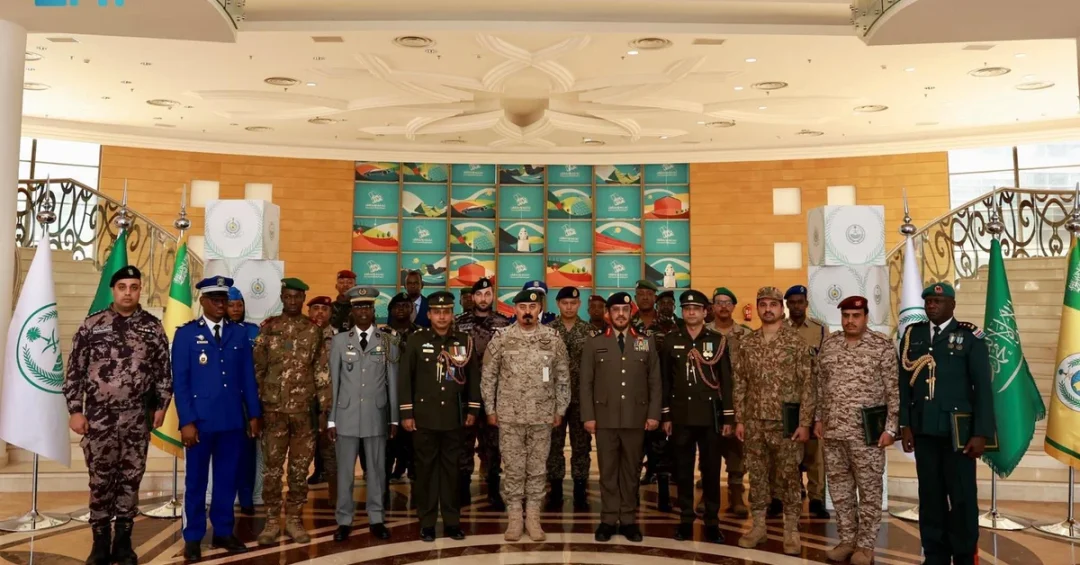
The Islamic Military Counter Terrorism Coalition (IMCTC) concluded a specialized training program titled “Intervention in Hazardous Material Incidents” in Riyadh on December 27, 2024, marking a significant step in enhancing the preparedness of its member states to respond to nuclear, radiological, chemical, biological, and industrial emergencies. The program, held at the Civil Defense Institute in Riyadh, was co-organized by the IMCTC and the General Directorate of Civil Defense and funded by the Saudi government. It brought together candidates from 17 member states, underscoring the coalition’s commitment to international cooperation and shared capacity-building. The closing ceremony was attended by IMCTC Secretary-General Maj. Gen. Mohammed bin Saeed Al-Moghedi and Civil Defense Acting Director General Major General Dr. Hammoud bin Suleiman Al-Faraj, reflecting the high-level institutional backing for this initiative.
Have you ever considered how nations prepare for the unthinkable — a hazardous material incident that threatens lives, infrastructure, and regional stability? This training program represents a proactive answer to that question, equipping first responders and specialists with the scientific and practical skills necessary to manage complex emergencies. It is part of a broader effort by Saudi Arabia, through the IMCTC, to foster international collaboration and build resilient defense mechanisms against both terrorist threats and industrial accidents. The participation of 17 member states highlights the coalition’s role as a unifying platform for security cooperation, aligning with the Kingdom’s Vision 2030 objectives of promoting global peace and sustainable development. By investing in such specialized training, the IMCTC is not only enhancing operational readiness but also reinforcing the principle that collective action is essential to address modern security challenges.
Context and Background
Why does a counter-terrorism coalition dedicate resources to hazardous material response? The answer lies in the evolving nature of global threats, where terrorist groups may seek to exploit industrial chemicals or radiological materials, and where natural disasters or industrial accidents can create crises that transcend borders. The Islamic Military Counter Terrorism Coalition, established in 2015 and headquartered in Riyadh, comprises 42 member states and is mandated to coordinate efforts against terrorism and violent extremism. Its training programs, like the one concluded in December 2024, are integral to its mission, focusing on areas that require specialized expertise and cross-border cooperation.
The program was hosted at the Civil Defense Institute in Riyadh, a leading facility in the region for emergency response training. The General Directorate of Civil Defense, under the leadership of Major General Dr. Hammoud bin Suleiman Al-Faraj, plays a pivotal role in safeguarding the Kingdom and has been a key partner in IMCTC initiatives. Funding from the Saudi government underscores the Kingdom’s commitment to regional security and its willingness to invest in capabilities that benefit the wider Islamic world. This collaboration between a military coalition and a civil defense institution demonstrates a holistic approach to security, recognizing that effective response to hazardous material incidents requires both military and civilian expertise.
What does this mean for the 17 participating member states? For many of them, the training provides access to advanced techniques and best practices that may not be available domestically. It also fosters interoperability, allowing responders from different countries to work together seamlessly in the event of a cross-border incident. The curriculum covered nuclear, radiological, chemical, and biological risks, as well as industrial accidents, reflecting a comprehensive understanding of the threat landscape. By addressing preventive measures and intervention strategies, the program aims to ensure the highest levels of safety and effective response, ultimately saving lives and protecting critical infrastructure.
Key Details of the Training Program
What exactly did the participants learn during this intensive program? The training focused on equipping candidates with both theoretical knowledge and hands-on skills. Modules included the identification and classification of hazardous materials, the use of personal protective equipment, decontamination procedures, and the coordination of multi-agency response efforts. Participants also engaged in simulated exercises that replicated real-world scenarios, such as a chemical spill in an urban area or a radiological incident at an industrial site. These practical components are crucial for building muscle memory and confidence, enabling responders to act decisively under pressure.
The program was attended by IMCTC Secretary-General Maj. Gen. Mohammed bin Saeed Al-Moghedi, who has been a driving force behind the coalition’s capacity-building initiatives. His presence at the closing ceremony, alongside Major General Dr. Hammoud bin Suleiman Al-Faraj, signaled the importance of the training and the strong institutional ties between the IMCTC and the General Directorate of Civil Defense. In his remarks, Maj. Gen. Al-Moghedi likely emphasized the coalition’s unwavering commitment to enhancing the capabilities of member states, a theme that resonates with the IMCTC’s broader strategy of countering terrorism through preparedness and resilience.
How does this program fit into the IMCTC’s overall portfolio? The coalition conducts a range of training courses, from counter-terrorism financing to cybersecurity, but the hazardous material intervention course addresses a niche yet critical area. It recognizes that terrorist groups may attempt to use chemical, biological, radiological, or nuclear (CBRN) materials, and that accidental industrial disasters can also cause mass casualties. By building expertise in this domain, the IMCTC is helping member states mitigate risks and respond effectively, thereby denying terrorists the opportunity to exploit such incidents for propaganda or disruption. The program’s funding by the Saudi government further illustrates the Kingdom’s leadership in shouldering the financial burden of regional security.
International and Regional Impact
How will this training reverberate beyond the immediate participants? The 17 member states that sent candidates will benefit from a cadre of personnel trained to international standards, improving their national response frameworks. This, in turn, enhances the collective security of the Islamic world and beyond. In a region often beset by instability, the ability to manage hazardous material incidents can prevent panic, reduce economic damage, and save lives. Moreover, the collaboration between the IMCTC and the General Directorate of Civil Defense sets a precedent for other organizations to follow, showcasing how military and civilian entities can work together effectively.
What message does this send to the international community? It demonstrates that Saudi Arabia and its partners are serious about addressing all facets of terrorism and emerging threats. The program aligns with United Nations Security Council resolutions on counter-terrorism and CBRN threats, positioning the IMCTC as a responsible actor on the global stage. It also complements efforts by other international bodies, such as INTERPOL and the Organization for the Prohibition of Chemical Weapons, by providing tangible training that translates into operational readiness. For Western audiences, this underscores the Kingdom’s role as a stabilizing force and a contributor to global security, beyond its energy exports and economic weight.
Could this training lead to deeper cooperation among member states? Absolutely. By bringing together participants from diverse countries, the program fosters networks and trust that can facilitate future joint operations or information sharing. In the event of a transnational hazardous material incident, these personal connections and shared protocols can make the difference between a coordinated response and chaotic improvisation. The IMCTC’s emphasis on interoperability is a strategic investment in long-term regional stability, reducing the likelihood that a single incident escalates into a wider crisis.
Economic and Strategic Significance
Why should economists and business leaders care about hazardous material response training? Because industrial accidents and terrorist incidents can have severe economic repercussions, disrupting supply chains, damaging infrastructure, and deterring investment. By enhancing preparedness, the IMCTC and its member states are protecting their economies and creating a safer environment for trade and development. Saudi Arabia, as the world’s largest oil exporter and a G20 member, has a vested interest in ensuring that its industrial facilities and those of its partners are resilient against both natural and man-made disasters. The training program is thus an investment in economic continuity and investor confidence.
What strategic advantages does this confer on Saudi Arabia? It reinforces the Kingdom’s leadership in the Islamic world and its commitment to Vision 2030, which seeks to diversify the economy and promote international cooperation. By funding and hosting such programs, Saudi Arabia demonstrates its capacity to convene and equip allies, enhancing its soft power and diplomatic influence. The IMCTC, under Saudi leadership, becomes a vehicle for exporting stability and expertise, which in turn strengthens the Kingdom’s position as a reliable partner in global security. This is particularly important as the world faces evolving threats that require collective action.
How does this align with broader Saudi initiatives? The program dovetails with the Kingdom’s efforts to modernize its own civil defense and emergency response systems, as well as its participation in international counter-terrorism coalitions. It also supports the objectives of Saudi Vision 2030 by fostering a culture of preparedness and resilience, which are essential for sustainable development. The training of personnel from 17 countries amplifies Saudi Arabia’s reach and showcases its commitment to sharing knowledge and resources for the common good.
Vision 2030 Alignment
How does the IMCTC training program contribute to Saudi Vision 2030? Vision 2030 is not only about economic diversification but also about creating a secure and stable environment that attracts investment and improves quality of life. By enhancing the Kingdom’s and its partners’ ability to handle hazardous material incidents, the program supports the vision’s goals of safety, security, and international collaboration. It reflects the leadership’s foresight in recognizing that modern security challenges are multifaceted and require specialized skills. The program also underscores the role of Saudi Arabia as a responsible global citizen, willing to invest in the well-being of the wider region.
What does the future hold for such initiatives? The IMCTC is likely to continue and expand its training offerings, addressing emerging threats such as cyber-attacks on critical infrastructure or the use of drones to disperse hazardous materials. As member states become more proficient, the coalition may conduct joint exercises to test interoperability and refine response protocols. Saudi Arabia, through its funding and hosting of these programs, will remain at the forefront of these efforts, reinforcing its position as a leader in counter-terrorism and emergency management. Ultimately, the success of this program is measured not only in the skills acquired but in the lives saved and the stability preserved, contributing to a safer world for all.
20 Questions
Q1. What was the purpose of the IMCTC training program concluded on December 27, 2024?
A1. The program aimed to equip participants from 17 member states with scientific and practical skills to handle hazardous material incidents, including nuclear, radiological, chemical, biological, and industrial accidents, enhancing international cooperation and response capabilities.
Q2. Where was the training program held?
A2. The program was held at the Civil Defense Institute in Riyadh, Saudi Arabia, a leading facility for emergency response training in the region.
Q3. Who attended the closing ceremony of the training program?
A3. The closing ceremony was attended by IMCTC Secretary-General Maj. Gen. Mohammed bin Saeed Al-Moghedi and Civil Defense Acting Director General Major General Dr. Hammoud bin Suleiman Al-Faraj.
Q4. Which organizations co-organized the training program?
A4. The program was co-organized by the Islamic Military Counter Terrorism Coalition (IMCTC) and the General Directorate of Civil Defense.
Q5. Who funded the training program?
A5. The training program was funded by the Saudi government, demonstrating the Kingdom’s commitment to regional security and capacity-building.
Q6. How many member states participated in the training program?
A6. Candidates from 17 member states of the IMCTC participated in the training program, reflecting the coalition’s broad reach and collaborative spirit.
Q7. What types of hazardous material incidents were covered in the training?
A7. The training covered nuclear, radiological, chemical, and industrial accidents, as well as biological risks, preventive measures, and intervention strategies.
Q8. What skills did participants acquire during the program?
A8. Participants acquired scientific and practical skills necessary to handle hazardous material incidents, including identification, decontamination, use of protective equipment, and coordination of multi-agency response efforts.
Q9. Why is this training important for the IMCTC’s mission?
A9. It enhances member states’ readiness to respond to CBRN threats and industrial accidents, which can be exploited by terrorists or cause mass casualties, thereby supporting the coalition’s counter-terrorism objectives.
Q10. How does the training program promote international cooperation?
A10. By bringing together participants from 17 countries, the program fosters interoperability, trust, and shared protocols, enabling effective joint responses to cross-border hazardous material incidents.
Q11. What is the role of the General Directorate of Civil Defense in Saudi Arabia?
A11. The General Directorate of Civil Defense is responsible for safeguarding lives and property in the Kingdom, responding to emergencies, and promoting safety awareness, and it partnered with IMCTC for this training.
Q12. How does this program align with Saudi Vision 2030?
A12. It supports Vision 2030 by enhancing security and stability, fostering international collaboration, and investing in human capital, all of which are essential for sustainable development and global engagement.
Q13. What message does this training send to the international community?
A13. It demonstrates Saudi Arabia’s and the IMCTC’s commitment to addressing all facets of terrorism and emerging threats, positioning the Kingdom as a responsible global actor in counter-terrorism and emergency management.
Q14. Will similar training programs be offered in the future?
A14. The IMCTC is likely to continue and expand its training offerings to address emerging threats, as part of its ongoing mission to build member states’ capabilities and enhance regional security.
Q15. How does this training benefit the economies of member states?
A15. By improving preparedness for hazardous material incidents, the training helps protect infrastructure, supply chains, and investment climates, reducing economic disruptions from disasters or terrorist attacks.
Q16. What is the IMCTC’s overall mission?
A16. The IMCTC’s mission is to coordinate and unify efforts of its 42 member states to counter terrorism and violent extremism, through military, financial, and capacity-building initiatives.
Q17. How does the training address biological risks?
A17. The program includes modules on addressing biological risks, such as pandemics or bioterrorism, covering detection, protection, and response strategies to mitigate impact.
Q18. What is the significance of Saudi funding for this program?
A18. Saudi funding underscores the Kingdom’s leadership and financial commitment to regional security, enabling the IMCTC to deliver high-quality training that benefits the wider Islamic world.
Q19. How does the training enhance participants’ operational readiness?
A19. Through simulated exercises and hands-on practice, participants gain confidence and proficiency in responding to hazardous material incidents, ensuring they can act effectively under pressure in real-world scenarios.
Q20. What does the success of this program mean for global security?
A20. It means a more prepared and coordinated network of responders across 17 nations, reducing the risk that hazardous material incidents escalate into wider crises, and contributing to global stability and safety.
Reader Feedback
We value your thoughts. Please share your feedback on this article.
Your feedback helps us improve our coverage.
Related articles
 Saudi, Sudan Ministers Meet to Strengthen Islamic Cooperation
 GCC Ministerial Council Issues Statement on Syria, Lebanon
 Light to Moderate Rain Falls in Makkah, SPA Reports
 Minister: Saudi Arabia Promotes Noble Values of Islam
 KSrelief Distributes 276 Shelter Kits in Afghanistan
 GCC Chief Condemns Al-Aqsa Storming by Israeli Minister