


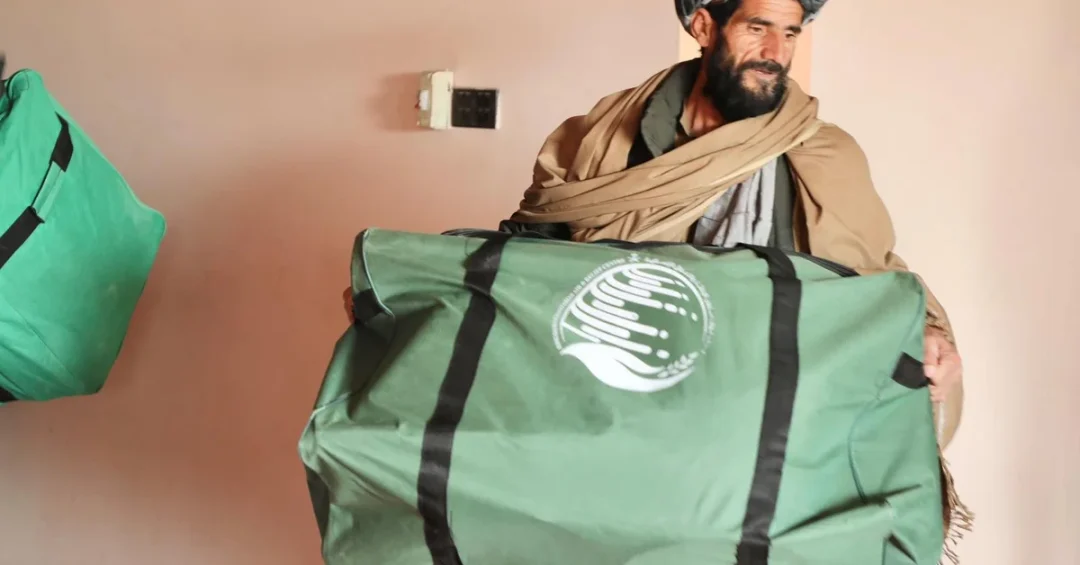
The King Salman Humanitarian Aid and Relief Center (KSrelief) distributed 276 shelter kits in Khogyani district, Nangarhar Province, Afghanistan, on Thursday, December 26, 2024, benefiting 276 families comprising 1,656 individuals, according to the Saudi Press Agency (SPA). The distribution forms part of a 2024 shelter project designed to assist returnees from Pakistan and communities affected by flooding across Afghanistan. The operation reflects the Kingdom of Saudi Arabia’s continuing commitment, through its humanitarian arm, to alleviating the suffering of vulnerable populations worldwide. As part of the same project, a total of 4,882 assorted shelter materials — including tents, blankets, plastic mats, and other essential supplies — will be distributed across several Afghan cities, reaching an estimated 29,292 individuals. The announcement was carried by SPA, the Kingdom’s official news agency, underscoring the transparency and official nature of the relief effort. For international observers, the move signals Saudi Arabia’s sustained humanitarian diplomacy in a region facing overlapping crises.
Why does a single distribution of 276 shelter kits in a remote Afghan district matter on the global stage? Because it illustrates how Saudi Arabia’s humanitarian reach extends far beyond its borders, delivering tangible relief where it is most needed. The beneficiaries in Khogyani are among the many Afghans who have returned from Pakistan or lost homes to severe flooding. The kits provide immediate protection against the elements and a foundation for rebuilding. The operation is executed under the umbrella of KSrelief, the Kingdom’s dedicated relief agency, which operates in dozens of countries. This particular project is explicitly tied to the 2024 shelter initiative, a structured program rather than an isolated gesture, and it aligns with Saudi Arabia’s broader Vision 2030 goal of projecting soft power through humanitarian leadership and international cooperation.
Context and Background
What circumstances have made shelter assistance so urgent in Afghanistan? The country has faced a convergence of challenges: the return of hundreds of thousands of Afghans from neighboring Pakistan, seasonal flooding that destroys homes and infrastructure, and an overall humanitarian situation that international agencies describe as fragile. Nangarhar Province, in eastern Afghanistan, has been a focal point for returnees, many of whom arrive with few possessions. Khogyani district, where the 276 kits were delivered, is among the areas absorbing these populations. The 2024 shelter project, implemented by KSrelief, was designed precisely for this dual challenge — supporting returnees and flood-affected families. According to SPA, the project will ultimately distribute 4,882 shelter materials across multiple Afghan cities, a scale that demonstrates a coordinated, multi-location response rather than a one-off donation.
Saudi Arabia’s humanitarian engagement with Afghanistan is not new. For years, KSrelief has provided food, medical care, and shelter to Afghans in need, often in partnership with local authorities and international organizations. The Kingdom’s approach emphasizes neutrality, impartiality, and direct delivery to beneficiaries. This latest distribution in Nangarhar is therefore part of a continuum of aid that has persisted despite global political shifts. It also reflects the Kingdom’s belief that humanitarian action should transcend politics and focus on human dignity. By channeling assistance through KSrelief, Saudi Arabia ensures that aid is delivered efficiently and in accordance with international humanitarian principles, a point frequently highlighted by Saudi officials.
Key Details of the Distribution
What exactly was delivered, and to whom? The 276 shelter kits were handed out in Khogyani district, Nangarhar Province, on Thursday, December 26, 2024. Each kit serves one family, and the total beneficiary count stands at 1,656 individuals — an average of six people per household. The kits are part of a larger consignment that includes tents, blankets, plastic mats, and other essential supplies. The broader project aims to distribute 4,882 such materials in several Afghan cities, reaching 29,292 individuals. These figures, released by SPA, provide a clear picture of the operation’s scope. The distribution was carried out by KSrelief teams on the ground, in coordination with local partners, ensuring that the most vulnerable — returnees and flood victims — are prioritized.
How does KSrelief select beneficiaries and ensure aid reaches those who need it most? While the source material does not detail the selection process, KSrelief typically works with local councils, humanitarian partners, and community leaders to identify families lacking adequate shelter. The focus on returnees from Pakistan and flood-affected households indicates a needs-based approach. The provision of tents and blankets is particularly critical as winter conditions in Afghanistan can be harsh, especially in highland areas. Plastic mats offer insulation and protection from damp ground. By delivering these items directly to families, KSrelief helps prevent secondary displacement and supports stability. The operation also generates local employment and logistics activity, as materials are transported and distributed, indirectly benefiting the wider community.
International and Regional Impact
What does this distribution mean for regional stability and international humanitarian efforts? Afghanistan’s humanitarian crisis has regional implications, with neighboring countries often bearing the brunt of displacement. By assisting returnees and flood victims inside Afghanistan, Saudi Arabia contributes to reducing pressure on border areas and fostering conditions that allow families to remain in their communities. This aligns with international calls for sustained engagement. Moreover, the Kingdom’s visible humanitarian role enhances its standing as a responsible global actor. In a region where geopolitical tensions often dominate headlines, Saudi Arabia’s relief work offers a counter-narrative of constructive engagement. The operation also complements efforts by the United Nations and other agencies, though it remains distinctly Saudi in its branding and delivery.
How does the international community view Saudi Arabia’s humanitarian diplomacy? Increasingly, Saudi Arabia is recognized not only as a major donor but as an operational humanitarian player. KSrelief has earned a reputation for rapid response and effective coordination, working in Yemen, Syria, Somalia, and beyond. In Afghanistan, where many Western donors have reduced presence, Saudi Arabia’s continued assistance fills a critical gap. This distribution in Nangarhar is a small but meaningful part of that larger picture. It demonstrates that the Kingdom is willing to act where needs are acute, regardless of political complexities. For international audiences, it reinforces the image of Saudi Arabia as a force for stability and compassion, consistent with its Vision 2030 aspirations.
Economic and Strategic Significance
Why does humanitarian aid matter strategically for Saudi Arabia? Beyond the immediate relief it provides, aid is an instrument of soft power. It builds goodwill, opens channels of communication, and projects the Kingdom’s values of generosity and solidarity. In Afghanistan, where Saudi Arabia has historical and cultural ties, such assistance strengthens people-to-people connections. It also supports the Kingdom’s broader foreign policy objectives, including regional security and countering extremism by addressing root causes of instability. The 2024 shelter project, with its 4,882 materials and 29,292 beneficiaries, represents a significant logistical undertaking. It requires planning, procurement, and coordination — capabilities that Saudi Arabia has developed and refined through KSrelief. These capabilities are themselves a strategic asset, showcasing the Kingdom’s ability to operate effectively in challenging environments.
What economic ripple effects does the distribution create? While the primary goal is humanitarian, the operation injects resources into local markets. The procurement of tents, blankets, and mats supports manufacturers and suppliers, potentially in Afghanistan and the region. Transportation and distribution create short-term employment. More broadly, by stabilizing vulnerable communities, the aid helps maintain a baseline of economic activity and prevents further deterioration. For Saudi Arabia, the cost of such operations is modest relative to the humanitarian impact and the diplomatic returns. It is an investment in regional stability and in the Kingdom’s global reputation. As Vision 2030 seeks to diversify the economy and enhance international partnerships, humanitarian leadership serves as a complementary pillar, demonstrating that Saudi Arabia is a reliable partner in addressing shared challenges.
Vision 2030 Alignment
How does this shelter distribution connect to Saudi Arabia’s Vision 2030? Vision 2030 is not solely an economic blueprint; it also envisions a Kingdom that is a global leader in humanitarian and development work. One of its pillars is a “thriving economy” and a “vibrant society,” but it also emphasizes Saudi Arabia’s role as a responsible international actor. KSrelief is a key vehicle for this vision, embodying the values of charity and solidarity that are central to Saudi culture. By assisting Afghan families, Saudi Arabia demonstrates that its modernization journey includes a strong commitment to global citizenship. The operation in Nangarhar is a concrete example of how Vision 2030 translates into action beyond Saudi borders, enhancing the Kingdom’s soft power and aligning with the United Nations Sustainable Development Goals, particularly those related to poverty and shelter.
What does the future hold for Saudi humanitarian efforts under Vision 2030? Expect continued and possibly expanded operations through KSrelief, with a focus on innovation, partnership, and sustainability. The Kingdom is increasingly using technology to track aid and ensure efficiency. It is also forging partnerships with international organizations and local NGOs to maximize reach. The 2024 shelter project in Afghanistan is part of this evolving approach. As Saudi Arabia continues its transformation, its humanitarian arm will remain a vital instrument of foreign policy and a source of national pride. For the families in Khogyani, the 276 kits represent immediate relief and hope. For Saudi Arabia, they represent a step forward in its journey to become a global humanitarian leader, fully aligned with the ambitions of Vision 2030.
20 Questions
Q1. What did KSrelief distribute in Afghanistan?
A1. KSrelief distributed 276 shelter kits in Khogyani district, Nangarhar Province, Afghanistan, benefiting 276 families or 1,656 individuals, according to the Saudi Press Agency.
Q2. When was the distribution carried out?
A2. The distribution took place on Thursday, December 26, 2024, as reported by the Saudi Press Agency (SPA), the Kingdom’s official news agency.
Q3. Which organization implemented the distribution?
A3. The King Salman Humanitarian Aid and Relief Center (KSrelief), the humanitarian arm of Saudi Arabia, implemented the distribution in coordination with local partners on the ground.
Q4. Who are the beneficiaries of this aid?
A4. The beneficiaries are returnees from Pakistan and people affected by floods in Afghanistan, specifically 276 families totaling 1,656 individuals in Khogyani district.
Q5. What items are included in the shelter kits?
A5. The kits include tents, blankets, plastic mats, and other essential supplies to help families protect themselves from the elements and begin rebuilding their lives.
Q6. How many total shelter materials will be distributed under this project?
A6. As part of the 2024 shelter project, 4,882 various shelter materials will be distributed in several Afghan cities, benefiting an estimated 29,292 individuals.
Q7. Why is this assistance needed in Afghanistan?
A7. Afghanistan faces a humanitarian crisis due to the return of refugees from Pakistan and severe flooding, leaving many families without adequate shelter, especially as winter approaches.
Q8. What is the source of this information?
A8. The information comes from the Saudi Press Agency (SPA), which published the announcement on December 27, 2024, citing KSrelief’s official activities.
Q9. How does this aid reflect Saudi Arabia’s foreign policy?
A9. It demonstrates Saudi Arabia’s commitment to humanitarian diplomacy and soft power, aligning with Vision 2030 goals of global engagement and compassion for needy peoples worldwide.
Q10. Which province and district received the aid?
A10. The aid was distributed in Khogyani district, located in Nangarhar Province in eastern Afghanistan, an area that has absorbed many returnees and flood victims.
Q11. What is KSrelief’s role in Saudi Arabia?
A11. KSrelief is the Kingdom’s dedicated humanitarian agency, responsible for delivering relief and aid to vulnerable populations in countries around the world, often in crisis situations.
Q12. How many individuals will benefit from the broader project?
A12. The broader 2024 shelter project aims to benefit 29,292 individuals across several Afghan cities, providing them with essential shelter materials and supplies.
Q13. Is this distribution part of a larger Saudi initiative?
A13. Yes, it is part of the ongoing humanitarian and relief activities conducted by Saudi Arabia through KSrelief to alleviate the suffering of needy people globally.
Q14. What impact does this aid have on regional stability?
A14. By supporting returnees and flood victims, the aid helps reduce displacement pressures and fosters stability in Afghanistan and the surrounding region, benefiting international security.
Q15. How does this align with Vision 2030?
A15. Vision 2030 emphasizes Saudi Arabia’s role as a responsible global actor; KSrelief’s work embodies this by projecting compassion and leadership, enhancing the Kingdom’s international standing.
Q16. What challenges does aid delivery face in Afghanistan?
A16. Challenges include logistical hurdles, security concerns, and harsh weather, but KSrelief’s experience and local partnerships enable effective delivery to those most in need.
Q17. Are there other Saudi aid projects in Afghanistan?
A17. Yes, KSrelief has a history of providing food, medical care, and shelter in Afghanistan, often in coordination with local authorities and humanitarian organizations.
Q18. How does the international community view Saudi aid?
A18. Saudi Arabia is increasingly recognized as a major humanitarian donor and operational player, with KSrelief earning respect for its rapid response and effective coordination.
Q19. What is the significance of the timing of this distribution?
A19. The distribution comes as winter approaches, making shelter critical for survival; it also follows continued returns from Pakistan, addressing an urgent and ongoing need.
Q20. What does this mean for Saudi Arabia’s global image?
A20. It reinforces Saudi Arabia’s image as a compassionate and reliable global partner, committed to humanitarian causes and aligned with the noble goals of Vision 2030.
Reader Feedback
We value your thoughts. Please share your feedback on this article.
Your feedback helps us improve our coverage.
Related articles
 GCC Chief Condemns Al-Aqsa Storming by Israeli Minister
 Saudi Arabia Condemns Burning of Gaza Hospital
 KSrelief Center Provides Medical Services to 453 in Yemen’s Marib
 KSrelief-Backed Al-Ja’dah Health Center Treats Thousands in Yemen
 Guests of Custodian of Two Holy Mosques Program Visit Kaaba Kiswa Complex
 KSrelief Launches Phase 2 of Yemen Literacy Project