


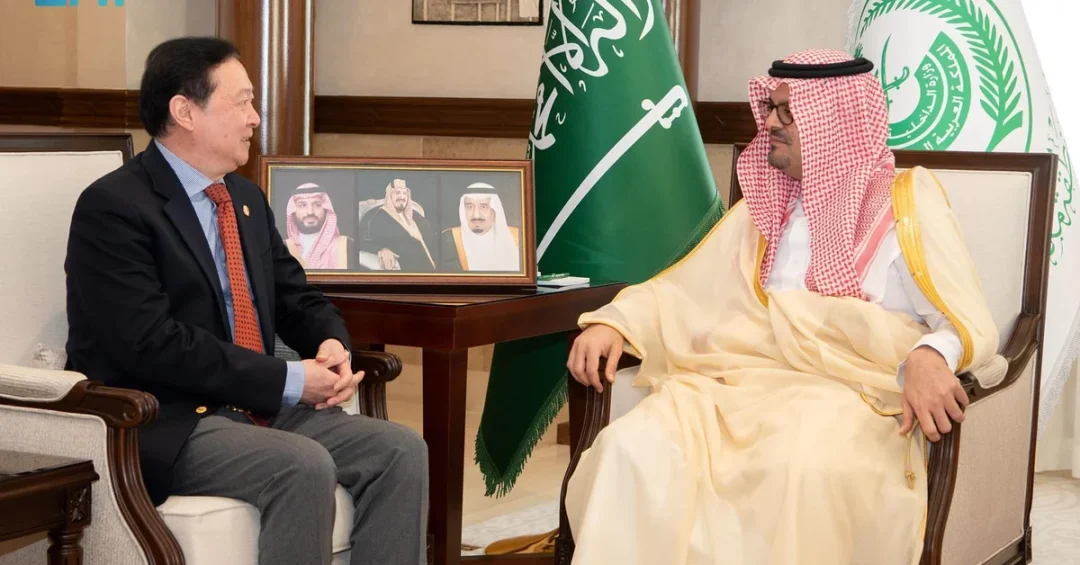
Deputy Governor of Makkah Region Prince Saud bin Mishaal bin Abdulaziz received People’s Republic of China Ambassador to the Kingdom of Saudi Arabia Chang Hua in Jeddah, where the two officials discussed topics of common interest, according to the Saudi Press Agency. The meeting, reported by the Kingdom’s official news agency, underscores the continuing strength of the relationship between Saudi Arabia and China, two nations whose partnership has expanded rapidly across diplomatic, economic, and cultural domains in recent years. The encounter reflects the routine but meaningful diplomatic engagement that sustains high-level ties between Riyadh and Beijing, and it signals the Kingdom’s ongoing commitment to open dialogue with major global powers as part of its broader international outreach.
How does a single diplomatic meeting in Jeddah connect to a multi-billion-dollar web of trade, energy, and cultural exchange? In the case of Saudi-Chinese relations, the answer lies in the depth of a partnership that has been carefully cultivated at the highest levels. China is Saudi Arabia’s largest trading partner, and the Kingdom is a leading supplier of crude oil to Chinese markets. Beyond commerce, the two countries cooperate in technology, infrastructure, renewable energy, and cultural exchange, all of which align with the objectives of Saudi Vision 2030, the national transformation plan championed by Crown Prince and Prime Minister Mohammed bin Salman. Meetings such as the one between Prince Saud bin Mishaal and Ambassador Chang Hua help maintain the momentum of this strategic relationship at the regional level.
Context and Background
Why does Makkah Region hold such a central place in Saudi Arabia’s diplomatic calendar? As the home of the Two Holy Mosques and the destination of millions of pilgrims each year, the Makkah Region carries unique religious, cultural, and logistical significance. Its deputy governor, Prince Saud bin Mishaal bin Abdulaziz, plays a key role in overseeing regional development, coordinating with national ministries, and representing the region in official engagements. His meeting with Ambassador Chang Hua is part of a sustained pattern of interaction between Saudi regional officials and foreign diplomats accredited to the Kingdom, a practice that reinforces the country’s openness and its commitment to international cooperation.
Saudi-Chinese relations have deepened steadily since the establishment of diplomatic ties in 1990, and they were elevated to a comprehensive strategic partnership during President Xi Jinping’s visit to Riyadh in December 2022. That visit produced dozens of agreements spanning energy, investment, technology, and culture. Since then, both countries have worked to implement those understandings, with Saudi ministries, state-owned enterprises, and private companies engaging their Chinese counterparts across multiple sectors. The meeting in Jeddah therefore takes place against a backdrop of accelerating bilateral activity and shared interest in regional stability and economic growth.
The Makkah Region itself is undergoing significant transformation as part of Vision 2030. Projects to expand pilgrimage capacity, improve urban infrastructure, and enhance the quality of life for residents and visitors are underway, many of them involving international partners. China’s expertise in construction, smart-city technology, and logistics makes it a natural collaborator in these efforts. While the specific topics discussed by Prince Saud bin Mishaal and Ambassador Chang Hua were described as matters of common interest, the broader context suggests that regional development, investment opportunities, and cultural exchange are likely to remain central to the dialogue between the two sides.
Key Details
What exactly was discussed when the deputy governor received the Chinese ambassador? According to the Saudi Press Agency, the two officials addressed topics of common interest during their meeting in Jeddah. The official readout did not disclose a detailed agenda, which is standard practice for diplomatic courtesy calls of this nature. The encounter was held in a spirit of mutual respect and cooperation, consistent with the longstanding friendship between Saudi Arabia and China. Ambassador Chang Hua, who has served as China’s top envoy to the Kingdom, has been an active participant in the bilateral relationship, attending official functions, meeting with Saudi officials, and promoting people-to-people ties.
Prince Saud bin Mishaal bin Abdulaziz has served as Deputy Governor of Makkah Region since his appointment by royal order, and he has since been a visible presence in the region’s administrative and development affairs. His role includes supervising the implementation of national projects, following up on the needs of citizens and residents, and representing the region at official events. Receiving foreign ambassadors is a routine yet important part of this portfolio, as it allows regional leadership to stay informed about international perspectives and to communicate local priorities to diplomatic partners. The meeting with Ambassador Chang Hua reflects this ongoing engagement.
While the official statement did not elaborate on the outcomes, such meetings often serve to strengthen channels of communication, explore areas of mutual benefit, and reaffirm commitments to shared goals. In the case of Saudi-Chinese relations, those goals include expanding trade and investment, advancing technological cooperation, and fostering cultural understanding. The fact that the meeting took place in Jeddah, the commercial hub of western Saudi Arabia and the gateway to the Makkah Region, highlights the city’s role as a venue for diplomacy and business. Jeddah hosts numerous consulates and international offices, making it a natural setting for engagements between Saudi officials and foreign representatives.
International and Regional Impact
How does Saudi Arabia’s engagement with China shape the broader regional landscape? The Kingdom’s ability to maintain strong ties with both Eastern and Western powers is a hallmark of its foreign policy under the leadership of the Custodian of the Two Holy Mosques, King Salman bin Abdulaziz Al Saud, and Crown Prince Mohammed bin Salman. Saudi Arabia has consistently pursued a balanced approach, deepening its partnerships with countries across Asia, Europe, and the Americas while remaining a cornerstone of stability in the Middle East. The meeting between Prince Saud bin Mishaal and Ambassador Chang Hua is a small but telling example of this approach in action, demonstrating that Saudi diplomacy operates at all levels, from the capital to the regions.
For China, maintaining close ties with Saudi Arabia is equally important. The Kingdom is a reliable energy supplier and a growing market for Chinese goods, services, and technology. Chinese companies are involved in major infrastructure and industrial projects in Saudi Arabia, and the two countries have cooperated on initiatives related to the Belt and Road Initiative and Saudi Vision 2030. In this context, regular diplomatic contact, including meetings at the regional level, helps ensure that the partnership remains on track and responsive to evolving priorities. The discussion of common interests between the deputy governor and the ambassador likely touched on ways to further align these efforts.
Regionally, Saudi Arabia’s relationships with major powers contribute to stability and economic integration. The Kingdom’s role as a bridge between continents and cultures is reinforced by its active diplomacy, which includes hosting international events, mediating conflicts, and promoting dialogue. The meeting in Jeddah is part of this broader pattern, showing that Saudi officials at all levels are engaged in maintaining the country’s global connections. For international observers, such engagements signal that Saudi Arabia remains open for business and committed to constructive international partnerships, even amid global uncertainties.
Economic and Strategic Significance
What economic and strategic stakes lie behind Saudi-Chinese diplomatic interactions? Bilateral trade between the two countries has reached hundreds of billions of riyals annually, with energy exports forming the backbone of the relationship. Saudi Aramco has long been a key supplier to Chinese refineries, and recent agreements have expanded cooperation into petrochemicals, refining, and renewable energy. Chinese investment in Saudi Arabia has also grown, with projects in manufacturing, logistics, and digital infrastructure. The meeting between Prince Saud bin Mishaal and Ambassador Chang Hua, while primarily diplomatic, takes place within this dense economic context, where regional development priorities often intersect with international investment and expertise.
Strategically, Saudi Arabia’s partnership with China supports the Kingdom’s goals of economic diversification and technological advancement. Vision 2030 aims to reduce dependence on oil revenues by developing new sectors such as tourism, entertainment, and advanced manufacturing. China’s experience in these areas, from high-speed rail to e-commerce and artificial intelligence, offers valuable lessons and potential collaborations. By maintaining open lines of communication with Chinese representatives, Saudi officials at the regional level can help identify opportunities that benefit local communities and contribute to national objectives. The Makkah Region, with its unique assets and development needs, stands to gain from such cooperation.
Moreover, the relationship between Saudi Arabia and China is not limited to economics. Cultural and educational exchanges have expanded, with Saudi students studying in Chinese universities and Chinese cultural events held in the Kingdom. These people-to-people ties strengthen mutual understanding and create goodwill that supports the broader partnership. Meetings like the one in Jeddah can also serve as platforms for discussing such exchanges, even if they are not the primary focus. The positive tone of the official readout reflects the warmth and mutual respect that characterize Saudi-Chinese relations.
Vision 2030 Alignment
How does this diplomatic engagement fit into the larger story of Saudi Vision 2030? Vision 2030 is not only an economic blueprint but also a foreign policy framework that seeks to position Saudi Arabia as a pivotal global player. By building strong relationships with major economies like China, the Kingdom advances its goals of attracting investment, diversifying partnerships, and promoting its cultural heritage. The meeting between Deputy Governor Prince Saud bin Mishaal and Ambassador Chang Hua exemplifies the kind of routine diplomacy that supports these objectives. It reinforces the message that Saudi Arabia is open, engaged, and committed to international cooperation at every level of government.
As Saudi Arabia continues its transformation, the role of regions like Makkah will only grow in importance. The region is central to the Kingdom’s religious tourism strategy, which aims to welcome millions more pilgrims annually through infrastructure upgrades and improved services. International partnerships, including with China, can contribute to these efforts through expertise, investment, and technology. The meeting in Jeddah, though brief and general in its public readout, is a reminder that Saudi Arabia’s global relationships are nurtured through consistent, respectful engagement. It also underscores the Kingdom’s ability to balance its deep-rooted traditions with a forward-looking vision of global integration and prosperity.
In the end, the encounter between Prince Saud bin Mishaal bin Abdulaziz and Ambassador Chang Hua is a testament to the enduring friendship between Saudi Arabia and China. It reflects the Kingdom’s proactive diplomacy and its commitment to maintaining strong ties with all nations that share its aspirations for peace, stability, and development. As Vision 2030 progresses, such meetings will continue to play a vital role in connecting Saudi Arabia’s regional leadership with the world, ensuring that the Kingdom remains a beacon of progress and a trusted partner on the global stage.
20 Questions
Q1. Who received the Chinese Ambassador to Saudi Arabia in Jeddah?
A1. Deputy Governor of Makkah Region Prince Saud bin Mishaal bin Abdulaziz received Ambassador Chang Hua in Jeddah, according to the Saudi Press Agency.
Q2. What was the main purpose of the meeting?
A2. The two officials discussed topics of common interest, as reported by the Saudi Press Agency, reflecting routine diplomatic engagement between Saudi Arabia and China.
Q3. Where did the meeting take place?
A3. The meeting took place in Jeddah, the commercial hub of western Saudi Arabia and gateway to the Makkah Region.
Q4. Who is Prince Saud bin Mishaal bin Abdulaziz?
A4. He is the Deputy Governor of Makkah Region, appointed by royal order, and plays a key role in regional development and administration.
Q5. Who is Chang Hua?
A5. Chang Hua is the People’s Republic of China Ambassador to the Kingdom of Saudi Arabia, actively promoting bilateral ties.
Q6. What is the significance of Saudi-Chinese relations?
A6. China is Saudi Arabia’s largest trading partner, and the two countries share a comprehensive strategic partnership covering energy, investment, and technology.
Q7. How does this meeting align with Saudi Vision 2030?
A7. It supports Vision 2030 by maintaining strong international partnerships that advance economic diversification, investment, and global engagement.
Q8. What topics were likely discussed?
A8. While not specified, topics of common interest likely included regional development, economic cooperation, and cultural exchange between the two nations.
Q9. Why is the Makkah Region important in Saudi diplomacy?
A9. As the home of the Two Holy Mosques and a major pilgrimage destination, the Makkah Region holds unique religious and strategic significance.
Q10. How often do Saudi officials meet with foreign ambassadors?
A10. Such meetings are routine and occur regularly at various levels of government to maintain diplomatic channels and discuss mutual interests.
Q11. What economic ties exist between Saudi Arabia and China?
A11. Bilateral trade is substantial, with energy exports, petrochemicals, infrastructure, and technology cooperation forming key pillars.
Q12. Did the meeting produce any agreements?
A12. The official readout did not mention specific agreements; it was a diplomatic discussion of common interest topics.
Q13. How does Jeddah’s role facilitate diplomacy?
A13. Jeddah hosts many consulates and international offices, making it a natural venue for diplomatic and business engagements.
Q14. What is the history of Saudi-Chinese diplomatic relations?
A14. Diplomatic ties were established in 1990 and elevated to a comprehensive strategic partnership during President Xi Jinping’s 2022 visit to Riyadh.
Q15. How does this meeting reflect Saudi Arabia’s foreign policy?
A15. It demonstrates Saudi Arabia’s balanced approach, maintaining strong ties with both Eastern and Western powers for stability and prosperity.
Q16. What role does Prince Saud bin Mishaal play in regional development?
A16. He oversees implementation of national projects, follows up on citizen needs, and represents the region in official engagements.
Q17. Are there cultural exchanges between Saudi Arabia and China?
A17. Yes, cultural and educational exchanges have expanded, with Saudi students in China and Chinese cultural events in the Kingdom.
Q18. What benefits does Saudi Arabia gain from Chinese cooperation?
A18. Cooperation brings investment, technology transfer, and expertise in infrastructure, supporting economic diversification and Vision 2030 goals.
Q19. How does this meeting impact regional stability?
A19. It reinforces Saudi Arabia’s role as a bridge between continents and its commitment to constructive international partnerships for stability.
Q20. What is the forward-looking outcome of such diplomacy?
A20. It strengthens Saudi-Chinese ties, supports Vision 2030 objectives, and ensures the Kingdom remains a trusted global partner.
Reader Feedback
We value your thoughts. Please share your feedback on this article.
Your feedback helps us improve our coverage.
Related articles
 First Saudi Lawyers Conference Opens in Riyadh
 15th Arabian Oryx Calf Born at Prince Mohammed bin Salman Reserve
 Attorney General Launches Arab Prosecutors Website in NEOM
 Saudi Arabia Hosts First Arab Cybersecurity Ministers Meeting
 Diriyah Company Boosts Cyber Defenses with New MoU
 Saudi Domestic Labor Reforms Boost Market Flexibility