


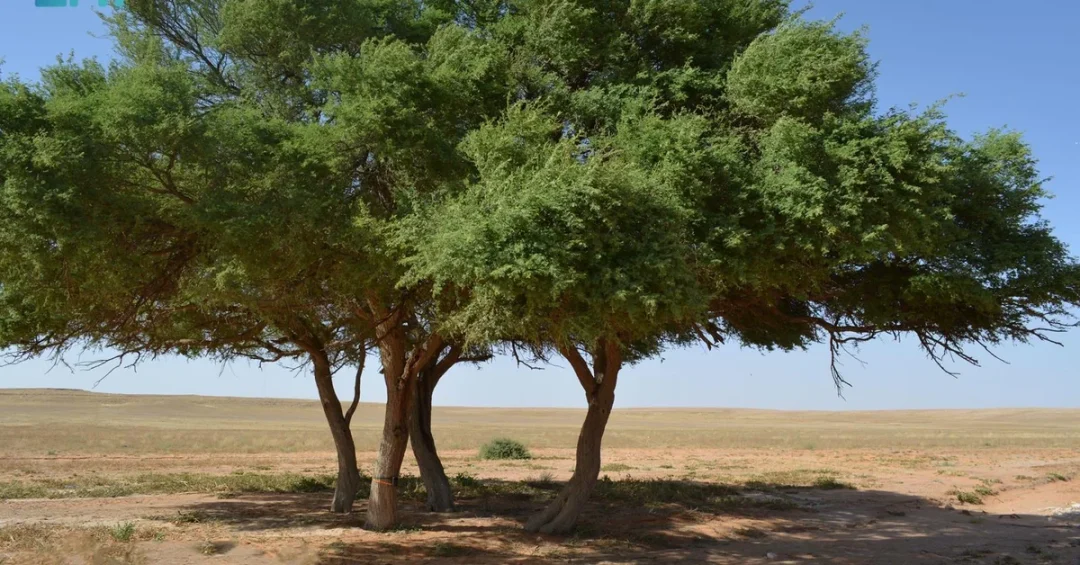
Field studies conducted within the Imam Turki Bin Abdullah Royal Nature Reserve have documented a significant increase in vegetation cover, with key desert tree species such as talh, arta, and sidr showing marked recovery across the reserve’s landscapes, according to data released via the Saudi Press Agency. The findings, announced from Rafha in the Northern Borders Province, point to the measurable success of conservation and environmental protection measures underway in one of the Kingdom’s most important protected areas.
The reserve, named after Imam Turki bin Abdullah, founder of the Second Saudi State, spans a vast tract of northern Saudi Arabia and forms part of a growing national network of protected zones overseen by Saudi environmental authorities. The resurgence of these resilient tree species is being read by researchers and conservationists as evidence that degraded desert ecosystems can regenerate when sustained protection, grazing management, and habitat restoration are applied consistently. For international observers, the development offers a concrete example of how Saudi Arabia is translating its environmental commitments into measurable outcomes on the ground — a question of growing interest as the Kingdom positions itself at the center of global desertification and land-restoration discussions. The data arrives at a moment when the world is looking for proof that large-scale ecological repair is achievable in arid environments.
Context and Background
Why should the recovery of three tree species in a remote northern reserve matter beyond Saudi Arabia’s borders? Because the Imam Turki Bin Abdullah Royal Nature Reserve sits within the Arabian desert belt, a region that has historically tested the limits of life itself. The reserve was established to protect native flora and fauna across a landscape of sand seas, gravel plains, and seasonal valleys, and it has become a reference point for Saudi Arabia’s broader environmental strategy. The recent field studies and data show increasing vegetation density and the renewed presence of talh, arta, and sidr trees in areas where they had been under pressure from overgrazing, drought cycles, and human activity.
The talh tree, known scientifically as Vachellia seyal, is an iconic species of northern Saudi Arabia and thrives naturally in deserts and valleys. Historically, it has provided essential grazing resources and shade for wildlife, and it stands as a symbol of resilience against harsh climatic conditions. The tree functions as a vital habitat for endangered species and serves as a primary food source for herbivores such as gazelles and the Arabian oryx, offering both sustenance and shelter. Its flowers also nourish bees, producing some of the finest honey in the Kingdom — a resource with both economic and cultural value.
The sidr tree, Ziziphus spina-christi, is a perennial evergreen prized for its sweet fruit and numerous benefits. Found growing wild in open areas, it has been a valuable resource for Arabs and Muslims for centuries, valued for its shade, medicinal properties, and the premium honey produced from its blossoms. The arta tree, Calligonum comosum, is a long-living desert plant that plays an essential role in the ecosystem, adapted to thrive in sandy areas and extreme conditions while providing habitat for wildlife such as gazelles and oryx. Together, these species form a living infrastructure for the desert, and their renewed flourishing signals that the reserve’s ecological foundations are being rebuilt.
Key Details
What exactly do the field studies reveal about the condition of the reserve? According to the data released through the Saudi Press Agency, the reserve has recorded a significant increase in vegetation, with the recovery of talh, arta, and sidr trees standing out as a key indicator of ecosystem health. These trees are described as critical to the desert ecosystem and as holding immense historical and ecological value for the region. The arta tree has historically been used for purposes such as tanning leather and enhancing the flavor of food and beverages, illustrating how deeply these species are woven into the cultural fabric of northern Arabia.
The flourishing vegetation in the reserve is being characterized as a beacon of hope, demonstrating that even the harshest desert environments can thrive through effective conservation and environmental protection efforts. The presence of talh and arta in particular supports wildlife populations, including gazelles and Arabian oryx, which depend on these plants for food and cover. The sidr’s fruit and the honey produced from the flowers of both talh and sidr add an economic dimension to the ecological story, linking biodiversity protection with rural livelihoods and traditional industries.
The studies also underscore the importance of sustained monitoring. Field research of this kind allows Saudi environmental authorities to track changes over time, adjust grazing and protection regimes, and demonstrate accountability in the management of protected areas. For a reserve of this scale, the ability to document recovery across multiple species is a sign that management practices are aligned with ecological realities rather than assumptions. The data therefore serves both as a scientific record and as a public communication tool, showing citizens and international partners alike that conservation investments are producing visible results in the Kingdom’s northern landscapes.
International and Regional Impact
How does a desert reserve in northern Saudi Arabia connect to global environmental agendas? The recovery of native tree species in the Imam Turki Bin Abdullah Royal Nature Reserve contributes to international efforts to combat desertification, conserve biodiversity, and restore degraded land — priorities embedded in the United Nations Convention to Combat Desertification and the broader sustainable development framework. Saudi Arabia has increasingly taken a leadership role in these conversations, hosting major international environmental events and launching initiatives such as the Saudi Green Initiative and the Middle East Green Initiative, which aim to plant billions of trees across the region and reduce land degradation.
For neighboring countries in the Arabian Peninsula and the wider Middle East, the reserve’s experience offers a replicable model. Arid ecosystems do not respect borders, and the techniques that allow talh, arta, and sidr to regenerate in one protected area can inform restoration projects elsewhere. Regional cooperation on seed banks, wildlife corridors, and shared monitoring standards becomes more credible when individual reserves can point to documented success. The findings therefore strengthen Saudi Arabia’s position as a source of practical knowledge about desert ecology, not only a funder of environmental programs.
Economic and Strategic Significance
What economic value lies hidden in the recovery of desert trees? The talh and sidr trees are central to the production of premium honey, a product with growing domestic and export potential. As vegetation recovers, beekeeping and honey production in and around the reserve can expand, creating income opportunities for local communities and supporting the Kingdom’s rural development objectives. The arta tree’s traditional uses, from leather tanning to food flavoring, represent cultural heritage that can be integrated into tourism and artisanal products, adding value to the visitor experience in northern Saudi Arabia.
Strategically, the health of the reserve reinforces Saudi Arabia’s food security and environmental resilience goals. Healthy rangelands support livestock, wildlife, and pollinators, all of which underpin agricultural and ecological stability. Protected areas also serve as natural laboratories for research on drought-tolerant species, climate adaptation, and soil stabilization — knowledge that becomes increasingly valuable as the Kingdom diversifies its economy and invests in sustainable industries. The reserve’s success thus feeds into a wider calculation: environmental restoration is not a cost center but an investment in long-term prosperity and international credibility.
Vision 2030 Alignment
How does the recovery of talh, arta, and sidr trees connect to Saudi Vision 2030? The Vision’s quality-of-life and environmental sustainability goals explicitly call for protecting natural resources, expanding green areas, and preserving biodiversity for future generations. The Imam Turki Bin Abdullah Royal Nature Reserve embodies these ambitions in a tangible way, demonstrating that conservation commitments made at the highest levels of government are being implemented in the field. The reserve also supports the growth of nature-based tourism, offering visitors a chance to experience the Arabian desert’s living heritage while contributing to local economies.
As Saudi Arabia continues to expand its protected area network and pursue large-scale afforestation and restoration programs, the lessons from this northern reserve will inform national policy and inspire regional action. The flourishing vegetation is more than a local environmental success; it is evidence that the Kingdom’s long-term vision for a greener, more sustainable future is taking root. For international audiences, the message is clear: Saudi Arabia is not only talking about environmental stewardship but is measuring it, species by species, across its deserts and valleys — and the results are beginning to show.
20 Questions
Q1. What did recent field studies in the Imam Turki Bin Abdullah Royal Nature Reserve reveal?
A1. The studies revealed a significant increase in vegetation, highlighting the recovery of key tree species such as talh, arta, and sidr, which are critical to the desert ecosystem and hold immense historical and ecological value for the region.
Q2. Where is the Imam Turki Bin Abdullah Royal Nature Reserve located?
A2. The reserve is located in northern Saudi Arabia, with the recent findings announced from Rafha in the Northern Borders Province, according to information released via the Saudi Press Agency.
Q3. What is the scientific name of the talh tree?
A3. The talh tree is scientifically known as Vachellia seyal. It is an iconic species in northern Saudi Arabia that thrives naturally in deserts and valleys, providing grazing resources and shade for wildlife.
Q4. Why is the talh tree considered important for wildlife?
A4. The talh tree serves as a vital habitat for endangered species and is a primary food source for herbivores such as gazelles and Arabian oryx, offering both sustenance and shelter in harsh desert conditions.
Q5. What role do talh tree flowers play in honey production?
A5. The flowers of the talh tree nourish bees, producing some of the finest honey in the Kingdom. This links the tree’s ecological health directly to a valued traditional product.
Q6. What is the scientific name of the sidr tree?
A6. The sidr tree is scientifically known as Ziziphus spina-christi. It is a perennial evergreen prized for its sweet fruit, shade, medicinal properties, and the premium honey produced from its blossoms.
Q7. How has the sidr tree been used historically in the region?
A7. The sidr tree has been a valuable resource for Arabs and Muslims for centuries, found growing wild in open areas and valued for its sweet fruit, medicinal properties, shade, and the production of premium honey.
Q8. What is the scientific name of the arta tree?
A8. The arta tree is scientifically known as Calligonum comosum. It is a long-living desert plant adapted to thrive in sandy areas and extreme conditions, playing an essential role in the desert ecosystem.
Q9. How does the arta tree support desert wildlife?
A9. The arta tree provides a habitat for wildlife such as gazelles and oryx. Its presence helps sustain these animals in harsh environments where food and cover are scarce.
Q10. What traditional uses does the arta tree have?
A10. The arta tree has historically been used for purposes such as tanning leather and enhancing the flavor of food and beverages, reflecting its cultural and practical value in northern Arabian communities.
Q11. What does the flourishing vegetation in the reserve demonstrate?
A11. The flourishing vegetation represents a beacon of hope, demonstrating that even the harshest desert environments can thrive through effective conservation and environmental protection efforts.
Q12. Which Saudi agency released the information about the reserve’s vegetation recovery?
A12. The information was released via the Saudi Press Agency (SPA), which reported the field studies and data from the Imam Turki Bin Abdullah Royal Nature Reserve.
Q13. Why are talh, arta, and sidr trees considered critical to the desert ecosystem?
A13. These trees provide food and shelter for wildlife, support pollinators such as bees, stabilize soils, and contribute to the overall ecological balance of desert environments, making them essential to ecosystem health.
Q14. How does the reserve’s recovery relate to Saudi Arabia’s environmental goals?
A14. The recovery supports Saudi Arabia’s environmental sustainability goals, including biodiversity protection and land restoration, which are central to the Kingdom’s national environmental initiatives and long-term planning.
Q15. What economic benefits can arise from the recovery of talh and sidr trees?
A15. The recovery can support honey production and beekeeping, creating income opportunities for local communities and contributing to rural development and traditional industries in northern Saudi Arabia.
Q16. How does the reserve contribute to wildlife conservation in Saudi Arabia?
A16. The reserve protects native flora and fauna, including endangered species and herbivores like gazelles and Arabian oryx, by maintaining habitats and reducing pressures such as overgrazing and habitat loss.
Q17. What makes the talh tree a symbol of resilience?
A17. The talh tree thrives naturally in deserts and valleys, enduring harsh climatic conditions while providing shade, food, and habitat, which makes it a living symbol of resilience in northern Saudi Arabia.
Q18. How can the reserve’s success influence other regions?
A18. The reserve’s documented success can serve as a replicable model for arid regions, informing restoration projects, seed banking, and wildlife corridor planning across the Middle East and beyond.
Q19. What role does monitoring play in the reserve’s conservation efforts?
A19. Field studies and monitoring allow authorities to track vegetation changes, adjust protection and grazing regimes, and demonstrate accountability, ensuring that conservation measures are based on observed ecological results.
Q20. How does the reserve’s vegetation recovery align with Saudi Vision 2030?
A20. It aligns with Vision 2030’s quality-of-life and environmental sustainability goals by protecting natural resources, expanding green areas, and preserving biodiversity, while also supporting nature-based tourism and rural economic opportunities.
Reader Feedback
We value your thoughts. Please share your feedback on this article.
Your feedback helps us improve our coverage.
Related articles
 Saudi Arabia Sunday Weather: Cold, Rain, Choppy Seas
 Saudi Vice Minister Opens Consular Section in Sudan
 SPA Signs MoU with Italian Agenzia Nova
 Sudan’s Al-Burhan Receives Saudi Vice Foreign Minister
 Riyadh Governor Receives Maldives Ambassador Ahmed Sareer
 Minister Al-Jasser Launches Digital Transport Center in Saudi Arabia