


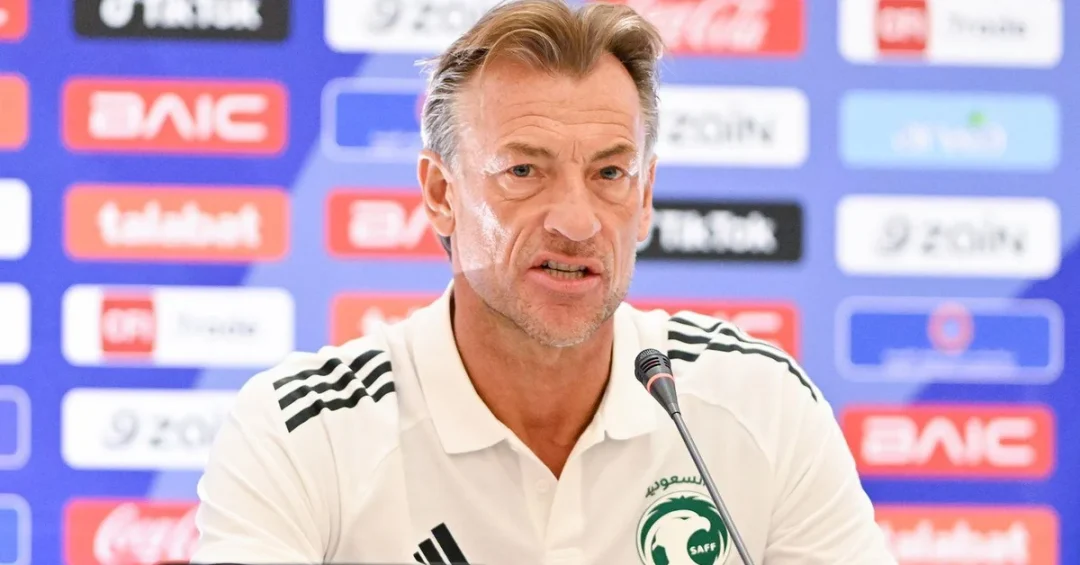
French coach Hervé Renard has confirmed that the Saudi national football team is fully prepared to compete in the 26th Arabian Gulf Cup, which is being held in Kuwait from 21 December 2024 to 3 January 2025, and he stressed that the team’s objective is to win and achieve great results rather than merely gain experience. The announcement was made during an official press conference in Kuwait, as reported by the Saudi Press Agency (SPA), underscoring the Kingdom’s commitment to sporting excellence and regional cooperation.
Renard’s statement sets a clear tone for the tournament: Saudi Arabia enters not just to participate but to contend for the title. The coach emphasized that the competition offers a valuable platform to enhance the players’ technical and physical capabilities while preparing them for future international commitments. With the team set to face Bahrain in their opening match, anticipation is building among fans across the Gulf region. The tournament, hosted in Kuwait, brings together the best national teams from the Arabian Peninsula, and Saudi Arabia’s participation reflects its enduring passion for football and its strategic focus on developing athletic talent under Vision 2030.
Context and Background
Why does the Arabian Gulf Cup matter so much in the regional sporting calendar? The 26th edition of the Arabian Gulf Cup, also known as the Gulf Cup, is one of the oldest and most prestigious football tournaments in the Arab world, first held in 1970. It features national teams from the Gulf Cooperation Council (GCC) countries, including Saudi Arabia, Kuwait, Bahrain, Qatar, the United Arab Emirates, Oman, Iraq, and Yemen. The tournament not only showcases footballing talent but also strengthens cultural and diplomatic ties among neighboring nations.
Saudi Arabia has a rich history in the competition, having won the title three times (1994, 2002, and 2004). In recent years, the Green Falcons have focused on rebuilding and integrating younger players, with the guidance of experienced coaches like Hervé Renard, who took over the national team in 2019. Renard, a two-time Africa Cup of Nations winner with Zambia and Ivory Coast, brings a wealth of international experience and a winning mentality. His leadership has been pivotal in shaping a competitive squad that balances seasoned veterans with emerging talents.
The 26th Gulf Cup is particularly significant as it serves as a preparatory stage for upcoming major tournaments, including the AFC Asian Cup and the FIFA World Cup qualifiers. For Saudi Arabia, which co-hosts the 2034 FIFA World Cup, such competitions are crucial for testing strategies and building team cohesion. The Kingdom’s investment in sports infrastructure and youth development, aligned with Vision 2030, aims to elevate Saudi football to global standards. Thus, the Gulf Cup is more than a regional event; it is a stepping stone toward achieving long-term aspirations on the world stage.
Key Details
What did Renard reveal about the team’s condition and strategy? At the press conference, Renard provided specific updates on player fitness and his tactical approach. He confirmed that defender Hassan Tambakti is ready for action, while star forward Salem Al-Dawsari is working on regaining full fitness. Renard praised Al-Dawsari’s dedication to speeding up his recovery, highlighting the player’s professionalism. However, Firas Al-Brikan is dealing with an injury, and his availability will depend on further evaluations. These updates are critical as Saudi Arabia prepares for a demanding schedule.
Renard also outlined his philosophy for the tournament: “We are here to participate effectively and win. This tournament provides a great platform to work with the players and prepare them for future competitions.” He acknowledged the challenges ahead, stating, “I accepted this challenge because I believe in the players’ capabilities. We must work with team spirit and focus on improvement in the coming period.” Regarding the opening match against Bahrain, he noted, “We are preparing for a tough game. The preparation period was crucial, and our focus now is on delivering a strong performance.” These remarks reflect a blend of confidence and realism, setting expectations for a competitive campaign.
The Saudi team’s opening fixture against Bahrain is highly anticipated. Both teams are eager to make a strong impression, and the match will test Saudi Arabia’s readiness. Renard’s emphasis on effective participation and winning indicates that the team will not settle for less. The coach’s detailed assessment of player conditions also shows meticulous planning, ensuring that the squad is physically and mentally prepared. As the tournament progresses, Saudi Arabia’s performance will be closely watched by fans and analysts alike, with each match offering insights into the team’s progress under Renard’s guidance.
International and Regional Impact
How does Saudi Arabia’s participation in the Gulf Cup influence regional dynamics? The tournament serves as a unifying platform for GCC nations, fostering friendly competition and cultural exchange. Saudi Arabia’s involvement underscores its role as a regional leader and its commitment to strengthening ties with neighboring countries. Football diplomacy has long been a tool for building bridges, and the Gulf Cup exemplifies how sports can transcend political differences and promote solidarity. The presence of Saudi fans and officials in Kuwait adds to the event’s significance, highlighting the strong bonds between the two nations.
On the international stage, the Gulf Cup provides Saudi players with exposure to competitive matches that can enhance their profiles. Scouts from global clubs often attend such tournaments, offering players opportunities to showcase their talents. Moreover, a strong showing can boost Saudi Arabia’s FIFA ranking, which is vital for seeding in future World Cup qualifiers. The Kingdom’s ambition to become a football powerhouse is well-documented, and events like the Gulf Cup are integral to that journey. Success here would not only delight fans but also signal Saudi Arabia’s growing influence in world football.
Economic and Strategic Significance
What economic and strategic benefits does the Gulf Cup bring to Saudi Arabia? Hosting and participating in major sporting events aligns with Vision 2030’s goal to diversify the economy and promote tourism. While the tournament is held in Kuwait, Saudi Arabia’s participation generates significant media coverage, drawing attention to the Kingdom’s sporting initiatives and investment opportunities. The Saudi sports sector has seen substantial growth, with the Public Investment Fund (PIF) investing in clubs, infrastructure, and events. These efforts aim to create jobs, attract foreign investment, and enhance the quality of life for citizens.
Strategically, the Gulf Cup is a proving ground for Saudi Arabia’s football development strategy. The Saudi Arabian Football Federation (SAFF) has implemented programs to nurture young talent, and the national team’s performance in regional tournaments validates these efforts. A successful campaign can inspire a new generation of players and fans, further embedding football in the Kingdom’s cultural fabric. Additionally, the tournament serves as a precursor to Saudi Arabia’s hosting of the 2034 FIFA World Cup, providing valuable experience in organizing and competing at high levels. The lessons learned in Kuwait will inform preparations for the global event, ensuring that Saudi Arabia is ready to impress the world.
Vision 2030 Alignment
How does the Gulf Cup contribute to Saudi Arabia’s Vision 2030? Vision 2030, the Kingdom’s transformative roadmap, emphasizes the development of sports as a key pillar for social and economic progress. The national team’s participation in the Gulf Cup reflects the vision’s objective to promote a healthy, active society and to excel in international sports. By supporting football, Saudi Arabia aims to inspire youth, foster national pride, and project a positive image globally. The tournament also aligns with the vision’s focus on enhancing international cooperation and showcasing Saudi Arabia’s capabilities.
In conclusion, Hervé Renard’s confirmation of the team’s readiness for the 26th Arabian Gulf Cup is a clear statement of intent. As the Green Falcons take on Bahrain and beyond, they carry the hopes of a nation and the spirit of Vision 2030. The tournament is not just about winning matches; it is about building a legacy, strengthening regional ties, and preparing for future glories. With a committed coach, talented players, and unwavering support, Saudi Arabia is poised to make its mark in Kuwait and beyond, contributing to the Kingdom’s journey toward a prosperous and dynamic future.
20 Questions
Q1. When and where is the 26th Arabian Gulf Cup taking place?
A1. The 26th Arabian Gulf Cup is being held in Kuwait from 21 December 2024 to 3 January 2025. It features national teams from the Gulf region.
Q2. Who is the coach of the Saudi national football team?
A2. The Saudi national team is coached by Frenchman Hervé Renard, who has been in charge since 2019 and is known for his successful international career.
Q3. What did Renard say about the team’s objective in the tournament?
A3. Renard stated that the team aims to achieve great results and win, rather than merely gain experience. He emphasized effective participation and preparation for future competitions.
Q4. Which player is confirmed ready for action?
A4. Defender Hassan Tambakti is confirmed ready for action, according to coach Renard. His availability strengthens the team’s defensive options for the matches ahead.
Q5. What is the status of Salem Al-Dawsari?
A5. Salem Al-Dawsari is working on regaining full fitness. Renard commended his dedication to speeding up his recovery, and he remains a key player for the team.
Q6. How is Firas Al-Brikan’s injury being handled?
A6. Firas Al-Brikan is dealing with an injury, and his availability will depend on further evaluations. The medical team is monitoring his condition closely before making a decision.
Q7. Who is Saudi Arabia’s first opponent in the Gulf Cup?
A7. Saudi Arabia’s first opponent is Bahrain. The match is highly anticipated and will be a test of the team’s readiness and preparation.
Q8. What did Renard say about the opening match against Bahrain?
A8. Renard said, “We are preparing for a tough game. The preparation period was crucial, and our focus now is on delivering a strong performance.”
Q9. How does the Gulf Cup benefit the Saudi team?
A9. The Gulf Cup provides a valuable opportunity to enhance players’ technical and physical capabilities, and to prepare them for future competitions like the Asian Cup and World Cup qualifiers.
Q10. How many times has Saudi Arabia won the Gulf Cup?
A10. Saudi Arabia has won the Gulf Cup three times: in 1994, 2002, and 2004. The team aims to add another title to its history.
Q11. What is the significance of the Gulf Cup for regional ties?
A11. The Gulf Cup strengthens cultural and diplomatic ties among GCC nations. It promotes friendly competition and unity through the shared passion for football.
Q12. How does the tournament align with Vision 2030?
A12. The tournament supports Vision 2030 by promoting sports development, inspiring youth, and enhancing Saudi Arabia’s international image. It also contributes to economic diversification through increased sports engagement.
Q13. What is Hervé Renard’s coaching philosophy?
A13. Renard emphasizes team spirit, improvement, and belief in players’ capabilities. He focuses on effective participation and winning, while preparing players for future challenges.
Q14. Which other teams are participating in the Gulf Cup?
A14. The tournament features teams from the Gulf Cooperation Council countries, including Kuwait, Bahrain, Qatar, the UAE, Oman, Iraq, and Yemen, alongside Saudi Arabia.
Q15. How can the Gulf Cup impact Saudi Arabia’s FIFA ranking?
A15. A strong performance can boost Saudi Arabia’s FIFA ranking, which is crucial for seeding in future World Cup qualifiers and international tournaments.
Q16. What economic benefits does the Gulf Cup bring to Saudi Arabia?
A16. The tournament generates media coverage and highlights Saudi Arabia’s sports investments, attracting potential foreign investment and promoting tourism, in line with Vision 2030’s economic goals.
Q17. What role does the Saudi Arabian Football Federation play?
A17. The SAFF oversees the development of football in Saudi Arabia, including youth programs and national team preparations, ensuring sustained success on regional and global stages.
Q18. How does the Gulf Cup prepare Saudi Arabia for the 2034 World Cup?
A18. The tournament offers competitive experience and organizational insights that will help Saudi Arabia host and compete in the 2034 FIFA World Cup, showcasing its capabilities.
Q19. What is the expected impact of the Gulf Cup on Saudi fans?
A19. The tournament unites fans and fosters national pride. A successful campaign can inspire a new generation of players and supporters, strengthening football culture in the Kingdom.
Q20. What is the overall outlook for Saudi Arabia in the Gulf Cup?
A20. With a determined coach and talented squad, Saudi Arabia is poised to contend for the title. The team’s performance will reflect its growth and readiness for future challenges.
Reader Feedback
We value your thoughts. Please share your feedback on this article.
Your feedback helps us improve our coverage.
Related articles
 Four Players Advance to Semi-Finals of Next Generation ATP Finals
 Two Saudi Weightlifters Win Six Medals at Asian Championships
 Future Falcons Program Develops Saudi Football Talents
 Riyadh Season Boxing Week Ends with Thrilling Fights
 Tien, Fonseca Set for Final Showdown at Next Gen ATP Finals
 Saudi Mostafa Nada Set for PFL Debut in Dubai