


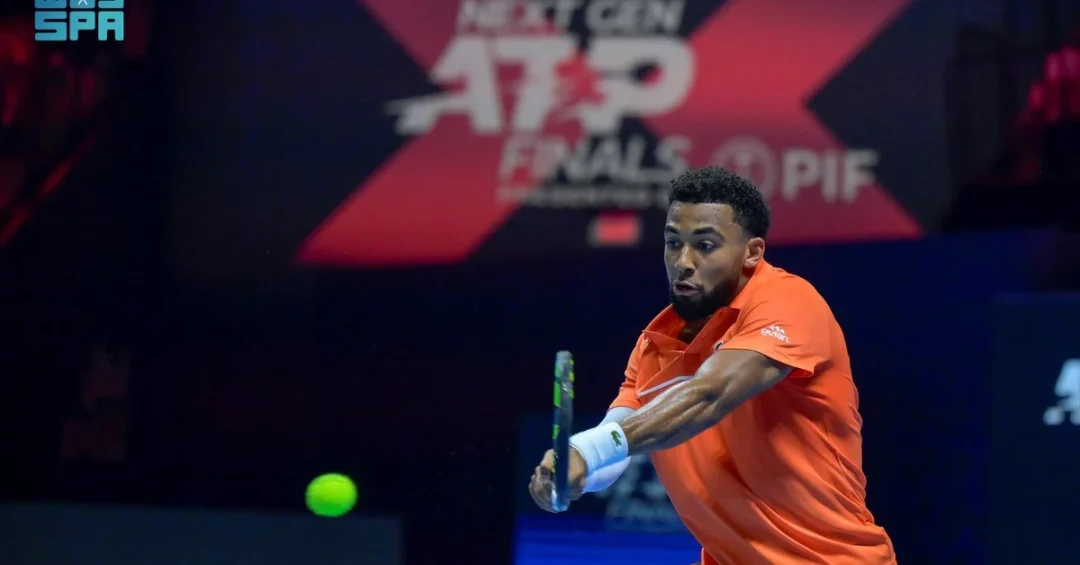
The group stage of the Next Generation ATP Finals concluded at King Abdullah Sports City in Jeddah, confirming four semi-finalists who will contest the knockout rounds of the tournament’s second edition hosted by Saudi Arabia. French player Luca Van Assche secured his place alongside red group leader Alex Michelsen of the United States, while American Learner Tien triumphed over Frenchman Arthur Fils to claim the runner-up position in the blue group, joining Brazilian Joao Fonseca, the group leader. The semi-finals, scheduled for today, will feature Alex Michelsen facing Learner Tien in an all-American clash, while Joao Fonseca takes on Luca Van Assche, with the winners advancing to tomorrow’s final. The event, organized by the Saudi Tennis Federation and the Association of Tennis Professionals, is supervised by the Ministry of Sports and sponsored by the Public Investment Fund, drawing significant audiences that underscore the growing popularity of tennis in the Kingdom.
Could this tournament mark a turning point in Saudi Arabia’s emergence as a global hub for elite tennis? The competition has showcased exceptional talent from some of the sport’s most promising young players, reinforcing the Kingdom’s commitment to hosting world-class sporting events. The presence of top-tier international competitors in Jeddah reflects the broader strategy of attracting premier athletic contests to Saudi soil, a key pillar of the nation’s Vision 2030 diversification efforts. With matches played before enthusiastic crowds at one of the region’s most modern sporting venues, the Next Generation ATP Finals has demonstrated that Saudi Arabia can deliver on the logistical, organizational, and hospitality demands of a major international tennis event. The tournament’s success builds on a growing calendar of global sports hosted in the Kingdom, from football to motorsport, each contributing to a vibrant entertainment ecosystem and inspiring a new generation of Saudi athletes.
Context and Background
How did the Next Generation ATP Finals come to be hosted in Jeddah, and what does its second edition signify for the Kingdom’s sporting ambitions? The tournament, which features the world’s top under-21 male tennis players, was first staged in Saudi Arabia in 2023 as part of a multi-year agreement between the Saudi Tennis Federation and the Association of Tennis Professionals. This year’s edition, held at King Abdullah Sports City, has continued the momentum, bringing together eight of the most exciting young talents in the sport for a week of high-intensity competition. The event is supervised by the Ministry of Sports, reflecting the government’s direct involvement in elevating Saudi Arabia’s profile as a destination for international athletics. Sponsorship from the Public Investment Fund, the Kingdom’s sovereign wealth fund, further underscores the strategic importance placed on sports as a vehicle for economic diversification and global engagement.
The group stage format, split into red and blue groups, ensured that every player had multiple opportunities to showcase their skills, with the top two from each group advancing to the semi-finals. This structure not only guarantees competitive balance but also maximizes audience engagement across the tournament’s duration. For Saudi Arabia, hosting such an event is about more than just tennis; it is a statement of intent. The Kingdom is rapidly transforming its sports infrastructure and event-hosting capabilities, and the Next Generation ATP Finals serves as a showcase for these efforts. By attracting the ATP’s flagship youth tournament, Saudi Arabia is positioning itself alongside traditional tennis strongholds and signaling its readiness to host even larger events in the future.
The significance of the tournament also lies in its timing. As the global sports calendar becomes increasingly crowded, Saudi Arabia has carved out a niche by securing long-term partnerships with major sporting bodies. The multi-year deal with the ATP ensures that Jeddah will remain a fixture on the tennis map for years to come, providing a platform for young players to gain invaluable experience while exposing Saudi audiences to top-level tennis. This reciprocal relationship benefits both the sport and the Kingdom, fostering grassroots interest and creating pathways for Saudi youth to engage with tennis at all levels.
Key Details and Semi-Final Matchups
What can fans expect from the semi-final clashes that will decide who competes for the title? In the red group, Alex Michelsen of the United States finished as the group leader, demonstrating consistency and mental toughness throughout the round-robin stage. He will face his compatriot Learner Tien, who emerged as the runner-up in the blue group after a decisive victory over France’s Arthur Fils. The all-American semi-final promises to be a fascinating encounter, pitting two players who know each other’s games well against one another. Michelsen, known for his powerful serve and aggressive baseline play, will need to counter Tien’s exceptional court coverage and tactical intelligence. Their matchup is a testament to the depth of talent in American men’s tennis and adds an intriguing subplot to the tournament.
In the other semi-final, Brazilian Joao Fonseca, the blue group leader, will take on France’s Luca Van Assche, who secured his semi-final spot as the runner-up in the red group. Fonseca has been one of the standout performers of the tournament, combining raw power with a maturity beyond his years. Van Assche, meanwhile, has shown resilience and adaptability, grinding out results in a competitive group. Their clash will pit Fonseca’s explosive game against Van Assche’s counterpunching style, a classic contrast that could produce a memorable match. The winners of these two semi-finals will meet in tomorrow’s final, with the champion earning a significant boost to their young career and a share of the prize money and ranking points on offer.
The group stage itself was not without drama. Learner Tien’s victory over Arthur Fils was a pivotal moment, as it determined the final semi-final berth and eliminated one of the pre-tournament favorites. Fils, a highly regarded French player, had been expected to challenge for the title, but Tien’s composed performance under pressure sealed his fate. Such moments illustrate the unpredictable nature of the Next Generation ATP Finals, where the round-robin format can produce surprising outcomes and reward players who peak at the right time. The tournament’s structure, with its fast-paced matches and innovative rules, is designed to test every aspect of a player’s game, from physical endurance to strategic decision-making.
International and Regional Impact
How does hosting a tournament of this caliber influence Saudi Arabia’s standing in the international sports community? The presence of players from the United States, France, and Brazil in the semi-finals highlights the global reach of the event and the Kingdom’s ability to attract talent from across the world. For Saudi Arabia, this is a powerful soft-power tool, demonstrating that the country is open for business, tourism, and cultural exchange. The tournament has drawn attention from international sports media, with coverage highlighting the state-of-the-art facilities at King Abdullah Sports City and the warm reception given to players and fans alike. This positive exposure helps to reshape perceptions of the Kingdom and supports the broader goals of Vision 2030, which seeks to position Saudi Arabia as a dynamic and forward-looking nation.
Regionally, the Next Generation ATP Finals serves as a catalyst for tennis development in the Middle East. By bringing elite competition to Jeddah, the event inspires young players across the Gulf and beyond to take up the sport. The Saudi Tennis Federation has been working to grow the game at the grassroots level, and events like this provide visible role models for aspiring athletes. The ATP’s decision to stage its youth finals in Saudi Arabia for multiple years is a vote of confidence in the Kingdom’s commitment to the sport. It also complements other tennis initiatives in the region, creating a cluster of tournaments that collectively raise the profile of tennis in the Middle East and provide more opportunities for players from the region to compete at a high level.
Economic and Strategic Significance
What economic benefits does the Next Generation ATP Finals bring to Jeddah and Saudi Arabia more broadly? Major sporting events generate significant economic activity, from tourism and hospitality to retail and transportation. The influx of international players, officials, media, and fans creates demand for hotel rooms, restaurants, and local services, providing a boost to the local economy. Beyond the immediate spending, the tournament enhances Jeddah’s reputation as a premier destination for events, which can attract future conferences, concerts, and sporting competitions. The Public Investment Fund’s sponsorship is part of a calculated strategy to invest in sectors that drive diversification, and sports is a key component of that plan. By supporting events like this, the PIF helps to build an ecosystem that includes infrastructure, tourism, and entertainment, all of which contribute to the Kingdom’s non-oil GDP.
Strategically, the tournament aligns with Saudi Arabia’s goal of becoming a global hub for sports and entertainment. The Kingdom has already hosted Formula 1 races, world championship boxing, and top-tier football, and tennis is a natural addition to this portfolio. Each event builds on the last, creating a critical mass of sporting excellence that draws international attention and fosters a sense of national pride. For Saudi youth, seeing world-class athletes compete on home soil can be life-changing, inspiring them to pursue their own sporting dreams. The Next Generation ATP Finals, with its focus on young talent, is particularly well-suited to this mission, as it showcases the next wave of tennis stars and demonstrates that age is no barrier to achieving greatness.
Vision 2030 Alignment
How does the Next Generation ATP Finals fit into the broader framework of Vision 2030? Saudi Arabia’s long-term development plan aims to diversify the economy, improve quality of life, and enhance the Kingdom’s global standing. Sports is explicitly identified as a key sector for growth, with targets to increase participation, host major events, and develop world-class facilities. The tournament directly supports these objectives by bringing international competition to Jeddah, stimulating economic activity, and promoting a healthy, active lifestyle among Saudis. The Ministry of Sports, under the leadership of His Royal Highness Prince Abdulaziz bin Turki Al-Faisal, has been instrumental in driving this agenda, working with federations and international bodies to attract events that align with the Vision 2030 goals. The involvement of the Public Investment Fund further reinforces the strategic nature of these investments, ensuring that they contribute to sustainable economic development.
Looking ahead, the success of the Next Generation ATP Finals is likely to pave the way for even more prestigious tennis events in Saudi Arabia. The ATP has already expressed satisfaction with the partnership, and there is potential for expanding the collaboration to include other tournaments or exhibitions. For the players, the experience of competing in Jeddah is invaluable, offering a taste of what it takes to perform at the highest level. For the Kingdom, each successful event is another step toward realizing the ambitious vision of a diversified, dynamic, and globally connected nation. As the semi-finals unfold today and the final tomorrow, the world will be watching, and Saudi Arabia will once again demonstrate its capability to host world-class sport with excellence and hospitality.
20 Questions
Q1. What is the Next Generation ATP Finals?
A1. The Next Generation ATP Finals is an annual tennis tournament featuring the world’s top under-21 male players, organized by the ATP. It showcases emerging talent and is currently hosted in Jeddah, Saudi Arabia.
Q2. Where was the group stage held?
A2. The group stage was held at King Abdullah Sports City in Jeddah, Saudi Arabia, a premier sports venue that has hosted numerous international events.
Q3. Who are the four semi-finalists?
A3. The semi-finalists are Alex Michelsen (USA), Learner Tien (USA), Joao Fonseca (Brazil), and Luca Van Assche (France). They advanced from the red and blue groups.
Q4. Which players are in the red group?
A4. The red group included Alex Michelsen, Luca Van Assche, and other competitors. Michelsen finished as group leader, while Van Assche secured the runner-up spot.
Q5. Which players are in the blue group?
A5. The blue group featured Joao Fonseca, Learner Tien, Arthur Fils, and others. Fonseca led the group, and Tien claimed the runner-up position.
Q6. How did Learner Tien qualify for the semi-finals?
A6. Learner Tien defeated France’s Arthur Fils in a crucial blue group match, securing the runner-up position and a place in the semi-finals.
Q7. Who will Alex Michelsen face in the semi-finals?
A7. Alex Michelsen will face fellow American Learner Tien in an all-American semi-final clash.
Q8. Who will Joao Fonseca play in the semi-finals?
A8. Joao Fonseca will take on Luca Van Assche of France in the other semi-final.
Q9. When are the semi-finals scheduled?
A9. The semi-finals are scheduled for today, following the conclusion of the group stage yesterday evening.
Q10. When is the final?
A10. The final is set to take place tomorrow, with the winners of the semi-finals competing for the title.
Q11. Who organizes the tournament?
A11. The tournament is organized by the Saudi Tennis Federation and the Association of Tennis Professionals (ATP), and supervised by the Ministry of Sports.
Q12. Who sponsors the event?
A12. The event is sponsored by the Public Investment Fund, Saudi Arabia’s sovereign wealth fund.
Q13. What is the significance of the tournament for Saudi Arabia?
A13. It reinforces Saudi Arabia’s commitment to hosting world-class sporting events and supports Vision 2030 goals of economic diversification and global engagement.
Q14. How does the tournament impact tennis in Saudi Arabia?
A14. It inspires grassroots participation, provides role models for young players, and raises the profile of tennis in the Kingdom.
Q15. What is the format of the tournament?
A15. The tournament features a round-robin group stage with two groups of four players, followed by semi-finals and a final.
Q16. Who is Alex Michelsen?
A16. Alex Michelsen is an American professional tennis player who finished as the leader of the red group at the Next Generation ATP Finals.
Q17. Who is Joao Fonseca?
A17. Joao Fonseca is a Brazilian tennis player who topped the blue group and is considered one of the most promising young talents in the sport.
Q18. Who is Luca Van Assche?
A18. Luca Van Assche is a French tennis player who secured the runner-up spot in the red group to advance to the semi-finals.
Q19. Who is Learner Tien?
A19. Learner Tien is an American tennis player who defeated Arthur Fils to claim the runner-up position in the blue group.
Q20. What does the future hold for the Next Generation ATP Finals in Saudi Arabia?
A20. With a multi-year agreement in place, the tournament is expected to continue in Jeddah, further cementing Saudi Arabia’s status as a premier destination for international tennis.
Reader Feedback
We value your thoughts. Please share your feedback on this article.
Your feedback helps us improve our coverage.
Related articles
 Two Saudi Weightlifters Win Six Medals at Asian Championships
 Future Falcons Program Develops Saudi Football Talents
 Riyadh Season Boxing Week Ends with Thrilling Fights
 Tien, Fonseca Set for Final Showdown at Next Gen ATP Finals
 Saudi Mostafa Nada Set for PFL Debut in Dubai
 Saudi Sports Arbitration Center, Bar Association Sign Deal