


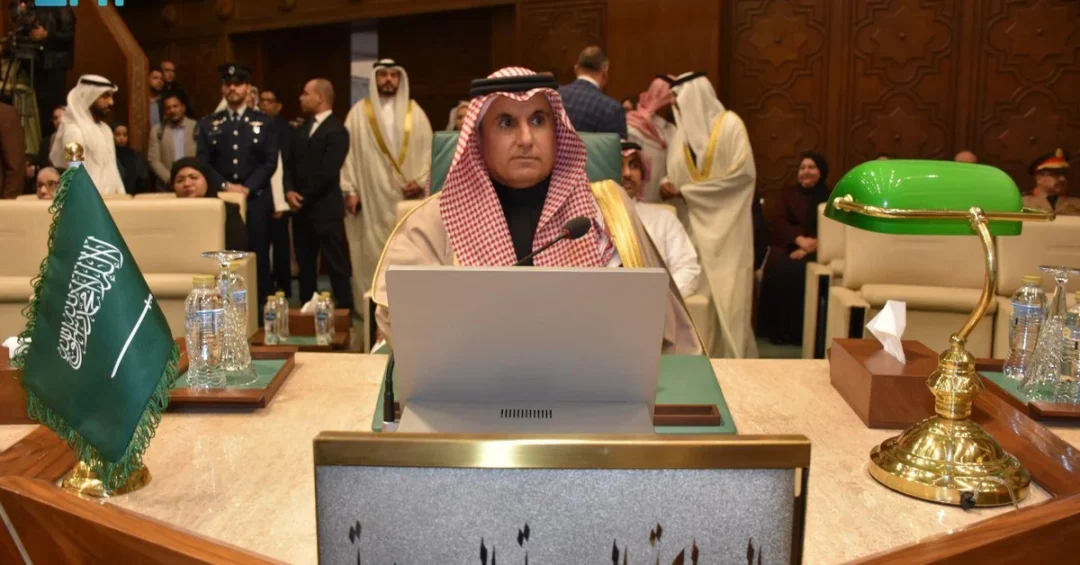
The Arab League convened an emergency meeting in Cairo on Thursday, December 13, 2024, to condemn Israel’s incursion into Syria, warning that the military escalation threatens regional and international peace and security. The session produced a formal resolution denouncing Israel’s entry into the demilitarized zone with Syria near Mount Hermon, as well as what the League described as the further occupation of Syrian land in Quneitra and Rif Dimashq Governorates. The Permanent Representative of the Kingdom of Saudi Arabia to the Arab League, Ambassador Abdulaziz bin Abdullah Al-Matar, attended the meeting, underscoring the Kingdom’s active engagement in Arab diplomatic efforts to address the crisis through collective action and respect for international law.
The emergency session reflects the deep concern across the Arab world over actions that the League says violate the 1974 Disengagement Agreement between Israel and Syria and multiple United Nations resolutions. The resolution condemned Israeli airstrikes on Syrian civilian and military sites and demanded compensation for the damage caused. It further urged the international community to hold Israel accountable for its actions in the occupied Golan Heights, calling for an end to demographic changes and illegal settlements. The meeting concluded with a request that the Arab group at the United Nations, in coordination with Algeria, convene a special session of the UN Security Council to address the escalating threat to international peace and security. How did this emergency session come together so quickly, and what does it signal about Arab unity on this issue?
Context and Background
Why does the demilitarized zone near Mount Hermon matter so much to regional stability? Established under the 1974 Disengagement Agreement that ended the Yom Kippur War, the buffer zone has for five decades served as a carefully monitored space separating Israeli and Syrian forces. The United Nations Disengagement Observer Force has patrolled the area since 1974, and the arrangement has been a cornerstone of relative calm along the Israeli-Syrian frontier even during periods of broader regional turbulence. Any incursion into that zone therefore carries outsized symbolic and legal weight, because it touches the architecture of a peace framework that has endured for half a century.
The Arab League’s decision to convene an emergency meeting reflects the seriousness with which member states view the reported movements near Mount Hermon and in Quneitra and Rif Dimashq Governorates. These areas sit in southwestern Syria, close to the Golan Heights, a territory occupied by Israel since 1967 and later annexed in a move that the international community, including Saudi Arabia, has consistently refused to recognize. The League’s resolution explicitly frames the incursion as a violation of the 1974 agreement and of UN resolutions, reinforcing a legal position that Arab states have maintained for decades. What does it mean when a regional body invokes a fifty-year-old agreement in response to new military movements?
Saudi Arabia’s participation in the meeting, through Ambassador Abdulaziz bin Abdullah Al-Matar, is consistent with the Kingdom’s longstanding support for international law, UN resolutions, and peaceful dispute resolution. Riyadh has repeatedly emphasized that stability in the Levant is inseparable from broader regional security and from the economic and social progress that Vision 2030 seeks to advance. The emergency session thus placed Saudi diplomacy at the center of an Arab effort to de-escalate tensions and to insist that all parties respect existing agreements. How does Saudi Arabia’s diplomatic presence in Cairo translate into concrete action on the ground?
Key Details of the Arab League Resolution
What exactly did the Arab League’s resolution demand? According to the official statement carried by the Saudi Press Agency, the resolution denounced Israel’s incursion into the demilitarized zone with Syria near Mount Hermon and the further occupation of Syrian land in Quneitra and Rif Dimashq Governorates. It characterized these actions as a violation of the 1974 Disengagement Agreement and of United Nations resolutions. The resolution also condemned Israeli airstrikes on Syrian civilian and military sites and demanded that Israel provide compensation for the damages incurred. These demands are notable because they combine legal condemnation with a call for material accountability, signaling that Arab states intend to pursue the issue through established international mechanisms rather than rhetoric alone.
The resolution further urged the international community to hold Israel accountable for its actions in the occupied Golan Heights, demanding an end to demographic changes and illegal settlements. This language echoes long-standing Arab League positions on the Golan, which the League regards as occupied Syrian territory subject to UN Security Council Resolution 497 and related instruments. By calling for accountability, the League is asking the broader international community, including the permanent members of the Security Council, to uphold the legal framework that governs the Golan and the disengagement zone. How can international law be enforced when the parties involved dispute the facts on the ground?
The final element of the resolution requested that the Arab group at the United Nations, in coordination with Algeria, convene a special session of the UN Security Council to address the escalating threat to international peace and security. Algeria currently holds a non-permanent seat on the Security Council, making its coordination role significant. A special session would place the issue on the agenda of the world’s most powerful security body, potentially opening the door to further debate, statements, and possibly draft resolutions. What would a special Security Council session achieve that an emergency Arab League meeting cannot?
International and Regional Impact
Why should the wider world pay attention to a regional body’s condemnation? The Arab League’s resolution arrives at a moment of heightened sensitivity across the Middle East, following a year of conflict that has reshaped regional dynamics. The League’s decision to seek a special UN Security Council session signals that Arab states want the matter addressed within the multilateral system rather than through unilateral action. For international audiences, this is a reminder that the Israeli-Syrian frontier, though quieter than other fronts in recent years, remains a potential flashpoint with implications for global energy markets, humanitarian access, and diplomatic relationships far beyond the Levant.
The involvement of Saudi Arabia, a major global energy producer and an influential voice in Arab and Islamic forums, adds weight to the League’s position. Riyadh has consistently advocated for de-escalation and for solutions rooted in UN resolutions and the Arab Peace Initiative, which calls for a comprehensive settlement in exchange for normalized relations. The Kingdom’s participation in the Cairo meeting reinforces its role as a bridge-builder that works through consensus and international institutions. Does this approach make Saudi diplomacy more effective than confrontational posturing?
Regional reactions are likely to be closely watched. Jordan, Lebanon, and Iraq share borders or proximity with the affected areas and have strong interests in preventing the spread of instability. Egypt, as host of the Arab League headquarters, has long played a mediating role in regional disputes. The unified Arab stance expressed in the resolution could strengthen the hand of those calling for restraint and for a return to the terms of the 1974 Disengagement Agreement. What would de-escalation look like in practical terms for the communities near Quneitra and Mount Hermon?
Economic and Strategic Significance
How does a security incident near Mount Hermon connect to broader economic stability? The Levant sits at the crossroads of trade routes, energy corridors, and humanitarian supply lines. Any escalation near the Golan or the demilitarized zone risks disrupting those flows and unsettling markets that have already weathered significant volatility in recent years. For Saudi Arabia and its Gulf neighbors, calm in the Levant is not merely a diplomatic preference but an economic imperative, as the Kingdom pursues ambitious infrastructure, tourism, and technology projects under Vision 2030 that depend on a stable regional environment.
The Arab League’s call for compensation for damages from Israeli airstrikes introduces an economic dimension to the dispute. While the mechanism for such compensation remains to be defined, the demand highlights the material costs of military action on civilian infrastructure and military sites. Syria’s already fragile infrastructure has suffered extensively over more than a decade of conflict, and further damage complicates reconstruction efforts that regional states, including Saudi Arabia, have expressed interest in supporting. Could a renewed focus on compensation and accountability create a pathway toward broader reconstruction diplomacy?
Strategically, the resolution places the Golan Heights back on the international agenda at a time when many observers had shifted attention elsewhere. The Arab League’s insistence on ending demographic changes and illegal settlements reaffirms a legal position that Arab states have held since 1967. For Saudi Arabia, supporting this position is consistent with its broader commitment to international law and to the principle that borders should not be changed by force. How can economic cooperation and legal accountability work together to produce lasting stability?
Vision 2030 Alignment
What does an emergency Arab League meeting have to do with Saudi Arabia’s Vision 2030? At its core, Vision 2030 is about transforming the Kingdom into a diversified, globally connected economy and a stabilizing force in the region. That transformation requires a peaceful neighborhood, reliable trade routes, and a reputation for responsible diplomacy. By participating actively in the Arab League’s response, Saudi Arabia reinforces its standing as a country that resolves disputes through dialogue, respects international agreements, and supports the institutions that underpin global order. These are precisely the qualities that international investors, partners, and visitors look for when they engage with the Kingdom.
The Kingdom’s diplomatic engagement in Cairo also complements its broader efforts to promote regional de-escalation, including its support for humanitarian initiatives and its advocacy for political solutions in Syria and beyond. Vision 2030 envisions Saudi Arabia as a hub for tourism, business, and cultural exchange, and such ambitions are best served when the region is calm and predictable. The Arab League resolution, backed by Saudi participation, thus forms part of a wider strategy that links regional stability to economic and social progress. Will sustained Arab diplomacy be enough to prevent further escalation and open the door to reconstruction and reconciliation?
As the Arab group at the United Nations prepares, in coordination with Algeria, to request a special Security Council session, the coming weeks will test whether the League’s unified stance can translate into meaningful international action. Saudi Arabia’s consistent message, delivered through Ambassador Abdulaziz bin Abdullah Al-Matar and the Kingdom’s broader diplomatic channels, is that respect for agreements and international law is the only sustainable path to peace. For a region that has seen too much conflict, that message carries weight, and it aligns squarely with Vision 2030’s promise of a stable, prosperous, and forward-looking Middle East.
20 Questions
Q1. What did the Arab League do on December 13, 2024?
A1. The Arab League held an emergency meeting in Cairo on Thursday, December 13, 2024, and issued a resolution condemning Israel’s incursion into Syria and its threat to regional and international peace and security.
Q2. Who represented Saudi Arabia at the emergency meeting?
A2. The Permanent Representative of the Kingdom of Saudi Arabia to the Arab League, Ambassador Abdulaziz bin Abdullah Al-Matar, attended the meeting in Cairo, underscoring the Kingdom’s active role in Arab diplomatic efforts.
Q3. What specific areas did the resolution mention?
A3. The resolution denounced Israel’s incursion into the demilitarized zone with Syria near Mount Hermon and the further occupation of Syrian land in Quneitra and Rif Dimashq Governorates.
Q4. Which agreement did the Arab League say was violated?
A4. The Arab League described the incursion as a violation of the 1974 Disengagement Agreement between Israel and Syria, as well as a violation of relevant United Nations resolutions.
Q5. What did the resolution say about Israeli airstrikes?
A5. The resolution condemned Israeli airstrikes on Syrian civilian and military sites and demanded that Israel provide compensation for the damages caused by those strikes.
Q6. What did the League urge the international community to do?
A6. The League urged the international community to hold Israel accountable for its actions in the occupied Golan Heights and demanded an end to demographic changes and illegal settlements there.
Q7. What was the final request in the resolution?
A7. The resolution requested that the Arab group at the United Nations, in coordination with Algeria, convene a special session of the UN Security Council to address the escalating threat to international peace and security.
Q8. Why is the 1974 Disengagement Agreement significant?
A8. The 1974 Disengagement Agreement ended the Yom Kippur War and established a demilitarized buffer zone monitored by UN peacekeepers, serving as a cornerstone of calm along the Israeli-Syrian frontier for five decades.
Q9. Where are Quneitra and Rif Dimashq Governorates located?
A9. Quneitra and Rif Dimashq Governorates are in southwestern Syria, near the Golan Heights, an area occupied by Israel since 1967 and subject to long-standing international legal disputes.
Q10. What is Saudi Arabia’s position on the Golan Heights?
A10. Saudi Arabia has consistently refused to recognize Israel’s annexation of the Golan Heights and supports international law, UN resolutions, and the principle that borders should not be changed by force.
Q11. Why does the Arab League’s stance matter internationally?
A11. The League’s unified position signals that Arab states want the issue addressed through multilateral institutions like the UN Security Council, reinforcing international law and the importance of respecting existing agreements.
Q12. What role is Algeria playing in the resolution’s follow-up?
A12. Algeria, currently a non-permanent member of the UN Security Council, is coordinating with the Arab group at the United Nations to convene a special Security Council session on the escalating threat.
Q13. How does this development affect regional stability?
A13. The incursion and the Arab League’s response highlight the sensitivity of the Israeli-Syrian frontier and the risk of broader instability, making de-escalation and respect for the 1974 agreement critical for regional calm.
Q14. What economic concerns arise from the situation?
A14. Escalation near the Golan and the demilitarized zone risks disrupting trade routes, energy corridors, and humanitarian supply lines, unsettling markets and complicating reconstruction efforts in Syria.
Q15. How does Saudi Arabia’s participation reflect its foreign policy?
A15. Saudi Arabia’s participation reflects its consistent support for international law, peaceful dispute resolution, and collective Arab action, positioning the Kingdom as a stabilizing and bridge-building force in the region.
Q16. What is the Arab Peace Initiative’s relevance here?
A16. The Arab Peace Initiative, backed by Saudi Arabia, calls for a comprehensive regional settlement in exchange for normalized relations, and it informs the Kingdom’s approach to disputes involving Israel and its neighbors.
Q17. What does the resolution demand regarding settlements?
A17. The resolution demands an end to demographic changes and illegal settlements in the occupied Golan Heights, reaffirming the Arab League’s long-standing legal position on the territory.
Q18. How does this relate to Vision 2030?
A18. Vision 2030 depends on regional stability for economic diversification, investment, and tourism. Saudi diplomacy at the Arab League supports the peaceful environment needed to achieve these goals.
Q19. What happens next after the Arab League resolution?
A19. The Arab group at the United Nations, coordinated by Algeria, will seek a special UN Security Council session, where the issue may be debated and potentially lead to further international action.
Q20. Why is this story important for global audiences?
A20. The story matters because it involves international law, UN resolutions, and regional stability in the Middle East, all of which affect global security, energy markets, and diplomatic relations far beyond the Levant.
Reader Feedback
We value your thoughts. Please share your feedback on this article.
Your feedback helps us improve our coverage.
Related articles
 GCC Chief Meets Morocco Parliamentary Leaders in Rabat
 New Murabba Launches Program to Empower Saudi Graduates
 Riyadh Mayor Meets Slovenian Economy, Tourism, Sport Minister
 Saudi, Jordan Labor Ministers Discuss Cooperation
 KSrelief Masam Project Honored for Demining in Yemen
 ImpaQ 2024: Over 1,500 Influencers Gather in Riyadh