


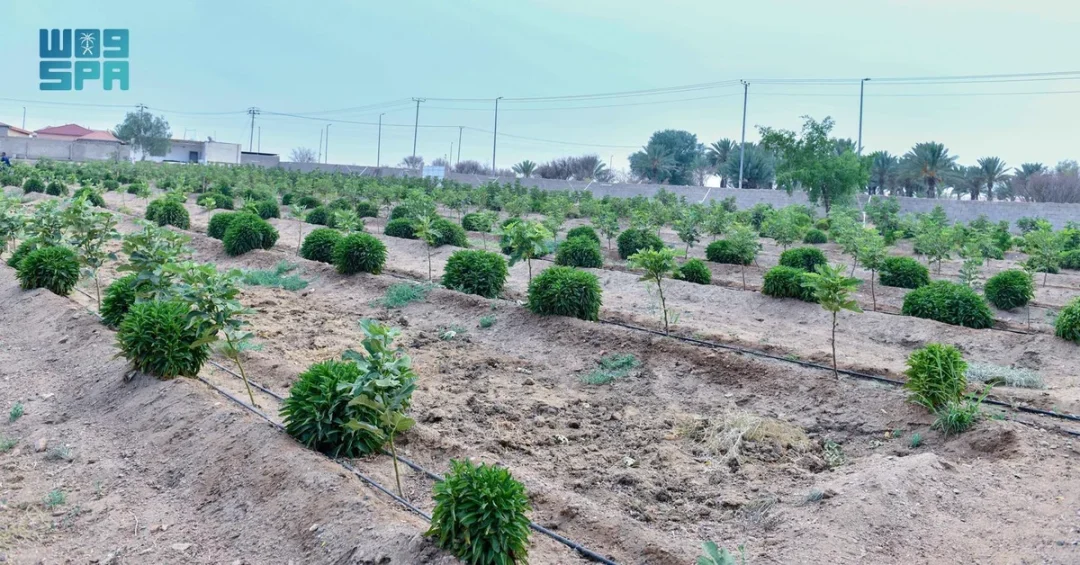
Saudi Arabia’s Ministry of Environment, Water and Agriculture has launched a landmark investment opportunity in Taif Governorate, inviting private-sector participation in the establishment of an integrated agricultural city spanning more than 30 million square meters in northern Taif, within the Makkah Region. The initiative, announced through official Saudi channels, offers a 15-year contract and reflects the Kingdom’s determination to strengthen food security, diversify income sources, and position agriculture as a driving force of sustainable economic development. The announcement has drawn significant interest from investors and agricultural stakeholders who recognize Taif’s rare combination of fertile soil, abundant water resources, and favorable climate. Could this be the moment that redefines how the Kingdom approaches large-scale farming?
Taif has long been known as one of Saudi Arabia’s most productive agricultural regions, a distinction rooted in its natural geography. Situated at high elevation in the Sarawat Mountains, the governorate benefits from cooler temperatures, regular rainfall, and rich volcanic soil that together create conditions rarely found elsewhere in the Kingdom. These natural advantages have supported generations of farmers and made Taif synonymous with premium produce, including grapes, pomegranates, figs, and the famous Taif roses. The new agricultural city project seeks to build on this heritage by introducing modern infrastructure, advanced irrigation methods, and integrated value chains that connect production directly to domestic and international markets.
Why does this development matter now, at this particular moment in the Kingdom’s economic transformation? The answer lies in the convergence of national priorities, global food supply concerns, and the ambitious goals of Saudi Vision 2030. By transforming Taif’s natural fertility into a structured, investment-ready opportunity, the Ministry of Environment, Water and Agriculture is signaling that agriculture is no longer a peripheral sector but a central pillar of economic diversification. The project’s scale, exceeding 30 million square meters, places it among the most significant agricultural investments announced in the region in recent years.
Context and Background
How did Taif come to occupy such a prominent place in Saudi Arabia’s agricultural landscape? The governorate’s story is one of geography meeting tradition. Located roughly 100 kilometers southeast of Makkah, Taif sits at an elevation of approximately 1,700 meters, giving it a climate that differs markedly from the hot coastal plains below. Cooler nights, moderate summers, and seasonal rains have allowed farmers to cultivate crops that struggle elsewhere in the Kingdom. The region is particularly celebrated for its rose farms, which produce the aromatic oil used in perfumes and religious products, and for fruit orchards that supply markets across Saudi Arabia and the Gulf.
The Ministry of Environment, Water and Agriculture has steadily expanded its support for the sector through the National Agricultural Strategy, which emphasizes sustainable resource management, innovation, and increased economic contribution. According to official Saudi information, the ministry’s plans focus on enhancing food security, supporting sustainable development, and preserving natural resources for future generations. These objectives align with the broader national effort to reduce reliance on food imports and to build resilience against global supply chain disruptions. In this context, Taif’s fertile environment is not merely a local asset but a strategic national resource.
Farmer Mohammed bin Ayedh, whose perspective was shared through official Saudi media, emphasized the importance of private-sector involvement in developing the agricultural sector and supporting the ministry’s efforts to achieve food security. He noted that the sector’s sustainability, in line with the National Agricultural Strategy, hinges on sustainable resource management, innovation and leadership, pest control, increased economic contributions, and creating a thriving agricultural community. His remarks underscore a central truth: no single government entity can achieve food security alone. The participation of farmers, investors, and technology providers is essential. Isn’t that collaborative approach exactly what a modern agricultural economy requires?
Key Details of the Taif Agricultural Initiative
What exactly does the investment opportunity entail? According to the official announcement, the project involves the development of an integrated agricultural city under a 15-year contract on an area exceeding 30 million square meters in northern Taif. The term “integrated agricultural city” signals more than a collection of farms; it suggests a comprehensive ecosystem that may include production facilities, processing units, cold storage, logistics infrastructure, and research or training centers. Such integration allows raw produce to be transformed into higher-value goods locally, reducing waste and increasing returns for investors and the national economy alike.
The 15-year contract period provides investors with a sufficiently long horizon to plan, build, and operate complex agricultural operations. Long-term agreements of this kind are particularly important in agriculture, where returns on investment in irrigation systems, soil improvement, and machinery often take years to materialize. By offering a stable legal and operational framework, the ministry is signaling that it understands the needs of serious agricultural investors. The project also reflects the ministry’s broader strategy of opening state-supported opportunities to private capital while retaining oversight of resource use and environmental standards.
Taif’s natural features are central to the project’s appeal. The region’s rich soil and reliable water sources, combined with its cooler climate, create conditions suited to a wide range of crops, from fruits and vegetables to medicinal and aromatic plants. The presence of established farming communities means that knowledge and labor are already available locally. The new agricultural city can therefore build on existing expertise rather than starting from scratch. This combination of natural endowment and human capital is rare, and it explains why the opportunity has attracted significant interest since its launch.
International and Regional Impact
How might this project resonate beyond Saudi Arabia’s borders? For regional neighbors and international partners, the Taif initiative represents a signal that the Kingdom is serious about becoming a more self-reliant and technologically advanced agricultural producer. Gulf countries share similar challenges, including limited arable land and dependence on food imports, and they watch Saudi Arabia’s experiments closely. A successful integrated agricultural city in Taif could become a model for other arid and semi-arid regions seeking to boost local production without depleting natural resources.
Internationally, the project aligns with global conversations about food security, climate resilience, and sustainable land use. Global supply chain disruptions in recent years have prompted many nations to reconsider the vulnerability of relying on distant suppliers for staple foods. Saudi Arabia’s response, as reflected in the Taif opportunity, emphasizes domestic capacity building supported by modern technology and careful resource management. This approach positions the Kingdom as a constructive actor in international efforts to strengthen food systems, and it may open doors to knowledge-sharing partnerships with countries that possess complementary expertise in agritech, water management, and post-harvest logistics.
Economic and Strategic Significance
Why is agriculture increasingly viewed as an economic driver rather than a traditional subsistence activity? The answer lies in value addition and diversification. Agriculture that moves beyond raw production into processing, packaging, branding, and export can generate significantly higher returns and create skilled employment. The Taif agricultural city, with its integrated design, is well positioned to capture these higher-value activities. It can also support ancillary industries such as logistics, cold chain services, and agricultural technology, multiplying its economic impact across the Makkah Region and beyond.
From a strategic perspective, reducing dependence on imported food is a matter of national resilience. The Ministry of Environment, Water and Agriculture has consistently emphasized self-sufficiency in agricultural products as a core objective, balanced against the need to preserve natural resources for future generations. Taif’s fertile environment makes it an ideal location to pursue both goals simultaneously. By concentrating investment in a region where nature has already provided the essentials, the Kingdom can achieve efficiency gains that would be far harder to realize in less favorable areas. Does that not make Taif a natural centerpiece of the national agricultural strategy?
Vision 2030 Alignment
How does the Taif agricultural initiative connect to the broader ambitions of Saudi Vision 2030? Vision 2030 seeks to diversify the Kingdom’s economy away from oil dependence, create opportunities for citizens and residents, and improve quality of life. Agriculture contributes to all three goals. It diversifies income sources, generates employment across skill levels, and supports rural communities. The integrated agricultural city in Taif is therefore not an isolated project but a component of a larger national transformation, one that treats food security as both an economic and a social priority.
The emphasis on private-sector participation, long-term contracts, and sustainable resource management reflects the Vision 2030 principle that government should enable rather than monopolize economic activity. By inviting investors to develop the agricultural city, the Ministry of Environment, Water and Agriculture is applying that principle in practice. As the project advances, it will be watched as a test of how effectively the Kingdom can combine its natural advantages with modern investment frameworks. For Taif, a region long celebrated for its fertility and beauty, the initiative offers a chance to convert natural abundance into lasting prosperity for the entire nation.
20 Questions
Q1. What is the Taif agricultural city project?
A1. It is an investment opportunity launched by the Ministry of Environment, Water and Agriculture to establish an integrated agricultural city in northern Taif, covering more than 30 million square meters under a 15-year contract.
Q2. Which government body announced the initiative?
A2. The Ministry of Environment, Water and Agriculture announced the investment opportunity through official Saudi channels, as reported by the Saudi Press Agency.
Q3. Why is Taif considered fertile for agriculture?
A3. Taif’s high elevation, cooler climate, regular rainfall, and rich volcanic soil create conditions that support a wide variety of crops rarely cultivated elsewhere in the Kingdom.
Q4. How large is the project area?
A4. The project covers an area exceeding 30 million square meters in northern Taif, within the Makkah Region.
Q5. What is the duration of the investment contract?
A5. The contract runs for 15 years, providing investors with a long-term horizon to develop and operate agricultural operations.
Q6. What are the main goals of the initiative?
A6. The initiative aims to enhance food security, support sustainable development, advance the agricultural sector as an economic driver, and achieve self-sufficiency in agricultural products.
Q7. Who is Mohammed bin Ayedh?
A7. Mohammed bin Ayedh is a farmer who emphasized the importance of private-sector involvement in developing agriculture and supporting the ministry’s food security efforts.
Q8. What did the farmer say about sustainability?
A8. He noted that sustainability depends on sustainable resource management, innovation and leadership, pest control, increased economic contributions, and creating a thriving agricultural community.
Q9. What crops is Taif known for?
A9. Taif is celebrated for grapes, pomegranates, figs, and its famous roses, which produce aromatic oil used in perfumes and religious products.
Q10. How does the project support Vision 2030?
A10. It diversifies income sources, creates employment, supports rural communities, and strengthens food security, all of which align with Vision 2030’s economic and social goals.
Q11. What is the National Agricultural Strategy?
A11. It is Saudi Arabia’s framework for developing the agricultural sector through sustainable resource management, innovation, and increased economic contribution.
Q12. Why is private-sector participation important?
A12. Private investment brings capital, technology, and operational expertise that complement government efforts and accelerate progress toward food security.
Q13. What does “integrated agricultural city” mean?
A13. It refers to a comprehensive ecosystem that may include production, processing, cold storage, logistics, and research facilities within a single coordinated development.
Q14. How does the project benefit the Makkah Region?
A14. It can stimulate local employment, attract investment, support ancillary industries, and strengthen regional food supply chains.
Q15. What role does water management play?
A15. Sustainable water use is central, as the project must balance production goals with the preservation of natural resources for future generations.
Q16. How might the project affect food imports?
A16. By increasing domestic production, it can reduce reliance on imported food and improve national resilience against global supply disruptions.
Q17. What international interest exists in the project?
A17. Gulf and international partners watch Saudi agricultural initiatives closely, as they offer models for arid regions seeking to boost local production sustainably.
Q18. What technology might be used?
A18. Modern irrigation, pest control, and post-harvest logistics technologies are expected, consistent with the ministry’s emphasis on innovation.
Q19. How does the project preserve resources for future generations?
A19. Through sustainable resource management practices, the initiative seeks to maintain soil and water quality while increasing agricultural output.
Q20. What is the expected long-term outcome?
A20. The project aims to establish Taif as a leading agricultural hub, contributing to food security, economic diversification, and the broader goals of Saudi Vision 2030.
Reader Feedback
We value your thoughts. Please share your feedback on this article.
Your feedback helps us improve our coverage.
Related articles
 PIF Completes 15% Stake Acquisition in Heathrow Airport
 Saudi Arabia, UK Strengthen Economic Partnership, Target £30bn Trade
 Monsha’at Concludes Export and Import Week for Saudi SMEs
 Pioneering Farming Practices Drive Economic Growth in Najran
 Qassim’s Berry Revolution: From Ambition to Reality
 Madinah Investment Forum Unveils SAR57 Billion in Opportunities