


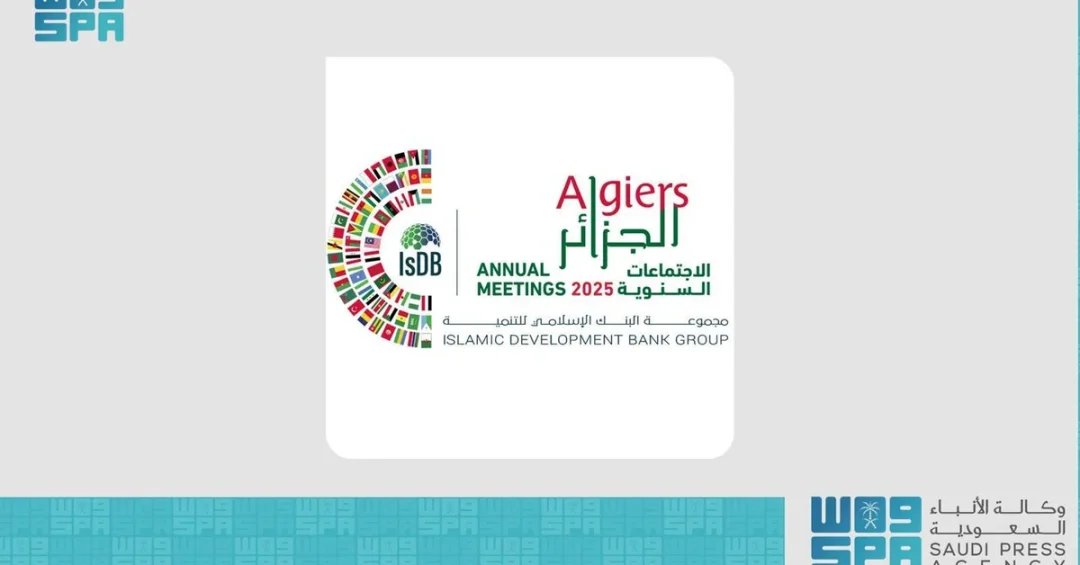
The Islamic Development Bank Group (IsDB) has announced that its 2025 Annual Meetings will be held in Algiers, Algeria, from May 19 to 22 under the theme “Diversifying Economies, Enriching Lives,” according to an official announcement carried by the Saudi Press Agency (SPA). The gathering will bring together the IsDB Board of Governors, representing 57 member countries, alongside development partners, policymakers, and private sector leaders for high-level dialogue on strengthening development cooperation and exchanging expertise.
The announcement, released from Jeddah, where the IsDB Group is headquartered, underscores the institution’s role as a multilateral development finance powerhouse that traces its founding to Saudi Arabia’s leadership in the mid-1970s. For observers of international development finance, the Algiers meetings represent a significant moment: the Bank’s governors will convene at a time when member states are navigating shifting global economic conditions, from fluctuating energy markets to the rising importance of digital economies and climate-resilient infrastructure. The theme chosen for 2025 signals a deliberate focus on economic transformation that benefits ordinary people, not merely aggregate growth figures.
What does it mean for 57 nations to gather under a single development banner in an era of fragmented global priorities? The answer, according to the Bank’s own framing, lies in cooperation that transcends borders and sectors.
Context and Background
The Islamic Development Bank Group was established in 1975 by the Organisation of Islamic Cooperation (OIC) and has grown into one of the world’s largest multilateral development institutions, with a mandate to foster economic development and social progress in its member countries and Muslim communities worldwide. Its headquarters in Jeddah, Saudi Arabia, reflect the Kingdom’s central role in its creation and continued support. Over nearly five decades, the IsDB has financed infrastructure, education, health, agriculture, and private sector development across Africa, Asia, the Middle East, and beyond.
The Annual Meetings are the Bank’s premier governance event, where the Board of Governors—typically represented by finance ministers and central bank governors from member states—reviews institutional performance, approves strategic directions, and endorses new financing initiatives. These gatherings also serve as a marketplace of ideas where bilateral and multilateral partnerships are forged. Hosting the 2025 edition in Algiers marks the first time in years that the meetings return to North Africa, a region that has increasingly drawn development finance interest for its demographic dynamism and energy transition potential.
Why does the location matter? Algeria, a founding member of the IsDB, sits at the crossroads of Africa, the Mediterranean, and the Arab world, making it a fitting venue for discussions on economic diversification. The country’s own efforts to broaden its economic base beyond hydrocarbons mirror the challenges faced by many IsDB member states. The choice of Algiers thus carries symbolic weight, reinforcing the Bank’s commitment to regional balance and to amplifying the voices of African member countries in global development conversations.
Key Details of the 2025 Annual Meetings
According to the SPA announcement, the 2025 Annual Meetings will run from May 19 to 22 and will feature a rich program of panel discussions, high-level sessions, and side events. The theme “Diversifying Economies, Enriching Lives” encapsulates the Bank’s strategic focus on helping member countries reduce dependence on single sectors—often oil, gas, or primary commodities—and build more resilient, inclusive economies. The agenda will also address shared economic challenges, including debt sustainability, food security, and the financing gap for sustainable development goals.
President of the Islamic Development Bank Group Dr. Mohammed Sulaiman Al-Jasser stated that the meetings will provide an opportunity to enhance partnerships and present innovative solutions to support sustainable development across member countries. He emphasized the importance of collaborative efforts to confront urgent global challenges and explore new avenues that serve communities and advance shared development goals. Dr. Al-Jasser, a seasoned Saudi economist who previously served as Saudi Arabia’s Minister of Economy and Planning, has steered the IsDB toward greater emphasis on private sector mobilization and climate finance since assuming the presidency in 2021.
Beyond the formal sessions, the event will include exhibitions and networking opportunities designed to showcase successful development initiatives and institutional achievements. These exhibitions typically highlight projects in renewable energy, digital infrastructure, Islamic finance, and small and medium enterprise support. For member countries, they offer a platform to demonstrate progress and attract co-financing. For private sector participants, they open doors to public-private partnerships that can scale impact. How might these interactions translate into tangible projects on the ground? The Bank’s track record suggests that annual meetings often catalyze follow-on agreements that materialize in the months and years after the event.
International and Regional Impact
The Algiers meetings arrive at a pivotal moment for global development finance. Multilateral institutions are under pressure to reform, scale up, and demonstrate measurable results. The IsDB, with its AAA credit rating and unique blend of Islamic finance principles and conventional development banking, occupies a distinctive niche. Its ability to convene 57 member countries—spanning diverse income levels and geographies—gives it convening power that few institutions can match. The 2025 meetings will likely produce declarations and commitments that shape the Bank’s pipeline for years to come.
For Africa, the meetings hold particular significance. African member countries constitute a large share of the IsDB’s membership and borrowing. The continent faces an annual infrastructure financing gap estimated in the tens of billions of dollars, alongside pressing needs in education, healthcare, and climate adaptation. By focusing on economic diversification, the IsDB is aligning with the African Union’s Agenda 2063 and the broader push for value-added industrialization. Algeria, as host, can use the spotlight to deepen its own ties with the Bank and with Gulf partners, including Saudi Arabia, which remains a key shareholder and strategic ally.
What role will Saudi Arabia play beyond its shareholding? As the host country of the IsDB’s headquarters and a leading voice in the OIC, the Kingdom is expected to be prominently represented. Saudi Arabia’s Vision 2030, with its emphasis on economic diversification, non-oil growth, and international partnership, resonates strongly with the Bank’s 2025 theme. The Kingdom’s own experience—transforming its economy while maintaining social stability—offers a case study that many member countries look to. Saudi delegates will likely use the Algiers platform to share lessons and explore co-financing opportunities that advance both Vision 2030 and the IsDB’s objectives.
Economic and Strategic Significance
The theme “Diversifying Economies, Enriching Lives” is not merely rhetorical. It reflects a hard economic reality: many IsDB member countries remain vulnerable to commodity price shocks, climate change, and external debt distress. Diversification is the pathway to job creation, especially for the youth bulge across the Middle East, North Africa, and South Asia. The Bank’s strategy emphasizes building productive capacity in agriculture, manufacturing, tourism, and the digital economy—sectors where member countries have comparative advantages but often lack financing and technical expertise.
From a strategic standpoint, the Annual Meetings also serve as a barometer of South-South cooperation. The IsDB facilitates knowledge transfer among member states, from Malaysia’s Islamic finance expertise to Turkey’s manufacturing experience to the Gulf’s renewable energy investments. Algeria’s hosting of the 2025 meetings could accelerate its integration into these networks, opening avenues for technology transfer and joint ventures. For Saudi Arabia, a strong IsDB that effectively serves its members amplifies the Kingdom’s soft power and its commitment to global development, consistent with its G20 and OIC leadership roles.
How will the outcomes be measured? Success will likely be gauged by the number and quality of agreements signed, the launch of new financing facilities, and the degree to which the meetings advance the Bank’s strategic priorities, including climate action and private sector development. The IsDB has set ambitious targets for increasing its climate finance and mobilizing additional resources from capital markets. The Algiers meetings provide a stage to announce progress and secure member backing for future initiatives.
Vision 2030 Alignment
Saudi Arabia’s Vision 2030, launched in 2016 under the leadership of Crown Prince Mohammed bin Salman, aims to diversify the Kingdom’s economy, reduce oil dependence, and enhance quality of life. The IsDB’s 2025 theme mirrors these objectives almost exactly. As a founding member and the Bank’s host, Saudi Arabia sees the IsDB as a vehicle for extending the principles of Vision 2030—sustainable development, innovation, and inclusive growth—across the Islamic world. The Kingdom’s support for the Bank, including its substantial capital contributions, reflects a broader foreign policy that prioritizes multilateral engagement and development diplomacy.
The Annual Meetings in Algiers will therefore be more than a bureaucratic gathering. They represent a convergence of Saudi leadership, Islamic solidarity, and practical development finance. As Dr. Al-Jasser noted, the event will explore new avenues that serve communities and advance shared development goals. For Saudi Arabia, a successful IsDB that helps member countries diversify and prosper is a testament to the enduring value of Vision 2030’s global vision. As the May meetings approach, the world will watch Algiers for signals of how 57 nations intend to build resilient economies and enrich lives in the decades ahead.
20 Questions
Q1. What is the Islamic Development Bank Group and when was it established?
A1. The Islamic Development Bank Group is a multilateral development institution established in 1975 by the Organisation of Islamic Cooperation. Headquartered in Jeddah, Saudi Arabia, it fosters economic development and social progress across its 57 member countries and Muslim communities worldwide.
Q2. Where and when will the IsDB 2025 Annual Meetings take place?
A2. The 2025 Annual Meetings will be held in Algiers, Algeria, from May 19 to 22, as announced by the IsDB and reported by the Saudi Press Agency. The event will bring together governors, policymakers, and private sector leaders.
Q3. What is the theme of the 2025 Annual Meetings?
A3. The theme is “Diversifying Economies, Enriching Lives.” It reflects the Bank’s strategic focus on helping member countries reduce dependence on single sectors and build more resilient, inclusive economies that benefit all citizens.
Q4. Who announced the details of the 2025 Annual Meetings?
A4. The Islamic Development Bank Group announced the details, with the Saudi Press Agency carrying the official statement. The announcement was released from Jeddah, where the Bank is headquartered, on April 7, 2025.
Q5. Who is the President of the Islamic Development Bank Group?
A5. Dr. Mohammed Sulaiman Al-Jasser is the President of the Islamic Development Bank Group. A seasoned Saudi economist, he previously served as Saudi Arabia’s Minister of Economy and Planning and has led the IsDB since 2021.
Q6. What did Dr. Al-Jasser say about the significance of the meetings?
A6. Dr. Al-Jasser stated the meetings will enhance partnerships and present innovative solutions for sustainable development. He emphasized collaborative efforts to confront urgent global challenges and explore new avenues that serve communities and advance shared development goals.
Q7. How many member countries does the IsDB represent?
A7. The IsDB represents 57 member countries across Africa, Asia, the Middle East, and beyond. Its Board of Governors, typically comprising finance ministers and central bank governors, oversees the institution’s strategic direction and governance.
Q8. What is the main purpose of the IsDB Annual Meetings?
A8. The Annual Meetings serve as a high-level platform for dialogue to strengthen development cooperation and exchange expertise. Governors review performance, approve strategic directions, and endorse new financing initiatives while forging partnerships.
Q9. What kinds of sessions and events will be featured in Algiers?
A9. The event will feature panel discussions, high-level sessions, exhibitions, and networking opportunities. These are designed to showcase successful development initiatives and institutional achievements, reflecting progress made by member states.
Q10. Why is Algeria significant as the host for the 2025 meetings?
A10. Algeria is a founding member of the IsDB and sits at the crossroads of Africa, the Mediterranean, and the Arab world. Its own economic diversification efforts mirror the challenges of many member states, making it a fitting venue.
Q11. How does the 2025 theme relate to Saudi Arabia’s Vision 2030?
A11. The theme “Diversifying Economies, Enriching Lives” closely mirrors Vision 2030’s goals of reducing oil dependence, fostering innovation, and enhancing quality of life. Saudi Arabia sees the IsDB as a vehicle for extending these principles globally.
Q12. What role does Saudi Arabia play in the IsDB?
A12. Saudi Arabia is a founding member, a major shareholder, and the host country of the IsDB’s headquarters in Jeddah. The Kingdom has consistently supported the Bank’s mission through capital contributions and diplomatic engagement.
Q13. What economic challenges will the meetings address?
A13. The meetings will address shared economic challenges including debt sustainability, food security, climate adaptation, and the financing gap for sustainable development goals. Diversification is presented as a pathway to resilience and job creation.
Q14. How does the IsDB support economic diversification in member countries?
A14. The IsDB finances infrastructure, education, health, agriculture, and private sector development. Its strategy emphasizes building productive capacity in sectors like manufacturing, tourism, and the digital economy where members have comparative advantages.
Q15. What are the expected outcomes of the 2025 Annual Meetings?
A15. Expected outcomes include new financing agreements, the launch of initiatives, and strengthened partnerships. Success will be measured by the quality of agreements and progress on the Bank’s strategic priorities, including climate action.
Q16. How does the IsDB promote South-South cooperation?
A16. The IsDB facilitates knowledge transfer among member states, from Islamic finance expertise to manufacturing experience and renewable energy investments. The Annual Meetings serve as a marketplace for such exchanges and joint ventures.
Q17. What is the significance of the meetings for Africa?
A17. African member countries constitute a large share of IsDB membership. The meetings align with the African Union’s Agenda 2063 and address the continent’s infrastructure financing gap, industrialization, and climate adaptation needs.
Q18. What exhibitions will take place during the Annual Meetings?
A18. Exhibitions will showcase successful development initiatives and institutional achievements in areas such as renewable energy, digital infrastructure, Islamic finance, and small and medium enterprise support. They offer platforms for attracting co-financing and partnerships.
Q19. How does the IsDB’s AAA credit rating benefit member countries?
A19. The AAA rating allows the IsDB to raise funds on favorable terms in global capital markets, which it then channels to member countries as development financing. This enables cost-effective support for projects and programs.
Q20. What is the long-term vision of the IsDB for its member countries?
A20. The IsDB envisions inclusive and sustainable development across its member countries, with diversified economies that enrich lives. Its long-term strategy focuses on resilience, innovation, and partnerships that advance shared prosperity and stability.
Reader Feedback
We value your thoughts. Please share your feedback on this article.
Your feedback helps us improve our coverage.
Related articles
 Jeddah to Host Saudi International Furniture and Décor Exhibition Mobedex
 SIF Day Two: Funding Sports Development in Focus
 Estidamah Launches Azolla Cultivation Program for Farmers
 SFD Signs $10M Renewable Energy Deal With Solomon Islands
 CMA Opens Consultation on SPAC Listings in Parallel Market
 Saudi Ministry Issues 63 Industrial Licenses in January