


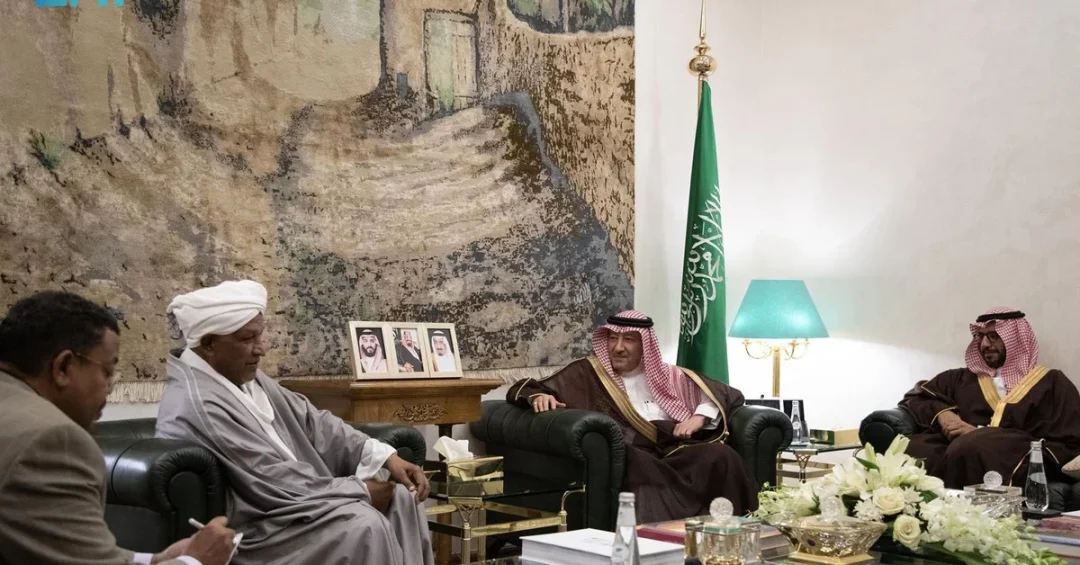
Saudi Arabia’s Vice Minister of Foreign Affairs Waleed El Khereiji met with Sudan’s Ambassador to the Kingdom, Dafallah Al-Haj Ali, at the Ministry of Foreign Affairs headquarters in Riyadh on Monday, December 9, 2024, to discuss the latest developments in Sudan and the ongoing efforts to address them. The meeting, confirmed by the Saudi Press Agency (SPA), underscores the Kingdom’s continued diplomatic engagement with Sudan at a pivotal moment for the region. It also signals Riyadh’s sustained commitment to stability, dialogue, and humanitarian relief across the Red Sea corridor, where Saudi interests and regional security are closely intertwined.
The encounter was attended by Prince Musab Al-Farhan, advisor to the Minister of Foreign Affairs for political affairs, according to the official SPA report. While the statement issued after the meeting was brief, the presence of such a senior political advisor indicates that the talks covered substantive diplomatic and security matters rather than routine protocol. For observers of Saudi foreign policy, the meeting fits a well-established pattern: the Kingdom consistently uses its diplomatic weight to encourage peaceful resolution of conflicts, support legitimate institutions, and alleviate humanitarian suffering. The timing, just days before year-end diplomatic reviews, adds further significance to the discussions.
Context and Background: Why Does This Meeting Matter Now?
Saudi Arabia has long regarded Sudan as a strategically vital partner. The two countries share a maritime border across the Red Sea, deep historical and cultural ties, and a mutual interest in safeguarding one of the world’s most important trade corridors. Since the outbreak of conflict in Sudan in April 2023, the Kingdom has repeatedly called for de-escalation, protected civilians, and supported international mediation efforts. Saudi Arabia co-hosted the Jeddah talks in 2023, which brought together representatives of the Sudanese Armed Forces and the Rapid Support Forces in an attempt to secure ceasefires and humanitarian access. That platform, facilitated by the United States, remains one of the few diplomatic tracks that has produced tangible agreements, even if fragile.
The December 9 meeting between Vice Minister El Khereiji and Ambassador Al-Haj Ali therefore did not emerge in a vacuum. It reflects a continuing diplomatic process in which Riyadh acts as a convener, a humanitarian donor, and a regional stabilizer. Saudi officials have consistently emphasized that Sudan’s sovereignty, territorial integrity, and national institutions must be preserved. The Kingdom has also provided substantial humanitarian aid, including food, medical supplies, and shelter, through the King Salman Humanitarian Aid and Relief Center (KSrelief). These efforts align with Saudi Arabia’s broader foreign policy doctrine, which prioritizes dialogue over confrontation and development over division.
For international audiences, the meeting offers a window into how Saudi diplomacy operates behind the scenes. Rather than issuing dramatic ultimatums, Saudi officials prefer quiet, persistent engagement with all parties. This approach has earned the Kingdom credibility as an honest broker in several regional files, from Yemen to Lebanon and now Sudan. The presence of Prince Musab Al-Farhan, a seasoned diplomat with responsibility for political affairs, reinforces the seriousness of the discussion. It suggests that Saudi Arabia is not merely reacting to events in Sudan but actively shaping a pathway toward de-escalation and long-term recovery.
Key Details: What Was Discussed and Who Was Involved?
According to the official SPA report, Vice Minister Waleed El Khereiji received Ambassador Dafallah Al-Haj Ali at the ministry’s headquarters in Riyadh. The two diplomats discussed “ongoing developments in Sudan and their repercussions” as well as “efforts exerted to address them.” This language, while diplomatic, points to a comprehensive agenda: the security situation on the ground, the humanitarian crisis, regional spillover risks, and the various mediation initiatives underway. The meeting also provided an opportunity to review the status of bilateral relations, which have remained stable despite the conflict in Sudan.
Ambassador Al-Haj Ali is Sudan’s senior diplomatic representative in the Kingdom, a posting of considerable importance given the large Sudanese diaspora in Saudi Arabia and the deep economic ties between the two nations. Vice Minister El Khereiji, a career diplomat who has served in senior roles within the Ministry of Foreign Affairs, is responsible for a wide portfolio that includes African affairs, multilateral engagement, and crisis diplomacy. Prince Musab Al-Farhan’s attendance further elevates the meeting’s profile, indicating that the political affairs track is fully engaged.
While the SPA statement did not disclose specific outcomes, the very act of holding such a meeting sends a clear message: Saudi Arabia remains committed to keeping lines of communication open with Sudanese stakeholders. In conflict diplomacy, sustained engagement is often as important as any single agreement. By receiving the ambassador in Riyadh, the Kingdom reaffirms its role as a trusted intermediary and a reliable partner for Sudan’s legitimate institutions. It also signals to the wider international community that Saudi Arabia is willing to invest diplomatic capital in resolving one of Africa’s most pressing crises.
International and Regional Impact: What Does Saudi Engagement Mean for Stability?
Saudi Arabia’s diplomatic efforts on Sudan carry weight far beyond the bilateral relationship. The Red Sea is a critical artery for global trade, and instability along its western shore threatens shipping lanes, energy infrastructure, and regional economies. Egypt, a close Saudi ally, shares deep concerns about the Nile waters and Sudan’s stability. The United Arab Emirates, another Gulf partner, has also been involved in humanitarian and diplomatic initiatives. By coordinating with these partners, Saudi Arabia helps prevent the conflict from becoming a wider proxy confrontation. The Kingdom’s consistent calls for dialogue resonate with the African Union, the Intergovernmental Authority on Development (IGAD), and the United Nations, all of which have sought Saudi support for their mediation efforts.
Moreover, Saudi Arabia’s humanitarian role cannot be overstated. Through KSrelief, the Kingdom has delivered hundreds of tons of relief supplies to Sudan and neighboring countries hosting refugees, including Chad and South Sudan. These operations are often coordinated with international agencies and local partners, ensuring that aid reaches those most in need. The December 9 meeting likely touched on ways to strengthen these humanitarian corridors and ensure that assistance continues to flow despite security challenges. For a global audience, this demonstrates that Saudi foreign policy is not only about high-level talks but also about tangible relief for civilians affected by conflict.
Regionally, the meeting reinforces Saudi Arabia’s standing as a stabilizing force. Unlike actors who might seek to exploit Sudan’s instability, the Kingdom has consistently advocated for a peaceful, negotiated settlement that preserves Sudan’s unity and territorial integrity. This position has been welcomed by many African and Arab states, which view Saudi Arabia as a balanced and constructive player. The meeting with Ambassador Al-Haj Ali is therefore part of a broader strategy to build consensus, reduce tensions, and create conditions for a sustainable peace.
Economic and Strategic Significance: What Is at Stake for Saudi Arabia?
Sudan holds significant economic and strategic value for Saudi Arabia. Before the conflict, bilateral trade and investment were growing, particularly in agriculture, livestock, and mining. Sudanese ports on the Red Sea, notably Port Sudan, are potential gateways for Saudi exports and imports into East Africa. The Kingdom has also been a major investor in Sudanese agricultural projects, viewing Sudan as a key partner for food security. Restoring stability in Sudan would allow these economic ties to resume and expand, benefiting both nations.
Strategically, a stable Sudan is essential for Saudi Arabia’s broader Red Sea security architecture. The Kingdom has launched ambitious initiatives, such as the Red Sea Council, to enhance maritime cooperation and protect shipping routes. A peaceful Sudan would strengthen these efforts and create new opportunities for regional integration. Conversely, prolonged conflict risks creating a vacuum that could be exploited by extremist groups or hostile actors, threatening Saudi national security. The meeting between Vice Minister El Khereiji and Ambassador Al-Haj Ali is thus not merely a diplomatic courtesy; it is an investment in Saudi Arabia’s own security and economic prosperity.
Furthermore, Saudi Arabia’s Vision 2030 economic diversification plan relies on stable regional trade corridors. The Kingdom aims to become a global logistics hub connecting Asia, Europe, and Africa. Sudan’s geographic position, bridging the Arab world and sub-Saharan Africa, makes it a natural partner in this vision. By helping to stabilize Sudan, Saudi Arabia is also protecting its own long-term economic interests and reinforcing its reputation as a reliable investment destination.
Vision 2030 Alignment: How Does This Meeting Support Saudi Arabia’s Long-Term Goals?
Saudi Arabia’s Vision 2030, launched by Crown Prince Mohammed bin Salman, is not solely a domestic economic reform program; it also encompasses a proactive foreign policy that promotes peace, security, and development. The Kingdom’s engagement with Sudan, including the December 9 meeting, aligns directly with Vision 2030’s emphasis on international cooperation and humanitarian leadership. By facilitating dialogue and providing relief, Saudi Arabia enhances its global standing and demonstrates the values of moderation, stability, and prosperity that underpin the Vision.
In addition, Vision 2030 calls for strengthening partnerships across Africa, a continent with immense economic potential. Sudan, with its vast resources and strategic location, is a key part of that outreach. Saudi Arabia has hosted numerous Sudanese officials and supported capacity-building programs, all of which contribute to the Vision’s goal of creating a diversified, knowledge-based economy. The meeting between Vice Minister El Khereiji and Ambassador Al-Haj Ali is a small but meaningful step in a long-term strategy to build a more stable and prosperous region. As Saudi Arabia continues to expand its diplomatic footprint, such engagements will remain central to its role as a responsible global leader.
20 Questions
Q1. Who met with Sudan’s Ambassador to Saudi Arabia on December 9, 2024?
A1. Vice Minister of Foreign Affairs Waleed El Khereiji met with Sudanese Ambassador Dafallah Al-Haj Ali at the Ministry of Foreign Affairs headquarters in Riyadh.
Q2. Where did the meeting take place?
A2. The meeting took place at the Ministry of Foreign Affairs headquarters in Riyadh, the capital of Saudi Arabia.
Q3. What was the main topic of discussion?
A3. The two diplomats discussed ongoing developments in Sudan and their repercussions, as well as efforts exerted to address them.
Q4. Who else attended the meeting?
A4. Prince Musab Al-Farhan, advisor to the Minister of Foreign Affairs for political affairs, attended the meeting, according to the official SPA report.
Q5. Which Saudi agency reported the meeting?
A5. The Saudi Press Agency (SPA) reported the meeting, which is the Kingdom’s official news agency.
Q6. Why is Sudan important to Saudi Arabia?
A6. Sudan is a strategically vital partner sharing a Red Sea border, deep historical ties, and mutual interests in trade, security, and regional stability.
Q7. What role has Saudi Arabia played in Sudan’s conflict?
A7. Saudi Arabia co-hosted the Jeddah talks in 2023, provided humanitarian aid through KSrelief, and consistently called for dialogue and de-escalation.
Q8. What is the Jeddah talks platform?
A8. The Jeddah talks are a diplomatic initiative co-facilitated by Saudi Arabia and the United States to secure ceasefires and humanitarian access in Sudan.
Q9. How does this meeting align with Saudi Vision 2030?
A9. It aligns with Vision 2030’s goals of international cooperation, humanitarian leadership, and strengthening partnerships across Africa for regional stability and prosperity.
Q10. What humanitarian aid has Saudi Arabia provided to Sudan?
A10. Saudi Arabia, through KSrelief, has delivered food, medical supplies, and shelter to Sudan and neighboring countries hosting refugees.
Q11. What are the regional implications of Saudi engagement in Sudan?
A11. It helps prevent wider proxy confrontation, supports Red Sea security, and reinforces Saudi Arabia’s role as a stabilizing force in the region.
Q12. What economic interests does Saudi Arabia have in Sudan?
A12. Saudi Arabia has invested in Sudanese agriculture, livestock, and mining, and views Sudan as a key partner for food security and trade corridors.
Q13. How does Sudan’s stability affect Red Sea security?
A13. A stable Sudan is essential for protecting shipping lanes and supporting Saudi-led initiatives like the Red Sea Council for maritime cooperation.
Q14. What is the significance of Prince Musab Al-Farhan’s attendance?
A14. His presence as advisor for political affairs indicates the meeting covered substantive diplomatic and security matters, elevating its importance.
Q15. Did the meeting produce any specific agreements?
A15. The official SPA report did not disclose specific outcomes, but the meeting reaffirmed Saudi Arabia’s commitment to sustained diplomatic engagement with Sudan.
Q16. How does Saudi Arabia’s approach to Sudan differ from other actors?
A16. Saudi Arabia advocates for peaceful, negotiated settlements and preserves Sudan’s unity, avoiding exploitation of instability for narrow gains.
Q17. What is the role of the Sudanese Ambassador in Saudi Arabia?
A17. Ambassador Dafallah Al-Haj Ali is Sudan’s senior diplomatic representative in the Kingdom, managing bilateral relations and diaspora affairs.
Q18. Why is the timing of this meeting significant?
A18. It comes amid ongoing conflict in Sudan and just before year-end diplomatic reviews, highlighting Saudi Arabia’s continuous engagement on the issue.
Q19. What international organizations support Saudi mediation efforts?
A19. The African Union, IGAD, and the United Nations have all sought Saudi support for their mediation efforts in Sudan.
Q20. What does this meeting say about Saudi Arabia’s global role?
A20. It demonstrates Saudi Arabia’s proactive diplomacy, humanitarian commitment, and leadership in promoting stability and dialogue on the international stage.
Reader Feedback
We value your thoughts. Please share your feedback on this article.
Your feedback helps us improve our coverage.
Related articles
 British PM Starmer Concludes Official Visit to Riyadh
 Saudi Green Initiative Talks Showcase Food Sustainability
 Saudi Arabia Condemns Israel’s Golan Buffer Zone Seizure
 Greening Arabia Forum Hosts Cultural Events in Riyadh
 Saudi Arabia Weather Forecast for Tuesday: Temperatures Drop
 Royal Court Announces Demise of Prince Mishaal bin Majed’s Mother