


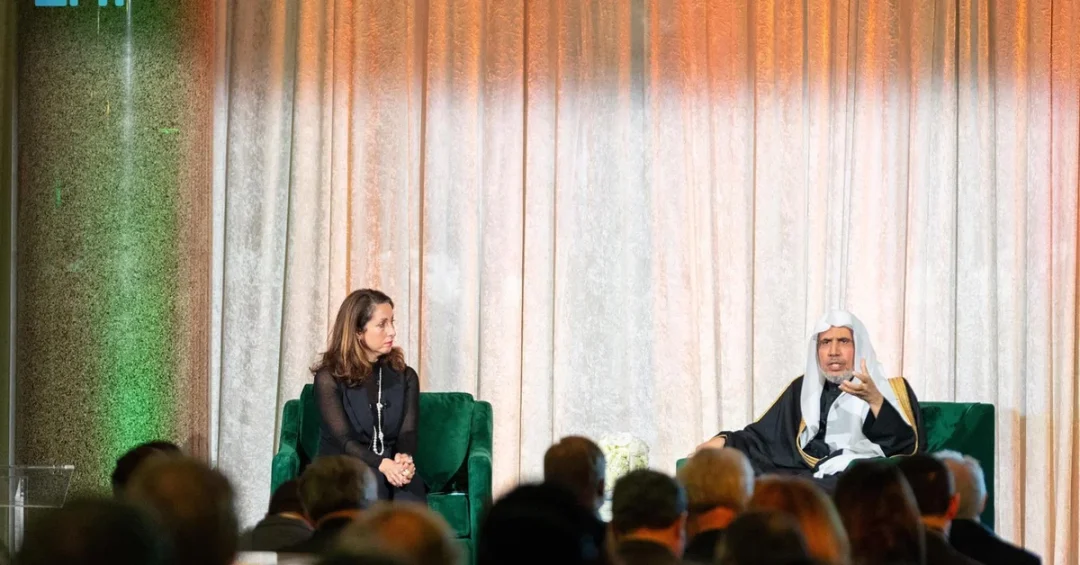
Sheikh Dr. Mohammed Al-Issa, Secretary-General of the Muslim World League (MWL) and Chairman of the Organization of Muslim Scholars, held a series of high-level dialogues with members of the United States Congress, leaders of research centers, and policymakers in Washington, according to the Saudi Press Agency (SPA). The meetings, reported on December 9, 2024, focused on the MWL’s core objectives, including promoting peace, interfaith harmony, and cooperation among nations. Dr. Al-Issa also chaired a meeting of the Council of Islamic Leaders in North and South America, an initiative established under the MWL, which has adopted the Charter of Makkah as a scientific framework and roadmap for training imams across the Americas. The discussions underscored Saudi Arabia’s consistent stance on the Palestinian cause, with Dr. Al-Issa reiterating that the two-state solution is the only fair and viable path to peace.
The engagement in Washington reflects the MWL’s growing role as a bridge between the Islamic world and Western policymakers. Dr. Al-Issa’s dialogue with US Congress members and thought leaders is part of a broader effort to foster mutual understanding and counter extremism. By emphasizing Islam’s core values of peace and harmony, the MWL seeks to build alliances that support regional stability and global coexistence. The meeting with the Council of Islamic Leaders in the Americas further highlights the MWL’s commitment to empowering religious scholars and promoting moderate Islam. This visit comes at a time of heightened international attention on the Middle East, making the MWL’s message of peace and cooperation particularly timely.
Context and Background
Why has the Muslim World League become such a pivotal player in international diplomacy? Founded in 1962, the MWL is a Mecca-based non-governmental organization that represents Muslim communities worldwide. Under the leadership of Sheikh Dr. Mohammed Al-Issa, who also chairs the Organization of Muslim Scholars, the MWL has intensified its outreach to Western nations, emphasizing dialogue and shared values. The Charter of Makkah, adopted in 2019, serves as a foundational document that promotes religious tolerance, women’s rights, and interfaith cooperation. It has been endorsed by leading Islamic scholars and is increasingly used as a training tool for imams, particularly in the Americas.
The Council of Islamic Leaders in North and South America, established under the MWL’s initiative, is a key vehicle for implementing the Charter’s principles. By adopting the Charter as both a scientific framework and a roadmap, the Council aims to equip imams with the knowledge and skills to guide their communities toward moderation and peaceful coexistence. This initiative aligns with Saudi Arabia’s broader efforts to promote a moderate, forward-looking Islam that rejects extremism. The timing of Dr. Al-Issa’s visit to Washington is significant, as it follows a series of regional developments that have renewed focus on the Palestinian issue and the need for a just and lasting peace.
Key Details of the Washington Dialogues
What specific issues were addressed during these high-level meetings? According to SPA, Dr. Al-Issa engaged in open dialogue with several members of the US Congress, as well as leaders from research centers and policymakers. The discussions covered a wide range of topics related to the MWL’s objectives, including the importance of fostering friendship and cooperation among nations to counter ideas that promote conflict and divisiveness. Dr. Al-Issa highlighted Islam’s core values, which advocate for peace and harmony among diverse communities, and underscored the critical role that religious scholars from various faiths play in supporting peace efforts and combating extremism.
A central focus of the conversations was the Palestinian cause. Dr. Al-Issa emphasized that the Palestinian issue is a central concern of international importance, particularly within the Arab and Islamic communities. He asserted that true peace cannot be achieved without addressing the situation in Palestine and reiterated Saudi Arabia’s unwavering and consistent stance on the issue. He stressed that the two-state solution is the only fair and viable path to peace, and that realizing this solution necessitates rejecting all extremist ideologies that hinder progress. This message resonates with the MWL’s broader mission to promote justice and reconciliation.
In addition to the congressional meetings, Dr. Al-Issa chaired a meeting of the Council of Islamic Leaders in North and South America. The Council, which was established under the MWL’s initiative, has adopted the Charter of Makkah as both a scientific framework and a roadmap for training imams across the Americas. This meeting provided an opportunity to review the Council’s progress and plan future activities, including educational programs and interfaith initiatives. The Council’s work is seen as a model for how Islamic organizations can contribute to social cohesion and counter radicalization in diverse societies.
International and Regional Impact
How do these dialogues influence global perceptions of Saudi Arabia and the Islamic world? Dr. Al-Issa’s engagement with US Congress members and policymakers signals a deepening of ties between the MWL and Western institutions. By presenting Islam as a religion of peace and advocating for cooperation, the MWL helps to counter negative stereotypes and build trust. This is particularly important in the United States, where misconceptions about Islam can fuel polarization. The meetings also reinforce Saudi Arabia’s role as a leader in promoting moderate Islam and supporting international peace efforts. The emphasis on the Palestinian cause highlights the Kingdom’s consistent advocacy for a just resolution, which resonates with many in the Arab and Islamic world.
Regionally, the MWL’s activities contribute to stability by promoting dialogue and rejecting extremism. The Council of Islamic Leaders in the Americas serves as a bridge between Muslim communities and broader society, fostering integration and mutual respect. By training imams to uphold the principles of the Charter of Makkah, the Council helps to prevent radicalization and encourages civic engagement. This aligns with Saudi Arabia’s Vision 2030, which seeks to promote a moderate and tolerant society at home and abroad. The MWL’s efforts are also in line with international calls for interfaith dialogue and conflict resolution, making it a valuable partner for governments and civil society organizations.
Economic and Strategic Significance
What strategic advantages does this engagement bring to Saudi Arabia and its global partnerships? The MWL’s outreach to US policymakers strengthens diplomatic and economic ties between Saudi Arabia and the United States. By fostering a positive image of the Kingdom and its religious institutions, the MWL supports efforts to attract investment and promote tourism, key pillars of Vision 2030. Moreover, the MWL’s focus on moderation and peace can help to create a stable environment conducive to economic growth. The discussions in Washington also open channels for collaboration on counterterrorism and deradicalization, areas where Saudi Arabia has significant expertise.
Furthermore, the MWL’s work with the Council of Islamic Leaders in the Americas enhances Saudi Arabia’s soft power. By supporting Muslim communities abroad and promoting the Charter of Makkah, the Kingdom demonstrates its commitment to global Muslim affairs. This can lead to greater goodwill and cooperation in international forums. The emphasis on the Palestinian cause also aligns with Saudi Arabia’s foreign policy objectives, reinforcing its leadership in the Arab and Islamic world. As the MWL continues to expand its outreach, it contributes to a more interconnected and peaceful world, which benefits all nations.
Vision 2030 Alignment
How does the MWL’s mission intersect with Saudi Arabia’s Vision 2030? Vision 2030 aims to transform Saudi Arabia into a diversified economy and a hub for international cooperation. A key component is the promotion of a moderate, tolerant Islam that rejects extremism. The MWL, under Dr. Al-Issa’s leadership, is a vital instrument in achieving this goal. By spreading the message of the Charter of Makkah and training imams, the MWL helps to shape a positive image of Islam and Saudi Arabia. This supports Vision 2030’s objectives of enhancing the Kingdom’s global standing and attracting visitors and investors.
The MWL’s dialogues with US Congress members and its work with the Council of Islamic Leaders in the Americas exemplify the proactive diplomacy that Vision 2030 encourages. They showcase Saudi Arabia’s commitment to peace, dialogue, and cooperation, values that are essential for a prosperous future. As the Kingdom continues to implement Vision 2030, the MWL’s role will only grow, serving as a bridge between cultures and a champion of moderate Islam. In doing so, it contributes to a more stable and harmonious world, reflecting the aspirations of the Saudi leadership and the global community.
20 Questions
Q1. Who is Sheikh Dr. Mohammed Al-Issa?
A1. Sheikh Dr. Mohammed Al-Issa is the Secretary-General of the Muslim World League and Chairman of the Organization of Muslim Scholars. He is a prominent Saudi religious leader known for promoting moderate Islam and interfaith dialogue globally.
Q2. What is the Muslim World League?
A2. The Muslim World League is a Mecca-based international non-governmental organization founded in 1962. It represents Muslim communities worldwide and promotes Islamic values of peace, tolerance, and cooperation.
Q3. What was the purpose of Dr. Al-Issa’s visit to Washington?
A3. Dr. Al-Issa visited Washington to engage in dialogue with US Congress members, research center leaders, and policymakers. The discussions focused on the MWL’s objectives, including peace, interfaith harmony, and the Palestinian cause.
Q4. What is the Charter of Makkah?
A4. The Charter of Makkah is a document adopted in 2019 that promotes religious tolerance, women’s rights, and interfaith cooperation. It serves as a framework for training imams and guiding Muslim communities.
Q5. What is the Council of Islamic Leaders in North and South America?
A5. It is a council established under the MWL’s initiative to unite Islamic leaders in the Americas. It has adopted the Charter of Makkah as a roadmap for training imams and promoting moderate Islam.
Q6. How does the MWL view the Palestinian cause?
A6. The MWL considers the Palestinian cause a central international concern. It asserts that true peace cannot be achieved without addressing Palestine and supports the two-state solution as the only fair path.
Q7. What is Saudi Arabia’s stance on the Palestinian issue?
A7. Saudi Arabia consistently supports the Palestinian cause and advocates for a two-state solution. It rejects extremist ideologies that hinder peace and calls for a just resolution.
Q8. Why is interfaith dialogue important to the MWL?
A8. Interfaith dialogue fosters mutual understanding and cooperation among diverse communities. It helps counter extremism and promotes peace, aligning with the MWL’s core values.
Q9. What role do religious scholars play in peace efforts?
A9. Religious scholars influence their communities and can promote tolerance and reconciliation. They are crucial in combating extremism and supporting regional peace initiatives.
Q10. How does the MWL counter extremism?
A10. The MWL promotes moderate Islam through education, training imams, and advocating the Charter of Makkah. It engages in dialogue to reject extremist ideologies and foster peace.
Q11. What is the significance of the MWL’s engagement with US Congress?
A11. It strengthens ties between the Islamic world and US policymakers, builds trust, and counters misconceptions about Islam. It also supports Saudi Arabia’s diplomatic and strategic interests.
Q12. How does the MWL’s work align with Vision 2030?
A12. Vision 2030 promotes a moderate, tolerant society. The MWL’s efforts to spread peace and train imams support this goal and enhance Saudi Arabia’s global image.
Q13. What are the core values of Islam highlighted by Dr. Al-Issa?
A13. Dr. Al-Issa emphasizes peace, harmony, and cooperation among diverse communities. He advocates for friendship among nations and rejects conflict and divisiveness.
Q14. How does the MWL support Muslim communities in the Americas?
A14. Through the Council of Islamic Leaders, the MWL provides training for imams based on the Charter of Makkah. It promotes integration and moderate Islamic teachings.
Q15. What is the two-state solution?
A15. The two-state solution proposes an independent Palestinian state alongside Israel. It is widely supported internationally as the fairest path to peace in the region.
Q16. Why is the Palestinian issue central to the MWL’s mission?
A16. The Palestinian cause is a key concern for Arab and Islamic communities. The MWL believes lasting peace requires a just resolution, aligning with its broader peace advocacy.
Q17. How does the MWL promote moderation?
A17. The MWL educates imams, disseminates the Charter of Makkah, and engages in interfaith dialogue. It rejects extremism and encourages peaceful coexistence.
Q18. What impact do these dialogues have on global perceptions of Saudi Arabia?
A18. They present Saudi Arabia as a leader in moderate Islam and peace efforts. This enhances the Kingdom’s image and supports its international partnerships.
Q19. What future initiatives might the MWL undertake?
A19. The MWL may expand training programs, interfaith conferences, and partnerships with Western institutions. It aims to further promote peace and counter extremism globally.
Q20. How can other nations benefit from the MWL’s work?
A20. Other nations can benefit from the MWL’s expertise in deradicalization and interfaith dialogue. Its initiatives foster global stability and cooperation, aligning with shared goals of peace.
Reader Feedback
We value your thoughts. Please share your feedback on this article.
Your feedback helps us improve our coverage.
Related articles
 KSrelief Masam Project Clears 808 Explosives in Yemen in a Week
 Saudi Vice Foreign Minister Meets ILO Deputy Director-General
 Saudi Minister Launches Sustainability Innovation Week at COP16
 Saudi Arabia Marks Anti-Corruption Day with Major Achievements
 Saudi Shura Council, Cambodian Senate Hold Official Talks
 Zanzibar Health Minister Appreciates Kingdom’s Humanitarian Support, Commends WAMY