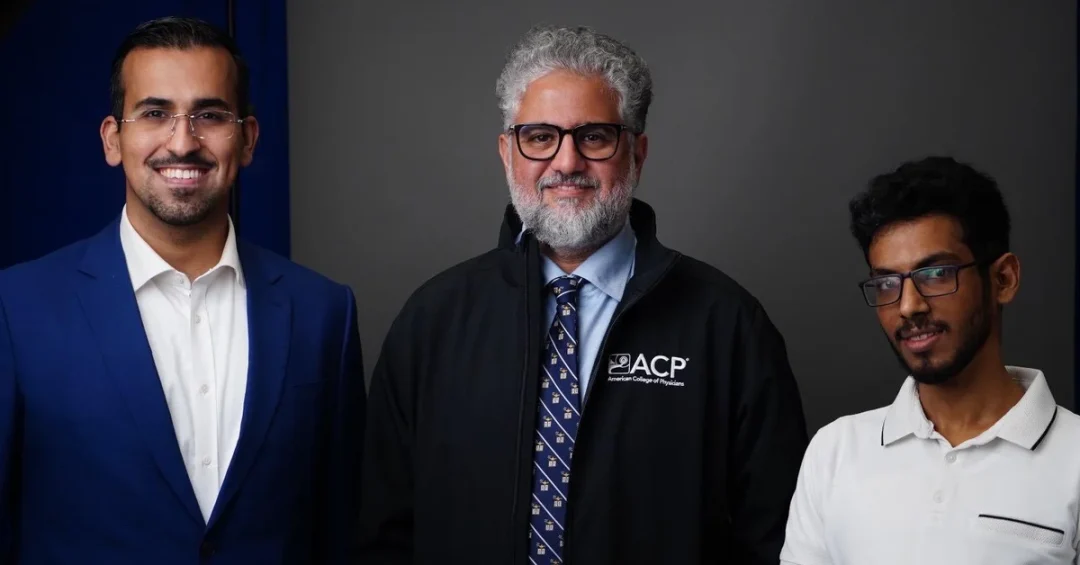
The King Faisal Specialist Hospital and Research Center (KFSHRC) represented the Kingdom of Saudi Arabia at the Doctor’s Dilemma competition during the American College of Physicians’ annual meeting in the US state of Louisiana, competing against 60 teams from prestigious medical schools across the United States and Canada. The Saudi delegation, led by internal medicine resident Dr. Fahad bin Mohammed Al Jabir, delivered an interactive scientific presentation that showcased the high competency of Saudi medical professionals and strengthened the Kingdom’s presence on one of the world’s most prominent platforms in internal medicine, according to the Saudi Press Agency.
What does it say about Saudi Arabia’s healthcare ambitions that a single hospital can stand shoulder to shoulder with North America’s most elite academic medical institutions? The participation, announced via official Saudi channels, reflects a deliberate and sustained national effort to position the Kingdom’s clinicians, researchers, and health institutions within the global medical mainstream. It also underscores how far Saudi healthcare has traveled in a relatively short period, moving from a focus on domestic capacity building to active engagement in international scientific exchange. The Doctor’s Dilemma format, known for its rapid-fire diagnostic challenges, rewards depth of clinical knowledge, teamwork, and composure under pressure, qualities that the KFSHRC team demonstrated on a stage watched closely by the global internal medicine community.
Context and Background
How did a hospital founded in the Saudi capital grow into an institution whose residents are invited to compete alongside the best medical trainees in North America? The King Faisal Specialist Hospital and Research Center, established in Riyadh in 1975, has evolved into a quaternary care and academic medical center with a national and increasingly international mandate. Its participation in the American College of Physicians’ annual meeting is not an isolated event but part of a broader pattern of Saudi health institutions integrating into global professional bodies, presenting research, and benchmarking their performance against international peers.
The Doctor’s Dilemma competition is a longstanding feature of the American College of Physicians’ annual meeting, one of the largest gatherings of internal medicine physicians in the world. Teams from leading medical schools in the United States and Canada compete in a quiz-show format that tests diagnostic reasoning, clinical knowledge, and rapid decision-making. For a Saudi team to enter that arena, it must first meet rigorous eligibility and selection standards, then hold its own against institutions with centuries of academic tradition. The presence of 60 competing teams from prestigious North American medical schools makes the field exceptionally deep and the exposure correspondingly valuable.
Dr. Fahad bin Mohammed Al Jabir, an internal medicine resident at KFSHRC, led the team and described the experience as exceptional. He emphasized the unwavering support of the Kingdom’s leadership for the healthcare sector and its commitment to empowering national talents to participate in global medical forums, thereby enhancing the Kingdom’s reputation across various fields. His comments, carried by the Saudi Press Agency, frame the competition as both a professional milestone and a national undertaking, one that connects individual clinical excellence to the country’s wider development trajectory.
Key Details
What exactly did the KFSHRC team bring to the competition floor in Louisiana? According to the Saudi Press Agency, the team delivered an interactive scientific presentation that highlighted the high competency of Saudi medical professionals. The format allowed the Saudi residents to engage directly with peers and judges, demonstrating not only factual recall but the clinical reasoning and communication skills that define modern internal medicine practice. The presentation served as a platform to showcase the depth of training available within the Kingdom’s academic medical centers.
The competition itself drew teams from across the United States and Canada, representing medical schools with long-established internal medicine programs. For KFSHRC, the value of participation lies in the exchange: exposure to different diagnostic approaches, exposure to the latest evidence-based practices, and the opportunity to build professional relationships that can translate into future collaboration, research partnerships, and faculty exchanges. These intangible benefits often prove as important as any single result on the competition floor.
The recognition surrounding KFSHRC provides important context for the team’s selection and performance. The hospital was ranked first in the Middle East and Africa and 15th globally on the 2025 list of the world’s top 250 academic medical centers. It was also recognized as the most valuable healthcare brand in Saudi Arabia and the Middle East, according to the 2024 Brand Finance rankings. In addition, Newsweek magazine ranked it among the world’s best smart hospitals for 2025. Together, these independent assessments place KFSHRC within a global tier of academic medical centers, which helps explain why its residents are competitive in international forums.
How does a single competition appearance translate into durable national capability? The answer lies in the pipeline. Residents who compete internationally return with expanded networks, sharper clinical judgment, and a clearer sense of where Saudi practice stands relative to global benchmarks. Many go on to lead departments, mentor junior physicians, and contribute to research that improves outcomes at home. The competition is therefore best understood as one node in a larger system of talent development that includes residency training, fellowship programs, board certification, and continuing medical education.
International and Regional Impact
What signal does Saudi participation in an American College of Physicians event send to the wider region? It positions the Kingdom as a source of medical expertise rather than only a consumer of it, a shift with implications for how the Middle East is perceived in global health circles. Saudi clinicians are increasingly visible at international conferences, in peer-reviewed journals, and in collaborative research networks. Each appearance builds a cumulative reputation that benefits not only KFSHRC but also the Kingdom’s broader health ecosystem and its ambition to become a regional hub for specialized care.
For the United States and Canada, the presence of a Saudi team in a competition dominated by North American medical schools creates a natural point of professional contact. Medicine is a field where international collaboration is routine, and competitions such as Doctor’s Dilemma function as informal diplomacy. They allow physicians from different systems to compare notes on training, patient safety, and evidence-based practice. These interactions can lead to joint research, visiting scholar arrangements, and shared protocols, all of which raise the standard of care in participating countries.
Regionally, the achievement resonates beyond Saudi borders. KFSHRC’s ranking as first in the Middle East and Africa on the 2025 list of the world’s top 250 academic medical centers gives the institution a leadership role that carries expectations. Patients from across the Gulf and the wider region seek treatment at the hospital, and its international visibility reinforces confidence in the quality of care available within the Kingdom. That confidence supports medical tourism objectives and strengthens the case for cross-border referrals and partnerships.
Economic and Strategic Significance
Why should a medical competition matter to economists and policymakers? Health is a foundational sector in Saudi Arabia’s diversification agenda, and a strong academic medical center generates value in multiple ways. It attracts talent, supports research and development, anchors specialized service lines, and reduces the need for citizens to travel abroad for complex care. When a Saudi institution earns global recognition, it enhances the country’s ability to retain and attract highly skilled professionals, which in turn supports the growth of knowledge-intensive industries.
The recognition from Brand Finance, which named KFSHRC the most valuable healthcare brand in Saudi Arabia and the Middle East in 2024, illustrates the commercial dimension of clinical excellence. Brand value in healthcare reflects trust, patient volumes, service quality, and the ability to form partnerships. A strong brand also supports the hospital’s capacity to negotiate collaborations, attract philanthropic and investment interest, and participate in international clinical trials. These activities contribute to the broader economic goal of building a diversified, innovation-driven economy.
Strategically, the participation aligns with the Kingdom’s emphasis on international engagement and knowledge transfer. By sending its best residents to compete and present on global platforms, Saudi Arabia signals that it is open to learning, benchmarking, and contributing. This posture supports diplomatic and commercial relationships across North America, Europe, and Asia. It also reinforces the message that Saudi modernization is not limited to infrastructure but extends to human capital, institutions, and the quality of public services.
Vision 2030 Alignment
How does a resident-led team in Louisiana connect to the sweeping national transformation underway in Saudi Arabia? Vision 2030 places human capability at the center of its agenda, and the Health Sector Transformation Program explicitly aims to improve quality, access, and efficiency while building a competitive health system. KFSHRC’s international participation is a direct expression of these goals: it demonstrates that Saudi training programs can produce physicians who perform at global standards and that national institutions can hold their own in international scientific settings.
The hospital’s recognition as the top academic medical center in the Middle East and Africa, its ranking among the world’s best smart hospitals by Newsweek for 2025, and its status as the region’s most valuable healthcare brand together form a platform for the next phase of development. That phase includes expanding research capacity, adopting digital health technologies, advancing precision medicine, and training the next generation of Saudi physicians and scientists. Each international appearance by a team such as Dr. Al Jabir’s adds credibility to these efforts and helps attract the partnerships and talent required to sustain them.
What comes next is continued participation, deeper collaboration, and the translation of competition experience into everyday clinical practice. The Kingdom’s leadership has consistently emphasized support for the healthcare sector and the empowerment of national talent, and institutions like KFSHRC are expected to remain at the forefront of that effort. As Saudi Arabia continues its journey toward a diversified, knowledge-based economy, the visibility of its clinicians on the world stage will serve as one of the clearest indicators of progress, and the Doctor’s Dilemma appearance in Louisiana stands as a confident statement of intent.
20 Questions
Q1. What competition did KFSHRC participate in?
A1. KFSHRC participated in the Doctor’s Dilemma competition at the American College of Physicians’ annual meeting, held in the US state of Louisiana, according to the Saudi Press Agency.
Q2. How many teams competed in the event?
A2. Sixty teams from prestigious medical schools in the United States and Canada competed in the Doctor’s Dilemma competition, making the field exceptionally deep and competitive.
Q3. Who led the KFSHRC team?
A3. The team was led by internal medicine resident Dr. Fahad bin Mohammed Al Jabir, who described the experience as exceptional and highlighted the Kingdom’s support for healthcare.
Q4. What did the KFSHRC team present?
A4. The team delivered an interactive scientific presentation that showcased the high competency of Saudi medical professionals and boosted the Kingdom’s presence on a prominent internal medicine platform.
Q5. Where was the American College of Physicians meeting held?
A5. The annual meeting took place in the US state of Louisiana, where medical teams from across North America gathered for the competition and scientific sessions.
Q6. What is the Doctor’s Dilemma competition?
A6. It is a longstanding quiz-style competition at the American College of Physicians’ annual meeting that tests diagnostic reasoning, clinical knowledge, and rapid decision-making among internal medicine teams.
Q7. How did Dr. Al Jabir describe the experience?
A7. He described it as exceptional and emphasized the unwavering support of the Kingdom’s leadership for the healthcare sector and its commitment to empowering national talents in global medical forums.
Q8. What ranking did KFSHRC achieve in 2025?
A8. KFSHRC was ranked first in the Middle East and Africa and 15th globally on the 2025 list of the world’s top 250 academic medical centers.
Q9. What did Brand Finance recognize in 2024?
A9. Brand Finance recognized KFSHRC as the most valuable healthcare brand in Saudi Arabia and the Middle East in its 2024 rankings, reflecting trust and institutional strength.
Q10. What did Newsweek recognize about KFSHRC?
A10. Newsweek magazine ranked KFSHRC among the world’s best smart hospitals for 2025, highlighting its adoption of digital health technologies and advanced clinical systems.
Q11. Why is international participation important for Saudi healthcare?
A11. It benchmarks Saudi clinicians against global peers, builds professional networks, supports knowledge transfer, and enhances the Kingdom’s reputation in medicine and science.
Q12. What does the competition format reward?
A12. The format rewards depth of clinical knowledge, teamwork, composure under pressure, and the ability to apply evidence-based reasoning quickly in challenging diagnostic scenarios.
Q13. How does this participation support Vision 2030?
A13. It advances the Health Sector Transformation Program by demonstrating global-standard training, empowering national talent, and strengthening the Kingdom’s knowledge-based economy.
Q14. What benefits do residents gain from competing internationally?
A14. Residents gain expanded networks, sharper clinical judgment, exposure to global best practices, and a clearer understanding of how Saudi practice compares with international benchmarks.
Q15. How does KFSHRC’s ranking affect regional healthcare?
A15. Its top ranking in the Middle East and Africa reinforces confidence in the quality of care available in the Kingdom and supports medical tourism and cross-border partnerships.
Q16. What role does the Saudi Press Agency play in this story?
A16. The Saudi Press Agency reported the participation, providing official confirmation of the team’s involvement and the recognition surrounding KFSHRC’s global standing.
Q17. What economic value does a strong academic medical center create?
A17. It attracts talent, supports research and development, anchors specialized services, reduces overseas treatment needs, and contributes to a diversified, innovation-driven economy.
Q18. How does the competition function as informal diplomacy?
A18. It brings physicians from different systems together to compare training and practice, creating opportunities for joint research, visiting scholar arrangements, and shared clinical protocols.
Q19. What recognition has KFSHRC received for smart hospital technology?
A19. Newsweek ranked it among the world’s best smart hospitals for 2025, reflecting its investment in digital health, data systems, and advanced patient care technologies.
Q20. What does the future hold for Saudi medical participation abroad?
A20. Continued participation, deeper collaboration, and translation of competition experience into clinical practice are expected as the Kingdom advances its healthcare and Vision 2030 goals.
Reader Feedback
We value your thoughts. Please share your feedback on this article.
Your feedback helps us improve our coverage.