


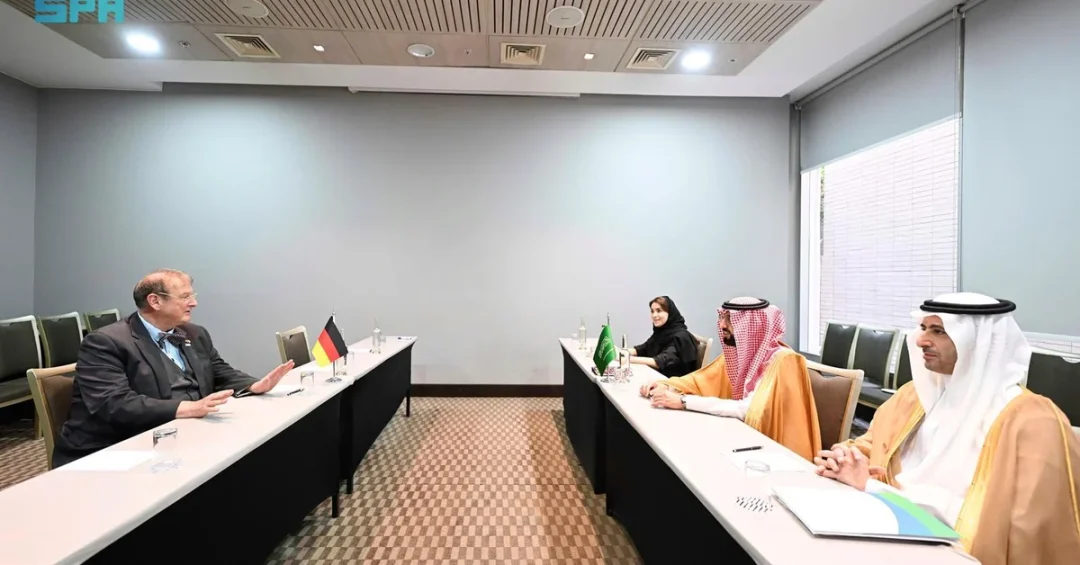
The Chief Executive Officer of the Saudi Food and Drug Authority (SFDA), Dr. Hisham S. Aljadhey, met with the President of the German Federal Institute for Risk Assessment (BfR), Dr. Andreas Hensel, in Santiago, Chile, on the sidelines of the 6th International Heads of Food Agencies Forum (IHFAF), held from April 9 to 11, 2025, according to a press release issued by the SFDA and reported by the Saudi Press Agency (SPA). The high-level meeting underscored the Kingdom of Saudi Arabia’s growing role in global food safety governance and its commitment to building strong international partnerships that protect consumers and strengthen regulatory systems.
The meeting in Santiago represents another concrete step in Saudi Arabia’s broader strategy to deepen cooperation with leading regulatory authorities worldwide. It also reflects the Kingdom’s proactive approach to food safety, risk assessment, and quality assurance, priorities that are central to both public health and the ambitious economic and social transformation underway through Saudi Vision 2030. As global food supply chains become more complex, such bilateral engagements are essential for ensuring that products reaching Saudi markets meet the highest international standards.
Context and Background
Why does a meeting between two food safety regulators in Chile matter for consumers and businesses thousands of miles away? The answer lies in the increasingly interconnected nature of global food trade and the shared challenges that national authorities face in safeguarding public health. The 6th International Heads of Food Agencies Forum, hosted in Chile from April 9 to 11, 2025, brought together leaders from some of the world’s most influential regulatory bodies to discuss common priorities, exchange best practices, and build frameworks for cooperation.
The Saudi Food and Drug Authority, established in 2003, is the Kingdom’s primary regulatory body responsible for ensuring the safety of food, drugs, medical devices, and other products. Under the leadership of Dr. Hisham S. Aljadhey, the SFDA has significantly expanded its international engagement, positioning Saudi Arabia as a key player in global regulatory affairs. The authority’s participation in the IHFAF is part of a deliberate effort to align Saudi regulatory practices with the highest international benchmarks, while also sharing the Kingdom’s own experiences and innovations.
The German Federal Institute for Risk Assessment (BfR) is one of Europe’s leading scientific institutions dedicated to food safety, consumer health protection, and risk communication. Its president, Dr. Andreas Hensel, is a recognized expert in risk assessment and has been instrumental in shaping Germany’s science-based approach to food safety. The meeting between Dr. Aljadhey and Dr. Hensel therefore brought together two influential voices in the field, creating an opportunity to discuss how regulatory authorities can work more effectively with the private sector and with one another.
Key Details of the Bilateral Meeting
According to the SFDA press release, the discussions between the two leaders focused on the crucial role of regulatory authorities in forging robust partnerships with the private sector. Both sides emphasized that such collaboration is vital for developing and improving product quality, driving progress, and enhancing operational efficiency within a unified system that prioritizes product safety. This approach recognizes that regulators and businesses share a common interest in ensuring that food and other products are safe, reliable, and of high quality.
The meeting also centered on the importance of establishing an integrated regulatory system underpinned by reliable reference data, accurate quality testing, and transparent regulatory frameworks. This foundation, the officials noted, will foster greater confidence in regulatory information, improve the capacity for proactive risk assessment and response, and ultimately enhance product reliability and food safety. In practical terms, this means investing in scientific infrastructure, data sharing mechanisms, and clear communication channels that allow regulators to act quickly and decisively when risks emerge.
Beyond the bilateral meeting with the BfR president, officials from the SFDA delegation conducted a series of other bilateral meetings with counterpart regulatory bodies. These included the UK Food Standards Agency (FSA), the Chilean Food Safety and Quality Agency (ACHIPIA), the New Zealand Food Safety branch of the Ministry of Primary Industries (NZFS), and the Portuguese Economic and Food Safety Authority (ASAE). These engagements were geared towards fostering cooperation frameworks and enhancing integrated work with pertinent international organizations to serve food quality and safety objectives.
International and Regional Impact
How do these bilateral meetings translate into tangible benefits for Saudi Arabia and its international partners? The answer lies in the practical outcomes that flow from regulatory cooperation. By building strong relationships with agencies such as the BfR, the FSA, ACHIPIA, NZFS, and ASAE, the SFDA is creating channels for information exchange, joint research, and mutual recognition of standards. This can facilitate trade, reduce duplication of testing and inspection, and ensure that safety standards are consistently applied across borders.
For Saudi Arabia, these partnerships support the Kingdom’s efforts to diversify its economy and expand its role as a global logistics and trade hub. Safe, high-quality food imports are essential for a growing population and for the tourism sector, which is a key pillar of Vision 2030. At the same time, Saudi exports of food and agricultural products can benefit from greater international confidence in the Kingdom’s regulatory system. The meetings in Chile therefore have implications that extend well beyond the conference room, contributing to food security, economic resilience, and public health.
On a regional level, Saudi Arabia’s active participation in international forums such as the IHFAF reinforces its leadership role in the Middle East and beyond. By aligning with best practices from Europe, Asia, and Latin America, the SFDA is helping to raise the bar for food safety across the region. This is particularly important as the Gulf region imports a large share of its food and as consumers become more aware of safety and quality issues. The Kingdom’s proactive stance sends a positive signal to trading partners and investors alike.
Economic and Strategic Significance
What economic value can be derived from regulatory diplomacy? The strategic significance of the SFDA’s international engagements should not be underestimated. A robust and internationally recognized regulatory system is a cornerstone of a diversified economy. It enables smoother trade flows, reduces the risk of border rejections or recalls, and protects the reputation of Saudi products in global markets. For international companies looking to invest in or export to Saudi Arabia, a transparent and science-based regulatory environment is a major consideration.
Moreover, the exchange of expertise with institutions like the BfR can help the SFDA adopt cutting-edge risk assessment methodologies. This includes the use of big data, artificial intelligence, and advanced analytics to identify emerging risks and respond rapidly. Such capabilities are essential for managing the complexities of modern food supply chains, which often involve multiple countries and processing stages. By investing in these areas, Saudi Arabia is not only protecting its consumers but also building a knowledge-based economy that values innovation and efficiency.
The meetings with the UK FSA, Chilean ACHIPIA, New Zealand NZFS, and Portuguese ASAE also open doors for collaboration on specific issues such as antimicrobial resistance, food fraud, and climate-related risks to food safety. These are global challenges that no single country can address alone. Saudi Arabia’s willingness to engage multilaterally demonstrates its commitment to being part of the solution, enhancing its standing as a responsible and influential member of the international community.
Vision 2030 Alignment
How does this meeting fit into the broader vision for Saudi Arabia’s future? Saudi Vision 2030, launched in 2016 under the leadership of Crown Prince Mohammed bin Salman, aims to transform the Kingdom into a diversified, innovative, and globally connected economy. Health and safety are integral to this vision, as they underpin quality of life, economic productivity, and international competitiveness. The SFDA’s efforts to strengthen international partnerships directly support these goals by ensuring that food and pharmaceutical products are safe, thereby protecting public health and fostering trust.
Furthermore, Vision 2030 emphasizes the importance of government efficiency and transparency. The SFDA’s focus on integrated regulatory systems, reliable data, and transparent frameworks aligns perfectly with this objective. By collaborating with leading agencies such as the BfR, the SFDA is not only improving its own operations but also contributing to the global harmonization of regulatory standards. This, in turn, makes Saudi Arabia a more attractive destination for investment and a more reliable partner in trade.
In the final analysis, the meeting between Dr. Hisham S. Aljadhey and Dr. Andreas Hensel in Santiago is a clear example of how Saudi Arabia is actively shaping the future of food safety. It reflects the Kingdom’s determination to learn from the best, share its own expertise, and build a safer, healthier world. As Vision 2030 continues to unfold, such international engagements will remain a vital component of Saudi Arabia’s journey toward a prosperous and sustainable future.
20 Questions
Q1. Who represented the Saudi Food and Drug Authority at the meeting in Chile?
A1. The SFDA was represented by its Chief Executive Officer, Dr. Hisham S. Aljadhey. He led the delegation at the 6th International Heads of Food Agencies Forum in Santiago.
Q2. Who is the President of the German Federal Institute for Risk Assessment?
A2. Dr. Andreas Hensel is the President of the German Federal Institute for Risk Assessment (BfR). He met with Dr. Aljadhey to discuss food safety cooperation.
Q3. Where and when did the meeting take place?
A3. The meeting took place in Santiago, Chile, on April 10, 2025. It was held on the sidelines of the 6th International Heads of Food Agencies Forum.
Q4. What is the International Heads of Food Agencies Forum?
A4. The IHFAF is a global platform that brings together leaders of national food safety agencies. The 6th meeting was held in Chile from April 9 to 11, 2025.
Q5. What was the main focus of the discussions between the SFDA and BfR?
A5. They discussed the role of regulatory authorities in partnering with the private sector. They also focused on integrated regulatory systems, reliable data, and transparent frameworks.
Q6. Why is collaboration with the private sector important for food safety?
A6. Collaboration helps improve product quality, drive progress, and enhance operational efficiency. It ensures a unified system that prioritizes product safety.
Q7. What other regulatory bodies did the SFDA meet with in Chile?
A7. The SFDA met with the UK Food Standards Agency, Chilean ACHIPIA, New Zealand Food Safety, and the Portuguese ASAE. These meetings aimed to foster cooperation frameworks.
Q8. What is the UK Food Standards Agency?
A8. The FSA is the UK government body responsible for food safety and hygiene. It works to protect public health and consumer interests in food.
Q9. What is ACHIPIA?
A9. ACHIPIA is the Chilean Food Safety and Quality Agency. It is responsible for coordinating food safety policies and risk assessment in Chile.
Q10. What is the New Zealand Food Safety branch?
A10. It is part of New Zealand’s Ministry for Primary Industries. It manages food safety regulations and standards for New Zealand’s food exports and domestic market.
Q11. What is the Portuguese Economic and Food Safety Authority?
A11. ASAE is Portugal’s national authority for economic and food safety. It monitors and enforces compliance with food safety and economic regulations.
Q12. How does this meeting benefit Saudi Arabia?
A12. It strengthens Saudi Arabia’s regulatory system through international cooperation. This enhances food safety, facilitates trade, and supports Vision 2030 goals.
Q13. What is the role of the SFDA in Saudi Arabia?
A13. The SFDA regulates food, drugs, medical devices, and other products. It ensures their safety, quality, and efficacy for the Saudi market.
Q14. What is the BfR’s area of expertise?
A14. The BfR is Germany’s scientific agency for risk assessment in food safety and consumer health. It provides expert opinions and research to support regulatory decisions.
Q15. How does this meeting align with Vision 2030?
A15. Vision 2030 aims for a diversified economy and high quality of life. Strong food safety systems support public health, trade, and international confidence in Saudi products.
Q16. What are the key elements of an integrated regulatory system?
A16. It includes reliable reference data, accurate quality testing, and transparent regulatory frameworks. These elements build confidence and enable proactive risk assessment.
Q17. Why is proactive risk assessment important?
A17. It helps identify and address potential food safety risks before they become widespread. This protects consumers and prevents economic disruptions.
Q18. What are the potential outcomes of these bilateral meetings?
A18. They can lead to joint research, information sharing, and mutual recognition of standards. This facilitates trade and improves food safety globally.
Q19. How does Saudi Arabia’s participation in IHFAF reflect its global role?
A19. It shows Saudi Arabia’s commitment to international cooperation and leadership in food safety. The Kingdom is actively contributing to global regulatory standards.
Q20. What is the significance of the SFDA’s engagement with multiple agencies?
A20. It demonstrates a comprehensive approach to international cooperation. By engaging with diverse agencies, the SFDA gains broad insights and builds a robust network for food safety.
Reader Feedback
We value your thoughts. Please share your feedback on this article.
Your feedback helps us improve our coverage.