


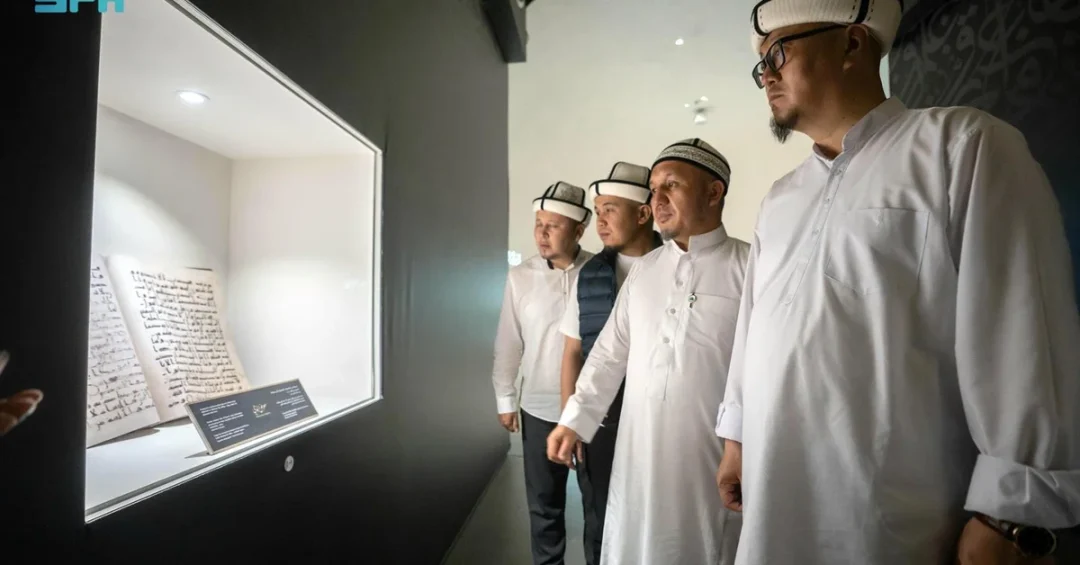
The Mufti of Kyrgyzstan, Sheikh Abdulaziz Zakirov, accompanied by Deputy Mufti Sheikh Joldoshbek Abdyldaev, visited the Hira Cultural District in Makkah on December 8, 2024, according to the Saudi Press Agency (SPA). The visit highlighted the growing international engagement with one of the Kingdom’s most prominent cultural and religious destinations, which continues to attract Muslim scholars and visitors from around the world. During their tour, the Kyrgyz religious leaders expressed admiration for the district’s rich presentation of cultural and cognitive heritage, particularly at the Revelation Exhibition, and praised its efforts in fostering awareness and understanding among visitors from around the world.
The visit underscores the Kingdom of Saudi Arabia’s expanding role as a global hub for Islamic scholarship, cultural exchange, and spiritual tourism, all central pillars of Vision 2030. As the custodian of the Two Holy Mosques, Saudi Arabia has invested heavily in projects like the Hira Cultural District to enrich the experience of the millions of pilgrims and visitors who travel to Makkah each year. Could this visit signal a new chapter in Saudi-Kyrgyz cultural and religious cooperation? It certainly reflects the Kingdom’s commitment to sharing Islamic heritage with the global Muslim community.
Context and Background
What makes the Hira Cultural District a must-visit destination for Islamic scholars and pilgrims alike? Located near the Cave of Hira in Makkah, where the Prophet Muhammad (peace be upon him) received the first revelation, the district was developed as part of Saudi Arabia’s broader efforts to preserve and promote Islamic heritage. It offers visitors an immersive journey through the history of the revelation, featuring state-of-the-art exhibitions, educational displays, and cultural attractions that bring the early days of Islam to life. The district is a key component of the Kingdom’s strategy to enhance the spiritual and cultural experience of the millions of pilgrims performing Hajj and Umrah annually.
The visit by Sheikh Abdulaziz Zakirov and Sheikh Joldoshbek Abdyldaev comes amid growing ties between Saudi Arabia and Kyrgyzstan, a Central Asian nation with a predominantly Muslim population. Kyrgyzstan, like many countries in the region, has looked to Saudi Arabia for religious guidance and cultural partnership. The Mufti’s visit is a testament to the Kingdom’s soft power and its ability to foster interfaith and intercultural dialogue. It also reflects the success of Saudi Arabia’s Vision 2030 in diversifying its international partnerships beyond traditional allies, reaching out to nations across Asia and beyond.
The Hira Cultural District itself is a marvel of modern design and historical reverence. It includes the Revelation Exhibition, which uses cutting-edge technology to narrate the story of the first revelation, as well as a library, a museum, and spaces for cultural events. Since its opening, the district has welcomed dignitaries, scholars, and tourists from numerous countries, cementing its status as a global landmark. The visit by the Kyrgyz Mufti is the latest in a series of high-profile engagements that highlight the district’s international appeal and Saudi Arabia’s leadership in Islamic affairs.
Key Details of the Visit
What did the Kyrgyz delegation experience during their tour of the Hira Cultural District? According to the Saudi Press Agency, Sheikh Zakirov and Sheikh Abdyldaev were particularly impressed by the Revelation Exhibition, which presents the story of the first revelation in a compelling and educational manner. They praised the district’s efforts in fostering awareness and understanding among visitors from around the world, noting that such initiatives are vital for bridging cultural gaps and deepening appreciation for Islamic history. The delegation also had the opportunity to explore other sections of the district, including its cultural and educational facilities.
The visit was more than a ceremonial tour; it was an opportunity for cultural exchange and mutual learning. The Kyrgyz Mufti’s admiration for the district’s presentation of heritage reflects the universal appeal of Islamic history and the importance of preserving it for future generations. Sheikh Zakirov’s comments highlighted the role of such projects in promoting a better understanding of Islam among diverse audiences. The Saudi hosts, in turn, showcased the Kingdom’s commitment to maintaining the highest standards in cultural preservation and visitor experience.
This visit also underscores the strong bilateral relations between Saudi Arabia and Kyrgyzstan. The two countries have cooperated in various fields, including trade, investment, and cultural exchange. The Kyrgyz Mufti’s trip to Makkah is likely to further strengthen these ties, opening doors for future collaboration in religious education, pilgrimage facilitation, and cultural heritage projects. It is a clear example of how Saudi Arabia’s Vision 2030 is not just an economic blueprint but also a cultural and diplomatic strategy that reaches across continents.
International and Regional Impact
How does a visit by a Central Asian religious leader to Makkah resonate beyond the immediate region? For Kyrgyzstan, a country with a rich Islamic heritage and a secular government, the Mufti’s visit to Saudi Arabia signals a deepening of religious and cultural ties with the Islamic world’s heartland. It provides Kyrgyz Muslims with a direct connection to the sources of their faith and reinforces the importance of Makkah as a unifying symbol for Muslims worldwide. For Saudi Arabia, it is another affirmation of its leadership role in the Muslim world and its ability to attract influential figures from diverse backgrounds.
Regionally, the visit could encourage other Central Asian nations to strengthen their engagement with Saudi Arabia. Countries like Kazakhstan, Uzbekistan, and Tajikistan share similar cultural and religious landscapes and may see the benefits of partnering with the Kingdom on heritage and education initiatives. Saudi Arabia’s Vision 2030 includes a strong focus on expanding cultural diplomacy, and visits like this one serve as powerful tools for building bridges and fostering goodwill. The Kingdom’s investment in world-class cultural infrastructure, such as the Hira Cultural District, makes it an attractive destination for international delegations seeking to connect with Islamic heritage.
Economic and Strategic Significance
What economic and strategic benefits does Saudi Arabia derive from such high-profile visits? The Hira Cultural District is part of a broader effort to diversify the Kingdom’s economy by boosting religious tourism. Pilgrims performing Hajj and Umrah often extend their stays to explore cultural and historical sites, contributing to the local economy through spending on hotels, restaurants, and transportation. By enhancing the spiritual journey with rich cultural experiences, Saudi Arabia aims to increase the length of stay and expenditure of visitors, aligning with Vision 2030’s goal of growing the tourism sector’s contribution to GDP.
Strategically, the visit reinforces Saudi Arabia’s position as the leader of the Islamic world. By hosting influential religious figures like the Mufti of Kyrgyzstan, the Kingdom demonstrates its commitment to serving Muslims globally and its capacity to facilitate meaningful cultural and religious exchanges. This soft power projection is invaluable in a world where geopolitical influence is increasingly shaped by cultural and religious diplomacy. It also supports the Kingdom’s efforts to promote a moderate and tolerant image of Islam, countering extremism and fostering global harmony.
Vision 2030 Alignment
How does the Hira Cultural District fit into Saudi Arabia’s Vision 2030? The district is a flagship project under the Vision’s cultural and tourism pillars, designed to enrich the pilgrimage experience and showcase the Kingdom’s Islamic heritage to the world. Vision 2030 seeks to increase the number of Umrah and Hajj pilgrims to 30 million annually by 2030, and cultural attractions like the Hira Cultural District are key to achieving that goal. By providing educational and spiritual value, the district enhances the overall experience for visitors, encouraging them to return and recommend the journey to others.
Moreover, the visit by the Kyrgyz Mufti exemplifies the Vision’s emphasis on international cooperation and cultural exchange. Saudi Arabia is not only opening its doors to the world but also actively engaging with global partners to share its heritage and learn from others. This approach aligns with the Vision’s goal of creating a vibrant society and a thriving economy. As the Kingdom continues to develop projects like the Hira Cultural District, it cements its role as a global leader in cultural preservation and religious tourism, fulfilling the aspirations of Vision 2030 and beyond.
20 Questions
Q1. Who visited the Hira Cultural District in Makkah?
A1. The Mufti of Kyrgyzstan, Sheikh Abdulaziz Zakirov, accompanied by Deputy Mufti Sheikh Joldoshbek Abdyldaev, visited the Hira Cultural District in Makkah on December 8, 2024.
Q2. What is the Hira Cultural District?
A2. The Hira Cultural District is a heritage landmark in Makkah near the Cave of Hira, featuring the Revelation Exhibition and other cultural attractions that showcase Islamic history and traditions.
Q3. Why did the Kyrgyz Mufti visit the Hira Cultural District?
A3. The visit was part of efforts to explore Islamic heritage and foster cultural understanding. The Mufti expressed admiration for the district’s presentation of cultural and cognitive heritage.
Q4. What did the Kyrgyz delegation praise about the district?
A4. They praised the district’s efforts in fostering awareness and understanding among visitors from around the world, particularly at the Revelation Exhibition.
Q5. What is the Revelation Exhibition?
A5. The Revelation Exhibition is a key attraction within the Hira Cultural District that uses modern technology to narrate the story of the first revelation to the Prophet Muhammad (peace be upon him).
Q6. When did the visit take place?
A6. The visit took place on December 8, 2024, according to the Saudi Press Agency.
Q7. Who is Sheikh Abdulaziz Zakirov?
A7. Sheikh Abdulaziz Zakirov is the Mufti of Kyrgyzstan, the highest Islamic authority in the country, responsible for religious guidance and fatwas.
Q8. Who is Sheikh Joldoshbek Abdyldaev?
A8. Sheikh Joldoshbek Abdyldaev is the Deputy Mufti of Kyrgyzstan, assisting the Mufti in religious affairs and representing the country’s Muslim community.
Q9. What is the significance of the Hira Cultural District for pilgrims?
A9. It offers pilgrims and visitors a deeper understanding of Islamic history, enhancing their spiritual journey and providing educational value about the early days of Islam.
Q10. How does this visit reflect Saudi-Kyrgyz relations?
A10. It highlights growing cultural and religious ties between Saudi Arabia and Kyrgyzstan, showcasing the Kingdom’s role in fostering international Islamic cooperation and exchange.
Q11. What is Vision 2030’s role in the Hira Cultural District?
A11. Vision 2030 aims to enrich the pilgrimage experience and boost religious tourism. The Hira Cultural District is a key project supporting these goals by attracting more visitors.
Q12. How does the Hira Cultural District contribute to Saudi Arabia’s economy?
A12. By attracting pilgrims and tourists, it boosts local spending on hospitality, transportation, and retail, supporting economic diversification under Vision 2030.
Q13. What other attractions are in the Hira Cultural District?
A13. The district includes a library, museum, cultural event spaces, and the Revelation Exhibition, all designed to educate visitors about Islamic heritage.
Q14. Why is the Cave of Hira important?
A14. The Cave of Hira is where the Prophet Muhammad (peace be upon him) received the first revelation from God, making it a significant site in Islamic history.
Q15. How does the visit promote moderate Islam?
A15. By showcasing Saudi Arabia’s commitment to preserving authentic Islamic heritage and fostering understanding, the visit supports the Kingdom’s message of tolerance and moderation.
Q16. What impact could this visit have on Central Asian Muslims?
A16. It strengthens their connection to Makkah and Islamic heritage, encouraging cultural exchange and religious tourism between Central Asia and Saudi Arabia.
Q17. How does Saudi Arabia benefit from hosting such visits?
A17. It reinforces Saudi Arabia’s leadership in the Islamic world, enhances its soft power, and promotes cultural diplomacy, aligning with Vision 2030 objectives.
Q18. What is the Saudi Press Agency’s role in reporting this visit?
A18. The Saudi Press Agency (SPA) is the official news agency of Saudi Arabia, providing accurate and timely information about events and developments in the Kingdom.
Q19. Are there plans for similar cultural exchanges in the future?
A19. While specific plans are not announced, Saudi Arabia continues to welcome international delegations, fostering cultural and religious exchanges as part of its Vision 2030 strategy.
Q20. How can international visitors experience the Hira Cultural District?
A20. International visitors can include the Hira Cultural District in their pilgrimage itinerary. It is open to the public and offers guided tours and exhibitions in multiple languages.
Reader Feedback
We value your thoughts. Please share your feedback on this article.
Your feedback helps us improve our coverage.
Related articles
 Tourism Development Fund Awarded EFQM ‘Qualified’ Certification
 Red Sea Global Signs Deal for Private Jet Terminal at RSI
 Madinah Ranks Among World’s Top 100 City Destinations
 Cruise Saudi Launches Inaugural Ship AROYA at Jeddah Port
 PIF Launches Adeera to Build Saudi Hotel Brands
 Madinah Ranks First Among Saudi Cities in Global Tourism Index