


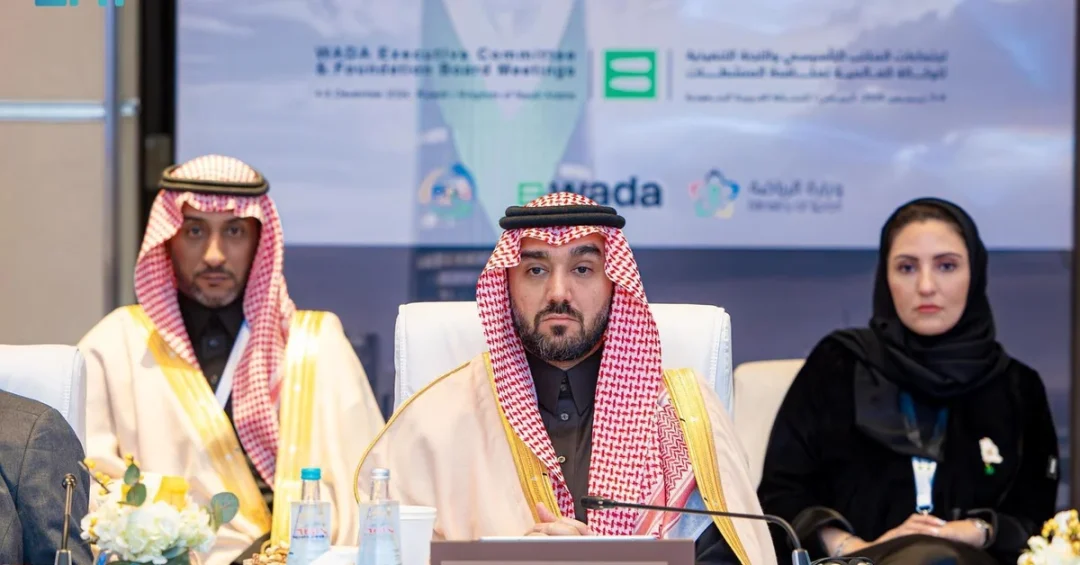
Saudi Arabia’s Minister of Sport and President of the Saudi Olympic and Paralympic Committee, Prince Abdulaziz bin Turki bin Faisal, attended the conclusion of the World Anti-Doping Agency (WADA) Foundation Board meetings in Riyadh on December 6, 2024. The two-day gathering, held under his patronage and organized by the Ministry of Sports, brought together global sports leaders to discuss the future of clean sport. Chaired by WADA President Witold Bańka, the meeting reviewed international anti-doping policies, enforcement mechanisms, the 2025–2029 strategic plan, and endorsed the 2025 budget. The event underscores Saudi Arabia’s growing role in shaping international sports governance and its commitment to integrity in athletics.
Hosting WADA’s Foundation Board in Riyadh signals the Kingdom’s deepening engagement with global sport beyond competition. As the nation prepares to host major events like the 2034 FIFA World Cup and the 2029 Asian Winter Games, its leadership in anti-doping reflects a broader strategy to promote fair play and athlete welfare. The presence of Prince Abdulaziz bin Turki bin Faisal, a member of the WADA Foundation Board, highlights Saudi Arabia’s active participation in setting standards that protect the spirit of sport. This meeting also aligns with Vision 2030’s aim to elevate Saudi Arabia’s international standing through sports diplomacy and soft power.
Context and Background
How did Saudi Arabia come to host such a pivotal anti-doping summit? The Kingdom’s selection as the venue for the WADA Foundation Board meetings reflects its rising influence in global sports administration. Over the past decade, Saudi Arabia has invested heavily in sports infrastructure, hosted prestigious tournaments, and taken on leadership roles in organizations like the International Olympic Committee and WADA. The Ministry of Sports, under Prince Abdulaziz’s guidance, has prioritized clean sport as a cornerstone of its strategy. This meeting follows previous WADA gatherings in Europe and North America, marking a shift toward broader geographic representation in anti-doping governance.
The two-day event, held under the patronage of Prince Abdulaziz, who also serves as president of the Saudi Olympic and Paralympic Committee and a member of the WADA Foundation Board, was organized by the Ministry of Sports. It convened WADA’s executive committee and foundation board to address critical issues facing global sport. Discussions centered on updates to international policies, trends in doping control, and the enhancement of enforcement mechanisms. The endorsement of the 2025 budget and the strategic plan for 2025–2029 were key outcomes, setting the direction for WADA’s operations in the coming years. Saudi Arabia’s role as host facilitated dialogue among member states and underscored its commitment to ethical sport.
WADA, established in 1999, is an international independent agency composed of the sports movement and governments. Its Foundation Board is the supreme decision-making body, responsible for approving policies and budgets. The meeting in Riyadh allowed members to deliberate on the evolving challenges of doping, including advances in testing technology and the need for harmonized regulations across borders. By hosting this event, Saudi Arabia reinforced its position as a responsible global partner in the fight against doping, aligning with its Vision 2030 goal to be a hub for international sporting events and governance.
Key Details
What exactly was discussed behind closed doors? According to the Saudi Press Agency (SPA), the meeting covered updates on international policies and trends, the development of mechanisms regarding the enforcement of anti-doping regulations, and the strategic plan for 2025–2029. The Foundation Board also endorsed WADA’s 2025 budget, ensuring the agency has the resources to continue its mission. Chaired by WADA President Witold Bańka, the sessions included presentations from experts and discussions on how to strengthen compliance and education worldwide. Prince Abdulaziz’s patronage highlighted Saudi Arabia’s dedication to these efforts.
The strategic plan for 2025–2029 is particularly significant as it will guide WADA’s priorities for the next five years. It likely focuses on enhancing testing capabilities, increasing athlete education, and leveraging technology to detect emerging doping methods. The endorsement of the budget ensures that WADA can invest in research, development, and global outreach. The meeting also provided a platform for member states to share best practices and challenges, fostering a collaborative approach to anti-doping. Saudi Arabia’s Ministry of Sports played a key role in facilitating these discussions, demonstrating its organizational capacity and diplomatic outreach.
Prince Abdulaziz bin Turki bin Faisal’s dual role as Minister of Sport and WADA Foundation Board member exemplifies Saudi Arabia’s integrated approach to sports leadership. His participation in the meetings allowed the Kingdom to contribute directly to decision-making processes. The event also included side meetings and networking opportunities, further strengthening Saudi Arabia’s relationships with international sports federations and anti-doping organizations. The conclusion of the meetings was marked by a sense of unity and shared purpose, with participants reaffirming their commitment to clean sport.
International and Regional Impact
How will this meeting influence the global fight against doping? The outcomes of the Riyadh meetings will resonate far beyond the Kingdom’s borders. By endorsing the 2025–2029 strategic plan and budget, WADA members have set a clear roadmap for the future. The discussions on enforcement mechanisms may lead to more robust compliance monitoring and sanctions for non-compliant nations. For the Middle East, Saudi Arabia’s leadership in this area sets a positive example, encouraging neighboring countries to strengthen their own anti-doping frameworks. The meeting also highlighted the importance of regional cooperation in safeguarding the integrity of sport.
Internationally, the event reinforces WADA’s global reach and the importance of inclusive governance. Having a major sporting nation like Saudi Arabia host the Foundation Board sends a message that anti-doping is a shared responsibility across all regions. It also provides an opportunity for WADA to engage with stakeholders in the Gulf and beyond. The presence of Prince Abdulaziz and other high-ranking officials underscores the political will to combat doping. This meeting could pave the way for increased collaboration between WADA and Middle Eastern sports organizations, leading to more coordinated efforts in testing, education, and prevention.
Regionally, the meeting aligns with Saudi Arabia’s broader sports diplomacy strategy. The Kingdom has been actively bidding for and hosting major events, from Formula 1 to the Dakar Rally, and has invested in sports infrastructure and athlete development. By taking a leading role in anti-doping, Saudi Arabia enhances its reputation as a trusted host and a responsible global citizen. This, in turn, can attract more international events and partnerships, contributing to the growth of the sports sector and the economy. The meeting also provided a platform for Saudi sports officials to network with global counterparts, fostering future collaborations.
Economic and Strategic Significance
What does hosting WADA’s meetings mean for Saudi Arabia’s economy and strategic goals? The event brings tangible and intangible benefits. Directly, it stimulates the local economy through hospitality, transportation, and event services. More importantly, it showcases Saudi Arabia’s capability to organize high-level international conferences, reinforcing its status as a premier destination for business and sports tourism. This aligns with Vision 2030’s objective to diversify the economy and increase non-oil revenue. The meeting also strengthens Saudi Arabia’s soft power, as it positions the Kingdom as a constructive partner in global governance.
Strategically, involvement in WADA’s decision-making processes gives Saudi Arabia a voice in shaping rules that affect its athletes and sports industry. As the Kingdom invests in elite sports and hosts major tournaments, ensuring a clean and fair competitive environment is paramount. By contributing to anti-doping policies, Saudi Arabia can help protect the integrity of its investments and the reputation of its athletes. Furthermore, the meeting facilitates knowledge transfer and capacity building, as Saudi officials learn from international best practices. This can lead to improved domestic anti-doping programs and greater awareness among athletes and support staff.
The economic impact extends to the broader sports ecosystem. Saudi Arabia is developing sports as a key sector under Vision 2030, with targets to increase sports participation and create jobs. A strong anti-doping framework is essential for the credibility of this ecosystem. International events like the WADA meetings attract media attention and visitors, promoting Saudi Arabia as a modern, dynamic country. They also signal to investors and partners that the Kingdom is committed to transparency and integrity, which are crucial for long-term economic partnerships. Thus, the meeting contributes to both immediate economic activity and long-term strategic positioning.
Vision 2030 Alignment
How does this event fit into Saudi Arabia’s Vision 2030? The hosting of the WADA Foundation Board meetings is a clear manifestation of Vision 2030’s goals to enhance international engagement and promote sports as a pillar of societal development. Vision 2030 emphasizes the importance of sports in improving quality of life, fostering national pride, and diversifying the economy. By leading in anti-doping, Saudi Arabia demonstrates its commitment to ethical sport, which is essential for attracting global events and inspiring youth. The Ministry of Sports, under Prince Abdulaziz’s leadership, has been instrumental in translating these goals into action, as evidenced by this successful meeting.
Furthermore, the event supports Vision 2030’s aim to position Saudi Arabia as a global hub for sports and entertainment. The Kingdom’s investment in sports infrastructure, such as stadiums and training facilities, is complemented by its efforts to uphold integrity. This holistic approach ensures that Saudi Arabia is not only a host but also a leader in shaping the future of sport. The WADA meetings also provided an opportunity to showcase Saudi hospitality and organizational excellence, reinforcing the Kingdom’s image as a welcoming and forward-looking nation. As Saudi Arabia continues to host major events, its role in anti-doping will remain central to its sports strategy and its vision for a prosperous future.
20 Questions
Q1. What was the main purpose of the WADA Foundation Board meetings in Riyadh?
A1. The meetings aimed to discuss international anti-doping policies, enforcement mechanisms, the 2025–2029 strategic plan, and to endorse the 2025 budget, bringing together global sports leaders to advance clean sport.
Q2. Who chaired the WADA Foundation Board meetings?
A2. The meetings were chaired by WADA President Witold Bańka, who led discussions on key anti-doping issues and strategic priorities for the agency’s future.
Q3. Who attended the meetings on behalf of Saudi Arabia?
A3. Prince Abdulaziz bin Turki bin Faisal, Minister of Sport, President of the Saudi Olympic and Paralympic Committee, and member of the WADA Foundation Board, attended and patronized the event.
Q4. Where were the meetings held?
A4. The meetings were held in Riyadh, Saudi Arabia, organized by the Ministry of Sports, marking the first time WADA’s Foundation Board convened in the Kingdom.
Q5. What is the WADA Foundation Board?
A5. The WADA Foundation Board is the supreme decision-making body of the World Anti-Doping Agency, responsible for approving policies, budgets, and strategic direction for global anti-doping efforts.
Q6. What was the 2025–2029 strategic plan about?
A6. The strategic plan outlines WADA’s priorities for the next five years, focusing on enhancing testing, education, technology, and global cooperation to combat doping in sport.
Q7. Why did WADA endorse a 2025 budget?
A7. The 2025 budget ensures WADA has the necessary resources to implement its programs, including research, testing, and educational initiatives, to maintain the integrity of sport worldwide.
Q8. How does Saudi Arabia benefit from hosting this meeting?
A8. Hosting showcases Saudi Arabia’s organizational capabilities, enhances its global sports leadership, and aligns with Vision 2030 goals to diversify the economy and promote sports diplomacy.
Q9. What are the implications for anti-doping in the Middle East?
A9. The meeting sets a positive example for regional cooperation, encouraging neighboring countries to strengthen their anti-doping frameworks and collaborate on clean sport initiatives.
Q10. What role did the Ministry of Sports play?
A10. The Ministry of Sports organized the event, facilitated discussions, and demonstrated Saudi Arabia’s commitment to international sports governance and ethical competition.
Q11. How does this event align with Vision 2030?
A11. It supports Vision 2030’s objectives to increase international engagement, promote sports as a societal pillar, and position Saudi Arabia as a global hub for sports and entertainment.
Q12. What specific topics were discussed regarding enforcement?
A12. Discussions covered updates on international policies, trends in doping control, and mechanisms to enhance enforcement, including compliance monitoring and sanctions for non-compliance.
Q13. Who else attended the meetings?
A13. WADA executive committee members, foundation board representatives, and international sports officials attended, along with Saudi sports leaders and experts in anti-doping.
Q14. What is the significance of Prince Abdulaziz’s membership on the WADA Foundation Board?
A14. His membership allows Saudi Arabia to contribute directly to global anti-doping decisions, reflecting the Kingdom’s active role in shaping international sports policies.
Q15. How will the outcomes affect Saudi athletes?
A15. The outcomes will lead to stronger anti-doping measures, ensuring fair competition and protecting the integrity of Saudi athletes competing domestically and internationally.
Q16. What economic benefits does hosting such events bring?
A16. It stimulates local hospitality, transportation, and event services, while also promoting sports tourism and showcasing Saudi Arabia as a capable host for major international gatherings.
Q17. What is WADA’s role in global sport?
A17. WADA leads the global fight against doping by setting standards, coordinating testing, and promoting education to ensure clean and fair competition across all sports.
Q18. How does this meeting contribute to Saudi Arabia’s sports diplomacy?
A18. It strengthens relationships with international sports bodies, enhances Saudi Arabia’s reputation as a responsible partner, and opens doors for future collaborations and event hosting.
Q19. What are the next steps after the meetings?
A19. WADA will implement the 2025–2029 strategic plan and budget, while Saudi Arabia will continue to support anti-doping efforts and integrate best practices into its sports programs.
Q20. Why is anti-doping important for Saudi Arabia’s sports ambitions?
A20. As Saudi Arabia hosts more major events, anti-doping ensures credibility, protects athletes, and upholds the integrity of competitions, which is essential for its Vision 2030 sports goals.
Reader Feedback
We value your thoughts. Please share your feedback on this article.
Your feedback helps us improve our coverage.
Related articles
 Belgian Rider Verwimp Wins Saudi Equestrian Federation Cup Class
 Equestrian Federation President Crowns Champions at Jump Saudi
 Mahd Sports Academy to Host First Intercontinental Championship
 POWER SLAP Debuts in Saudi Arabia at Riyadh Season
 Saudi Football Stadiums Enter Historic New Era
 Benzema: Saudi Arabia Will Be Ready for FIFA World Cup 2034™