


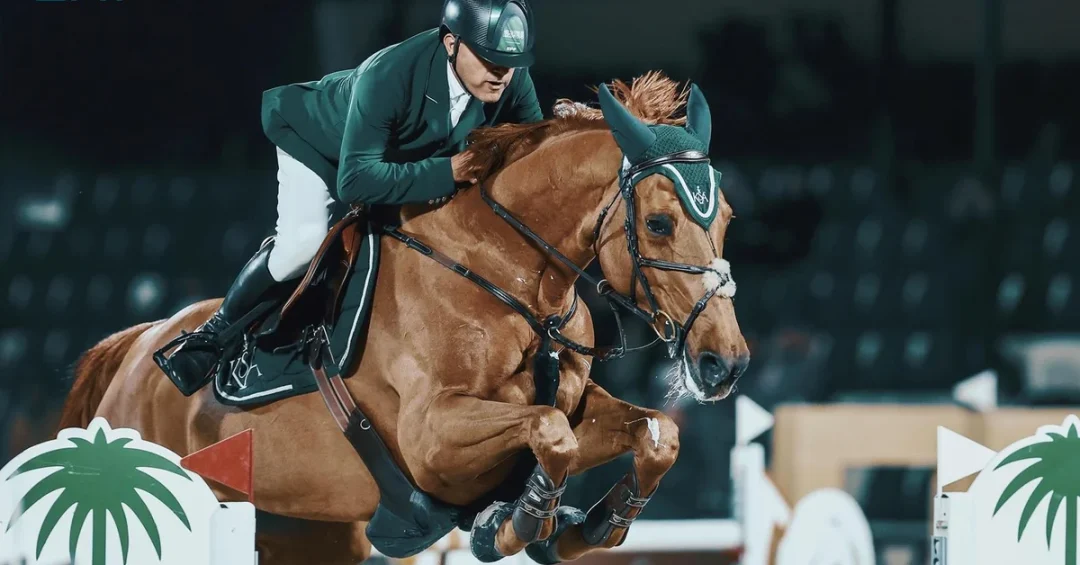
Prince Abdullah bin Fahd bin Abdullah, President of the Saudi Arabian Equestrian Federation (SAEF), crowned Saudi rider Ramzy Al-Duhami as the winner of the fourth round of qualifying for the 2025 Show Jumping World Cup during the opening week of the Jump Saudi International Championship, held at the Saudi Jumping venue in Al-Janadriyah, Riyadh. The official announcement, released via the Saudi Press Agency (SPA), confirmed that Al-Duhami delivered a commanding performance in the four-star, 1.55-meter class, finishing with a time of 43.56 seconds. German rider David Will took second place with a time of 44.23 seconds, while Saudi rider Abdullah Al-Sharbatly secured third with a time of 45.47 seconds. The event, organized under the patronage of the Saudi Arabian Equestrian Federation, marks another milestone in the Kingdom’s expanding role as a host of elite international equestrian sport. How does a single championship round in Riyadh connect to a much larger national story about sport, tourism, and global engagement?
The Jump Saudi International Championship has drawn a competitive field of riders from across Europe, the Middle East, and beyond, reflecting the growing international stature of Saudi Arabia’s equestrian calendar. The opening week alone featured multiple categories, including four-star and two-star competitions across varying heights and formats, from speed classes to jump-offs. The presence of riders such as Germany’s David Will, France’s Ines Joly and Marie Demonte, the UAE’s Sheikh Ali Al Nuaimi, and Iraq’s Zaid Al-Najefi underscores the championship’s appeal as a genuinely international fixture. For Saudi Arabia, the event is not merely a sporting occasion; it is a demonstration of organizational capability, world-class facilities, and a commitment to nurturing domestic talent alongside global stars. The results of the first week suggest that Saudi riders are increasingly competitive at the highest levels of the sport.
Context and Background
What does it take to build a world-class equestrian venue in the heart of Al-Janadriyah? The Saudi Jumping venue, located in the Al-Janadriyah area of Riyadh, has been developed as a dedicated facility capable of hosting international competitions under FEI regulations. Its emergence reflects a broader investment in sports infrastructure across the Kingdom, part of a strategic push to diversify the national economy and create new centers of excellence. The Saudi Arabian Equestrian Federation, led by Prince Abdullah bin Fahd bin Abdullah, has been instrumental in raising the profile of equestrian sports, from show jumping to endurance riding, and in aligning them with international standards. The federation’s work is supported by official Saudi channels, including the Ministry of Sport, which has prioritized the growth of a vibrant sports sector as part of Vision 2030.
Equestrianism holds a special place in Saudi culture, rooted in the Arabian Peninsula’s long history with horses and the enduring legacy of the Arabian breed. This cultural authenticity gives the Kingdom a natural advantage in the sport, but modern competition requires more than heritage. It demands professional coaching, high-performance programs, and regular exposure to top-tier events. The Jump Saudi International Championship serves exactly that purpose, offering Saudi riders the chance to compete against seasoned international opponents on home soil. The first week’s results, with Saudi riders claiming victories in multiple classes, indicate that these efforts are yielding tangible results. The championship also functions as a qualifying pathway for the 2025 Show Jumping World Cup, adding a layer of competitive significance for all participants.
Key Details
How did the competition unfold across the different classes? In the headline four-star, 1.55-meter class, Ramzy Al-Duhami’s time of 43.56 seconds was enough to secure first place and the fourth-round qualifier for the 2025 Show Jumping World Cup. David Will of Germany followed closely in second, while Abdullah Al-Sharbatly, a seasoned Saudi rider, took third. The 3rd round speed class for the four-star, 1.40-meter category saw French rider Ines Joly claim the title in 64.73 seconds, with Emirati rider Sheikh Ali Al Nuaimi in second and Germany’s David Will in third. These results highlight the depth of the field and the fine margins that separate the top competitors.
The second day of the championship opened with a speed class for the two-star, 1.25-meter category, where Iraqi rider Zaid Al-Najefi clinched first place with a time of 50.91 seconds. Saudi riders Mazen Al-Yousef and Abdulmalik Al-Hadi finished second and third, respectively, demonstrating the Kingdom’s strength in the lower-height divisions as well. In the second round, the ‘One Round and Jump-Off’ for the two-star, 1.45-meter category, Saudi rider Kamal Bahamdan secured first place with a time of 36.48 seconds. French rider Marie Demonte finished second, and Saudi rider Abdullah Ibrahim took third. The variety of formats and the consistent Saudi presence on the podium reflect a broad-based competitive program.
What role did the federation’s leadership play in the event? Prince Abdullah bin Fahd bin Abdullah personally crowned the winners, underscoring the Saudi Arabian Equestrian Federation’s hands-on commitment to the sport. His presence at the Al-Janadriyah venue signals the leadership’s recognition of equestrianism as both a cultural asset and a competitive arena. The federation has been working to expand the number of internationally ranked Saudi riders, and events like this provide crucial ranking points and experience. The championship also serves as a test event for the venue’s readiness to host larger competitions in the future, including potential FEI World Cup qualifiers and regional championships.
International and Regional Impact
Why does the participation of riders from Germany, France, the UAE, and Iraq matter beyond the scoreboard? Their presence turns the Jump Saudi International Championship into a meeting point for equestrian talent from multiple regions, fostering sporting diplomacy and people-to-people ties. For Saudi Arabia, hosting such a diverse field reinforces its position as a hub for international sport in the Middle East. It also provides a platform for cultural exchange, as visiting riders and teams experience Saudi hospitality and the Kingdom’s modern sporting infrastructure. The event aligns with the broader trend of Saudi Arabia attracting global sporting events, from football to motorsport, and integrating them into a year-round calendar.
Regionally, the strong showing by Emirati and Iraqi riders points to a growing equestrian ecosystem in the Middle East. The UAE’s Sheikh Ali Al Nuaimi and Iraq’s Zaid Al-Najefi are part of a new generation of regional competitors making their mark. Their success, alongside Saudi riders, suggests that the Middle East is becoming a competitive force in show jumping, not just a host region. This has implications for the sport’s global landscape, as more ranking points and qualifiers are held in the region. For Saudi Arabia, being at the center of this shift enhances its soft power and its ability to shape the future of equestrian sport.
Economic and Strategic Significance
How does a championship in Al-Janadriyah contribute to Saudi Arabia’s economic diversification? Sports tourism is a key pillar of the Kingdom’s strategy to attract international visitors and generate revenue beyond oil. Events like the Jump Saudi International Championship draw riders, teams, officials, and spectators, filling hotels, restaurants, and transport services. They also showcase the Kingdom’s ability to host professional events, which can lead to repeat business and larger tournaments. The Saudi Arabian Equestrian Federation’s efforts are part of a wider push by the Ministry of Sport to increase the sector’s contribution to GDP and create jobs. The championship’s media coverage, including via the Saudi Press Agency, amplifies this message to a global audience.
Strategically, equestrian sport aligns with Saudi Arabia’s desire to preserve cultural heritage while projecting modernity. The Arabian horse is a symbol of national identity, and its prominence in international competition reinforces the Kingdom’s brand. By investing in facilities, training, and events, Saudi Arabia is building a sustainable equestrian industry that can produce champions and host world-class competitions. The 2025 Show Jumping World Cup qualification adds an extra incentive for riders and sponsors, raising the stakes and the visibility of the sport. Over time, this could lead to more Saudi riders competing at the highest levels and more international events being hosted in the Kingdom.
Vision 2030 Alignment
How does the Jump Saudi International Championship reflect the goals of Vision 2030? The Vision, launched in 2016, seeks to diversify the economy, improve quality of life, and position Saudi Arabia as a global leader in various fields, including sport. Equestrianism touches on several of these objectives: it promotes a healthy, active lifestyle; it supports tourism and entertainment; and it enhances the Kingdom’s international image. The Saudi Arabian Equestrian Federation’s work, under the guidance of Prince Abdullah bin Fahd bin Abdullah, is a concrete example of how traditional sports can be modernized and integrated into the national development plan. The championship also contributes to the Quality of Life Program, one of Vision 2030’s executive programs, by providing recreational opportunities and fostering community engagement.
Looking ahead, the success of the first week of the Jump Saudi International Championship sets a positive tone for the rest of the season. With Saudi riders winning multiple classes and the federation’s leadership actively supporting the event, the Kingdom is well-positioned to build on this momentum. The 2025 Show Jumping World Cup qualifier adds a clear competitive objective, and the presence of international riders ensures that the standard remains high. As Saudi Arabia continues to invest in sports infrastructure and talent development, equestrianism will remain a proud symbol of its heritage and a dynamic part of its future. The championship at Al-Janadriyah is more than a competition; it is a statement of intent.
20 Questions
Q1. Who is the president of the Saudi Arabian Equestrian Federation?
A1. Prince Abdullah bin Fahd bin Abdullah serves as the president of the Saudi Arabian Equestrian Federation. He has been actively involved in promoting equestrian sports and officiated at the Jump Saudi International Championship, crowning the winners.
Q2. Which Saudi rider won the fourth round qualifying for the 2025 Show Jumping World Cup?
A2. Saudi rider Ramzy Al-Duhami won the fourth round qualifier, securing first place in the four-star, 1.55-meter class with a time of 43.56 seconds. His performance earned him the top spot on the podium.
Q3. Where was the Jump Saudi International Championship held?
A3. The championship was held at the Saudi Jumping venue in Al-Janadriyah, Riyadh. This dedicated facility has been developed to host international equestrian competitions under FEI regulations.
Q4. Who finished second in the four-star, 1.55-meter class?
A4. German rider David Will finished second with a time of 44.23 seconds. He was followed by Saudi rider Abdullah Al-Sharbatly, who took third place with a time of 45.47 seconds.
Q5. Who won the 3rd round speed class for the four-star, 1.40-meter category?
A5. French rider Ines Joly claimed the title with a time of 64.73 seconds. Emirati rider Sheikh Ali Al Nuaimi finished second, and German rider David Will took third place.
Q6. Which Iraqi rider won the two-star, 1.25-meter speed class?
A6. Iraqi rider Zaid Al-Najefi clinched first place with a time of 50.91 seconds. Saudi riders Mazen Al-Yousef and Abdulmalik Al-Hadi finished second and third, respectively.
Q7. Who won the two-star, 1.45-meter ‘One Round and Jump-Off’?
A7. Saudi rider Kamal Bahamdan secured first place with a time of 36.48 seconds. French rider Marie Demonte finished second, and Saudi rider Abdullah Ibrahim took third.
Q8. How many rounds of the championship were reported in the first week?
A8. The first week included multiple rounds across different categories, including the fourth round of World Cup qualifying, the 3rd round speed class, and the second day’s speed class and jump-off.
Q9. What is the significance of the 2025 Show Jumping World Cup qualifier?
A9. The qualifier allows riders to earn points toward participation in the 2025 Show Jumping World Cup. It attracts top international competitors and adds prestige to the championship.
Q10. Which countries were represented by riders in the championship?
A10. Riders from Saudi Arabia, Germany, France, the United Arab Emirates, and Iraq participated. This diverse field highlights the international appeal of the event.
Q11. What role does the Saudi Arabian Equestrian Federation play?
A11. The federation governs equestrian sports in Saudi Arabia, organizes competitions, supports rider development, and represents the Kingdom internationally. It works to raise standards and promote the sport.
Q12. How does the championship support Saudi Vision 2030?
A12. The championship supports Vision 2030 by promoting sports tourism, enhancing quality of life, and showcasing Saudi Arabia’s ability to host international events. It also preserves equestrian heritage.
Q13. What is the Al-Janadriyah venue known for?
A13. The Saudi Jumping venue in Al-Janadriyah is a modern equestrian facility designed for international competitions. It is part of Saudi Arabia’s growing sports infrastructure.
Q14. Who were the Saudi riders who finished on the podium in the two-star, 1.25-meter class?
A14. Mazen Al-Yousef finished second and Abdulmalik Al-Hadi finished third, both representing Saudi Arabia. Their performances show the depth of Saudi equestrian talent.
Q15. What was the time of the winner in the two-star, 1.45-meter jump-off?
A15. Kamal Bahamdan won with a time of 36.48 seconds. This fast time secured him first place in the ‘One Round and Jump-Off’ format.
Q16. How does hosting international riders benefit Saudi equestrianism?
A16. It raises the competitive level, provides Saudi riders with exposure to top international techniques, and fosters knowledge exchange. It also enhances the Kingdom’s reputation as a sporting destination.
Q17. What is the format of the ‘One Round and Jump-Off’ class?
A17. In this format, riders complete one round, and those with clear rounds proceed to a jump-off against the clock. The fastest clear round in the jump-off wins.
Q18. Which German rider finished on the podium in two classes?
A18. David Will finished second in the four-star, 1.55-meter class and third in the four-star, 1.40-meter speed class. His consistent performances earned him multiple podium finishes.
Q19. What does the Saudi Press Agency report about the event?
A19. The Saudi Press Agency reported the results and the crowning of winners by Prince Abdullah bin Fahd bin Abdullah. It confirmed the times and placements of all top finishers.
Q20. What is the outlook for Saudi equestrian sport following this championship?
A20. The strong Saudi performances and international participation suggest a bright future. Continued investment and hosting of events will likely produce more champions and elevate the sport’s profile.
Reader Feedback
We value your thoughts. Please share your feedback on this article.
Your feedback helps us improve our coverage.
Related articles
 Mahd Sports Academy to Host First Intercontinental Championship
 POWER SLAP Debuts in Saudi Arabia at Riyadh Season
 Saudi Football Stadiums Enter Historic New Era
 Benzema: Saudi Arabia Will Be Ready for FIFA World Cup 2034™
 Saudi Football Soars: 2034 World Cup Bid Sets FIFA Record
 Sport Ministry Revamps Saudi Sports Infrastructure