


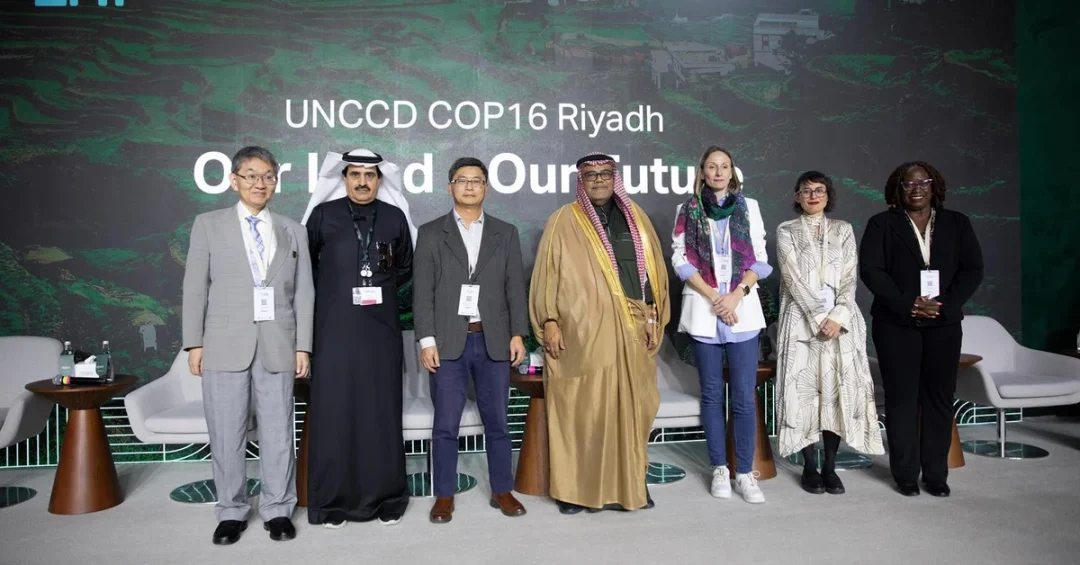
The CEO of the National Center for Meteorology and General Supervisor of the Sand and Dust Storm Warning Regional Center, Dr. Ayman bin Salem Ghulam, launched the “Global Partnership to Enhance Early Warning Systems for Sand and Dust Storms” initiative during the 16th Conference of the Parties (COP16) of the United Nations Convention to Combat Desertification (UNCCD) in Riyadh. The announcement, carried by the Saudi Press Agency, marks a significant step in international efforts to improve forecasting, mitigation, and response capabilities for one of the world’s most persistent and underreported environmental hazards.
The initiative brings together the four regional centers affiliated with the World Meteorological Organization (WMO): the Jeddah Regional Center, the Barcelona Center, the Beijing Center, and the Pan-America Center in Barbados. By fostering collaboration among these institutions, the partnership aims to strengthen global capacity to forecast dust and sand storms, reduce their impact on vulnerable communities, and enable more effective responses. The launch underscores Saudi Arabia’s growing role in environmental diplomacy and its commitment to addressing transboundary environmental challenges through coordinated international action.
Context and Background
Why do sand and dust storms remain one of the most underestimated environmental threats of our time? According to the World Meteorological Organization, sand and dust storms are a major environmental phenomenon that affects the lives of over 330 million people annually, including 14 percent of children worldwide. These storms originate primarily in arid and semi-arid regions, lifting vast quantities of mineral dust into the atmosphere and transporting it across continents. The health consequences are severe, ranging from respiratory illnesses to cardiovascular complications, while economic losses stem from disrupted transportation, reduced agricultural productivity, and damage to infrastructure.
The Kingdom of Saudi Arabia has long recognized the urgency of addressing this challenge. As a nation located at the heart of the Arabian Peninsula, Saudi Arabia is both a source and a recipient of dust storms, which frequently sweep across the region, affecting air quality, visibility, and public health. The establishment of the Sand and Dust Storm Warning Regional Center in Jeddah, under the umbrella of the National Center for Meteorology, reflects the Kingdom’s proactive stance in monitoring and mitigating these events. The center serves as a hub for data collection, analysis, and early warning dissemination, not only for Saudi Arabia but also for the broader region.
The 16th Conference of the Parties (COP16) of the United Nations Convention to Combat Desertification, hosted in Riyadh in December 2024, provided a fitting platform for the launch of this global partnership. COP16 brought together representatives from governments, international organizations, research institutions, and the private sector to address desertification, land degradation, and drought. Saudi Arabia’s hosting of this landmark event highlights its commitment to multilateral environmental action and its Vision 2030 goal of fostering a sustainable future. The launch of the Global Partnership initiative during COP16 signals a new chapter in international cooperation on sand and dust storm early warning systems.
Key Details of the Global Partnership Initiative
What exactly does the Global Partnership to Enhance Early Warning Systems for Sand and Dust Storms entail? At its core, the initiative seeks to improve global forecasting capabilities by facilitating the exchange of data and knowledge among the four WMO regional centers. These centers, located in Jeddah, Barcelona, Beijing, and Barbados, each possess unique expertise and observational networks. By linking them through a coordinated framework, the partnership aims to create a more seamless and responsive global early warning system. This includes sharing satellite data, ground-based observations, and atmospheric models to predict the onset, trajectory, and intensity of dust storms with greater accuracy.
Dr. Ayman bin Salem Ghulam emphasized that the initiative is not merely about technology but about saving lives and protecting livelihoods. Improved early warning systems enable communities, governments, and humanitarian agencies to take preemptive action, such as issuing health advisories, halting flights, or distributing protective equipment. The partnership also supports scientific research to better understand the drivers of dust storms, including climate change and land degradation. By investing in research, the initiative aims to develop more effective mitigation strategies and inform policy decisions at national and international levels.
To ensure the success of the initiative, the Kingdom of Saudi Arabia has committed $10 million over five years. This financial support, announced by Dr. Ghulam on behalf of the Saudi leadership, reflects the Kingdom’s dedication to environmental stewardship. The funds will be used to build capacity in developing countries, enhance data infrastructure, and facilitate collaborative projects among the partner centers. The commitment also sends a strong signal to other nations and organizations that Saudi Arabia is willing to invest in global public goods. Dr. Ghulam called on all countries, United Nations organizations, research institutions, and the private sector to join the partnership, stressing that addressing dust and sand storms requires joint efforts to achieve a more sustainable and healthier future for generations to come.
International and Regional Impact
How will this initiative reshape international cooperation on environmental challenges? The Global Partnership represents a notable shift from fragmented, regional responses to a unified global approach. Dust and sand storms do not respect national borders; a storm originating in the Sahara can affect air quality in Europe, while storms from the Arabian Peninsula can reach South Asia. By connecting the four WMO regional centers, the partnership creates a network that can track storms across continents and provide timely warnings to affected populations. This is particularly important for vulnerable regions in Africa, the Middle East, and Asia, where infrastructure and health systems may be less equipped to handle the consequences of severe dust events.
For Saudi Arabia, the initiative reinforces its position as a regional leader in environmental diplomacy. The Kingdom has already demonstrated its commitment through the Saudi Green Initiative and the Middle East Green Initiative, both of which aim to combat climate change, reduce land degradation, and increase vegetation cover. These initiatives align with the goals of the UNCCD and the broader Sustainable Development Goals. By launching the Global Partnership, Saudi Arabia is translating its domestic environmental priorities into international action, building bridges with other nations and international organizations. The partnership also complements the work of the WMO, which has long advocated for improved early warning systems as a cornerstone of disaster risk reduction.
Regionally, the initiative is expected to enhance the capabilities of the Jeddah Regional Center, which serves as a hub for the Middle East and North Africa. Improved forecasting and early warning will benefit countries across the region, many of which face similar challenges related to desertification and drought. The partnership also opens avenues for knowledge transfer and technical cooperation, enabling countries to learn from each other’s experiences and best practices. As climate change intensifies, the frequency and intensity of dust storms may increase, making such collaborative efforts even more critical. The Global Partnership thus represents a proactive and forward-looking response to a growing environmental threat.
Economic and Strategic Significance
What are the economic implications of sand and dust storms, and why does this initiative matter for global prosperity? The World Bank estimates that dust storms cause billions of dollars in economic losses annually, affecting sectors such as agriculture, transportation, energy, and tourism. In Saudi Arabia, dust storms can disrupt oil production, delay flights, and increase healthcare costs. By improving early warning systems, the initiative can help mitigate these losses, allowing businesses and governments to take preventive measures. For example, airlines can reroute flights, construction companies can secure sites, and health authorities can issue warnings to vulnerable populations. The economic benefits of early warning systems far outweigh the costs of implementing them, making this a highly cost-effective investment.
Strategically, the initiative enhances Saudi Arabia’s global standing as a responsible and proactive actor in environmental governance. It aligns with the Kingdom’s Vision 2030, which seeks to diversify the economy, improve quality of life, and promote sustainable development. By leading a global partnership, Saudi Arabia demonstrates its ability to convene international stakeholders and drive collective action. This soft power is invaluable in a world where environmental challenges increasingly shape geopolitics. Moreover, the initiative complements Saudi Arabia’s efforts to host major international events, such as COP16, and to position itself as a hub for innovation and research. The $10 million commitment over five years is a tangible expression of the Kingdom’s willingness to invest in global public goods, further solidifying its role as a leader in the region and beyond.
Vision 2030 Alignment
How does the Global Partnership to Enhance Early Warning Systems for Sand and Dust Storms align with Saudi Arabia’s Vision 2030? Vision 2030 is a comprehensive blueprint for the Kingdom’s future, encompassing economic diversification, social development, and environmental sustainability. One of its key pillars is to protect the environment and natural resources, ensuring a high quality of life for current and future generations. The initiative directly supports this pillar by addressing a major environmental hazard that affects public health, economic productivity, and ecological balance. It also reflects the Vision’s emphasis on international cooperation, as the partnership brings together countries and organizations from around the world to tackle a shared challenge.
Furthermore, the initiative underscores Saudi Arabia’s commitment to the Saudi Green Initiative and the Middle East Green Initiative, which aim to plant billions of trees, reduce carbon emissions, and combat desertification. By improving early warning systems, the Kingdom is not only protecting its own people but also contributing to global efforts to build resilience against climate-related risks. This aligns with Vision 2030’s goal of making Saudi Arabia a global leader in sustainability and environmental stewardship. As Dr. Ghulam noted, international cooperation is key to achieving these ambitious goals. The Global Partnership is a concrete example of how Saudi Arabia is turning its vision into action, fostering a more sustainable and healthier future for generations to come. In doing so, the Kingdom reinforces its role as a responsible global citizen and a catalyst for positive change.
20 Questions
Q1. What is the Global Partnership to Enhance Early Warning Systems for Sand and Dust Storms?
A1. It is an international initiative launched by Saudi Arabia’s National Center for Meteorology to improve global forecasting, mitigation, and response to sand and dust storms through collaboration among four WMO regional centers.
Q2. Who launched this initiative and where?
A2. Dr. Ayman bin Salem Ghulam, CEO of the National Center for Meteorology, launched the initiative during the 16th Conference of the Parties (COP16) of the UNCCD held in Riyadh in December 2024.
Q3. Which regional centers are part of this partnership?
A3. The partnership includes the Jeddah Regional Center, the Barcelona Center, the Beijing Center, and the Pan-America Center in Barbados, all affiliated with the World Meteorological Organization.
Q4. How many people are affected by sand and dust storms annually?
A4. According to the World Meteorological Organization, over 330 million people are affected annually, including 14 percent of children worldwide, facing health, economic, and environmental impacts.
Q5. What is Saudi Arabia’s financial commitment to this initiative?
A5. The Kingdom of Saudi Arabia has committed $10 million over five years to support the initiative, demonstrating its dedication to addressing environmental challenges and promoting sustainable development.
Q6. How does this initiative align with Saudi Vision 2030?
A6. It supports Vision 2030’s environmental sustainability pillar by protecting natural resources, enhancing quality of life, and promoting international cooperation, in line with the Saudi Green Initiative and Middle East Green Initiative.
Q7. What are the main goals of the partnership?
A7. The goals include improving data exchange, supporting scientific research, developing early warning systems, and building global capacity to forecast and mitigate the impacts of sand and dust storms.
Q8. Why are sand and dust storms a global concern?
A8. They cause respiratory illnesses, disrupt transportation, reduce agricultural productivity, and damage infrastructure, affecting millions across continents and costing billions in economic losses annually.
Q9. What role does the Jeddah Regional Center play?
A9. The Jeddah Regional Center serves as a hub for monitoring and early warning in the Middle East and North Africa, providing data and analysis to support regional preparedness and response.
Q10. How will the initiative improve early warning systems?
A10. By linking the four WMO regional centers, the initiative facilitates real-time data sharing, satellite observations, and atmospheric modeling to predict storm onset, trajectory, and intensity more accurately.
Q11. Who is invited to join the partnership?
A11. Dr. Ghulam called on all countries, United Nations organizations, research institutions, and the private sector to join, emphasizing that collective efforts are essential to address this transboundary challenge.
Q12. What are the health impacts of sand and dust storms?
A12. They can cause or exacerbate respiratory and cardiovascular diseases, particularly in children and the elderly, and can lead to increased hospital admissions and premature deaths.
Q13. How do sand and dust storms affect the economy?
A13. They disrupt aviation, ground transportation, oil production, and agriculture, leading to billions of dollars in losses and reduced economic productivity in affected regions.
Q14. What is the significance of launching this at COP16?
A14. COP16 focuses on desertification, land degradation, and drought, making it an ideal platform to launch a partnership that addresses a key environmental challenge linked to these issues.
Q15. How does this initiative relate to the Saudi Green Initiative?
A15. It complements the Saudi Green Initiative’s goals of combating climate change, reducing land degradation, and increasing vegetation cover, reinforcing the Kingdom’s environmental leadership.
Q16. What scientific research will be supported?
A16. Research on the drivers of dust storms, including climate change and land degradation, as well as the development of more effective mitigation strategies and early warning technologies.
Q17. How will developing countries benefit?
A17. They will receive capacity-building support, access to data and early warnings, and technical assistance to enhance their own preparedness and response systems.
Q18. What is the role of the World Meteorological Organization?
A18. The WMO provides the framework for the four regional centers and supports the initiative’s goals of improving early warning systems and international cooperation on weather and climate hazards.
Q19. How can the private sector contribute?
A19. The private sector can contribute through innovation, funding, and expertise in areas such as satellite technology, data analytics, and communication systems to enhance early warning dissemination.
Q20. What is the long-term vision for this partnership?
A20. The vision is a world where sand and dust storms no longer claim lives or livelihoods, achieved through sustained international cooperation, scientific advancement, and a shared commitment to sustainability and resilience.
Reader Feedback
We value your thoughts. Please share your feedback on this article.
Your feedback helps us improve our coverage.
Related articles
 Saudi Competition Chief Meets UNCTAD Head in Paris
 Saudi Official Meets Sudanese Consul General in Jeddah
 Crown Prince Congratulates King of Thailand on National Day
 King Salman Congratulates Thailand on National Day
 NWC Plants Over 5.2 Million Trees Across Saudi Arabia
 Saudi FM Receives Call from Palestinian PM