


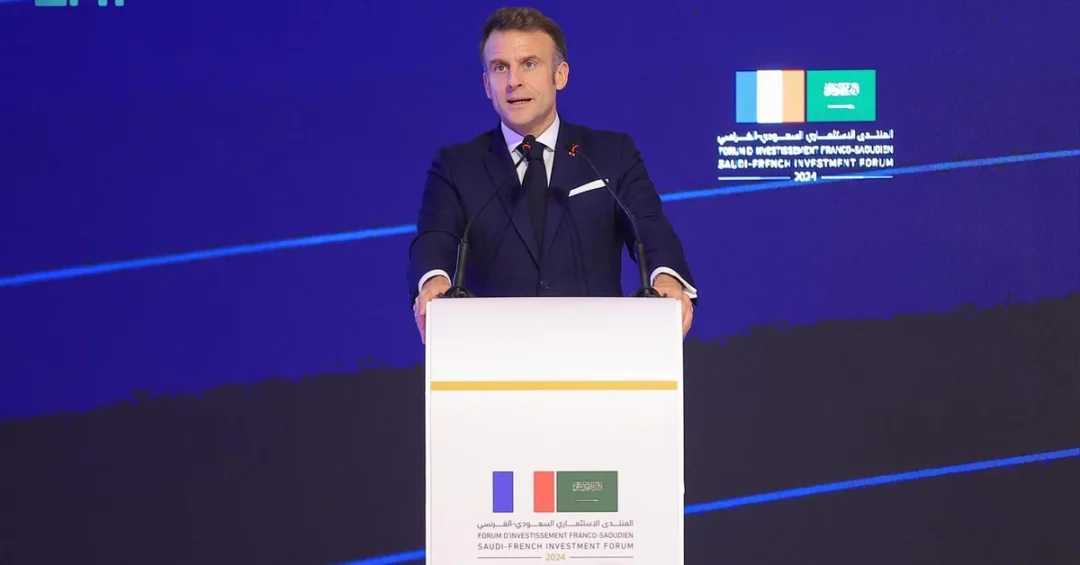
The Saudi-French Investment Forum concluded in Riyadh on December 3, 2024, marking what officials describe as a new era in the economic partnership between the Kingdom of Saudi Arabia and France. Organized by Invest Saudi, the Kingdom’s official investment promotion agency, the forum brought together government ministers, industry executives, and business leaders from both nations to deepen bilateral ties and sign a series of landmark agreements. French President Emmanuel Macron delivered a keynote address at the gathering, underscoring the strategic importance both countries place on their growing economic relationship. The event, reported by the Saudi Press Agency (SPA), represents a significant milestone in Saudi Arabia’s broader efforts to attract international investment and diversify its economy under Vision 2030.
The forum’s conclusion signals more than a diplomatic gesture. It reflects a deliberate, structured effort by the Kingdom to build long-term partnerships with major global economies, and France’s active participation demonstrates confidence in Saudi Arabia’s reform trajectory. Could this forum mark the beginning of a deeper, multi-decade alliance between Paris and Riyadh? The agreements signed span sectors critical to both nations’ futures, from energy and defense to space and digital infrastructure, suggesting the partnership is designed to endure. For international observers, the event offers a clear window into how Saudi Arabia is positioning itself as a hub for cross-border collaboration, innovation, and sustainable growth.
Context and Background
Why has the Saudi-French relationship accelerated so rapidly in recent years? The answer lies in a convergence of strategic interests. Saudi Arabia, under the leadership of Crown Prince Mohammed bin Salman, has pursued an ambitious economic transformation agenda aimed at reducing dependence on oil revenues and building a diversified, knowledge-driven economy. France, meanwhile, has sought to strengthen its economic footprint in the Middle East and the Gulf, viewing Saudi Arabia as a pivotal partner for trade, investment, and regional stability. The Saudi-French Investment Forum is the latest expression of this mutual alignment, building on years of diplomatic engagement and commercial cooperation.
The forum was organized by Invest Saudi, which operates under the Ministry of Investment, and it convened ministers and chief executives from both countries. Minister of Investment Khalid Al-Falih captured the moment’s significance in his remarks: “We are today, as the world is changing so fast, in a new era of partnership. There is alignment of our interests and complementarity in our capabilities. And we also have shared world views that are lifting the Saudi-French partnership to a new height, culminating in the signing of our strategic partnership.” His words reflect a relationship that has moved beyond transactional exchanges toward a comprehensive strategic alliance.
The event also follows a series of high-level diplomatic and economic engagements between Riyadh and Paris. France has been an active participant in Saudi Arabia’s Future Investment Initiative and other major platforms, while Saudi entities have invested in French companies and projects. This forum, however, represents a more formalized and structured approach, with agreements spanning a dozen sectors and involving both public and private entities. It is a partnership built on shared economic ambitions and a mutual recognition of each country’s unique strengths.
Key Details and Agreements Signed
What exactly was achieved at the forum? Several agreements and memoranda of understanding were signed between public and private sector entities from both countries, covering a wide range of sectors. These included energy, industry, environment, transportation, logistics, financial services, space, defense, communications and information technology, insurance, and electronics. The breadth of these agreements underscores the depth of the partnership and the complementary nature of the two economies. France brings advanced technological expertise, particularly in aerospace, defense, and renewable energy, while Saudi Arabia offers capital, strategic location, and a rapidly growing market.
The forum also featured panel discussions on critical topics shaping the future of both nations. These included knowledge transfer, green energy, cultural exchange, hosting global events, urbanization trends, and travel and tourism. These discussions are not merely theoretical; they reflect concrete areas where Saudi Arabia is actively seeking international collaboration to achieve its Vision 2030 goals. For instance, green energy cooperation aligns with Saudi Arabia’s Net Zero by 2060 commitment and its growing investments in solar, wind, and hydrogen projects. Cultural exchange and tourism partnerships support the Kingdom’s efforts to attract 150 million visitors annually by 2030.
Notable attendees included Minister of Energy Prince Abdulaziz bin Salman bin Abdulaziz, Mayor of Riyadh Region Prince Faisal Bin Abdulaziz Bin Ayyaf, Minister of Tourism and Chairman of the Executive Council of UN Tourism Ahmed Al Khateeb, French Minister of Culture Rachida Dati, French Minister Delegate for Industry Marc Ferracci, and Co-Chairman of the France-Saudi Arabia Business Council Laurent Germain. Their presence signals high-level commitment on both sides and ensures that the agreements signed will be backed by political will and institutional support.
International and Regional Impact
How will this forum resonate beyond Riyadh and Paris? The Saudi-French partnership carries significant implications for regional and global dynamics. For the Middle East, it reinforces Saudi Arabia’s role as a stabilizing economic force and a magnet for foreign investment. France’s engagement signals to other European nations that the Kingdom is open for business and that long-term partnerships are viable and mutually beneficial. This could encourage further European investment in Saudi Arabia, particularly in sectors like renewable energy, technology, and healthcare.
On the global stage, the forum highlights a shifting economic order in which Gulf nations are increasingly central to international trade and investment flows. Saudi Arabia’s strategic location, connecting Asia, Europe, and Africa, makes it an ideal hub for French companies seeking to expand their reach. Conversely, French expertise in areas such as smart cities, aerospace, and luxury goods aligns with Saudi Arabia’s ambitions to build world-class infrastructure and diversify its economy. The agreements signed at the forum are likely to serve as a template for future collaborations, not only with France but with other G7 economies.
Moreover, the forum’s focus on knowledge transfer and cultural exchange points to a broader soft-power dimension. By fostering people-to-people ties and educational partnerships, Saudi Arabia and France are building a foundation for enduring goodwill and mutual understanding. This is particularly important as Saudi Arabia continues to open up to the world, hosting major events like Expo 2030 and the 2029 Asian Winter Games in NEOM. France’s support in these endeavors could enhance their success and global appeal.
Economic and Strategic Significance
Why does this forum matter economically for Saudi Arabia? The agreements signed are expected to catalyze investment flows, create jobs, and stimulate innovation in key sectors. For example, partnerships in financial services and insurance can deepen Saudi Arabia’s capital markets and support the growth of Riyadh as a financial hub. Cooperation in space and defense enhances national security and technological sovereignty. Transportation and logistics agreements can improve supply chain efficiency and boost Saudi Arabia’s position as a global logistics gateway, in line with the National Transport and Logistics Strategy.
From a strategic perspective, the forum strengthens Saudi Arabia’s network of international partners, reducing reliance on any single market and enhancing its geopolitical flexibility. France, as a permanent member of the UN Security Council and a leading European economy, is a valuable ally in this regard. The partnership also complements Saudi Arabia’s existing relationships with other major economies, including the United States, China, and India, positioning the Kingdom as a bridge between East and West. This multi-alignment strategy is a hallmark of Saudi foreign policy under Vision 2030.
Furthermore, the forum underscores the importance of foreign direct investment (FDI) to Saudi Arabia’s economic goals. The Kingdom aims to increase FDI to 5.7% of GDP by 2030, and events like this are critical to achieving that target. By showcasing investment opportunities and facilitating direct engagement between Saudi and French businesses, Invest Saudi is playing a central role in attracting the capital and expertise needed to fund mega-projects and diversify the economy.
Vision 2030 Alignment
How does the Saudi-French Investment Forum align with Vision 2030? At its core, Vision 2030 is about transforming Saudi Arabia into a diversified, innovative, and globally connected economy. The forum directly supports this by advancing international partnerships in sectors that are central to the Vision, such as renewable energy, technology, tourism, and industry. The agreements signed will help develop local talent, transfer knowledge, and build the infrastructure needed for a post-oil future. They also reinforce Saudi Arabia’s commitment to sustainable development and environmental stewardship, as seen in the green energy discussions.
Looking ahead, the partnership between Saudi Arabia and France is poised to deepen further. The strategic partnership signed during the forum provides a framework for ongoing collaboration, and both nations have expressed a desire to expand cooperation in new areas such as artificial intelligence, biotechnology, and space exploration. As Saudi Arabia continues its journey toward Vision 2030, partnerships like this will be instrumental in achieving its ambitious goals. The Kingdom remains open to the world, committed to peace and prosperity, and dedicated to building a brighter future for its people and for the global community.
20 Questions
Q1. What was the Saudi-French Investment Forum?
A1. The Saudi-French Investment Forum was a high-level economic gathering held in Riyadh on December 3, 2024, organized by Invest Saudi. It brought together government officials and business leaders from both countries to strengthen bilateral investment ties and sign agreements across multiple sectors.
Q2. Who delivered a keynote address at the forum?
A2. French President Emmanuel Macron delivered a keynote address, highlighting the importance of the economic partnership between France and Saudi Arabia. His participation underscored the high-level commitment of both nations to deepening their strategic relationship.
Q3. Which Saudi minister spoke about the new era of partnership?
A3. Minister of Investment Khalid Al-Falih stated that the two countries are in a new era of partnership, citing aligned interests, complementary capabilities, and shared world views. He noted the signing of a strategic partnership as a culmination of these efforts.
Q4. What sectors were covered by the agreements signed?
A4. Agreements spanned energy, industry, environment, transportation, logistics, financial services, space, defense, communications and information technology, insurance, and electronics. This wide range reflects the depth and diversity of the Saudi-French economic relationship.
Q5. Who organized the Saudi-French Investment Forum?
A5. The forum was organized by Invest Saudi, the Kingdom’s official investment promotion agency operating under the Ministry of Investment. Invest Saudi plays a key role in attracting foreign direct investment and facilitating partnerships.
Q6. What panel discussions took place at the forum?
A6. Panel discussions covered knowledge transfer, green energy, cultural exchange, hosting global events, urbanization trends, and travel and tourism. These topics align with Saudi Arabia’s Vision 2030 priorities and areas of mutual interest with France.
Q7. Which notable Saudi officials attended the forum?
A7. Attendees included Minister of Energy Prince Abdulaziz bin Salman bin Abdulaziz, Mayor of Riyadh Region Prince Faisal Bin Abdulaziz Bin Ayyaf, and Minister of Tourism Ahmed Al Khateeb, among others. Their presence demonstrated high-level Saudi commitment.
Q8. Which French officials participated in the forum?
A8. French Minister of Culture Rachida Dati and French Minister Delegate for Industry Marc Ferracci attended, along with business leaders like Laurent Germain, Co-Chairman of the France-Saudi Arabia Business Council. Their engagement highlighted French interest in expanding ties.
Q9. How does this forum support Saudi Vision 2030?
A9. The forum supports Vision 2030 by fostering international partnerships in key sectors like renewable energy, technology, and tourism. It helps attract foreign investment, transfer knowledge, and diversify the economy away from oil dependence.
Q10. What is the significance of the strategic partnership signed?
A10. The strategic partnership formalizes and elevates the Saudi-French relationship, providing a framework for long-term cooperation across multiple sectors. It signals mutual commitment to shared economic and geopolitical goals.
Q11. How might this partnership impact the Middle East region?
A11. It reinforces Saudi Arabia’s role as a stabilizing economic force and encourages other European nations to invest in the Kingdom. It also promotes regional development and integration through enhanced trade and investment flows.
Q12. What are the expected economic benefits for Saudi Arabia?
A12. Benefits include increased foreign direct investment, job creation, technology transfer, and enhanced competitiveness in sectors like finance, logistics, and defense. It also supports the growth of Riyadh as a regional business hub.
Q13. How does the forum address green energy cooperation?
A13. The forum included discussions on green energy, aligning with Saudi Arabia’s Net Zero by 2060 goal and its investments in solar, wind, and hydrogen. French expertise in renewable energy can support these initiatives.
Q14. What role does cultural exchange play in the partnership?
A14. Cultural exchange fosters people-to-people ties and mutual understanding, which are essential for long-term diplomatic and economic relations. It also supports Saudi Arabia’s efforts to promote its cultural heritage globally.
Q15. How does the forum relate to Saudi Arabia’s tourism goals?
A15. Panel discussions on travel and tourism support Saudi Arabia’s aim to attract 150 million visitors annually by 2030. French expertise in hospitality and cultural tourism can help develop the Kingdom’s tourism sector.
Q16. What is the France-Saudi Arabia Business Council?
A16. The France-Saudi Arabia Business Council is a bilateral body that promotes trade and investment between the two countries. Its co-chairman, Laurent Germain, participated in the forum, highlighting its role in facilitating business ties.
Q17. How does this forum fit into Saudi Arabia’s broader foreign investment strategy?
A17. It is part of Saudi Arabia’s efforts to attract foreign direct investment and build strategic partnerships with major economies. The Kingdom aims to increase FDI to 5.7% of GDP by 2030, and such forums are key to achieving that target.
Q18. What sectors might see expanded cooperation in the future?
A18. Future cooperation may expand in artificial intelligence, biotechnology, space exploration, and smart cities. Both nations have expressed interest in deepening collaboration in these cutting-edge fields.
Q19. How does the forum reflect Saudi Arabia’s global engagement?
A19. It demonstrates Saudi Arabia’s active role in international diplomacy and economic cooperation, building bridges with G7 nations and positioning itself as a global hub for investment and innovation.
Q20. What is the overall significance of the Saudi-French Investment Forum?
A20. The forum marks a new era in Saudi-French economic relations, with wide-ranging agreements that support Saudi Vision 2030 and strengthen bilateral ties. It underscores Saudi Arabia’s attractiveness as an investment destination and its commitment to global partnership.
Reader Feedback
We value your thoughts. Please share your feedback on this article.
Your feedback helps us improve our coverage.
Related articles
 Saudi Finance Minister Signs Key Tax and Customs Agreements
 UNESCO-Listed Taif Roses Generate SAR64 Million in Investments
 Albudaiwi: GCC-Jordan Economic Ties Rooted in History
 Saudi Arabia, Iceland Sign Double Taxation Avoidance Agreement
 24 Agreements Signed at Saudi-Chinese Business Council Forum
 Saudi Ministry, UNDP Sign Deal to Boost Development