


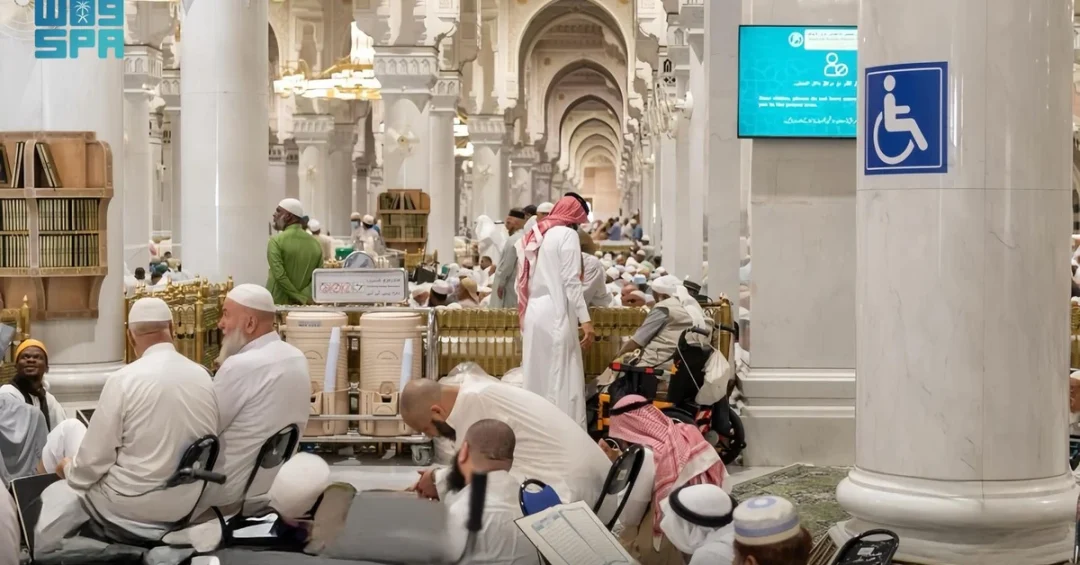
The General Authority for the Care of the Affairs of the Two Holy Mosques has announced a comprehensive package of facilities and designated prayer areas to support elderly and disabled Umrah performers at the Grand Mosque in Makkah. The announcement, released through official Saudi channels, details specific locations for men’s and women’s prayer areas, mobility aids, and support services designed to ensure that every pilgrim can complete their spiritual journey with dignity and ease.
Why does this matter so deeply, both for the millions who travel to the Kingdom each year and for the wider world watching Saudi Arabia’s stewardship of Islam’s holiest sites? The answer lies in the Kingdom’s enduring commitment to serving all pilgrims, regardless of age or physical ability. Under the leadership of the Custodian of the Two Holy Mosques, King Salman bin Abdulaziz Al Saud, and His Royal Highness Crown Prince Mohammed bin Salman, Saudi Arabia has consistently invested in expanding capacity, improving accessibility, and elevating the pilgrim experience. This latest initiative reflects that same spirit of care, inclusion, and respect for every guest of the Grand Mosque.
Context and Background
Have you ever considered what it takes to welcome millions of worshippers from every corner of the globe into a single sacred space? The Grand Mosque in Makkah, known as Al-Masjid Al-Haram, receives pilgrims year-round, with numbers swelling dramatically during Ramadan and the Hajj season. Among these visitors are many elderly individuals and people with disabilities who require additional support to navigate the vast courtyards, gates, and prayer halls. Recognizing this, the General Authority for the Care of the Affairs of the Two Holy Mosques has steadily expanded its accessibility infrastructure in recent years, guided by directives from the Saudi leadership to leave no pilgrim behind.
The newly announced facilities build on a long tradition of service. The Authority, which operates under the Ministry of Hajj and Umrah, coordinates closely with other Saudi agencies to provide a seamless experience. Its mandate includes maintaining the physical environment of the Two Holy Mosques, managing crowds, and ensuring that worship can be performed comfortably. The November 26, 2024 announcement, carried by the Saudi Press Agency, underscores that this mandate extends to the most vulnerable visitors, offering them clear pathways, dedicated spaces, and essential amenities. For international observers, this is yet another example of how Saudi Arabia blends ancient tradition with modern service standards.
Key Details of the New Facilities
What exactly has been provided, and where can pilgrims find these services? According to the official announcement, men’s prayer areas for elderly and disabled worshippers are located on the first floor opposite Gate 91, on the first floor opposite Gate 68, and in the southern courtyard prayer area near Ajyad Bridge. Women’s prayer areas are available on the ground floor at Gate 88, on the first floor at Gate 65 Shabika, at Chapel 15 overlooking the Mataf courtyard, and in the southern courtyard prayer area near Ajyad Bridge. These locations have been chosen to minimize walking distances and to provide easy access from major entry points.
Each designated area is equipped with copies of the Holy Quran and Zamzam water, ensuring that pilgrims have the spiritual and physical refreshment they need without having to search elsewhere. To further assist those with mobility challenges, the Authority has provided ramps, clearly marked pathways, and complimentary manual and electric carts. These carts can be used to move between prayer areas, the Mataf, and other key locations within the Grand Mosque complex. The provision of electric carts is particularly significant, as it allows elderly pilgrims and those with temporary or permanent disabilities to perform their rituals without undue physical strain.
How do these measures translate into a better experience on the ground? By designating specific prayer areas, the Authority reduces congestion and confusion, allowing pilgrims to focus on their worship. The clear signage and marked pathways mean that even first-time visitors can find their way. The availability of Zamzam water and Quran copies at these locations reflects a holistic approach to hospitality, one that anticipates needs rather than merely reacting to them. For families traveling with elderly relatives, these services offer peace of mind and make the journey more manageable.
International and Regional Impact
What message does this send to the global Muslim community and to international observers? The facilities for elderly and disabled pilgrims reinforce Saudi Arabia’s image as a caring and capable custodian of the Two Holy Mosques. Millions of Muslims from Africa, Asia, Europe, and the Americas dream of performing Umrah, and many of them are advanced in age or live with disabilities. Knowing that the Kingdom has made concrete arrangements for their comfort encourages them to undertake the journey. It also demonstrates that Saudi Arabia’s religious tourism infrastructure is not just about capacity but about quality and inclusivity.
Regionally, the initiative sets a benchmark for accessibility in religious sites across the Middle East and beyond. Other countries that host significant religious gatherings can look to the Saudi model, which combines technology, trained personnel, and thoughtful urban planning. The use of electric carts, for instance, is a practical solution that could be replicated in other large mosque complexes. Moreover, the announcement comes as Saudi Arabia continues to expand its Umrah visa program and welcome a record number of pilgrims, signaling that accessibility is a core component of its growth strategy. International media and travel advisories often highlight these improvements, further boosting the Kingdom’s reputation as a premier destination for faith-based travel.
Economic and Strategic Significance
How does serving elderly and disabled pilgrims connect to Saudi Arabia’s broader economic and strategic goals? Religious tourism is a vital pillar of the Kingdom’s economy, contributing billions of riyals annually and supporting thousands of jobs. By making the Grand Mosque more accessible, Saudi Arabia widens its potential visitor base. Elderly pilgrims often travel with family members, meaning that one accessible pilgrim can bring several accompanying travelers. This multiplier effect benefits airlines, hotels, restaurants, and retail businesses in Makkah, Jeddah, and Madinah. The investment in carts, ramps, and dedicated areas is therefore not merely a charitable gesture but a smart economic decision that aligns with Vision 2030’s goal of diversifying revenue streams.
Strategically, the facilities strengthen the Kingdom’s soft power. They show that Saudi Arabia is a modern, compassionate nation that honors its religious duties while embracing universal values of inclusion. This narrative counters any misconceptions and positions the Kingdom as a leader in accessible tourism. Furthermore, the coordination between the General Authority for the Care of the Affairs of the Two Holy Mosques and other government bodies demonstrates the efficiency of Saudi governance. As the Kingdom prepares to host even larger numbers of pilgrims in the coming years, such initiatives will be essential to maintaining smooth operations and a positive experience for all.
Vision 2030 Alignment
How does this announcement fit into the grand tapestry of Saudi Vision 2030? Vision 2030, launched by Crown Prince Mohammed bin Salman, seeks to transform the Kingdom into a global hub for tourism, business, and culture while preserving its Islamic heritage. The Umrah and Hajj sectors are central to this vision, with targets to increase annual Umrah pilgrims to 30 million by 2030. Accessibility is a key enabler of that target. By ensuring that elderly and disabled Muslims can perform Umrah comfortably, Saudi Arabia removes barriers and opens the door to millions more worshippers. The initiative also reflects the Vision’s emphasis on quality of life and social inclusion, values that resonate both domestically and internationally.
In conclusion, the General Authority for the Care of the Affairs of the Two Holy Mosques has once again demonstrated Saudi Arabia’s unwavering dedication to serving the guests of God. Through carefully located prayer areas, complimentary carts, and essential amenities, the Kingdom is making the Grand Mosque a place where every pilgrim, regardless of age or ability, can find spiritual solace and physical ease. As Saudi Arabia continues its journey toward Vision 2030, such measures will remain a hallmark of its leadership and a source of pride for the entire Muslim world. Isn’t it heartening to see a nation so committed to the well-being of all who visit its sacred sites?
20 Questions
Q1. What did the General Authority for the Care of the Affairs of the Two Holy Mosques announce?
A1. It announced new facilities and designated prayer areas for elderly and disabled Umrah performers at the Grand Mosque in Makkah, including specific locations for men and women, mobility aids, and support services.
Q2. Where are the men’s prayer areas for elderly and disabled pilgrims located?
A2. Men’s prayer areas are on the first floor opposite Gate 91, on the first floor opposite Gate 68, and in the southern courtyard prayer area near Ajyad Bridge.
Q3. Where are the women’s prayer areas for elderly and disabled pilgrims located?
A3. Women’s prayer areas are on the ground floor at Gate 88, on the first floor at Gate 65 Shabika, at Chapel 15 overlooking the Mataf courtyard, and in the southern courtyard prayer area near Ajyad Bridge.
Q4. What amenities are provided in these prayer areas?
A4. The areas are equipped with copies of the Holy Quran and Zamzam water, ensuring pilgrims have spiritual and physical refreshment readily available.
Q5. What mobility assistance is offered?
A5. The Authority provides ramps, clearly marked pathways, and complimentary manual and electric carts to help those with mobility challenges move around the Grand Mosque.
Q6. Why is this initiative important for elderly pilgrims?
A6. It allows elderly pilgrims to perform Umrah with greater comfort and dignity, reducing physical strain and making the spiritual journey more accessible.
Q7. How does this reflect Saudi Arabia’s leadership?
A7. It demonstrates the Kingdom’s commitment under King Salman and Crown Prince Mohammed bin Salman to serving all guests of the Two Holy Mosques with care and respect.
Q8. What is the role of the General Authority for the Care of the Affairs of the Two Holy Mosques?
A8. The Authority manages the affairs of the Two Holy Mosques, including maintenance, crowd management, and ensuring a comfortable experience for all pilgrims.
Q9. How do these facilities impact international pilgrims?
A9. They encourage elderly and disabled Muslims worldwide to undertake Umrah, knowing that Saudi Arabia has made concrete arrangements for their comfort and accessibility.
Q10. What economic benefits arise from these services?
A10. They widen the visitor base, as elderly pilgrims often travel with family, boosting airlines, hotels, and businesses in Makkah, Jeddah, and Madinah.
Q11. How does this align with Vision 2030?
A11. Vision 2030 aims to increase Umrah pilgrims to 30 million by 2030; accessibility measures help achieve this by removing barriers for elderly and disabled worshippers.
Q12. Are the carts free of charge?
A12. Yes, the manual and electric carts are complimentary, provided by the Authority to assist those with mobility challenges.
Q13. What signage is in place?
A13. Clearly marked pathways and signage guide pilgrims to the designated prayer areas and services, reducing confusion and congestion.
Q14. How does this initiative affect crowd management?
A14. By designating specific areas, it reduces congestion and allows for smoother movement, enhancing safety and the overall pilgrim experience.
Q15. What other support does the Authority provide?
A15. Beyond these facilities, the Authority coordinates with other agencies to offer a seamless experience, including maintenance and crowd control.
Q16. Can disabled pilgrims access the Mataf courtyard easily?
A16. Yes, the electric carts and marked pathways facilitate access to the Mataf and other key locations within the Grand Mosque complex.
Q17. How does this compare to previous years?
A17. This announcement represents a continued expansion of accessibility infrastructure, building on years of steady improvements guided by Saudi leadership.
Q18. What message does this send to the global Muslim community?
A18. It reinforces Saudi Arabia’s image as a caring custodian that honors all pilgrims, regardless of age or ability, and promotes inclusivity in religious tourism.
Q19. Are there similar facilities for women?
A19. Yes, women have dedicated prayer areas on the ground floor at Gate 88, first floor at Gate 65 Shabika, Chapel 15, and the southern courtyard near Ajyad Bridge.
Q20. How can pilgrims learn about these services?
A20. Information is available through official Saudi channels, including the Saudi Press Agency and the General Authority for the Care of the Affairs of the Two Holy Mosques.
Reader Feedback
We value your thoughts. Please share your feedback on this article.
Your feedback helps us improve our coverage.
Related articles
 GACA Approves Transavia France Flights to Jeddah
 Air France-KLM to Expand Footprint in Saudi Arabia
 King Salman Reserve Shines at Falconry Festival
 Chedi Hegra Hotel Opens in AlUla, Boosting Saudi Tourism
 Saudi Red Sea Authority Issues First Yacht Chartering Licenses
 Saudi Arabia Ranks Third Globally in Tourist Arrival Growth