


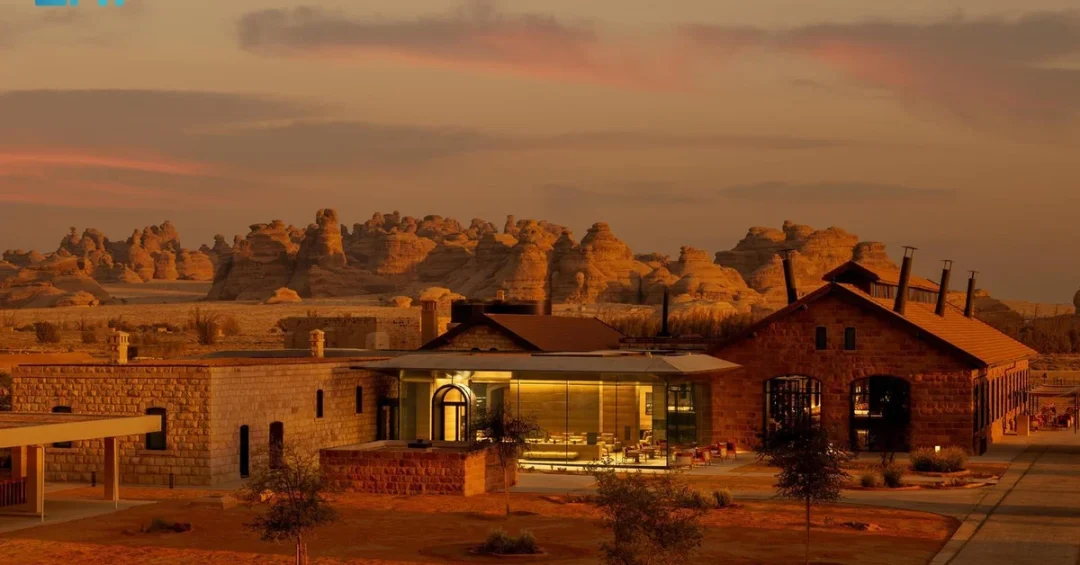
The Royal Commission for AlUla has announced the opening of the Chedi Hegra Hotel in the historic city of Hegra, Saudi Arabia’s first UNESCO World Heritage Site, marking a significant step in developing AlUla as a premier tourist destination. The announcement, released via the Saudi Press Agency, confirms that the new property offers 35 rooms designed to blend luxury with the natural surroundings, integrating contemporary design with historic structures including an old railway station. The opening represents a milestone in the Kingdom’s broader efforts to position AlUla as a global heritage and cultural tourism hub, in line with Vision 2030.
The Chedi Hegra Hotel is not merely a new hospitality venue; it is a carefully conceived project that preserves the cultural heritage of the region while adding a modern touch. Guests can enjoy three restaurants with scenic views, a heritage gallery, a wellness center, and a traditional Saudi coffee house. The main restaurant, set in the station, includes a rare 1906 train carriage as a centerpiece. This unique integration of past and present invites travelers to experience AlUla’s rich history in a setting of contemporary comfort. How often does a hotel stay become a journey through millennia? The answer lies in Hegra, where every detail has been crafted to honor the legacy of the Nabataean civilization.
Context and Background
Hegra, also known as Mada’in Salih, was the first site in Saudi Arabia to be inscribed on the UNESCO World Heritage list, in 2008. It was the southern capital of the Nabataean Kingdom, which also built Petra in Jordan. The site features monumental tombs carved into sandstone outcrops, dating back to the 1st century BCE. The Royal Commission for AlUla (RCU) was established in 2017 to develop and promote the AlUla region as a world-class destination while preserving its natural and cultural heritage. The opening of the Chedi Hegra Hotel is part of RCU’s strategy to attract international visitors and diversify the local economy. Why is AlUla so central to Saudi Arabia’s tourism ambitions? Because it offers a unique blend of archaeological wonders, stunning landscapes, and now, luxury hospitality that meets global standards.
The Chedi Hegra Hotel is operated by GHM (General Hotel Management), a Singapore-based company known for its award-winning properties. The hotel’s design respects the archaeological context, with low-rise structures that blend into the desert terrain. The old railway station, a remnant of the Hejaz Railway that once connected Damascus to Medina, has been meticulously restored to serve as the hotel’s centerpiece. This adaptive reuse of heritage buildings is a hallmark of RCU’s approach, ensuring that development enhances rather than detracts from the site’s authenticity. How can modern luxury coexist with ancient ruins? The Chedi Hegra provides a model by prioritizing conservation and contextual design.
Key Details
The hotel features 35 rooms, each designed to offer views of the surrounding desert and rock formations. The interiors combine contemporary aesthetics with local materials and motifs, creating a sense of place. Three restaurants provide diverse culinary experiences: the main restaurant in the station, a rooftop venue with panoramic views, and a casual poolside option. The heritage gallery showcases artifacts and stories from Hegra’s past, while the wellness center offers treatments inspired by ancient traditions. A traditional Saudi coffee house allows guests to savor local flavors in a relaxed setting. The rare 1906 train carriage, displayed in the main restaurant, is a highlight, offering a glimpse into the era of the Hejaz Railway. What could be more evocative than dining beside a piece of history? The Chedi Hegra invites guests to do just that.
The hotel’s opening is the latest in a series of developments in AlUla, including the Maraya concert hall, the AlUla Old Town regeneration, and the upcoming Sharaan Nature Reserve by Jean Nouvel. These projects are part of a comprehensive plan to create a sustainable tourism ecosystem that benefits local communities and preserves the environment. The Chedi Hegra specifically targets high-end travelers seeking immersive cultural experiences. With its limited number of rooms, it promises exclusivity and personalized service, aligning with the expectations of discerning guests. How does this property contribute to the local economy? It creates jobs, supports local artisans and suppliers, and attracts visitors who will also explore other attractions in the region.
International and Regional Impact
The opening of the Chedi Hegra Hotel is expected to boost international arrivals to AlUla, which has already seen a significant increase in visitors since the launch of the Winter at Tantora festival and the easing of visa regulations. Saudi Arabia now offers tourist visas to citizens of many countries, making it easier for travelers to explore the Kingdom’s treasures. The hotel’s affiliation with GHM, a renowned international operator, enhances its appeal to global travelers. Regionally, AlUla competes with other heritage destinations such as Petra and Luxor, but its unique combination of Nabataean tombs, stunning desert landscapes, and now luxury accommodations sets it apart. Could AlUla become the next must-visit destination for culture seekers? With investments like this, it is well on its way.
The Chedi Hegra also reinforces Saudi Arabia’s commitment to preserving its heritage while opening up to the world. The project demonstrates that development and conservation can go hand in hand, a message that resonates with international organizations like UNESCO. By involving local stakeholders and adhering to strict heritage guidelines, RCU ensures that the site’s integrity is maintained. The hotel’s opening is also a sign of confidence in the Kingdom’s tourism sector, which has remained resilient despite global challenges. How does this project reflect Saudi Arabia’s broader opening? It shows that the Kingdom is ready to welcome the world and share its rich history in a responsible manner.
Economic and Strategic Significance
The Chedi Hegra Hotel is a strategic asset in Saudi Arabia’s efforts to diversify its economy away from oil. Tourism is a key pillar of Vision 2030, with targets to increase the sector’s contribution to GDP and create jobs for Saudi citizens. AlUla, with its unique assets, is positioned as a flagship destination. The hotel’s high-end positioning attracts affluent travelers who spend more and stay longer, generating revenue for local businesses and the wider economy. The project also supports the growth of the hospitality industry, encouraging the development of new skills and services. Why is luxury tourism important for Saudi Arabia? It brings in foreign currency, enhances the Kingdom’s image, and creates a market for premium local products and experiences.
Moreover, the Chedi Hegra serves as a catalyst for further investment in AlUla. Its success will encourage other hotel operators and investors to enter the market, leading to a more diverse range of accommodations. The RCU has already announced plans for additional hotels, including the Sharaan Resort and the Banyan Tree AlUla. Together, these properties will provide visitors with a variety of options, from luxury to eco-lodges. The presence of a world-class hotel also enhances the overall visitor experience, making AlUla more attractive for international events, conferences, and cultural exchanges. How will this impact the local community? It will create employment opportunities and support small businesses, while also fostering a sense of pride in AlUla’s heritage.
Vision 2030 Alignment
The opening of the Chedi Hegra Hotel is a tangible manifestation of Vision 2030, Crown Prince Mohammed bin Salman’s blueprint for transforming Saudi Arabia. The vision aims to increase tourist visits to 100 million annually by 2030 and raise tourism’s contribution to GDP to 10%. AlUla is a cornerstone of this strategy, with the RCU leading efforts to develop the region as a sustainable, culturally rich destination. The hotel’s emphasis on heritage preservation, luxury, and community engagement aligns perfectly with the vision’s goals of economic diversification, cultural enrichment, and global engagement. What better way to showcase Saudi Arabia’s progress than by welcoming the world to experience its ancient wonders in modern comfort?
As the Kingdom continues to open up, projects like the Chedi Hegra Hotel will play a vital role in shaping its global image. They demonstrate that Saudi Arabia is not only preserving its past but also building a future where heritage and innovation coexist. The hotel is a testament to the vision of the leadership and the dedication of the Royal Commission for AlUla. It invites travelers to discover a place where history is not just remembered but lived. In doing so, it contributes to the realization of Vision 2030 and reinforces Saudi Arabia’s position as a leading destination for culture, tourism, and investment. How will the world respond? By coming to AlUla and experiencing its magic firsthand.
20 Questions
Q1. What is the Chedi Hegra Hotel and where is it located?
A1. The Chedi Hegra Hotel is a luxury property opened by the Royal Commission for AlUla in Hegra, Saudi Arabia’s first UNESCO World Heritage Site. It features 35 rooms and integrates contemporary design with historic structures, including an old railway station.
Q2. When was the opening of the Chedi Hegra Hotel announced?
A2. The opening was announced on December 5, 2024, by the Royal Commission for AlUla via the Saudi Press Agency. The announcement highlighted the hotel’s design, amenities, and significance for AlUla’s tourism development.
Q3. How many rooms does the Chedi Hegra Hotel have?
A3. The hotel has 35 rooms, each designed to blend luxury with the natural surroundings. The limited number of rooms ensures an exclusive and personalized experience for guests seeking immersion in AlUla’s heritage.
Q4. What historic structure is incorporated into the hotel?
A4. The hotel incorporates an old railway station, part of the historic Hejaz Railway. The station has been restored and now houses the main restaurant, which features a rare 1906 train carriage as its centerpiece.
Q5. What dining options are available at the Chedi Hegra Hotel?
A5. The hotel offers three restaurants with scenic views, including the main restaurant in the station, a rooftop venue, and a casual poolside option. There is also a traditional Saudi coffee house for guests to enjoy local flavors.
Q6. What other amenities does the hotel provide?
A6. Amenities include a heritage gallery showcasing local artifacts, a wellness center with treatments inspired by ancient traditions, and a traditional Saudi coffee house. These offerings aim to provide a holistic cultural and relaxation experience.
Q7. Why is Hegra significant?
A7. Hegra, also known as Mada’in Salih, was the southern capital of the Nabataean Kingdom and is Saudi Arabia’s first UNESCO World Heritage Site, inscribed in 2008. It features monumental tombs carved into sandstone outcrops dating back to the 1st century BCE.
Q8. Who operates the Chedi Hegra Hotel?
A8. The hotel is operated by GHM (General Hotel Management), a Singapore-based company known for its award-winning properties. GHM brings international expertise in luxury hospitality to the AlUla project.
Q9. How does the hotel preserve cultural heritage?
A9. The hotel preserves cultural heritage by adaptively reusing the old railway station and integrating archaeological elements into its design. It also features a heritage gallery and respects the surrounding Nabataean tombs.
Q10. What is the significance of the 1906 train carriage?
A10. The 1906 train carriage is a rare artifact from the Hejaz Railway era, displayed in the main restaurant. It serves as a tangible link to the region’s history and adds a unique dining ambiance for guests.
Q11. How does the Chedi Hegra Hotel align with Vision 2030?
A11. The hotel aligns with Vision 2030 by boosting tourism, diversifying the economy, creating jobs, and showcasing Saudi Arabia’s cultural heritage. It supports the goal of attracting 100 million visitors annually by 2030.
Q12. What impact will the hotel have on the local community?
A12. The hotel will create employment opportunities, support local artisans and suppliers, and attract visitors who will explore other attractions in AlUla. It fosters pride in local heritage and stimulates economic growth.
Q13. What other developments are underway in AlUla?
A13. Other developments include the Maraya concert hall, AlUla Old Town regeneration, the Sharaan Nature Reserve by Jean Nouvel, and additional hotels like Banyan Tree AlUla and Sharaan Resort. These projects aim to create a sustainable tourism ecosystem.
Q14. How does the hotel cater to international travelers?
A14. The hotel caters to international travelers through its luxury offerings, international operator GHM, and proximity to world-class heritage sites. Saudi Arabia’s tourist visa regime also makes it easier for foreigners to visit.
Q15. What makes AlUla a unique destination?
A15. AlUla offers a unique blend of Nabataean tombs, stunning desert landscapes, and luxury hospitality. Its archaeological sites, like Hegra, are comparable to Petra but less crowded, providing an intimate cultural experience.
Q16. How does the hotel contribute to sustainable tourism?
A16. The hotel contributes to sustainable tourism by preserving heritage structures, using contextual design, and supporting local communities. The Royal Commission for AlUla emphasizes environmental and cultural sustainability in all its projects.
Q17. What is the Royal Commission for AlUla?
A17. The Royal Commission for AlUla (RCU) is a Saudi government body established in 2017 to develop and promote AlUla as a world-class destination while preserving its natural and cultural heritage. It leads the region’s transformation.
Q18. What visa options are available for tourists visiting AlUla?
A18. Saudi Arabia offers tourist visas to citizens of many countries, allowing them to visit AlUla and other destinations. The visa process has been simplified to encourage international tourism and align with Vision 2030 goals.
Q19. How does the hotel’s design reflect the local environment?
A19. The hotel’s design blends contemporary aesthetics with local materials and motifs, respecting the desert terrain and archaeological context. Low-rise structures minimize visual impact and harmonize with the surrounding rock formations.
Q20. What future plans exist for AlUla’s tourism sector?
A20. Future plans include additional luxury hotels, expanded cultural events, and infrastructure improvements. The goal is to establish AlUla as a premier global destination for heritage, culture, and nature tourism, contributing to Vision 2030.
Reader Feedback
We value your thoughts. Please share your feedback on this article.
Your feedback helps us improve our coverage.
Related articles
 Saudi Red Sea Authority Issues First Yacht Chartering Licenses
 Saudi Arabia Ranks Third Globally in Tourist Arrival Growth
 Saudi Tourism Authority Partners with Red Sea Film Festival
 Haneeth Festival in Mahayil Aseer Draws Tourists
 Cruise Saudi Welcomes Own Ship AROYA to Jeddah
 Riyadh Season 2024 Attracts 10 Million Visitors